Product Overview of the STM32F103 Series
The STM32F103 represents a high-density microcontroller family from STMicroelectronics, built on the ARM Cortex-M3 architecture. This series encompasses three primary variants: the STM32F103xC, STM32F103xD, and STM32F103xE, each offering progressively expanded memory configurations and peripheral counts. The STM32F103 is engineered for applications requiring a balance between processing power, memory capacity, and integrated peripheral functionality, making it suitable for industrial control systems, consumer electronics, and embedded automation solutions.
The STM32F103 family maintains full compatibility across its variants, allowing designers to scale their implementations from lower-density to higher-density configurations without requiring fundamental architectural changes. This compatibility extends across pinouts, memory mapping, and peripheral interfaces, facilitating design flexibility and reducing time-to-market for product iterations.
Core Architecture and Processing Capabilities of the STM32F103
The STM32F103 employs a 32-bit ARM Cortex-M3 processor operating at a maximum frequency of 72 MHz. This architecture delivers 1.25 DMIPS per megahertz (Dhrystone 2.1 benchmark) at zero wait states, providing deterministic performance for real-time applications. The processor incorporates single-cycle multiplication and hardware division capabilities, enabling efficient mathematical operations without requiring software emulation.
The Cortex-M3 core within the STM32F103 includes a nested vectored interrupt controller (NVIC) that supports up to 16 external interrupt vectors. This interrupt architecture allows the microcontroller to respond rapidly to asynchronous events while maintaining priority-based interrupt handling. The external interrupt/event controller (EXTI) extends this capability by providing flexible event detection and routing mechanisms.
Memory Architecture and Storage Solutions in the STM32F103
The STM32F103 family offers three distinct memory configurations. The STM32F103xC variant provides 256 kilobytes of Flash memory, the STM32F103xD provides 384 kilobytes, and the STM32F103xE provides 512 kilobytes. All variants include up to 64 kilobytes of embedded SRAM for runtime data storage and stack operations.
The embedded Flash memory in the STM32F103 supports in-system programming, allowing firmware updates without removing the device from its application. Flash memory endurance specifications indicate support for a minimum of 10,000 write/erase cycles, with data retention guaranteed for a minimum of 20 years under specified conditions. The Flash memory architecture includes a cyclic redundancy check (CRC) calculation unit, enabling firmware integrity verification during runtime.
The STM32F103 incorporates a flexible static memory controller (FSMC) that extends the microcontroller's memory addressing capabilities. The FSMC supports connection to external memory devices including SRAM, PSRAM, NOR Flash, NAND Flash, and Compact Flash storage. This external memory interface operates through a multiplexed or non-multiplexed address/data bus configuration, accommodating various memory device types and access patterns.
Clock Management and Power Supply Systems for the STM32F103
The STM32F103 integrates multiple clock sources to support diverse application requirements. The high-speed external (HSE) oscillator accepts crystal frequencies ranging from 4 to 16 MHz, providing a stable reference for the phase-locked loop (PLL). The internal high-speed (HSI) oscillator operates at 8 MHz with factory trimming, offering a clock source without requiring external components. A low-speed external (LSE) oscillator at 32.768 kHz supports real-time clock (RTC) functionality, while an internal low-speed (LSI) oscillator at 40 kHz provides a backup timing reference.
The STM32F103 incorporates a PLL that multiplies the selected clock source to achieve the maximum 72 MHz operating frequency. The clock tree architecture allows flexible routing of clock signals to the processor core, peripheral buses, and specialized subsystems. This architecture enables independent frequency scaling of different functional blocks, supporting power optimization strategies.
Power supply for the STM32F103 operates across a voltage range of 2.0 to 3.6 volts, accommodating both 3.3-volt and lower-voltage battery-powered applications. The microcontroller integrates a power-on reset (POR) circuit that ensures proper initialization during power-up sequences. A programmable voltage detector (PVD) monitors the supply voltage and can trigger interrupt signals when the supply falls below a programmed threshold, enabling graceful shutdown procedures or backup power transitions.
The STM32F103 includes an internal voltage regulator that maintains stable core voltage despite variations in supply voltage and load current. This regulator supports both normal run mode and low-power mode operation, with distinct current consumption characteristics for each mode.
Low-Power Operating Modes and Energy Management in the STM32F103
The STM32F103 provides three distinct low-power operating modes to minimize energy consumption in battery-powered or energy-constrained applications. Sleep mode reduces power consumption by disabling the processor clock while maintaining peripheral clock operation. In Sleep mode, the microcontroller can respond to interrupts with minimal latency, making this mode suitable for applications requiring frequent wake-up events.
Stop mode further reduces power consumption by disabling both the processor and peripheral clocks while maintaining SRAM and register contents. The voltage regulator can operate in either run mode or low-power mode during Stop operation, with low-power mode providing additional current reduction at the cost of longer wake-up latency. Stop mode wake-up timings range from microseconds to milliseconds depending on the clock source selected for resumption.
Standby mode represents the lowest power consumption state, disabling all clocks and the voltage regulator while preserving only the RTC and backup register contents. Standby mode wake-up requires a complete system reset sequence, making this mode suitable for applications where extended dormancy periods are acceptable.
The STM32F103 maintains a VBAT supply pin that powers the RTC and backup registers independently of the main supply voltage. This architecture enables timekeeping and data retention even when the primary power supply is disconnected, supporting applications requiring persistent state information across power cycles.
Timer and Watchdog Functions in the STM32F103
The STM32F103 integrates up to 11 timers providing diverse timing and counting functions. Four 16-bit general-purpose timers offer input capture, output compare, and pulse-width modulation (PWM) capabilities. Each general-purpose timer supports up to four independent channels, enabling complex timing sequences and multi-phase PWM generation.
Two 16-bit motor control PWM timers provide specialized functionality for three-phase motor drive applications. These timers include dead-time generation circuitry that prevents shoot-through conditions in complementary output stages, and emergency stop inputs that immediately disable PWM outputs upon detection of fault conditions.
Two independent watchdog timers provide system reliability monitoring. The independent watchdog operates from an internal 40 kHz oscillator and generates a system reset if not serviced within a programmed timeout interval. The window watchdog provides additional functionality by requiring service within a specific time window, detecting both timeout and premature service conditions.
A 24-bit SysTick timer provides a system tick reference for real-time operating systems and general timing applications. Two 16-bit basic timers support DAC trigger generation and general timing functions without input/output capabilities.
Communication Interfaces and Connectivity Options in the STM32F103
The STM32F103 integrates up to 13 communication interfaces, providing connectivity options for diverse application requirements. Up to five UART/USART interfaces support asynchronous serial communication with optional synchronous modes, ISO 7816 smart card protocols, LIN bus interfaces, and IrDA infrared communication. These interfaces operate at baud rates up to 4.5 megabits per second.
Up to three serial peripheral interfaces (SPI) provide synchronous serial communication at rates up to 18 megabits per second. Two of the SPI interfaces support I2S (inter-integrated sound) protocol for audio applications, enabling direct connection to audio codecs and digital audio processors.
Up to two I2C interfaces support SMBus and PMBus protocols in addition to standard I2C operation. The I2C interfaces operate at frequencies up to 400 kilohertz in standard mode and 1 megahertz in fast mode.
A CAN 2.0B active interface provides controller area network connectivity for automotive and industrial applications. The CAN interface supports standard and extended frame formats with programmable bit timing for operation across a range of bus speeds.
A USB 2.0 full-speed interface operates at 12 megabits per second, supporting device and host modes for connection to personal computers and USB peripherals. The USB interface includes integrated transceiver circuitry and supports suspend and resume operations for power management.
An SDIO interface provides connectivity to SD/MMC memory cards, supporting both default mode and high-speed mode operation. The SDIO interface operates at clock frequencies up to 48 megabits per second in high-speed mode.
Analog Signal Processing: ADC and DAC in the STM32F103
The STM32F103 incorporates three independent 12-bit analog-to-digital converters (ADC), each capable of sampling at rates up to 1 microsecond per conversion. The ADCs support up to 21 input channels, with flexible channel selection and sequencing capabilities. Each ADC includes triple-sample-and-hold functionality, enabling simultaneous sampling of multiple channels for phase-coherent analog measurements.
The ADC conversion range spans 0 to 3.6 volts, with internal reference voltage generation. The ADCs support both single-conversion and continuous-conversion modes, with programmable conversion sequences and interrupt generation upon completion. Injected channel functionality allows insertion of high-priority conversions into the regular conversion sequence, supporting interrupt-driven analog measurements.
The STM32F103 includes two independent 12-bit digital-to-analog converters (DAC), each capable of generating analog output signals across the 0 to 3.6-volt range. The DACs support buffered and non-buffered output configurations, with output impedance specifications enabling direct connection to analog circuits. DAC conversion rates support updates up to 1 megahertz, enabling audio-frequency signal generation.
The STM32F103 integrates an on-chip temperature sensor connected to one of the ADC channels. The temperature sensor provides analog output proportional to die temperature, enabling thermal monitoring and temperature-compensated measurements. Temperature sensor accuracy specifications indicate typical accuracy of ±1.5 degrees Celsius across the operating temperature range.
External Memory Interface and FSMC Controller in the STM32F103
The flexible static memory controller (FSMC) in the STM32F103 extends the addressable memory space beyond the internal Flash and SRAM. The FSMC supports connection to external memory devices through a multiplexed or non-multiplexed address/data bus architecture. Four chip select signals enable independent control of up to four external memory banks.
The FSMC supports asynchronous memory access modes for SRAM, PSRAM, and NOR Flash devices, with programmable timing parameters accommodating various device speed grades. Synchronous memory access modes support higher-speed NOR and PSRAM devices with clock-synchronized data transfer. Multiplexed address/data bus modes reduce pin count requirements for applications with space constraints.
The FSMC includes specialized controllers for PC Card and CompactFlash interfaces, supporting both common memory and attribute memory access modes. NAND Flash controller functionality enables connection to NAND Flash storage devices with programmable timing for various device types.
The FSMC timing parameters include address setup time, address hold time, data setup time, and data hold time specifications, allowing precise timing configuration for specific memory device requirements. These parameters accommodate memory devices with access times ranging from tens of nanoseconds to hundreds of nanoseconds.
Input/Output Architecture and GPIO Capabilities of the STM32F103
The STM32F103 provides up to 112 general-purpose input/output (GPIO) pins, with the specific count depending on the selected package variant. The GPIO architecture supports flexible pin mapping, allowing most peripheral functions to be routed to multiple pin locations. This flexibility simplifies PCB layout and accommodates various application requirements.
The GPIO pins support both CMOS and TTL input characteristics, with selectable input thresholds. Up to 51 GPIO pins provide 5-volt tolerance, enabling direct connection to 5-volt logic circuits without level translation. The remaining GPIO pins operate at 3.3-volt logic levels.
GPIO output stages support push-pull and open-drain configurations, with programmable output speeds accommodating both high-speed digital signals and low-speed analog-compatible outputs. Output current specifications indicate typical drive capability of 20 milliamperes per pin, with total port current limitations preventing simultaneous maximum-current operation on all pins.
The GPIO architecture includes input filtering and debouncing capabilities, reducing susceptibility to noise and contact bounce in switch-based applications. External interrupt capability on up to 16 GPIO pins enables event-driven processing of external signals.
Debug and Trace Capabilities of the STM32F103
The STM32F103 integrates comprehensive debug support through serial wire debug (SWD) and JTAG interfaces. The serial wire debug interface provides a two-wire connection for programming, debugging, and real-time monitoring of microcontroller operation. The JTAG interface supports four-wire boundary scan testing and device programming.
The embedded trace macrocell (ETM) provides real-time instruction and data tracing capabilities, enabling non-intrusive observation of program execution. Trace data can be captured to external trace memory or streamed to a development host for real-time analysis. This capability supports performance profiling and debugging of complex real-time applications.
The debug architecture includes breakpoint and watchpoint functionality, enabling conditional program halting based on instruction address or data access patterns. These features support interactive debugging workflows and automated test procedures.
Thermal Management and Package Options for the STM32F103
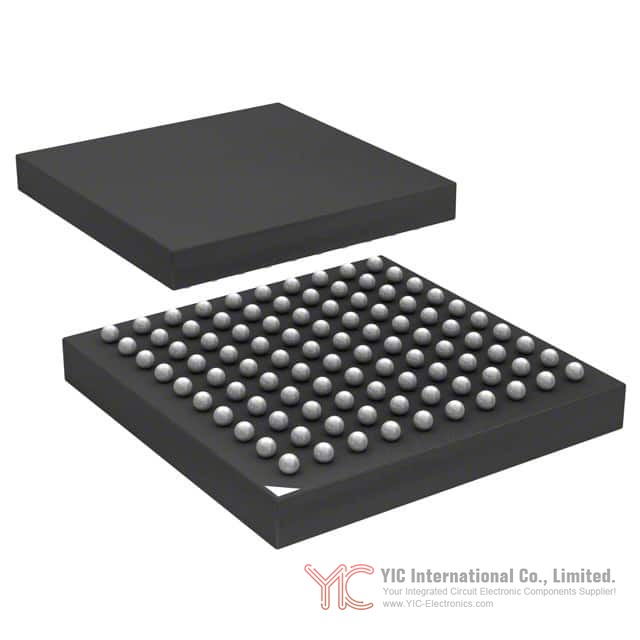
The STM32F103 is available in five package options, accommodating diverse application requirements and PCB layout constraints. The LFBGA144 package provides a 144-ball ball grid array in a 10 × 10 millimeter footprint with 0.8 millimeter ball pitch. The LFBGA100 package offers a 100-ball configuration in the same 10 × 10 millimeter footprint.
The LQFP144 package provides a 144-pin quad flat package in a 20 × 20 millimeter footprint, suitable for applications requiring through-hole or surface-mount compatibility. The LQFP100 package offers a 100-pin configuration in a 14 × 14 millimeter footprint. The WLCSP64 package provides a 64-ball wafer-level chip-scale package in a 4.466 × 4.395 millimeter footprint, enabling ultra-compact designs.
The STM32F103 operates across a temperature range of -40 to +85 degrees Celsius, supporting both industrial and consumer applications. Thermal characteristics include junction-to-ambient thermal resistance specifications for each package variant, enabling thermal design calculations for specific application requirements.
The microcontroller dissipates power primarily through the supply pins and package substrate. Thermal management strategies include PCB thermal vias connecting the package substrate to internal ground planes, reducing junction temperature rise during high-current operation.
Electrical Characteristics and Operating Conditions of the STM32F103
The STM32F103 operates across a supply voltage range of 2.0 to 3.6 volts, with absolute maximum ratings extending to 4.0 volts for brief overvoltage transients. The microcontroller incorporates electrostatic discharge (ESD) protection on all I/O pins, with ESD withstand ratings of 2 kilovolts for human body model testing and 200 volts for machine model testing.
Current consumption in run mode varies with operating frequency and code execution location. Maximum current consumption at 72 MHz with code executing from Flash memory reaches approximately 40 milliamperes with peripherals enabled. Current consumption reduces to approximately 30 milliamperes with peripherals disabled. Code execution from internal SRAM reduces current consumption by approximately 10 percent due to elimination of Flash memory access overhead.
Sleep mode current consumption ranges from approximately 10 to 15 milliamperes depending on peripheral configuration. Stop mode current consumption reduces to approximately 2 to 5 milliamperes with the voltage regulator in run mode, or approximately 0.5 to 1 milliampere with the regulator in low-power mode. Standby mode current consumption reaches approximately 10 microamperes, enabling extended battery operation.
The STM32F103 incorporates electromagnetic compatibility (EMC) features including input filtering and output slew rate control. EMI characteristics specify radiated and conducted emissions performance, supporting compliance with industrial electromagnetic compatibility standards.
Conclusion
The STM32F103 high-density microcontroller family provides a comprehensive platform for embedded system design, combining a 72 MHz ARM Cortex-M3 processor with extensive memory, communication interfaces, and analog signal processing capabilities. The family's three density variants enable design scalability from 256 kilobytes to 512 kilobytes of Flash memory, accommodating applications ranging from simple control tasks to complex real-time systems. The integration of multiple communication interfaces, timer functions, and analog peripherals reduces external component requirements and simplifies system integration. The STM32F103's low-power operating modes and flexible clock management support battery-powered applications, while comprehensive debug capabilities facilitate development and troubleshooting. The availability of five package options enables optimization for specific form factor and thermal requirements.
Frequently Asked Questions (FAQ)
- Q1. What are the primary differences between the STM32F103xC, STM32F103xD, and STM32F103xE variants?
-
- A1. The three variants differ primarily in Flash memory capacity and peripheral counts. The STM32F103xC provides 256 kilobytes of Flash memory, the STM32F103xD provides 384 kilobytes, and the STM32F103xE provides 512 kilobytes. All variants share the same 72 MHz ARM Cortex-M3 core and 64 kilobytes of SRAM. The higher-density variants support additional timer channels and communication interface instances, enabling more complex peripheral configurations.
- Q2. What is the maximum operating frequency of the STM32F103, and what performance metrics does it deliver?
-
- A2. The STM32F103 operates at a maximum frequency of 72 MHz. At this frequency with zero wait states, the processor delivers 1.25 DMIPS per megahertz according to the Dhrystone 2.1 benchmark. The processor includes single-cycle multiplication and hardware division, enabling efficient mathematical operations without software emulation overhead.
- Q3. How many communication interfaces does the STM32F103 provide, and what types are supported?
-
- A3. The STM32F103 integrates up to 13 communication interfaces including up to five UART/USART interfaces, up to three SPI interfaces (two with I2S support), up to two I2C interfaces, one CAN 2.0B interface, one USB 2.0 full-speed interface, and one SDIO interface. This comprehensive interface set enables connectivity to diverse peripheral devices and communication networks.
- Q4. What are the power supply requirements for the STM32F103?
-
- A4. The STM32F103 operates across a supply voltage range of 2.0 to 3.6 volts. The microcontroller incorporates an internal voltage regulator that maintains stable core voltage despite supply variations. A separate VBAT pin powers the RTC and backup registers, enabling timekeeping operation even when the primary supply is disconnected.
- Q5. What low-power operating modes does the STM32F103 provide?
-
- A5. The STM32F103 provides three low-power modes: Sleep mode reduces power consumption while maintaining peripheral clock operation and enabling rapid interrupt response; Stop mode disables both processor and peripheral clocks while preserving SRAM and register contents, with the voltage regulator selectable between run and low-power modes; Standby mode provides the lowest power consumption by disabling all clocks and the voltage regulator while preserving only RTC and backup register contents.
- Q6. What is the current consumption of the STM32F103 in different operating modes?
-
- A6. Run mode current consumption at 72 MHz reaches approximately 40 milliamperes with peripherals enabled and code executing from Flash memory. Sleep mode current consumption ranges from 10 to 15 milliamperes. Stop mode current consumption reduces to 2 to 5 milliamperes with the voltage regulator in run mode, or 0.5 to 1 milliampere in low-power mode. Standby mode current consumption reaches approximately 10 microamperes, enabling extended battery operation.
- Q7. How many timers does the STM32F103 include, and what functions do they provide?
-
- A7. The STM32F103 integrates up to 11 timers: four 16-bit general-purpose timers with input capture, output compare, and PWM capabilities; two 16-bit motor control PWM timers with dead-time generation and emergency stop inputs; two independent watchdog timers; one 24-bit SysTick timer; and two 16-bit basic timers for DAC triggering and general timing functions.
- Q8. What analog signal processing capabilities does the STM32F103 provide?
-
- A8. The STM32F103 incorporates three independent 12-bit analog-to-digital converters capable of 1 microsecond conversion times with up to 21 input channels. The ADCs include triple-sample-and-hold functionality for simultaneous multi-channel sampling. Two independent 12-bit digital-to-analog converters support analog output generation at rates up to 1 megahertz. An on-chip temperature sensor provides thermal monitoring with typical accuracy of ±1.5 degrees Celsius.
- Q9. What external memory devices can be connected through the FSMC controller?
-
- A9. The flexible static memory controller (FSMC) in the STM32F103 supports connection to SRAM, PSRAM, NOR Flash, NAND Flash, and Compact Flash storage devices. The FSMC supports both multiplexed and non-multiplexed address/data bus configurations, with four chip select signals enabling independent control of up to four external memory banks. Programmable timing parameters accommodate memory devices with access times ranging from tens to hundreds of nanoseconds.
- Q10. How many GPIO pins does the STM32F103 provide, and what are their characteristics?
-
- A10. The STM32F103 provides up to 112 general-purpose input/output pins depending on the selected package variant. Up to 51 GPIO pins provide 5-volt tolerance for direct connection to 5-volt logic circuits. The GPIO architecture supports flexible pin mapping, allowing most peripheral functions to be routed to multiple pin locations. GPIO pins support both push-pull and open-drain output configurations with programmable output speeds.
- Q11. What package options are available for the STM32F103?
-
- A11. The STM32F103 is available in five package options: LFBGA144 (144-ball, 10 × 10 mm), LFBGA100 (100-ball, 10 × 10 mm), LQFP144 (144-pin, 20 × 20 mm), LQFP100 (100-pin, 14 × 14 mm), and WLCSP64 (64-ball, 4.466 × 4.395 mm). These options accommodate diverse application requirements and PCB layout constraints.
- Q12. What debug and trace capabilities does the STM32F103 provide?
-
- A12. The STM32F103 integrates serial wire debug (SWD) and JTAG interfaces for programming and debugging. The embedded trace macrocell (ETM) provides real-time instruction and data tracing capabilities for non-intrusive observation of program execution. Breakpoint and watchpoint functionality enables conditional program halting based on instruction address or data access patterns.
- Q13. What is the operating temperature range for the STM32F103?
-
- A13. The STM32F103 operates across a temperature range of -40 to +85 degrees Celsius, supporting both industrial and consumer applications. Thermal characteristics include junction-to-ambient thermal resistance specifications for each package variant, enabling thermal design calculations for specific application requirements.
- Q14. What clock sources are available in the STM32F103?
-
- A14. The STM32F103 integrates multiple clock sources: a high-speed external (HSE) oscillator accepting 4 to 16 MHz crystals, an internal high-speed (HSI) oscillator at 8 MHz with factory trimming, a low-speed external (LSE) oscillator at 32.768 kHz for RTC functionality, and an internal low-speed (LSI) oscillator at 40 kHz. A phase-locked loop (PLL) multiplies the selected clock source to achieve the maximum 72 MHz operating frequency.
- Q15. What is the Flash memory endurance specification for the STM32F103?
-
- A15. The STM32F103 Flash memory supports a minimum of 10,000 write/erase cycles with data retention guaranteed for a minimum of 20 years under specified conditions. The Flash memory architecture includes a cyclic redundancy check (CRC) calculation unit enabling firmware integrity verification during runtime.