Product Overview of the STM32F103 Series
The STM32F103 series represents a family of 32-bit microcontrollers built on the ARM Cortex-M3 architecture, designed to deliver balanced performance and integration for a wide range of embedded applications. These devices operate at a maximum frequency of 72 MHz and are available in multiple package options, ranging from 36 pins to 100 pins, accommodating various system complexity requirements.
The STM32F103 series is manufactured using ST's advanced process technology and incorporates on-chip flash memory ranging from 64 KB to 128 KB, along with 20 KB of embedded SRAM. This combination of processing power, memory capacity, and peripheral integration makes the STM32F103 series suitable for applications spanning industrial control, consumer electronics, and IoT devices.
Core Architecture and Processing Capabilities of the STM32F103 Series
The STM32F103 series employs an ARM Cortex-M3 core operating at up to 72 MHz, delivering 1.25 DMIPS per megahertz (Dhrystone 2.1) at zero wait state memory access. This performance metric indicates that the processor can execute approximately 90 million instructions per second at maximum frequency, providing sufficient computational capacity for real-time control tasks and signal processing applications.
The core includes single-cycle multiplication and hardware division capabilities, which accelerate mathematical operations commonly encountered in control algorithms and digital signal processing. These features reduce the instruction count required for complex calculations, improving overall system responsiveness and reducing power consumption during computation-intensive tasks.
Memory Organization in the STM32F103 Series
The STM32F103 series offers two memory density variants: the STM32F103x8 with 64 KB of flash memory and the STM32F103xB with 128 KB of flash memory. Both variants include 20 KB of embedded SRAM for runtime data storage and stack operations.
The flash memory serves as the primary storage for program code and constant data. The STM32F103 series implements a dual-bank flash architecture that allows for in-application programming, enabling firmware updates without external programming equipment. The flash memory supports read and write operations with specified endurance characteristics, typically rated for 10,000 programming cycles per location.
The embedded SRAM provides fast access to runtime variables and temporary data structures. Unlike flash memory, SRAM offers single-cycle read and write access at the processor clock frequency, making it ideal for stack operations, interrupt handlers, and performance-critical data buffers.
The STM32F103 series includes a cyclic redundancy check (CRC) calculation unit that operates independently of the main processor. This dedicated hardware accelerates data integrity verification, commonly used in communication protocols and stored data validation. The CRC unit supports standard polynomial configurations and reduces the computational burden on the main processor.
Clock Management and Power Supply Architecture of the STM32F103 Series
The STM32F103 series incorporates a flexible clock management system supporting multiple clock sources. The high-speed external (HSE) oscillator accepts crystal frequencies from 4 MHz to 16 MHz, providing a stable reference for the phase-locked loop (PLL). The internal high-speed (HSI) oscillator operates at 8 MHz with factory trimming, offering a clock source without external components.
For real-time clock (RTC) and backup register functionality, the STM32F103 series includes a low-speed external (LSE) oscillator operating at 32.768 kHz, typically driven by a dedicated crystal. An internal low-speed (LSI) oscillator at 40 kHz provides an alternative when external components are not available.
The PLL multiplies the selected clock source to achieve the 72 MHz system clock. The clock tree includes programmable dividers for the AHB bus, APB1 peripheral bus, and APB2 peripheral bus, allowing independent frequency scaling of different subsystems. This granular clock control enables power optimization by reducing clock frequencies for peripherals that do not require maximum performance.
The STM32F103 series operates from a 2.0 V to 3.6 V supply voltage range, accommodating both 3.3 V and lower-voltage battery-powered applications. An integrated voltage regulator maintains stable core voltage despite supply fluctuations. The power supply supervisor includes a power-on reset (POR) circuit that holds the processor in reset until the supply voltage reaches a valid operating level, and a programmable voltage detector (PVD) that monitors supply voltage and can trigger interrupt handlers or system resets when voltage falls below a programmed threshold.
Low-Power Operating Modes in the STM32F103 Series
The STM32F103 series provides three low-power modes to reduce energy consumption during periods of reduced activity: Sleep mode, Stop mode, and Standby mode.
Sleep mode reduces power consumption by halting the processor clock while maintaining peripheral operation and memory contents. The processor can wake from Sleep mode through any enabled interrupt, typically within a few clock cycles. This mode is suitable for applications that require rapid response to external events while minimizing idle power consumption.
Stop mode powers down the processor and most peripherals while retaining SRAM and register contents. The voltage regulator can operate in either Run mode or Low-power mode during Stop. When the regulator operates in Low-power mode, current consumption decreases further, though wake-up latency increases slightly. Stop mode is appropriate for applications requiring extended idle periods with occasional activity bursts.
Standby mode represents the lowest power consumption state, disabling the processor, most peripherals, and the voltage regulator. Only the RTC, backup registers, and the low-speed oscillator remain active. Wake-up from Standby mode requires a reset sequence, resulting in longer wake-up latency compared to Sleep or Stop modes. Standby mode suits applications with infrequent activity requirements, such as battery-powered devices that wake periodically to perform measurements or check for external events.
The STM32F103 series includes a VBAT supply pin that powers the RTC and backup registers independently of the main supply. This allows the RTC to maintain accurate timekeeping and preserve critical data in backup registers even when the main power supply is disconnected, provided an external backup battery is connected to the VBAT pin.
Timer and Watchdog Functions in the STM32F103 Series
The STM32F103 series integrates seven timers providing diverse timing and counting functions. Three 16-bit general-purpose timers offer input capture, output compare, and pulse-width modulation (PWM) capabilities. Each timer can operate with up to four independent channels, supporting applications such as motor speed control, servo positioning, and frequency measurement.
A dedicated 16-bit motor control PWM timer includes dead-time generation and emergency stop functionality. Dead-time insertion prevents shoot-through conditions in motor drive circuits by ensuring that complementary switches do not conduct simultaneously. The emergency stop feature allows external signals to immediately disable PWM outputs, providing hardware-level safety protection for motor control applications.
Two independent watchdog timers monitor processor operation. The independent watchdog operates from an internal 40 kHz oscillator and generates a system reset if the processor fails to service the watchdog within a programmed timeout period. The window watchdog provides additional flexibility by defining both minimum and maximum service intervals, detecting both processor lockup and erratic operation.
A 24-bit SysTick timer provides a system tick interrupt for real-time operating system (RTOS) scheduling and general timing functions. The SysTick timer operates from the processor clock and generates periodic interrupts at a programmable rate, typically used to implement time-slice scheduling in multitasking environments.
Communication Interfaces Supported by the STM32F103 Series
The STM32F103 series provides comprehensive communication capabilities through multiple interface standards. Up to three universal asynchronous receiver-transmitter (UART) interfaces support serial communication at various baud rates. These interfaces include support for ISO 7816 smart card protocols, LIN (Local Interconnect Network) bus operation, and IrDA (Infrared Data Association) modulation, enabling diverse communication scenarios from simple serial debugging to automotive and infrared applications.
Two serial peripheral interface (SPI) controllers support synchronous serial communication at data rates up to 18 Mbit/s. The SPI interfaces operate in both master and slave modes, supporting standard SPI timing modes and enabling communication with external memory devices, sensors, and display controllers.
Two I2C (Inter-Integrated Circuit) interfaces support SMBus and PMBus protocols, facilitating communication with sensors, power management devices, and other I2C-compatible peripherals. The I2C interfaces operate at standard (100 kHz) and fast (400 kHz) modes, with programmable timing parameters to accommodate various device requirements.
A CAN (Controller Area Network) interface implements the CAN 2.0B protocol, supporting both standard (11-bit) and extended (29-bit) identifiers. The CAN interface includes message filtering and prioritization, making it suitable for automotive and industrial control applications requiring deterministic communication.
A USB 2.0 full-speed interface operates at 12 Mbit/s, enabling communication with host computers and USB peripherals. The USB interface includes integrated transceiver and supports standard USB device classes, facilitating rapid development of USB-based applications.
Analog-to-Digital Conversion in the STM32F103 Series
The STM32F103 series incorporates two independent 12-bit analog-to-digital converters (ADCs) with up to 16 input channels each. The ADCs support a conversion range from 0 V to 3.6 V and achieve conversion times as fast as 1 microsecond per sample at maximum clock frequency.
Each ADC includes dual sample-and-hold capability, allowing simultaneous sampling of two analog channels. This feature is particularly useful in three-phase motor control and power measurement applications where phase-aligned sampling of multiple signals is required.
The ADCs support multiple conversion modes including single conversion, continuous conversion, and scan mode. Scan mode automatically sequences through multiple channels, enabling rapid acquisition of multiple analog signals without software intervention between conversions. The ADCs integrate with the DMA controller, allowing conversion results to be transferred directly to memory without processor intervention, reducing latency and improving overall system efficiency.
An integrated temperature sensor provides on-chip temperature measurement with a typical accuracy of ±1.5°C. The temperature sensor output connects to one of the ADC channels, enabling thermal monitoring and temperature-based system adjustments without external components.
General-Purpose Input/Output Configuration in the STM32F103 Series
The STM32F103 series provides up to 80 fast general-purpose input/output (GPIO) ports distributed across multiple ports (Port A through Port G). The number of available I/O pins varies by package: 26 pins in the 36-pin package, 37 pins in the 48-pin package, 51 pins in the 64-pin package, and 80 pins in the 100-pin packages.
All GPIO pins are mappable to 16 external interrupt vectors, allowing flexible assignment of interrupt sources. The GPIO pins support 5 V tolerance on input, enabling direct connection to 5 V logic circuits without level translation. This feature simplifies integration with legacy systems and 5 V-based sensors.
GPIO pins support multiple output modes including push-pull and open-drain configurations. Push-pull outputs actively drive both high and low logic levels, suitable for standard logic interfacing. Open-drain outputs pull the output low through an internal transistor but require external pull-up resistors for high-level output, enabling multi-master communication protocols and flexible voltage level adaptation.
The GPIO ports support programmable slew rates and output drive strengths, allowing optimization of electromagnetic emissions and power consumption. Reduced slew rates minimize high-frequency noise generation, while reduced drive strengths lower power consumption for applications where maximum output current is not required.
Direct memory access (DMA) support on GPIO ports enables rapid data transfer between external devices and memory without processor intervention. This capability is particularly useful for applications requiring high-speed data acquisition or output, such as audio processing or high-speed sensor interfaces.
Package Options and Thermal Characteristics of the STM32F103 Series
The STM32F103 series is available in nine package options accommodating various application requirements and PCB space constraints. The VFQFPN36 package provides a 36-pin very thin profile fine pitch quad flat package in a 6 mm × 6 mm footprint with 0.5 mm pitch, suitable for space-constrained applications. The UFQFPN48 package offers 48 pins in a 7 mm × 7 mm footprint, providing additional I/O capacity in a compact form factor.
The LQFP48 package delivers 48 pins in a 7 mm × 7 mm low-profile quad flat package, offering a traditional through-hole compatible footprint. The LQFP64 package provides 64 pins in a 10 mm × 10 mm footprint, and the LQFP100 package offers 100 pins in a 14 mm × 14 mm footprint, both supporting conventional PCB assembly processes.
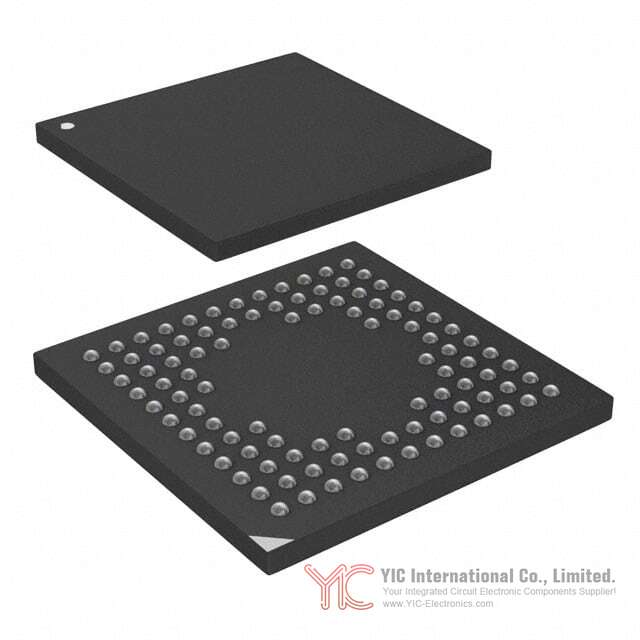
Ball grid array (BGA) packages provide superior thermal performance and reduced electromagnetic emissions compared to quad flat packages. The TFBGA64 package offers 64 balls in a 5 mm × 5 mm footprint with 0.5 mm pitch. The LFBGA100 package provides 100 balls in a 10 mm × 10 mm footprint with 0.8 mm pitch, and the UFBGA100 package offers 100 balls in a 7 mm × 7 mm footprint with 0.5 mm pitch, enabling high-density PCB designs.
Thermal characteristics vary by package type and operating conditions. The junction-to-ambient thermal resistance (θJA) ranges from approximately 40°C/W for the LQFP100 package to over 100°C/W for smaller packages. PCB design significantly influences thermal performance; proper thermal via placement and copper area allocation can reduce θJA by 20-30% compared to minimal PCB designs.
The STM32F103 series operates across a temperature range from -40°C to +85°C, accommodating industrial and automotive applications. Thermal derating curves provided in the datasheet indicate maximum power dissipation at elevated temperatures, ensuring reliable operation within specified thermal limits.
Electrical Performance and Operating Conditions of the STM32F103 Series
The STM32F103 series operates from a 2.0 V to 3.6 V supply voltage, with typical operating voltage of 3.3 V. The integrated voltage regulator maintains stable core voltage within ±5% of the nominal 1.2 V, despite supply voltage variations and load transients.
Current consumption varies significantly with operating mode and clock frequency. In Run mode at 72 MHz with code and data processing running from flash memory and peripherals enabled, typical current consumption ranges from 40 mA to 50 mA. When peripherals are disabled, current consumption decreases to approximately 30 mA. In Sleep mode, current consumption drops to approximately 10 mA, while Stop mode reduces consumption to 2-5 mA depending on regulator configuration. Standby mode achieves the lowest consumption at approximately 10 microamperes, with RTC operation consuming an additional 1-2 microamperes.
The STM32F103 series implements multiple reset sources including power-on reset, external reset pin, watchdog reset, and software reset. The power-on reset circuit maintains the processor in reset until the supply voltage reaches 1.8 V, ensuring proper initialization. The external reset pin (NRST) includes integrated debouncing and can be driven by external reset circuits or push-button switches.
The embedded reference voltage generator provides a stable 1.2 V reference for the ADCs and internal comparators. The reference voltage exhibits temperature coefficient of approximately 0.04%/°C, ensuring consistent ADC accuracy across the operating temperature range.
The STM32F103 series includes electromagnetic compatibility (EMC) features to minimize radiated and conducted emissions. The internal clock distribution includes multiple ground planes and shielding to reduce high-frequency noise. External decoupling capacitors on the power supply pins further attenuate high-frequency noise and stabilize the supply voltage during transient current changes.
Design Considerations and PCB Layout Guidelines for the STM32F103 Series
Proper PCB layout is fundamental to achieving reliable operation of the STM32F103 series. Power supply decoupling requires multiple capacitors placed close to the power supply pins. A 100 nF ceramic capacitor should be placed within 5 mm of each VDD pin, with additional bulk capacitance (10 µF to 47 µF) distributed across the board to handle transient current demands during processor state transitions.
The VREF+ pin requires dedicated decoupling with a 100 nF capacitor placed directly adjacent to the pin. If VREF+ is connected to VDDA (the analog supply), a ferrite bead or resistor should be inserted in series with the connection to isolate the analog supply from digital noise. Alternatively, VREF+ can be connected to a separate filtered supply derived from VDDA.
Clock circuit design significantly impacts system stability and EMC performance. External crystal oscillators should be placed close to the oscillator pins with short, direct traces. The crystal load capacitors should be placed immediately adjacent to the crystal pins, with the other terminal connected directly to ground through a via. Typical load capacitance values range from 15 pF to 25 pF, selected based on crystal specifications.
The reset pin (NRST) should include a 100 nF capacitor connected between the pin and ground, placed within 5 mm of the pin. An optional pull-up resistor (10 kΩ) can be added to ensure proper reset level during power-up transients. External reset circuits should drive the NRST pin through a series resistor (1 kΩ) to limit current and protect the internal reset circuit.
Signal integrity requires careful routing of high-speed signals such as SPI and USB interfaces. Differential pair routing with controlled impedance is recommended for USB signals. SPI clock and data signals should be routed with minimal length matching to reduce skew. Ground planes should be continuous beneath high-speed signal traces to provide return paths and minimize radiated emissions.
GPIO pins used for analog measurements should be isolated from digital switching signals through separate ground planes or guard traces. Analog input traces should be routed away from high-speed digital signals to minimize capacitive coupling and noise injection.
The STM32F103 series supports in-application programming through the SWD (Serial Wire Debug) interface. The SWD interface requires only two pins (SWDIO and SWDCLK) plus ground, enabling compact debug connectors. A 10 kΩ pull-up resistor on the SWDIO pin is recommended to ensure proper signal levels during debug operations.
Conclusion
The STM32F103 series delivers a balanced combination of processing performance, memory capacity, and peripheral integration suitable for diverse embedded applications. The 72 MHz ARM Cortex-M3 core provides sufficient computational capacity for real-time control and signal processing tasks, while the flexible clock management and low-power modes enable power-efficient operation in battery-powered systems. The comprehensive communication interfaces, including CAN, USB, and multiple serial protocols, facilitate integration into complex systems. The availability of nine package options accommodates various space and thermal requirements, from compact 36-pin packages to high-density 100-pin BGA packages. Careful attention to PCB layout, power supply decoupling, and clock circuit design ensures reliable operation and compliance with electromagnetic compatibility requirements.
Frequently Asked Questions (FAQ)
- Q1. What is the maximum operating frequency of the STM32F103 series, and how does it compare to other microcontroller families?
-
- A1. The STM32F103 series operates at a maximum frequency of 72 MHz, delivering 1.25 DMIPS per megahertz. This performance level positions the STM32F103 series in the mid-range performance category, suitable for applications requiring real-time control and moderate signal processing. Higher-performance variants in the STM32 family operate at frequencies up to 168 MHz, while lower-cost alternatives operate at 36 MHz or less. The 72 MHz frequency represents an optimal balance between performance, power consumption, and cost for many industrial and consumer applications.
- Q2. How much flash memory and SRAM does the STM32F103 series provide, and is it sufficient for typical embedded applications?
-
- A2. The STM32F103 series offers two memory density options: 64 KB of flash memory in the STM32F103x8 variant and 128 KB in the STM32F103xB variant. Both variants include 20 KB of embedded SRAM. For typical embedded applications such as motor control, sensor data acquisition, and communication protocol implementation, the 128 KB flash memory provides adequate capacity for application code, constant data, and firmware updates. Applications requiring larger code footprints, such as complex signal processing or advanced user interfaces, may require higher-density variants. The 20 KB SRAM supports real-time data processing and stack operations for most applications; however, applications requiring large data buffers or complex data structures may benefit from external SRAM expansion.
- Q3. What low-power modes does the STM32F103 series support, and which mode should be selected for different application scenarios?
-
- A3. The STM32F103 series provides three low-power modes: Sleep mode, Stop mode, and Standby mode. Sleep mode halts the processor clock while maintaining peripheral operation, consuming approximately 10 mA and enabling wake-up within microseconds. This mode suits applications requiring frequent activity bursts with minimal idle periods. Stop mode powers down the processor and most peripherals while retaining memory contents, consuming 2-5 mA depending on regulator configuration and enabling wake-up within milliseconds. This mode is appropriate for applications with extended idle periods and occasional activity. Standby mode disables the processor and most peripherals, consuming approximately 10 microamperes, and requires a reset sequence for wake-up. This mode suits battery-powered devices with infrequent activity requirements, such as environmental monitoring systems that wake periodically to acquire measurements. The VBAT supply pin enables RTC operation and backup register retention during Standby mode, allowing time-stamped data logging even when main power is disconnected.
- Q4. How many communication interfaces does the STM32F103 series provide, and which applications benefit from each interface type?
-
- A4. The STM32F103 series integrates nine communication interfaces: three UART/USART interfaces, two SPI interfaces, two I2C interfaces, one CAN interface, and one USB 2.0 interface. UART interfaces support serial communication with sensors, GPS modules, and debugging terminals, with support for IrDA and LIN protocols enabling specialized applications. SPI interfaces provide high-speed synchronous communication with external memory, display controllers, and sensor interfaces at data rates up to 18 Mbit/s. I2C interfaces facilitate communication with temperature sensors, humidity sensors, and power management devices using a two-wire protocol. The CAN interface enables automotive and industrial control applications requiring deterministic communication and message prioritization. The USB 2.0 interface supports communication with host computers and USB peripherals, enabling rapid development of USB-based data acquisition and control systems. Applications typically utilize multiple interfaces simultaneously; for example, a motor control system might use CAN for network communication, SPI for sensor interfaces, and UART for debugging.
- Q5. What are the ADC specifications of the STM32F103 series, and how do they affect measurement accuracy in sensor applications?
-
- A5. The STM32F103 series incorporates two independent 12-bit ADCs with up to 16 input channels each, supporting conversion times as fast as 1 microsecond per sample. The 12-bit resolution provides 4096 discrete levels across the 0 V to 3.6 V input range, corresponding to approximately 0.88 mV per least significant bit. This resolution is suitable for most sensor applications including temperature measurement, pressure sensing, and analog signal monitoring. The dual sample-and-hold capability enables simultaneous sampling of two channels, important for applications requiring phase-aligned measurements such as three-phase power measurement. The ADC accuracy is affected by reference voltage stability, input impedance, and sampling time. The internal temperature sensor provides ±1.5°C accuracy, adequate for thermal monitoring but insufficient for precision temperature measurement applications requiring external precision sensors. For applications requiring higher resolution or accuracy, external ADCs with 16-bit or 24-bit resolution can be interfaced through SPI or I2C.
- Q6. What package options are available for the STM32F103 series, and how should the selection be made based on application requirements?
-
- A6. The STM32F103 series is available in nine package options ranging from 36 pins to 100 pins. The VFQFPN36 package (6 mm × 6 mm) suits space-constrained applications where PCB area is limited. The LQFP48 and UFQFPN48 packages (7 mm × 7 mm) provide moderate I/O capacity in compact form factors. The LQFP64 package (10 mm × 10 mm) offers 64 pins with traditional quad flat package compatibility. The LQFP100 package (14 mm × 14 mm) provides maximum I/O capacity in a quad flat package. Ball grid array packages (TFBGA64, LFBGA100, UFBGA100) offer superior thermal performance and reduced electromagnetic emissions compared to quad flat packages, making them suitable for high-performance applications and designs requiring thermal management. Package selection should consider I/O requirements, thermal dissipation needs, PCB assembly capabilities, and cost constraints. Applications with moderate I/O requirements and thermal dissipation below 1 W typically use LQFP packages, while high-density applications or those requiring superior thermal performance use BGA packages.
- Q7. What are the power supply requirements for the STM32F103 series, and what decoupling strategy should be implemented?
-
- A7. The STM32F103 series operates from a 2.0 V to 3.6 V supply voltage, with typical operating voltage of 3.3 V. The integrated voltage regulator maintains stable core voltage despite supply fluctuations. Proper power supply decoupling is fundamental to reliable operation. A 100 nF ceramic capacitor should be placed within 5 mm of each VDD pin to attenuate high-frequency noise. Additional bulk capacitance (10 µF to 47 µF) should be distributed across the board to handle transient current demands during processor state transitions. The VREF+ pin requires dedicated 100 nF decoupling placed directly adjacent to the pin. If VREF+ is connected to VDDA, a ferrite bead or resistor should isolate the analog supply from digital noise. The VBAT pin, which powers the RTC and backup registers, should include a 100 nF capacitor and can be connected to an external backup battery to maintain RTC operation during main power loss. Inadequate decoupling can result in supply voltage ripple exceeding 100 mV, causing processor malfunction, ADC measurement errors, and increased electromagnetic emissions.
- Q8. How does the STM32F103 series support in-application programming and firmware updates?
-
- A8. The STM32F103 series supports in-application programming through the Serial Wire Debug (SWD) interface, which requires only two signal pins (SWDIO and SWDCLK) plus ground. The SWD interface enables connection to standard debug probes such as ST-Link or J-Link, allowing firmware download and debugging without removing the device from the application circuit. The dual-bank flash memory architecture allows firmware updates without erasing the entire flash memory, enabling seamless firmware updates in deployed systems. Bootloader firmware can be implemented to support firmware updates through communication interfaces such as UART, CAN, or USB, enabling remote firmware updates over network connections. The flash memory supports 10,000 programming cycles per location, adequate for development and field updates but not suitable for frequent runtime data logging. For applications requiring frequent data storage, external EEPROM or flash memory should be interfaced through SPI or I2C.
- Q9. What are the electromagnetic compatibility (EMC) considerations for the STM32F103 series, and how can radiated emissions be minimized?
-
- A9. The STM32F103 series operates at clock frequencies up to 72 MHz, generating high-frequency harmonics that can radiate electromagnetic energy if not properly managed. Radiated emissions can be minimized through several design practices: continuous ground planes beneath signal traces provide return paths and reduce loop area; multiple power supply decoupling capacitors placed close to power pins attenuate high-frequency noise; clock circuits should be placed close to the processor with short, direct traces; high-speed signals such as SPI and USB should be routed with controlled impedance and minimal length matching; and shielding can be applied around clock circuits and high-speed signal traces. The STM32F103 series includes internal clock distribution shielding and multiple ground planes to reduce internal noise generation. External ferrite beads or resistors on clock input pins can further attenuate high-frequency noise. Compliance with electromagnetic compatibility standards such as FCC Part 15 or CE marking typically requires careful PCB layout, proper shielding, and sometimes external filtering.
- Q10. What are the typical current consumption values for the STM32F103 series in different operating modes, and how can power consumption be optimized?
-
- A10. Current consumption varies significantly with operating mode and clock frequency. In Run mode at 72 MHz with code and data processing running from flash memory and peripherals enabled, typical current consumption is 40-50 mA. When peripherals are disabled, consumption decreases to approximately 30 mA. In Sleep mode, consumption drops to approximately 10 mA. In Stop mode with the regulator in Run mode, consumption is 2-5 mA, and with the regulator in Low-power mode, consumption decreases further to 1-2 mA. Standby mode achieves the lowest consumption at approximately 10 microamperes. Power consumption can be optimized through several strategies: reducing clock frequency for non-time-critical operations; disabling unused peripherals; utilizing low-power modes during idle periods; and implementing efficient interrupt handlers to minimize wake-up latency. For battery-powered applications, the combination of Standby mode with periodic wake-ups can extend battery life from days to months depending on activity requirements. The VBAT supply pin enables RTC operation during Standby mode, consuming an additional 1-2 microamperes, allowing time-stamped data logging with minimal power consumption.
- Q11. How should external crystal oscillators be selected and connected to the STM32F103 series?
-
- A11. The STM32F103 series supports external crystal oscillators in the 4 MHz to 16 MHz range for the high-speed external (HSE) oscillator and 32.768 kHz for the low-speed external (LSE) oscillator. Crystal selection should consider frequency accuracy, temperature stability, and load capacitance specifications. Typical load capacitance values range from 15 pF to 25 pF, selected based on crystal specifications and PCB parasitic capacitance. The crystal should be placed close to the oscillator pins with short, direct traces to minimize parasitic inductance. Load capacitors should be placed immediately adjacent to the crystal pins with the other terminal connected directly to ground through a via. The oscillator circuit should be isolated from digital switching signals through separate ground planes or guard traces to minimize noise injection. A series resistor (1 kΩ) can be inserted between the oscillator output and the processor pin to limit current and improve noise immunity. For applications requiring high frequency accuracy, temperature-compensated crystal oscillators (TCXO) or oven-controlled crystal oscillators (OCXO) can be used, though these require external oscillator modules rather than discrete crystals.
- Q12. What debugging and development tools are recommended for the STM32F103 series?
-
- A12. The STM32F103 series supports debugging through the Serial Wire Debug (SWD) interface, compatible with standard debug probes including ST-Link, J-Link, and other CMSIS-DAP compliant probes. The STM32CubeIDE integrated development environment provides a comprehensive development platform with code generation, compilation, debugging, and programming capabilities. The STM32CubeMX tool simplifies peripheral configuration and code generation, reducing development time for complex applications. Open-source tools including GCC compiler, OpenOCD debugger, and GDB provide alternative development platforms for developers preferring open-source toolchains. The STM32F103 series includes a 96-bit unique ID that can be used for device identification and secure bootloader implementation. Development boards such as the STM32F103 Nucleo boards provide integrated ST-Link debuggers and example code, enabling rapid prototyping and evaluation. For production programming, standalone programmers supporting the SWD interface enable efficient device programming without development boards.