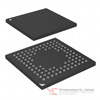
STM32F103VBT6 product overview and STM32F103xB family positioning
The STM32F103VBT6 is a member of the STMicroelectronics STM32F1 series, specifically the STM32F103xB medium-density group. It is a 32-bit single-core microcontroller built around the ARM Cortex-M3 CPU and operates at frequencies up to 72 MHz. The device integrates 128 KB of Flash memory and 20 KB of SRAM, and in this version it is housed in a 100-pin LQFP package.
Within the STM32F103x8 and STM32F103xB family, the STM32F103VBT6 belongs to the variants that combine 128 KB Flash with an expanded peripheral set that includes USB, CAN, seven timers, two ADCs, and up to nine communication interfaces. The family is designed for embedded control applications that require a balance of processing capability, communication flexibility, analog integration, and broad I/O availability.
The documented feature set includes a 72 MHz ARM 32-bit Cortex-M3 core delivering 1.25 DMIPS/MHz based on Dhrystone 2.1, operation from a 2.0 V to 3.6 V supply range, up to 80 fast I/O ports across the family, and a set of embedded peripherals that covers digital control, motor-control PWM, analog acquisition, watchdog supervision, and multiple serial buses. The STM32F103VBT6 itself is described as an active product from STMicroelectronics and supports surface-mount assembly in a 100-LQFP package.
STM32F103VBT6 processing architecture, memory resources, and performance profile
At the center of the STM32F103VBT6 is the ARM Cortex-M3 processor core. This architecture provides 32-bit processing capability and supports embedded Flash and SRAM operation with a maximum clock frequency of 72 MHz. STMicroelectronics specifies 1.25 DMIPS/MHz performance and 0 wait-state memory access under the documented operating conditions, giving the device a profile suited to real-time control and communication-heavy embedded tasks.
The processor includes single-cycle multiplication and hardware division. In practical terms, this reduces execution overhead for control loops, sensor calculations, and protocol processing compared with devices that rely on software division routines. For example, in a motor-control or metering design where scaling and filtering equations are executed repeatedly, hardware arithmetic support shortens execution paths and helps preserve CPU time for communication and supervisory tasks.
Memory resources on the STM32F103VBT6 include 128 KB of embedded Flash and 20 KB of SRAM. The Flash memory stores the application code and nonvolatile program data, while SRAM supports active variables, buffers, and stack space during runtime. The datasheet also lists Flash endurance and data retention characteristics, indicating that memory behavior is formally characterized as part of device reliability planning.
The microcontroller also integrates a CRC calculation unit. This block performs cyclic redundancy check operations in hardware, which can be used to verify data integrity without consuming the same level of CPU cycles as a software-only approach. This is useful in firmware validation, communication packet checking, or boot-time image verification.
STM32F103VBT6 clock system, reset behavior, boot modes, and supply architecture
The STM32F103VBT6 provides a flexible clock structure with both internal and external clock sources. The documented options include an internal 8 MHz factory-trimmed RC oscillator, an internal 40 kHz RC oscillator, and support for a 4 MHz to 16 MHz crystal oscillator. A 32 kHz oscillator is available for the RTC, with calibration support. The clock system also includes a PLL for CPU clock generation.
This combination allows designers to choose between lower external component count and tighter timing control. A design can begin with the internal RC source for simplified hardware and then use an external crystal where communication timing, RTC precision, or frequency stability needs tighter control. The documentation includes oscillator characteristics for HSE, HSI, LSE, and LSI sources, as well as PLL characteristics and example crystal application circuits.
Reset and supply management functions are integrated into the STM32F103VBT6. These include POR, PDR, and a programmable voltage detector. The power supply supervisor monitors voltage conditions and supports controlled device behavior during startup and undervoltage events. The device also contains an embedded voltage regulator.
Boot configuration is another key part of system initialization. The STM32F103VBT6 supports boot modes that determine how the device starts after reset. This allows the system to boot from different mapped memories depending on configuration, which can assist with production programming, field firmware maintenance, or recovery procedures.
The application supply and I/O range is specified from 2.0 V to 3.6 V. This range gives compatibility with common 3.3 V embedded power rails while allowing operation under lower-voltage conditions. The documentation also covers operating conditions during power-up and power-down, helping define how the device should be sequenced in the larger system.
STM32F103VBT6 low-power operation, supervisory functions, and RTC/backup domain
The STM32F103VBT6 supports Sleep, Stop, and Standby modes. These operating states allow firmware to trade immediate responsiveness against reduced current consumption depending on system activity. The documentation includes both typical and maximum current consumption data for Run, Sleep, Stop, and Standby modes, along with wakeup timing information.
Sleep mode keeps more of the system context active and is suitable when the application needs fast return to execution. Stop mode reduces activity further and can be used when the processor can pause while retaining more state than Standby. Standby mode targets the lowest-power state among the listed modes and is typically selected when wake events are infrequent and reduced consumption is prioritized over active context retention.
The STM32F103VBT6 includes two watchdog timers: independent and window watchdogs. These peripherals help supervise firmware execution by resetting the system if the software fails to refresh them according to the expected pattern. The distinction between the two watchdog styles gives flexibility. An independent watchdog can cover broad system hangs, while a window watchdog can also detect incorrectly timed refresh behavior.
The device includes an RTC and backup registers, with VBAT support for maintaining the backup domain. This means timekeeping and selected retained information can persist while the main supply is absent, provided VBAT remains available. In a real design, this can support timestamp continuity, event logging references, or retained configuration flags after main power cycling.
STM32F103VBT6 DMA engine, interrupt system, and data-handling support blocks
The STM32F103VBT6 integrates a 7-channel DMA controller. According to the documentation, the DMA supports transfers involving timers, ADCs, SPIs, I2Cs, and USARTs. This allows data to move between peripherals and memory with reduced CPU involvement.
DMA becomes particularly useful when multiple subsystems run simultaneously. For instance, the ADC can sample signals while a USART exchanges data and a timer generates PWM outputs. Instead of the CPU servicing every transfer directly, DMA can handle repetitive movement of samples or data frames, reducing interrupt load and improving timing consistency.
On the control side, the STM32F103VBT6 includes a nested vectored interrupt controller (NVIC) and an external interrupt/event controller (EXTI). The NVIC supports prioritized interrupt handling at the core level, while EXTI maps external sources into interrupt or event responses. Across the family, I/O lines can be mapped onto 16 external interrupt vectors, allowing flexible association between external signals and interrupt behavior.
The integrated CRC unit, DMA, NVIC, and EXTI together form a practical support set around the CPU core. Rather than relying on raw clock speed alone, the device distributes common embedded functions into dedicated hardware blocks, which helps preserve processor bandwidth for application-specific tasks.
STM32F103VBT6 timer subsystem and motor-control-related capabilities
Timer resources are a defining part of the STM32F103VBT6 feature set. The STM32F103xB documentation specifies seven timers in total. These include three 16-bit timers, each with up to four input capture, output compare, PWM, or pulse counter channels, and support for quadrature encoder input. There is also a 16-bit motor-control PWM timer with dead-time generation and emergency stop functionality. In addition, the device includes a SysTick timer implemented as a 24-bit downcounter.
The standard 16-bit timers can be used for interval timing, signal measurement, waveform generation, pulse counting, and encoder interfacing. In a motion or positioning application, quadrature encoder support allows the timer to track rotational movement directly from incremental encoder signals. In a digital power or actuator design, PWM and output compare functions can be used to create switching or drive signals with predictable timing relationships.
The motor-control PWM timer extends this capability by adding dead-time generation and emergency stop features. Dead-time insertion is relevant when driving half-bridge or full-bridge power stages, where switching overlap must be controlled to avoid shoot-through current paths. Emergency stop support provides a hardware-assisted response path for fault conditions.
Two watchdog timers complement the broader timer subsystem, and the inclusion of SysTick gives software a standard periodic timing base for operating systems, scheduler ticks, or timebase services.
STM32F103VBT6 communication interfaces including I2C, USART, SPI, CAN, and USB
The STM32F103VBT6 offers a broad communication set, documented as up to nine communication interfaces. These include up to two I2C interfaces with SMBus/PMBus support, up to three USARTs with ISO 7816, LIN, IrDA capability, and modem control, up to two SPI interfaces operating up to 18 Mbit/s, one CAN 2.0B Active interface, and one USB 2.0 full-speed interface.
The availability of multiple protocol types on one microcontroller makes the STM32F103VBT6 suitable for systems that need to bridge field connectivity, local peripheral links, and host communication. A single design might use SPI for a display or external converter, I2C for sensors or supervisory ICs, USART for service or wireless modules, CAN for networked control, and USB for configuration or firmware interaction.
The I2C interfaces support SMBus and PMBus-related usage, expanding compatibility with power-management and system-monitoring devices. The USART blocks cover both synchronous and asynchronous communication scenarios and include protocol-oriented features that broaden their use in industrial and instrumentation contexts. The SPI interfaces reach 18 Mbit/s, which is useful for comparatively fast peripheral data exchange.
The CAN 2.0B Active controller allows the STM32F103VBT6 to participate in robust differential networked systems commonly used in distributed control architectures. The USB 2.0 full-speed interface provides direct USB connectivity without requiring an external USB controller. The datasheet includes startup timing and electrical characteristics for USB, as well as timing data for I2C and SPI interfaces.
STM32F103VBT6 analog features, ADC subsystem, and on-chip temperature sensor
Analog integration in the STM32F103VBT6 is centered on two 12-bit ADCs with 1 µs conversion time and support for up to 16 channels. The conversion range is specified from 0 V to 3.6 V, and the ADCs include dual sample-and-hold capability. This dual capability can improve handling of multiple analog signals, particularly where synchronized or closely timed sampling is useful.
The ADC subsystem supports acquisition tasks such as sensor monitoring, voltage measurement, current observation through conditioned analog signals, and general embedded data collection. The documentation includes ADC electrical characteristics, input constraints such as RAIN max for a given ADC clock, connection diagrams, and decoupling guidance for VDDA and VREF+ arrangements.
In practical design terms, these supporting details matter because ADC accuracy depends not only on converter resolution but also on source impedance, reference routing, and supply noise behavior. For example, a 12-bit converter can only approach its documented accuracy if the analog input network and reference decoupling follow the recommended conditions shown in the documentation.
The STM32F103VBT6 also integrates an on-chip temperature sensor. This provides an internal temperature-related measurement source that can be digitized through the ADC subsystem. It is useful for thermal trend monitoring, compensation schemes, or system diagnostics where a relative on-chip temperature indication is sufficient.
STM32F103VBT6 GPIO structure, external interrupt mapping, and debug access
The STM32F103VBT6 sits in the higher pin-count section of the family and supports extensive GPIO availability. Across the STM32F103x8/xB family, there are 26, 37, 51, or 80 I/Os depending on package. In the 100-pin versions, the family reaches the upper end of this range. The I/Os are described as fast, and almost all are 5 V-tolerant.
This I/O structure allows the device to connect to mixed-voltage digital environments without requiring level shifting on every signal, though actual interface design must still follow the electrical characteristics and pin constraints in the datasheet. The ability to map I/O lines onto 16 external interrupt vectors adds flexibility in assigning event-driven inputs.
The STM32F103VBT6 also provides serial wire debug and JTAG interfaces through the SWJ-DP debug port. This gives support for development, in-system debugging, and production-level test or programming workflows. The presence of both SWD and JTAG makes the device adaptable to different toolchains and board-space tradeoffs, since SWD can be used where connector pin count needs to be minimized.
The documentation also specifies NRST pin characteristics and includes a recommended NRST pin protection approach. This is useful in board design because reset-line integrity often affects startup reliability, debug entry, and recovery behavior after electrical disturbances.
STM32F103VBT6 package, pin-count options, and family-level compatibility
Although this article centers on the STM32F103VBT6 in a 100-pin LQFP package, the wider STM32F103x8/xB family is offered in several package styles and pin counts. Listed package options include VFQFPN36, LQFP48, LQFP64, LQFP100, LFBGA100, and TFBGA64.
The family documentation highlights compatibility throughout the family. This is useful when a design begins on one package or memory density and later needs migration to another version with different pin count, package style, or memory size. Such migration options can help align board area, I/O count, and peripheral availability with the evolving design.
For the STM32F103VBT6 specifically, the 100-pin LQFP package provides access to the larger I/O complement of the family and supports applications that need many peripheral connections simultaneously. This package is mechanically documented with outline and recommended footprint information, making it easier to integrate into PCB layout workflows.
STM32F103VBT6 memory map and electrical operating conditions
The STM32F103VBT6 documentation includes a defined memory map, which is relevant to boot behavior, peripheral access, firmware placement, and debugger visibility. Memory mapping determines where Flash, SRAM, peripheral registers, and boot-related regions appear in the processor address space.
From an electrical perspective, the documented operating range for the STM32F103VBT6 is 2.0 V to 3.6 V. The operating temperature listed for the provided device data is -40°C to 85°C ambient. The datasheet also includes absolute maximum ratings, general operating conditions, electrical sensitivity data, I/O static and AC characteristics, and EMC-related characteristics.
The availability of both operating conditions and absolute maximum ratings matters because these are not interchangeable. Operating conditions describe the intended functional region, while absolute maximum ratings define stress limits that are not meant for continuous use. This distinction guides power rail tolerance analysis, external signal conditioning, and fault-case review during hardware design.
The device is listed as RoHS3 compliant and REACH unaffected, and its moisture sensitivity level is MSL 3 with 168 hours. These data points relate to assembly handling and environmental compliance rather than runtime electrical behavior, but they still influence manufacturing planning for boards using the STM32F103VBT6.
STM32F103VBT6 clock source characteristics, current consumption behavior, and design considerations
The STM32F103VBT6 datasheet provides detailed current consumption information across operating modes and conditions. These include maximum current in Run mode with code executing from Flash or RAM, Sleep mode current, and typical and maximum values in Stop and Standby modes. There is also peripheral current consumption data.
This level of characterization makes it possible to estimate power profiles based on operating mode selection, code location, active frequency, and enabled peripherals. For example, a design that samples data periodically and transmits in bursts may spend most of its time in Stop mode, wake to Run mode for ADC and communication activity, then return to a reduced-power state. The documented mode-by-mode current data supports this type of budget analysis.
Clock source selection affects both power and timing behavior. Internal oscillators reduce bill-of-material complexity, while external oscillators can offer timing characteristics better aligned with communication precision or RTC behavior. The datasheet includes external clock timing diagrams, oscillator characteristics, PLL data, and typical application circuits for both an 8 MHz crystal and a 32.768 kHz crystal.
For analog sections, the documentation shows recommended power supply and reference decoupling arrangements. These are not isolated analog notes; they connect directly to ADC accuracy and noise behavior. Similarly, the current consumption measurement scheme described in the datasheet helps interpret the published numbers correctly by clarifying the associated conditions.
STM32F103VBT6 package thermal and mechanical characteristics
For the STM32F103VBT6 in LQFP100 form, mechanical package data and recommended footprint information are provided in the documentation. These dimensions guide PCB land pattern generation, assembly process setup, and enclosure compatibility checks.
Thermal characteristics are also documented. Thermal performance affects allowable power dissipation relative to ambient temperature, and the documentation includes package thermal data and an example relationship involving LQFP100 power dissipation versus ambient temperature. This information supports evaluation of junction heating in applications where the MCU remains active for long intervals, drives many I/Os, or uses multiple on-chip peripherals concurrently.
Where several interfaces, timers, ADCs, and CPU activity are enabled together, the total device power can rise enough that package thermal behavior becomes part of system verification. In many embedded boards the microcontroller is not the dominant heat source, but the thermal tables still provide the basis for confirming whether the chosen package and ambient range align with the application envelope.
Conclusion
The STM32F103VBT6 from STMicroelectronics combines a 72 MHz ARM Cortex-M3 core, 128 KB Flash, 20 KB SRAM, and a broad peripheral mix inside a 100-pin LQFP package. Its documented feature set spans dual 12-bit ADCs, CAN, USB full-speed, multiple I2C/USART/SPI interfaces, a 7-channel DMA controller, extensive timer resources, low-power modes, RTC and backup support, and integrated reset and voltage supervision functions.
The device fits within the STM32F103xB medium-density family, where compatibility across package and density options provides migration flexibility. Its datasheet shows not only functional blocks, but also the electrical, timing, current-consumption, oscillator, package, and thermal characterization needed to translate feature lists into board-level design decisions. When viewed as a whole, the STM32F103VBT6 is defined not by any single peripheral, but by the way its processing core, communication interfaces, analog subsystem, timer architecture, and power-management options are combined into a balanced embedded control platform.
Frequently Asked Questions (FAQ)
- Q1. What processor core does the STM32F103VBT6 use?
-
- A1. The STM32F103VBT6 uses an ARM Cortex-M3 32-bit CPU and supports operation up to 72 MHz.
- Q2. How much memory is integrated in the STM32F103VBT6?
-
- A2. The STM32F103VBT6 integrates 128 KB of Flash memory and 20 KB of SRAM.
- Q3. Which STM32 family group does the STM32F103VBT6 belong to?
-
- A3. The STM32F103VBT6 belongs to the STM32F1 series and specifically to the STM32F103xB medium-density group.
- Q4. What package is used by the STM32F103VBT6?
-
- A4. The STM32F103VBT6 is provided in a 100-pin LQFP package.
- Q5. What is the maximum CPU frequency of the STM32F103VBT6?
-
- A5. The maximum documented CPU frequency is 72 MHz.
- Q6. What is the supply voltage range of the STM32F103VBT6?
-
- A6. The application supply and I/O operating range is 2.0 V to 3.6 V.
- Q7. What operating temperature range is listed for the STM32F103VBT6?
-
- A7. The listed ambient operating temperature range is -40°C to 85°C.
- Q8. Does the STM32F103VBT6 include CAN and USB?
-
- A8. Yes. The STM32F103VBT6 includes a CAN 2.0B Active interface and a USB 2.0 full-speed interface.
- Q9. How many ADCs are available in the STM32F103VBT6?
-
- A9. The device includes two 12-bit ADCs.
- Q10. How fast are the ADCs in the STM32F103VBT6?
-
- A10. The ADCs are specified at 1 µs conversion time.
- Q11. How many ADC input channels does the STM32F103VBT6 support?
-
- A11. The ADC subsystem supports up to 16 channels.
- Q12. What analog input range is specified for the STM32F103VBT6 ADCs?
-
- A12. The conversion range is documented as 0 V to 3.6 V.
- Q13. Does the STM32F103VBT6 include an internal temperature sensor?
-
- A13. Yes. The device includes an on-chip temperature sensor characterized in the datasheet.
- Q14. What communication interfaces are available on the STM32F103VBT6?
-
- A14. The documented interfaces include up to 2 I2C, up to 3 USART, up to 2 SPI, CAN, and USB full-speed.
- Q15. Does the STM32F103VBT6 support SMBus or PMBus-related communication?
-
- A15. Yes. Its I2C interfaces support SMBus/PMBus.
- Q16. What extra protocol-related features are supported by the STM32F103VBT6 USARTs?
-
- A16. The USARTs support ISO 7816 interface functions, LIN, IrDA capability, and modem control.
- Q17. What SPI speed is specified for the STM32F103VBT6?
-
- A17. The SPI interfaces are specified up to 18 Mbit/s.
- Q18. How many timers are included in the STM32F103VBT6 feature set?
-
- A18. The STM32F103xB documentation specifies seven timers, including general-purpose timers and a motor-control PWM timer.
- Q19. Does the STM32F103VBT6 support quadrature encoder input?
-
- A19. Yes. The 16-bit timers support quadrature encoder input for incremental encoder applications.
- Q20. Does the STM32F103VBT6 provide motor-control PWM functions?
-
- A20. Yes. It includes a 16-bit motor-control PWM timer with dead-time generation and emergency stop.
- Q21. What watchdog functions are available in the STM32F103VBT6?
-
- A21. The device includes two watchdog timers: an Independent watchdog and a Window watchdog.
- Q22. Does the STM32F103VBT6 support low-power operation?
-
- A22. Yes. It supports Sleep, Stop, and Standby modes, with current-consumption data provided for each mode.
- Q23. Does the STM32F103VBT6 include RTC support?
-
- A23. Yes. It includes an RTC and backup registers.
- Q24. Can the STM32F103VBT6 keep RTC and backup data when the main supply is removed?
-
- A24. Yes. The device supports a VBAT supply for the RTC and backup registers.
- Q25. What clock sources are available in the STM32F103VBT6?
-
- A25. The device supports an internal 8 MHz factory-trimmed RC oscillator, an internal 40 kHz RC oscillator, an external 4 MHz to 16 MHz crystal oscillator, and a 32 kHz oscillator for the RTC.
- Q26. Does the STM32F103VBT6 include a PLL?
-
- A26. Yes. A PLL is provided for CPU clock generation.
- Q27. What reset and voltage-monitoring functions are integrated in the STM32F103VBT6?
-
- A27. The device includes POR, PDR, and a programmable voltage detector, along with an embedded voltage regulator and power supply supervisor functions.
- Q28. Does the STM32F103VBT6 support DMA?
-
- A28. Yes. It integrates a 7-channel DMA controller.
- Q29. Which peripherals can use DMA in the STM32F103VBT6?
-
- A29. According to the documentation, DMA supports timers, ADCs, SPIs, I2Cs, and USARTs.
- Q30. What debug interfaces are supported by the STM32F103VBT6?
-
- A30. The STM32F103VBT6 supports Serial Wire Debug (SWD) and JTAG through the SWJ-DP debug port.
- Q31. How many external interrupt vectors can be associated with I/Os in the STM32F103VBT6 family?
-
- A31. The family supports mapping onto 16 external interrupt vectors.
- Q32. Are the I/Os on the STM32F103VBT6 5 V-tolerant?
-
- A32. The family documentation states that almost all I/Os are 5 V-tolerant.
- Q33. Does the STM32F103VBT6 include a hardware CRC unit?
-
- A33. Yes. It includes a CRC calculation unit for cyclic redundancy check operations.
- Q34. What makes the STM32F103VBT6 suitable for mixed-function embedded designs?
-
- A34. Its combination of a 72 MHz Cortex-M3 core, 128 KB Flash, dual ADCs, CAN, USB, multiple serial interfaces, DMA, timer resources, RTC/backup support, and low-power modes allows one device to cover control, acquisition, and communication tasks within a single MCU.
- Q35. What should be checked when using the STM32F103VBT6 ADCs in a precision measurement design?
-
- A35. The datasheet’s ADC characteristics, source impedance guidance, connection diagrams, and VDDA/VREF+ decoupling recommendations should be reviewed, because converter accuracy depends on the surrounding analog network as well as on ADC resolution.
- Q36. What should be reviewed when choosing between internal and external clocks for the STM32F103VBT6?
-
- A36. The datasheet sections on HSE, HSI, LSE, LSI, PLL characteristics, external clock timing, and the example crystal application circuits should be compared against the timing stability, RTC behavior, and component-count goals of the design.
- Q37. Why does the STM32F103VBT6 datasheet provide current data for code running from Flash and from RAM?
-
- A37. Execution location can affect current consumption. The separate characterization helps estimate power more accurately for applications that optimize runtime behavior by selecting where code executes.
- Q38. What family-level migration flexibility is associated with the STM32F103VBT6?
-
- A38. The STM32F103x8/xB family includes multiple package options such as VFQFPN36, LQFP48, LQFP64, LQFP100, LFBGA100, and TFBGA64, with documented family compatibility that can support migration across package sizes or related variants.