Product overview of STM32F103VDH6
STM32F103VDH6 is a high‑density 32‑bit microcontroller from STMicroelectronics based on the Arm Cortex‑M3 core, operating up to 72 MHz. It belongs to the STM32F103xD family and is part of the broader STM32F103xC/xD/xE performance line.
Key integrated resources of STM32F103VDH6 include 384 Kbytes of embedded Flash memory and up to 64 Kbytes of SRAM, combined with a rich set of peripherals: up to 11 timers, three 12‑bit ADCs, two 12‑bit DAC channels, multiple communication interfaces (up to two I2C, five USART, three SPI with I2S capability, CAN, USB 2.0 full‑speed, and SDIO), and a 12‑channel DMA controller.
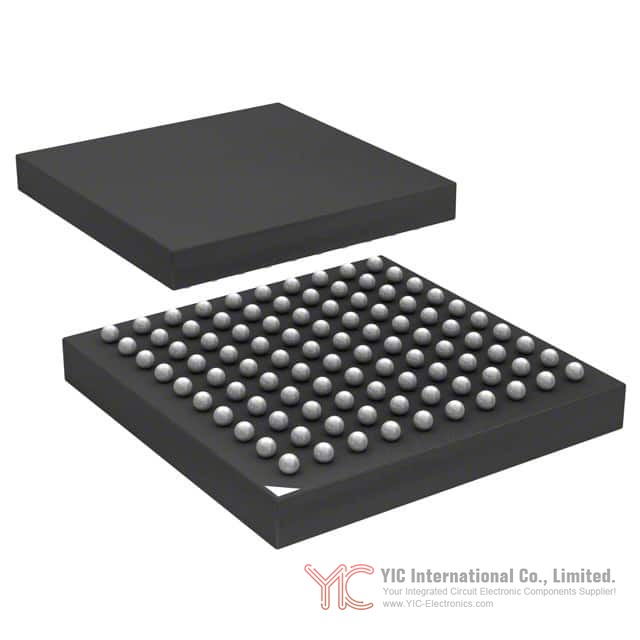
STM32F103VDH6 is supplied in a 100‑ball LFBGA package (10 × 10 mm), providing up to 80 I/O pins. All I/O pins operate from a single 2.0–3.6 V supply and most are 5 V tolerant. The device supports operating temperature from –40 °C to +85 °C (TA), and complies with RoHS3, with a moisture sensitivity level (MSL) of 3 (168 hours).
With its combination of Flash density, RAM size, integrated analog, multiple timers and communication interfaces, STM32F103VDH6 is suitable for embedded applications that require advanced control, communication and mixed‑signal processing in a compact BGA footprint.
2.
Core architecture and performance features of STM32F103VDH6
STM32F103VDH6 integrates a 32‑bit Arm Cortex‑M3 CPU core running at up to 72 MHz. The core achieves 1.25 DMIPS/MHz (Dhrystone 2.1) at zero wait‑state Flash access, providing a well‑balanced performance profile for real‑time control and communication tasks.
Key core‑related features of STM32F103VDH6 include:
- Single‑cycle multiplication and hardware division, supporting efficient fixed‑point arithmetic and signal processing.
- A nested vectored interrupt controller (NVIC) that manages multiple interrupt sources with vectorized, prioritized and low‑latency handling. This architecture allows deterministic response to external and internal events.
- A SysTick timer, which is a 24‑bit downcounter tightly integrated with the core. It supports periodic interrupts, typically used for OS tick generation or time base functions.
- Embedded Trace Macrocell (ETM) support for advanced trace capabilities, allowing instruction trace in complex debugging scenarios.
- Serial Wire Debug (SWD) and JTAG debug ports, enabling standard debug tools to access the core and on‑chip resources.
In practical terms, STM32F103VDH6’s core performance and interrupt architecture allow it to handle tasks such as motor control, communication stacks, and sensor data acquisition concurrently, by combining deterministic interrupt handling with adequate processing bandwidth.
3.
Memory subsystem and FSMC expansion in STM32F103VDH6
STM32F103VDH6 offers an internal memory subsystem optimized for code and data storage, along with external memory expansion via the Flexible Static Memory Controller (FSMC).
Internal memory resources of STM32F103VDH6:
- Embedded Flash memory: 384 Kbytes.
This non‑volatile memory is used to store application code and constant data. It supports 0 wait‑state operation at appropriate supply voltage and frequency, preserving performance at 72 MHz.
- Embedded SRAM: up to 64 Kbytes.
This memory is used for stack, heap, variables, buffers and runtime data. The size allows for moderately complex firmware, communication buffers (e.g., USB, CAN, SDIO), and control algorithms.
Flash memory in STM32F103VDH6 supports endurance and data retention characteristics suitable for firmware storage. The datasheet defines Flash memory characteristics including programming times, erase times, and endurance figures in dedicated tables.
For external expansion, STM32F103VDH6 integrates an FSMC:
- FSMC supports up to four Chip Select signals, enabling connection of multiple external memory devices.
- Compatible with external devices such as:
- SRAM
- PSRAM
- NOR Flash
- NAND Flash
- CompactFlash (PC Card)
- Supports both asynchronous and synchronous modes, multiplexed and non‑multiplexed address/data buses.
The FSMC of STM32F103VDH6 is documented with detailed timing tables and waveforms for:
- Asynchronous non‑multiplexed SRAM/PSRAM/NOR read and write cycles.
- Asynchronous multiplexed PSRAM/NOR operations.
- Synchronous NOR/PSRAM read and write operations.
- PC Card/CompactFlash read, write, attribute and I/O space accesses.
- NAND controller read and write access timings.
A typical design example for STM32F103VDH6 is a user interface system that uses internal Flash for program storage and an external NOR or PSRAM device via FSMC to host a graphical frame buffer or large data sets, using the LCD parallel interface on top of FSMC‑mapped external memory.
4.
Clock, reset, and power management in STM32F103VDH6
STM32F103VDH6 provides a flexible clock architecture to balance performance, accuracy and power consumption:
Clock sources in STM32F103VDH6:
- Internal 8 MHz RC oscillator (HSI), factory‑trimmed.
- External 4–16 MHz high‑speed crystal/ceramic resonator or clock input (HSE).
The datasheet specifies AC characteristics and offers a typical application diagram for an 8 MHz crystal, including recommended load capacitance.
- Internal 40 kHz low‑speed RC (LSI) with calibration capability.
- External 32.768 kHz low‑speed crystal oscillator (LSE) for real‑time clock (RTC).
A typical connection with a 32.768 kHz crystal is provided.
- Phase‑locked loop (PLL) for frequency multiplication to reach the 72 MHz system clock from lower‑frequency sources.
The clock tree of STM32F103VDH6 allows independent configuration of system, peripheral and RTC clocks. PLL characteristics, HSE/LSE parameters, and internal oscillator characteristics are detailed in the electrical characteristics section, enabling precise clock budgeting.
Reset and power supervision in STM32F103VDH6:
- Built‑in Power‑On Reset (POR) and Power‑Down Reset (PDR).
- Programmable voltage detector (PVD) to monitor the supply voltage and generate an interrupt or reset when VDD drops below a programmable threshold.
- An embedded power control block with defined characteristics for reset behavior and internal reference voltage.
The voltage regulator of STM32F103VDH6 supports normal run mode and low‑power mode, which is used in conjunction with low‑power operating states.
In practice, STM32F103VDH6’s clock system allows configurations such as: HSE + PLL for full performance; HSI‑only modes where external components are constrained; or LSE/LSI‑based configurations for low‑power RTC‑driven wakeup in standby applications.
5.
Low‑power modes and power consumption characteristics of STM32F103VDH6
STM32F103VDH6 implements several low‑power modes, each designed for different balance between power consumption and wakeup latency:
Low‑power modes in STM32F103VDH6:
- Sleep mode:
CPU is stopped while most peripherals remain clocked. Entry and exit are fast, and current consumption is reduced compared to Run mode. Typical and maximum currents are given for code executed from Flash or RAM, with peripherals enabled/disabled.
- Stop mode:
The internal voltage regulator can be kept in run mode or switched to low‑power mode. Clocks are stopped, but SRAM and register contents are preserved. Wakeup is triggered by external interrupts or other sources. The datasheet includes Stop‑mode current versus temperature at different VDD values for both regulator modes, and wakeup timings.
- Standby mode:
The lowest‑power state, with the main regulator and oscillator circuits switched off. RAM is not preserved, but backup registers and RTC can be maintained from VBAT. Typical current consumption curves versus temperature and VDD are provided.
Additional low‑power support in STM32F103VDH6:
- VBAT supply pin dedicated to RTC and backup registers, allowing backup domain operation when main VDD is off.
- Low‑speed oscillators (LSI, LSE) for RTC operation during Stop or Standby.
A real‑world example for STM32F103VDH6 is a battery‑powered data logger that stays in Standby mode most of the time, with LSE‑driven RTC generating periodic wakeups. At each wakeup, the MCU transitions through Stop or Run mode to acquire ADC data, store it in Flash or external memory via FSMC, then returns to low‑power mode, leveraging the characterized low current consumption in Stop and Standby.
6.
Integrated timers, motor control and watchdogs in STM32F103VDH6
STM32F103VDH6 integrates a comprehensive set of timers suitable for timing, waveform generation, measurement and motor control.
Timers in STM32F103VDH6:
- Up to four general‑purpose 16‑bit timers (TIMx):
- Each timer provides up to four input capture/output compare (IC/OC) channels.
- Supports PWM generation, pulse counting and quadrature encoder interface for incremental encoders.
- Two 16‑bit motor control PWM timers:
- Include complementary outputs with programmable dead‑time insertion.
- Provide emergency stop capability, which can immediately disable outputs on fault detection (e.g., over‑current).
- Two basic 16‑bit timers:
- Often used as generic time bases or to drive the DAC.
- Two watchdog timers:
- Independent watchdog (IWDG), running from LSI, typically for system recovery in case of software failure.
- Window watchdog (WWDG), which monitors software refresh timing, detecting both too‑early and too‑late refresh events.
- SysTick timer:
- A 24‑bit downcounter integrated with the core, used for OS ticks or periodic events.
The datasheet provides detailed timing and performance characteristics of the timer modules under various operating conditions.
In an industrial motor‑control application, STM32F103VDH6’s motor control timers can generate three‑phase PWM with dead‑time and emergency stop, while general‑purpose timers handle position feedback from quadrature encoders. Watchdogs supervise the control loop software, contributing to system robustness.
7.
Communication interfaces and connectivity options of STM32F103VDH6
STM32F103VDH6 offers a broad set of digital communication interfaces, allowing integration into diverse system topologies.
Available interfaces on STM32F103VDH6:
- Up to two I2C interfaces:
- Support standard I2C features and extensions such as SMBus and PMBus.
- I2C timing characteristics and SCL frequency limits (e.g., with fPCLK1 = 36 MHz and VDD_I2C = 3.3 V) are provided, along with AC waveforms and measurement circuits.
- Up to five USARTs:
- Support synchronous and asynchronous communication, with optional features including:
- ISO 7816 smart‑card interface
- LIN support
- IrDA
- Modem control signals
- This broad set allows concurrent UART‑based peripherals, such as modems, GPS modules, or RS‑485 links.
- Up to three SPI interfaces:
- Up to 18 Mbit/s data rates.
- Two SPI ports also support I2S mode, enabling interfacing to audio codecs.
- SPI timing diagrams are provided for master and slave modes with different clock phase (CPHA) settings.
- I2S interfaces (on two SPI peripherals):
- Support Philips I2S protocol in master and slave modes.
- Timing diagrams for I2S master/slave operation clarify bit clock, word select and data relationships.
- CAN 2.0B active interface:
- Ensures compatibility with standard CAN networks in automotive and industrial applications.
- Electrical and timing characteristics for CAN are specified.
- USB 2.0 full‑speed interface:
- Device mode implementation for 12 Mbit/s data rate.
- The datasheet details USB startup time, DC electrical characteristics, and full‑speed electrical parameters, along with signal rise/fall definitions.
- SDIO interface:
- Provides connectivity to SD/MMC memory cards.
- SDIO characteristics for default and high‑speed modes are defined, allowing appropriate PCB and firmware design.
All these communication peripherals in STM32F103VDH6 are supported by the 12‑channel DMA controller, which reduces CPU load by handling data transfers between memory and peripherals. The DMA can be configured for timers, ADCs, DAC, SDIO, I2S, SPI, I2C and USARTs, improving throughput in data‑intensive applications such as USB or SD card logging.
8.
Analog functions: ADC, DAC and temperature sensor in STM32F103VDH6
STM32F103VDH6 incorporates analog conversion and signal generation capabilities suitable for measurement and control.
ADC subsystem in STM32F103VDH6:
- Up to three 12‑bit ADCs, each with up to 21 channels (depending on package pinout and configuration).
- Conversion range: 0 to 3.6 V, aligned with the analog supply range.
- Sampling architecture: triple sample‑and‑hold capability, enabling interleaved or simultaneous sampling use cases.
- Conversion time: 1 µs for a 12‑bit conversion at the specified fADC.
- Embedded temperature sensor channel connected to one ADC input.
- Detailed ADC electrical characteristics include:
- Accuracy under limited test conditions and full conditions.
- Maximum input resistance vs ADC clock.
- Offset, gain error, and noise parameters.
The datasheet provides typical connection diagrams using the ADC, including reference decoupling for VREF+ connected or not connected to VDDA, and recommended external components.
DAC subsystem in STM32F103VDH6:
- Two 12‑bit DAC channels with independent outputs.
- Buffered and non‑buffered modes, as shown in the block diagram of the 12‑bit DAC.
- Electrical specifications include output range, settling times, and accuracy.
A common usage in STM32F103VDH6‑based designs is to generate analog control voltages for actuators or setpoints via the DAC, while measuring sensor signals through the ADC. The basic timers can be used to trigger DAC updates at precise intervals.
Temperature sensor in STM32F103VDH6:
- Integrated temperature sensor connected to the ADC, allowing on‑chip temperature monitoring.
- The datasheet specifies temperature sensor electrical characteristics, including slope, offset and conversion formula guidance.
In a practical scenario, STM32F103VDH6 can monitor its own temperature to adjust operating frequency or manage fan control, while simultaneously sampling multiple external sensors via ADCs in high‑speed acquisition loops.
9.
GPIO subsystem and interrupt handling in STM32F103VDH6
STM32F103VDH6 provides a flexible general‑purpose I/O and interrupt system that supports external control, sensing and signaling.
GPIO features on STM32F103VDH6:
- Up to 80 I/Os from the 100‑LFBGA package.
- Most GPIOs are 5 V tolerant (when configured as inputs), although the device operates from 2.0–3.6 V on its supply.
- All I/O pins are mapped on up to 16 external interrupt vectors, allowing multiple pins to generate interrupts on configurable edges.
- Each pin can be configured as input, output, alternate function, or analog input (for ADC/DAC connections).
- I/O static characteristics, including input thresholds (CMOS/TTL), leakage currents, and pull‑up/pull‑down behavior are specified.
- Output voltage characteristics, drive capability, AC characteristics and timing definitions are provided, as well as current injection characteristics and ESD/EMC figures.
External interrupt/event controller (EXTI) in STM32F103VDH6:
- Manages up to 16 external interrupt lines.
- Supports configurable trigger (rising edge, falling edge, or both).
- Can generate events as well as interrupts, enabling wakeup from low‑power modes or triggering of peripherals.
This GPIO and EXTI architecture allows STM32F103VDH6 to interface with external buttons, sensors, encoders and digital logic, and to respond promptly via NVIC mapping. For example, a design can route limit switches and emergency stop inputs to EXTI lines, guaranteeing rapid CPU response or safe state transitions through interrupts and timers.
10.
Debug and trace capabilities of STM32F103VDH6
STM32F103VDH6 includes comprehensive debug and trace functionality, supporting both development and production diagnostics.
Debug interfaces on STM32F103VDH6:
- Serial Wire JTAG debug port (SWJ‑DP), providing:
- JTAG interface compatibility.
- Serial Wire Debug (SWD) for reduced pin count debugging.
- Integrated with the Cortex‑M3 core debug architecture, enabling breakpoints, watchpoints, memory access, and register inspection in real time.
Embedded Trace Macrocell (ETM) in STM32F103VDH6:
- Provides instruction trace capability.
- When used with compatible trace tools, it allows non‑intrusive monitoring of code execution, which is useful for performance optimization and debugging intermittent issues.
The presence of SWD/JTAG and ETM on STM32F103VDH6 simplifies firmware development and validation. For example, in a complex control application interacting with multiple communication channels, ETM trace can be used to analyze timing interactions between interrupt service routines and main tasks without altering firmware behavior.
11.
Electrical characteristics and operating conditions of STM32F103VDH6
STM32F103VDH6 electrical specifications cover supply, input/output behavior, timing and robustness.
Supply and operating conditions for STM32F103VDH6:
- Supply voltage (VDD/VCC): 2.0–3.6 V for core and I/O.
- Operating temperature: –40 °C to +85 °C (TA).
- General operating conditions and power‑up/power‑down constraints are defined, including sequence and timing requirements.
- Embedded reset and power control block characteristics specify thresholds and timings for POR/PDR and PVD.
Current consumption characteristics for STM32F103VDH6:
- Maximum current consumption in Run mode for code running from Flash or RAM, with peripherals enabled or disabled, as a function of frequency and supply voltage.
- Typical Run‑mode current curves versus frequency at 3.6 V.
- Current consumption in Sleep, Stop and Standby modes, including typical and maximum values and their dependence on temperature and supply voltage.
- Peripheral current consumption figures, allowing budget calculations when multiple peripherals are active.
Clock source characteristics for STM32F103VDH6:
- External high‑speed clock source (HSE) characteristics, including required drive level, load capacitance, and start‑up time.
- External low‑speed oscillator (LSE) parameters.
- Internal HSI and LSI characteristics, including tolerance and temperature dependence.
- PLL characteristics and resulting frequency constraints.
Memory and FSMC electrical characteristics for STM32F103VDH6:
- Flash memory timing, programming and erase specifications.
- FSMC timing for different modes and external memory types (SRAM, NOR, NAND, PSRAM, CompactFlash), including setup, hold, access and cycle times.
I/O robustness and EMC for STM32F103VDH6:
- Absolute maximum ratings, including electrical sensitivity limits.
- ESD ratings and EMI/EMS characteristics.
- I/O current injection susceptibility and conditions under which injection can occur.
These details allow precise dimensioning of power supplies, decoupling networks, and external interface components when designing around STM32F103VDH6.
12.
Package, pinout, and thermal information for STM32F103VDH6
STM32F103VDH6 is offered in a 100‑ball LFBGA package measuring 10 × 10 mm with 0.8 mm ball pitch.
Package and pin information for STM32F103VDH6:
- Supplier device package: 100‑LFBGA (10 × 10).
- Up to 80 I/Os are available, with pin mappings given in the STM32F103xC/D/E pin definition tables and BGA100 ballout figure.
- Dedicated pins for:
- Power (VDD, VSS).
- Analog supplies (VDDA, VSSA).
- Oscillators (HSE and LSE).
- Reset (NRST).
- Debug (SWD/JTAG).
- VBAT for backup domain.
Mechanical and PCB design guidelines:
- The datasheet provides recommended PCB design rules for LFBGA100 packages, including footprint dimensions, solder mask apertures, and routing considerations.
- Marking examples illustrate package top‑view marking layout for device identification.
Thermal characteristics for STM32F103VDH6:
- Thermal resistance and maximum power dissipation (Pp max) figures are given for the relevant packages.
- Guidance is provided on selecting the product temperature range, referencing thermal performance and ambient conditions.
- A plot of maximum power dissipation versus ambient temperature is given for comparable packages (e.g., LQFP100), which can be used as a reference when estimating thermal margins for the LFBGA package in similar power envelopes.
When designing with STM32F103VDH6, careful layout around BGA balls, attention to power and ground distribution, and proper thermal dissipation strategies (e.g., solid ground planes and thermal vias) help meet electrical and thermal specifications.
13.
Conclusion: application positioning of STM32F103VDH6
STM32F103VDH6 combines a 72 MHz Arm Cortex‑M3 core with 384 Kbytes of Flash and up to 64 Kbytes of SRAM, a flexible FSMC for external memory and LCD interfacing, up to 11 timers including advanced motor‑control timers, rich communication options (I2C, USART, SPI/I2S, CAN, USB full‑speed, SDIO) and integrated 12‑bit ADCs and DACs.
The device supports low‑power modes ranging from Sleep to Standby with RTC retention, and operates from 2.0–3.6 V over –40 °C to +85 °C. Robust debug capabilities via SWD/JTAG and ETM, along with 5 V‑tolerant I/Os and BGA packaging, make STM32F103VDH6 suitable for embedded systems where performance, connectivity, mixed‑signal capability and compact board area are all relevant.
14.
Frequently Asked Questions (FAQ)
- Q1. What is the core architecture and maximum operating frequency of STM32F103VDH6?
-
- A1. STM32F103VDH6 is based on a 32‑bit Arm Cortex‑M3 core running up to 72 MHz. The core achieves 1.25 DMIPS/MHz (Dhrystone 2.1) at zero wait‑state Flash access, and includes single‑cycle multiplication, hardware division, a SysTick timer, NVIC, SWD/JTAG debug and an Embedded Trace Macrocell.
- Q2. How much Flash and SRAM does STM32F103VDH6 integrate?
-
- A2. STM32F103VDH6 provides 384 Kbytes of embedded Flash memory for program and constant data storage, and up to 64 Kbytes of SRAM for runtime variables, buffers and stack/heap.
- Q3. What are the supply voltage and temperature ranges for STM32F103VDH6?
-
- A3. The device operates from a 2.0–3.6 V supply (VCC/VDD) for core and I/Os, with an ambient operating temperature range from –40 °C to +85 °C. The analog supply (VDDA) generally shares the same range, with specific recommendations in the electrical characteristics.
- Q4. Which low‑power modes are supported by STM32F103VDH6, and can the RTC run when the main supply is off?
-
- A4. STM32F103VDH6 supports Sleep, Stop and Standby modes. In Sleep, the CPU is halted but peripherals can remain clocked. In Stop, clocks are disabled but SRAM and register contents are retained, with the regulator in run or low‑power mode. In Standby, the main regulator is off and context is lost, but the RTC and backup registers can continue to operate if supplied via VBAT. Thus, the RTC can run when the main VDD supply is off, using VBAT and LSE/LSI as clock sources.
- Q5. What communication interfaces are available on STM32F103VDH6?
-
- A5. STM32F103VDH6 offers up to two I2C interfaces (with SMBus/PMBus support), up to five USARTs (supporting ISO 7816, LIN, IrDA and modem control), up to three SPI interfaces (two with I2S capability up to 18 Mbit/s), one CAN 2.0B active interface, one USB 2.0 full‑speed interface (device mode) and one SDIO interface for SD/MMC cards.
- Q6. Does STM32F103VDH6 support USB connectivity, and what are the key characteristics?
-
- A6. Yes. STM32F103VDH6 integrates a USB 2.0 full‑speed device interface supporting 12 Mbit/s. The datasheet specifies USB startup time, DC electrical characteristics and full‑speed signal parameters, including rise and fall times. This enables direct implementation of USB device functions such as virtual COM ports, mass storage or custom USB classes with appropriate firmware stacks.
- Q7. How many timers are integrated in STM32F103VDH6 and what functions do they support?
-
- A7. STM32F103VDH6 includes up to 11 timers:
- - Up to four general‑purpose 16‑bit timers with up to four IC/OC/PWM channels and encoder interface capability.
-
- - Two 16‑bit motor‑control PWM timers with dead‑time insertion and emergency stop.
- - Two basic 16‑bit timers for time bases or DAC triggering.
-
- - Two watchdog timers (independent and window).
- - One 24‑bit SysTick timer integrated with the core.
-
- These timers support PWM generation, input capture, output compare, event counting, quadrature decoding and safety‑related functions.
- Q8. What analog capabilities does STM32F103VDH6 provide for measurement and signal generation?
-
- A8. STM32F103VDH6 integrates three 12‑bit ADCs with up to 21 channels each, a conversion range from 0 to 3.6 V, and triple sample‑and‑hold capability with 1 µs conversion time. It also includes two 12‑bit DAC channels with buffered/unbuffered outputs, and an internal temperature sensor connected to an ADC channel. Detailed ADC, DAC and temperature sensor characteristics (accuracy, timing, reference requirements) are included in the datasheet.
- Q9. Is it possible to connect external memories to STM32F103VDH6, and which types are supported?
-
- A9. Yes. STM32F103VDH6 includes a Flexible Static Memory Controller (FSMC) with four Chip Selects supporting external memory devices such as SRAM, PSRAM, NOR Flash, NAND Flash and CompactFlash/PC Card. The FSMC supports asynchronous and synchronous modes with multiplexed or non‑multiplexed buses. The datasheet provides detailed timing tables and waveforms for read/write operations with these memory types.
- Q10. How many GPIO pins does STM32F103VDH6 provide and are they 5 V tolerant?
-
- A10. In its 100‑LFBGA package, STM32F103VDH6 offers up to 80 I/Os. Nearly all I/Os are 5 V tolerant when configured as inputs, even though the device operates from a 2.0–3.6 V supply. I/O pins can be configured as input, output, alternate function or analog. Electrical characteristics cover input thresholds, drive strength, AC behavior, and current injection limitations.
- Q11. How is interrupt handling implemented in STM32F103VDH6?
-
- A11. Interrupt handling in STM32F103VDH6 is managed by the nested vectored interrupt controller (NVIC) and the external interrupt/event controller (EXTI). EXTI supports up to 16 external interrupt/event lines mapped from GPIO pins, with configurable edge triggers. NVIC prioritizes and vectorizes internal and external interrupts, allowing low‑latency response. This structure enables multiple external signals (e.g., sensors, buttons, communication events) to be serviced efficiently.
- Q12. What debug and trace options are available on STM32F103VDH6 during development?
-
- A12. STM32F103VDH6 offers a Serial Wire JTAG debug port (SWJ‑DP) supporting both JTAG and SWD protocols, enabling standard debugger connection for downloading code, setting breakpoints and inspecting memory/registers. Additionally, it includes an Embedded Trace Macrocell, which allows instruction trace when used with appropriate tools, providing deep visibility into program execution for debugging and optimization.
- Q13. Which oscillator options are available for system and RTC clocks on STM32F103VDH6?
-
- A13. For high‑speed operation, STM32F103VDH6 can use the internal 8 MHz RC oscillator (HSI) or an external 4–16 MHz crystal/clock (HSE), typically multiplied by the PLL to reach 72 MHz. For low‑speed and RTC functions, it can use an internal 40 kHz RC (LSI) or an external 32.768 kHz crystal (LSE). The device includes a detailed clock tree that allows selective clocking of the core and peripherals, and provides oscillator characteristics and example crystal connection circuits.
- Q14. What are the main EMC and ESD robustness characteristics of STM32F103VDH6?
-
- A14. The datasheet for STM32F103xC/xD/xE, including STM32F103VDH6, provides electromagnetic susceptibility (EMS) and emission (EMI) characteristics, ESD absolute maximum ratings and electrical sensitivity tables. I/O current injection susceptibility is specified to guide safe operating conditions. These parameters support the design of robust boards that meet electromagnetic compatibility requirements when proper layout and protection components are used.
- Q15. What package options are associated with the STM32F103xC/xD/xE family and which one applies to STM32F103VDH6?
-
- A15. The STM32F103xC/xD/xE family is available in several packages: WLCSP64, LQFP64, LQFP100, LQFP144, LFBGA100 and LFBGA144. STM32F103VDH6 specifically uses the 100‑LFBGA package (10 × 10 mm). The datasheet includes mechanical outlines, recommended footprints, marking examples and thermal data for these packages, enabling correct PCB layout and thermal design.
- Q16. Does STM32F103VDH6 comply with RoHS and what is its moisture sensitivity level?
-
- A16. STM32F103VDH6 is RoHS3 compliant and has a moisture sensitivity level (MSL) of 3, corresponding to a floor life of 168 hours at the specified conditions. This information is relevant for storage, handling and reflow soldering processes in manufacturing.
- Q17. How can DMA be used with peripherals on STM32F103VDH6 to reduce CPU load?
-
- A17. STM32F103VDH6 features a 12‑channel DMA controller that can be linked to various peripherals, including timers, ADCs, DAC, SDIO, I2S, SPI, I2C and USARTs. By configuring DMA channels for memory‑to‑peripheral or peripheral‑to‑memory transfers, data movement can occur in the background without CPU intervention, improving throughput and freeing CPU cycles for control and application logic. The datasheet lists supported peripherals and provides current consumption figures that can be used when evaluating DMA‑driven operation.