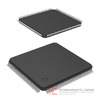
Product Overview of the STM32F103VGT6TR
The STM32F103VGT6TR represents the XL-density performance line within STMicroelectronics' STM32F1 family of 32-bit microcontrollers. This device integrates an ARM Cortex-M3 processor core with extensive embedded memory, a comprehensive set of peripherals, and flexible I/O capabilities, making it suitable for applications ranging from industrial control systems to consumer electronics and medical equipment.
The STM32F103VGT6TR operates across a wide temperature range from -40°C to +105°C and accepts supply voltages between 2.0 and 3.6 volts, providing flexibility for diverse deployment environments. The device is available in multiple package options, including LQFP64, LQFP100, LQFP144, and LFBGA144 configurations, allowing designers to select the form factor that best matches their application requirements.
Core Architecture and Processing Capabilities of the STM32F103VGT6TR
At the heart of the STM32F103VGT6TR lies a 32-bit ARM Cortex-M3 RISC processor operating at a maximum frequency of 72 MHz. This architecture delivers 1.25 DMIPS per megahertz at zero wait-state memory access, providing the computational performance necessary for real-time applications while maintaining code efficiency comparable to much larger processors.
The processor incorporates several advanced features that enhance its capability for embedded applications. Single-cycle multiplication and hardware division operations accelerate mathematical computations without requiring software emulation. The embedded Memory Protection Unit (MPU) enables separation of task processing from data protection, supporting real-time operating systems that require memory isolation between different software components. This MPU can manage up to eight protection areas, each further divisible into eight subareas, with protection granularity ranging from 32 bytes to the entire 4-gigabyte addressable memory space.
The STM32F103VGT6TR includes a Nested Vectored Interrupt Controller (NVIC) capable of handling up to 60 maskable interrupt channels with 16 priority levels. This architecture enables low-latency interrupt processing with support for tail-chaining, allowing the processor to handle late-arriving higher-priority interrupts efficiently. The closely coupled NVIC interface minimizes interrupt latency while the processor state is automatically saved and restored, reducing interrupt service routine overhead.
Memory Architecture and Organization in the STM32F103VGT6TR
The STM32F103VGT6TR provides 1 megabyte of embedded Flash memory organized into two banks of 512 kilobytes each, enabling read-while-write capability. This dual-bank structure allows code execution from one bank while programming the other, supporting in-application programming and firmware updates without halting system operation. The Flash memory supports endurance of 100,000 erase cycles and data retention exceeding 20 years at 55°C, meeting the reliability requirements of long-lifecycle applications.
Complementing the Flash storage, the device includes 96 kilobytes of embedded SRAM accessible at CPU clock speed with zero wait states. This high-speed RAM serves as the primary workspace for runtime data, stack operations, and DMA transfers. The memory map includes dedicated regions for peripheral registers, external memory interfaces, and system areas, providing a well-organized address space for application development.
The STM32F103VGT6TR incorporates a CRC calculation unit that computes cyclic redundancy check codes from 32-bit data words using a fixed generator polynomial. This hardware-accelerated CRC capability supports data integrity verification for both transmission and storage, enabling compliance with functional safety standards such as EN/IEC 60335-1 that require runtime verification of Flash memory integrity.
Clock Management and Power Supply Systems in the STM32F103VGT6TR
The STM32F103VGT6TR implements a sophisticated clock management system supporting multiple clock sources and flexible frequency scaling. The device can operate using an internal 8 MHz factory-trimmed RC oscillator, an external 4-16 MHz crystal oscillator, or an internal 40 kHz RC oscillator for low-power applications. A phase-locked loop (PLL) multiplies the input clock to achieve the 72 MHz system frequency, with the PLL output frequency ranging from 16 to 72 MHz.
The clock tree includes multiple prescalers that independently configure the AHB bus frequency (maximum 72 MHz), the high-speed APB2 domain (maximum 72 MHz), and the low-speed APB1 domain (maximum 36 MHz). This hierarchical clock distribution enables peripheral-specific frequency optimization, reducing power consumption by operating slower peripherals at lower clock rates while maintaining high-speed operation for performance-critical functions.
The STM32F103VGT6TR incorporates an integrated power-on reset (POR) and power-down reset (PDR) circuit that maintains the device in reset mode when supply voltage falls below 2 volts, eliminating the need for external reset circuitry. A programmable voltage detector (PVD) monitors the supply voltage and generates interrupts when the voltage crosses programmed thresholds, enabling software to implement graceful shutdown procedures or activate backup power supplies before critical voltage levels are reached.
The device features a three-mode voltage regulator: main regulation mode for normal operation, low-power regulation mode for Stop mode operation, and power-down mode for Standby operation. The regulator accepts supply voltages between 2.0 and 3.6 volts and provides stable internal voltage for the processor core and digital logic.
Low-Power Operating Modes and Energy Management in the STM32F103VGT6TR
The STM32F103VGT6TR supports three distinct low-power modes that enable designers to optimize energy consumption for battery-powered and energy-constrained applications. Sleep mode stops only the CPU clock while maintaining all peripheral clocks, allowing peripherals to continue operation and wake the processor through interrupt or event signals. This mode reduces power consumption while preserving the ability to respond quickly to external stimuli.
Stop mode achieves significantly lower power consumption by disabling all clocks in the 1.8-volt domain, including the PLL and both internal and external oscillators. The voltage regulator can operate in either normal or low-power mode during Stop, with low-power mode providing additional energy savings. The device retains SRAM and register contents during Stop mode, enabling rapid resumption of operation when awakened by external interrupt, RTC alarm, or USB wakeup event.
Standby mode represents the lowest power consumption state, achieved by switching off the internal voltage regulator and powering down the entire 1.8-volt domain. In this mode, SRAM and register contents are lost except for the backup domain registers and standby circuitry. The device exits Standby mode only through external reset, independent watchdog reset, rising edge on the WKUP pin, or RTC alarm event.
The STM32F103VGT6TR includes a real-time clock (RTC) and backup registers powered through a dedicated switch that selects between the main VDD supply and a separate VBAT pin. This architecture enables the RTC and 42 backup registers to maintain operation and preserve data when the main power supply is removed, supporting applications requiring continuous timekeeping and persistent storage of critical parameters during power loss.
Analog Signal Processing: ADC and DAC Integration in the STM32F103VGT6TR
The STM32F103VGT6TR integrates three independent 12-bit analog-to-digital converters, each capable of sampling up to 21 external analog channels. The ADCs operate with a conversion time of 1 microsecond at 14 MHz clock frequency, supporting both single-shot and scan mode conversions. In scan mode, the ADC automatically sequences through a programmed group of analog inputs, enabling continuous monitoring of multiple sensor signals.
The ADC architecture includes simultaneous sample-and-hold capability for synchronized sampling of multiple channels, interleaved sample-and-hold for sequential sampling with minimal delay between channels, and single-shunt configuration for applications requiring a single sampling network. An analog watchdog feature monitors converted voltage values and generates interrupts when measurements exceed programmed thresholds, enabling threshold-based event detection without CPU intervention.
The ADCs accept input voltages from 0 to 3.6 volts and include an internal temperature sensor connected to ADC1 channel 16, enabling on-chip temperature measurement for thermal management and compensation applications. The temperature sensor output varies linearly with temperature, providing a convenient method for monitoring die temperature without external sensors.
Complementing the ADC functionality, the STM32F103VGT6TR provides two independent 12-bit digital-to-analog converters with buffered outputs. The DAC channels support 8-bit or 12-bit monotonic output with left or right data alignment, synchronized update capability for simultaneous conversion of both channels, and noise-wave or triangular-wave generation for dithering applications. External triggers from general-purpose timers enable synchronized DAC conversion with timer events, supporting applications such as waveform generation and synchronized analog output.
Timer and Watchdog Functions in the STM32F103VGT6TR
The STM32F103VGT6TR incorporates an extensive timer subsystem comprising up to 17 independent timers serving diverse timing and control functions. Two advanced-control timers (TIM1 and TIM8) provide three-phase PWM generation with complementary outputs and programmable dead-time insertion, supporting motor control applications. These timers feature four independent channels configurable for input capture, output compare, PWM generation in edge or center-aligned modes, and one-pulse mode output.
Ten general-purpose timers (TIM2 through TIM5, TIM9 through TIM14) provide flexible timing capabilities with 16-bit auto-reload counters and 16-bit prescalers. These timers support input capture for measuring external signal timing, output compare for generating timed pulses, PWM generation for motor speed control and LED brightness adjustment, and quadrature encoder input for position measurement in motor control applications. The general-purpose timers can be synchronized together through the Timer Link feature, enabling coordinated operation for complex timing sequences.
Two basic timers (TIM6 and TIM7) provide simple 16-bit time base functionality primarily used for DAC trigger generation. A 24-bit SysTick timer dedicated to real-time operating systems provides a system tick interrupt for task scheduling and timing services.
The STM32F103VGT6TR includes two independent watchdog timers for system reliability. The independent watchdog operates from a dedicated 40 kHz internal RC oscillator, enabling watchdog operation during Stop and Standby modes when the main clock is disabled. The window watchdog provides early warning interrupt capability, allowing software to detect watchdog timeout conditions before system reset occurs.
Communication Interfaces Supported by the STM32F103VGT6TR
The STM32F103VGT6TR provides comprehensive communication capabilities through multiple interface standards. Up to five USART/UART interfaces support asynchronous serial communication at speeds up to 4.5 Mbit/s for USART1 and 2.25 Mbit/s for other interfaces. These interfaces support standard asynchronous operation, IrDA SIR ENDEC for infrared communication, LIN Master/Slave capability for automotive applications, and ISO 7816 Smart Card mode for payment and security applications.
Three SPI interfaces operate at speeds up to 18 Mbit/s in full-duplex and simplex modes, supporting both master and slave operation. The SPI interfaces include hardware CRC generation and verification, enabling reliable data transfer with automatic error detection. Two of the SPI interfaces (SPI2 and SPI3) can be configured as I²S audio interfaces, supporting 16 or 32-bit resolution with audio sampling frequencies from 8 kHz to 48 kHz.
Two I²C bus interfaces support multimaster and slave modes with standard and fast-mode operation. These interfaces include hardware CRC generation and verification, supporting SMBus 2.0 and PMBus protocols for power management applications. The I²C interfaces can be served by DMA for efficient data transfer without CPU intervention.
A CAN interface compliant with CAN 2.0A and 2.0B specifications supports bit rates up to 1 Mbit/s. The CAN controller includes three transmit mailboxes, two receive FIFOs with three stages each, and 14 scalable filter banks for message filtering and routing.
A USB 2.0 full-speed interface operates at 12 Mbit/s with software-configurable endpoint settings and suspend/resume support. The USB interface requires a dedicated 48 MHz clock generated from the internal PLL using an external crystal oscillator as the clock source.
An SDIO interface supports SD/SDIO/MMC card operation with 1-bit, 4-bit, and 8-bit databus modes, enabling data transfer at speeds up to 48 MHz in 8-bit mode. The SDIO interface is compliant with SD Memory Card Specifications Version 2.0 and MultiMediaCard System Specification Version 4.2.
External Memory Interface and FSMC Capabilities in the STM32F103VGT6TR
The STM32F103VGT6TR integrates a Flexible Static Memory Controller (FSMC) supporting connection of external memory devices including SRAM, PSRAM, NOR Flash, NAND Flash, and PC Card/CompactFlash interfaces. The FSMC provides four chip select outputs enabling simultaneous connection of multiple memory devices with independent timing configuration for each device.
The FSMC supports both asynchronous and synchronous memory access modes with configurable timing parameters for address setup, data setup, and hold times. Asynchronous mode supports non-multiplexed and multiplexed address/data bus configurations, accommodating various memory device architectures. Synchronous mode enables burst access for improved throughput when accessing high-speed memory devices.
The FSMC includes a write FIFO for buffering write operations, reducing CPU wait cycles during memory write sequences. The controller supports code execution from external NOR Flash memory, enabling applications with code size exceeding the internal Flash capacity. The FSMC can be configured to interface with graphic LCD controllers using Intel 8080 or Motorola 6800 parallel interface modes, supporting cost-effective graphic display implementations.
GPIO Configuration and I/O Characteristics of the STM32F103VGT6TR
The STM32F103VGT6TR provides up to 112 general-purpose I/O pins depending on package selection. Each GPIO pin can be independently configured as a digital input with or without pull-up/pull-down resistors, a digital output in push-pull or open-drain configuration, or as an alternate function for peripheral signals. Most GPIO pins are 5-volt tolerant, enabling direct interface with 5-volt logic systems without level translation.
The GPIO pins support high current drive capability, with standard pins capable of sourcing or sinking up to 8 milliamps at specified voltage levels, or up to 20 milliamps with relaxed output voltage specifications. Pins PC13, PC14, and PC15 are supplied through a power switch with limited current capability (3 milliamps maximum), restricting their use to low-speed, low-current applications.
The GPIO output speed can be configured to 2 MHz, 10 MHz, or 50 MHz, enabling optimization of power consumption and EMI characteristics for specific application requirements. The I/O alternate function configuration can be locked following a specific sequence to prevent accidental modification of critical pin configurations.
The STM32F103VGT6TR includes an External Interrupt/Event Controller (EXTI) with 19 edge detector lines for generating interrupt or event requests. Each EXTI line can be independently configured to detect rising edges, falling edges, or both, and can be masked independently. Up to 112 GPIO pins can be connected to the 16 external interrupt lines, enabling flexible interrupt source selection.
Package Options and Thermal Management for the STM32F103VGT6TR
The STM32F103VGT6TR is available in four package options providing different pin counts and form factors. The LQFP64 package (10 x 10 mm) provides 64 pins for space-constrained applications. The LQFP100 package (14 x 14 mm) offers 100 pins with expanded peripheral access. The LQFP144 package (20 x 20 mm) provides 144 pins with full peripheral availability. The LFBGA144 package (10 x 10 mm ball grid array) offers the highest pin density in the smallest footprint.
Thermal management is addressed through package thermal resistance specifications and junction temperature ratings. The device operates with junction temperatures up to 105°C (suffix 6) or 125°C (suffix 7), with thermal resistance varying by package type. The LQFP100 package exhibits thermal resistance of 46°C/W, while the LFBGA144 package provides improved thermal performance at 35°C/W due to its ball grid array construction.
Designers can calculate required temperature range selection by determining application power dissipation and using thermal resistance values to verify that junction temperature remains within specified limits across the operating temperature range.
Electrical Specifications and Operating Conditions of the STM32F103VGT6TR
The STM32F103VGT6TR operates with supply voltages between 2.0 and 3.6 volts, with separate analog supply pins (VDDA and VSSA) for the ADC, DAC, and oscillator circuits. The device maintains proper operation with a maximum 300 millivolt difference between digital and analog supply voltages during power-up and normal operation.
Current consumption varies significantly with operating mode and frequency. In Run mode at 72 MHz with all peripherals enabled, typical current consumption reaches approximately 36 milliamps at 3.3 volts. Sleep mode reduces current consumption to approximately 18 milliamps by stopping the CPU clock while maintaining peripheral operation. Stop mode with the voltage regulator in low-power mode achieves typical current consumption below 10 microamps. Standby mode with the voltage regulator disabled reduces current consumption to approximately 2 microamps, supporting extended battery operation in applications requiring periodic wake-up.
The ADC achieves 12-bit resolution with total unadjusted error below 2 LSB under typical conditions. The ADC requires a minimum sampling time of 1.5 microseconds for the temperature sensor and 1 microsecond for standard analog inputs at 14 MHz ADC clock frequency. The DAC provides 12-bit resolution with settling time below 3 microseconds for full-scale output changes.
The device includes comprehensive electrical protection including electrostatic discharge (ESD) protection rated at 2 kilovolts for human body model testing. The I/O pins support current injection susceptibility testing, demonstrating robustness against transient overvoltage conditions that may occur in industrial environments.
Conclusion
The STM32F103VGT6TR represents a mature, feature-rich microcontroller platform combining a high-performance ARM Cortex-M3 processor with extensive embedded memory, comprehensive peripheral integration, and flexible I/O capabilities. The device's dual-bank Flash architecture, multiple low-power modes, and extensive communication interfaces make it well-suited for applications ranging from industrial motor control and medical equipment to consumer electronics and IoT devices. The availability of multiple package options and temperature grades enables designers to select configurations optimized for specific application requirements while maintaining software compatibility across the STM32F1 family.
Frequently Asked Questions (FAQ)
- Q1. What is the maximum operating frequency of the STM32F103VGT6TR, and how does it affect power consumption?
-
- A1. The STM32F103VGT6TR operates at a maximum frequency of 72 MHz. Power consumption increases approximately linearly with operating frequency. At 72 MHz with all peripherals enabled, typical current consumption reaches approximately 36 milliamps at 3.3 volts. Designers can reduce power consumption by operating at lower frequencies when maximum performance is not required, with typical consumption dropping to approximately 18 milliamps at 36 MHz.
- Q2. How does the dual-bank Flash memory architecture benefit application development?
-
- A2. The dual-bank Flash architecture divides the 1 megabyte Flash memory into two 512-kilobyte banks. This enables read-while-write capability, allowing the processor to execute code from one bank while programming the other bank. This capability supports in-application programming and firmware updates without halting system operation, enabling remote firmware updates and field upgrades without requiring external programming equipment.
- Q3. What are the key differences between the three low-power modes, and when should each be used?
-
- A3. Sleep mode stops only the CPU clock while maintaining peripheral clocks, reducing power consumption to approximately 18 milliamps while preserving rapid response capability. Stop mode disables all clocks in the 1.8-volt domain, achieving typical consumption below 10 microamps with SRAM and register contents preserved. Standby mode switches off the voltage regulator, reducing consumption to approximately 2 microamps but losing SRAM and register contents except for the backup domain. Sleep mode suits applications requiring frequent CPU wake-up, Stop mode suits applications with periodic activity, and Standby mode suits applications requiring minimal power consumption with infrequent wake-up.
- Q4. How many communication interfaces does the STM32F103VGT6TR provide, and what are their maximum data rates?
-
- A4. The STM32F103VGT6TR provides up to 13 communication interfaces: five USART/UART interfaces (up to 4.5 Mbit/s for USART1, 2.25 Mbit/s for others), three SPI interfaces (up to 18 Mbit/s), two I²C interfaces, two I²S interfaces (multiplexed with SPI2 and SPI3), one CAN interface (up to 1 Mbit/s), one USB 2.0 full-speed interface (12 Mbit/s), and one SDIO interface (up to 48 Mbit/s in 8-bit mode). This comprehensive interface set enables connectivity with diverse external devices and systems.
- Q5. What is the purpose of the Memory Protection Unit (MPU), and which applications benefit from its use?
-
- A5. The MPU separates task processing from data protection by managing up to eight protection areas, each divisible into eight subareas. Applications running real-time operating systems benefit from MPU use by isolating critical or certified code from misbehavior in other tasks. The MPU enables the RTOS kernel to dynamically update protection settings based on the process being executed, preventing unauthorized memory access and improving system reliability in safety-critical applications.
- Q6. How does the FSMC enable connection of external memory, and what memory types are supported?
-
- A6. The FSMC provides four chip select outputs with independent timing configuration, supporting SRAM, PSRAM, NOR Flash, NAND Flash, and PC Card/CompactFlash interfaces. The FSMC supports both asynchronous and synchronous access modes with configurable timing parameters. This enables applications requiring memory capacity exceeding the internal 1 megabyte Flash to connect external memory devices. Code execution from external NOR Flash is supported, enabling applications with large code footprints.
- Q7. What are the ADC specifications, and how do they affect sensor interface design?
-
- A7. The STM32F103VGT6TR provides three independent 12-bit ADCs with up to 21 external channels each. The ADCs achieve 1 microsecond conversion time at 14 MHz clock frequency with total unadjusted error below 2 LSB under typical conditions. The ADCs support simultaneous and interleaved sampling modes for multi-channel applications. Sensor interface design must account for the maximum external impedance (RAIN) determined by the ADC sampling time and input capacitance, typically requiring source impedance below 10 kilohms for accurate conversion.
- Q8. How does the independent watchdog timer operate, and what advantages does it provide?
-
- A8. The independent watchdog operates from a dedicated 40 kHz internal RC oscillator, enabling watchdog operation during Stop and Standby modes when the main clock is disabled. This independence from the main clock system ensures watchdog functionality even if the main oscillator fails or the system enters low-power modes. The watchdog can be configured as a system reset mechanism or as a free-running timer for application timeout management, providing flexible reliability features for diverse application requirements.
- Q9. What package options are available for the STM32F103VGT6TR, and how do they differ in thermal performance?
-
- A9. The STM32F103VGT6TR is available in four packages: LQFP64 (10 x 10 mm, 64 pins), LQFP100 (14 x 14 mm, 100 pins), LQFP144 (20 x 20 mm, 144 pins), and LFBGA144 (10 x 10 mm ball grid array, 144 pins). Thermal resistance varies by package, with LQFP100 exhibiting 46°C/W and LFBGA144 providing improved performance at 35°C/W. The LFBGA144 package offers the highest pin density and best thermal performance, while LQFP packages provide cost-effective solutions for space-constrained applications.
- Q10. How should the power supply be decoupled for optimal ADC performance?
-
- A10. ADC performance requires careful power supply decoupling with 10 nanofarad ceramic capacitors placed as close as possible to the ADC power pins. If VREF+ is connected to VDDA, a single decoupling capacitor suffices. If VREF+ is connected to an external reference, separate decoupling capacitors are required for VDDA and VREF+. High-quality ceramic capacitors designed for high-frequency applications minimize noise coupling into the analog circuits, ensuring accurate analog-to-digital conversion.
- Q11. What is the purpose of the programmable voltage detector (PVD), and how is it used in applications?
-
- A11. The PVD monitors the VDD/VDDA supply voltage and compares it to a programmable threshold. When the supply voltage crosses the threshold, the PVD generates an interrupt, enabling software to implement graceful shutdown procedures or activate backup power supplies. The PVD supports multiple threshold levels, enabling applications to detect low-battery conditions and take appropriate action before critical voltage levels are reached, improving system reliability in battery-powered applications.
- Q12. How does the RTC and backup register system support applications requiring persistent data storage during power loss?
-
- A12. The RTC and 42 backup registers are powered through a dedicated switch that selects between the main VDD supply and a separate VBAT pin. When main power is removed, the VBAT supply maintains operation of the RTC and backup registers, enabling continuous timekeeping and preservation of critical parameters. This architecture supports applications requiring accurate time tracking during power loss and enables storage of configuration data that persists across power cycles without requiring external non-volatile memory.
- Q13. What are the I/O current limitations, and how do they affect system design?
-
- A13. Standard GPIO pins can source or sink up to 8 milliamps at specified voltage levels, or up to 20 milliamps with relaxed output voltage specifications. The total current sourced by all I/Os plus the MCU internal current cannot exceed the absolute maximum rating for IVDD. Similarly, the total current sunk by all I/Os plus the MCU internal current cannot exceed the absolute maximum rating for IVSS. Designers must account for these limitations when calculating total system current and selecting power supply capacity.
- Q14. How does the DMA controller improve system performance, and which peripherals can be served by DMA?
-
- A14. The 12-channel DMA controller (7 channels in DMA1, 5 channels in DMA2) manages memory-to-memory, peripheral-to-memory, and memory-to-peripheral transfers without CPU intervention. The DMA supports circular buffer management, eliminating the need for user code intervention when the controller reaches the end of the buffer. Supported peripherals include SPI, I²C, USART, general-purpose timers, basic and advanced-control timers, DAC, I²S, SDIO, and ADC. DMA operation reduces CPU load and enables efficient data transfer for high-bandwidth applications.
- Q15. What temperature range options are available, and how should the appropriate range be selected?
-
- A15. The STM32F103VGT6TR is available with suffix 6 (-40°C to +85°C, junction temperature to 105°C) or suffix 7 (-40°C to +105°C, junction temperature to 125°C). Selection depends on application power dissipation and ambient temperature. Designers calculate junction temperature using the formula TJ = TA + (PD × ΘJA), where TA is ambient temperature, PD is power dissipation, and ΘJA is thermal resistance. The appropriate temperature range is selected to ensure junction temperature remains within specified limits across the operating environment.