- English
-
EnglishDeutschItaliaFrançais한국의русскийSvenskaNederlandespañolPortuguêspolski繁体中文SuomiGaeilgeSlovenskáSlovenijaČeštinaMelayuMagyarországHrvatskaDanskromânescIndonesiaΕλλάδαБългарски езикGalegolietuviųMaoriRepublika e ShqipërisëالعربيةአማርኛAzərbaycanEesti VabariikEuskeraБеларусьLëtzebuergeschAyitiAfrikaansBosnaíslenskaCambodiaမြန်မာМонголулсМакедонскиmalaɡasʲພາສາລາວKurdîსაქართველოIsiXhosaفارسیisiZuluPilipinoසිංහලTürk diliTiếng ViệtहिंदीТоҷикӣاردوภาษาไทยO'zbekKongeriketবাংলা ভাষারChicheŵaSamoa日本語SesothoCрпскиKiswahiliУкраїнаनेपालीעִבְרִיתپښتوКыргыз тилиҚазақшаCatalàCorsaLatviešuHausaગુજરાતીಕನ್ನಡkannaḍaमराठी

Exploring SSD1306 OLED Display Overview, Features, and Applications
Catalog
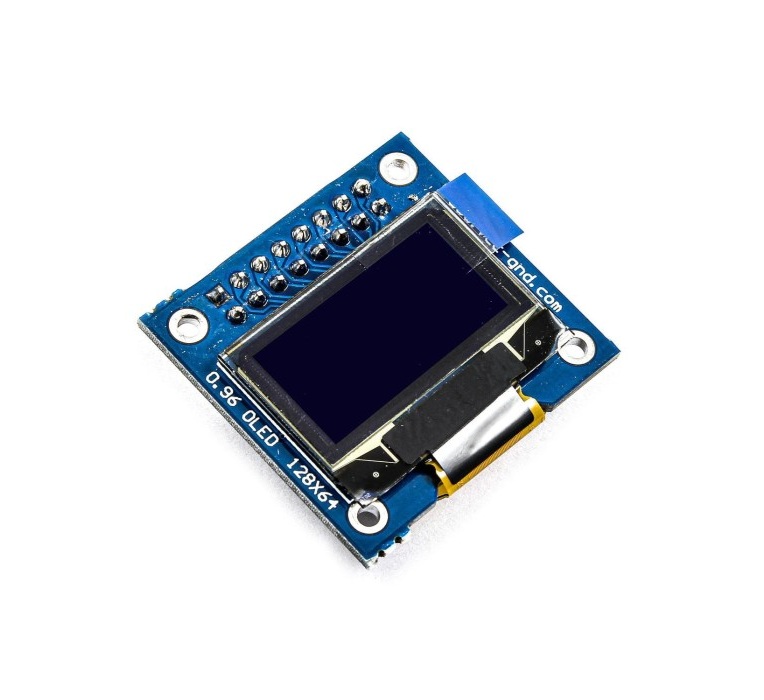
SSD1306 OLED Displays
The SSD1306 OLED screen captures attention in the realm of compact displays with its resolutions of 128 × 64 or 128 × 32 pixels. Its self-emitting pixels don't just provide exceptional contrast but also a vibrancy that does away with the traditional backlight's dependence. By supporting I2C and SPI communication protocols, it integrates effortlessly with microcontrollers like Arduino, ESP32, and Raspberry Pi. Compared to other options, its efficient power consumption and swift response make it advantageous, especially in portable electronics, status monitors, and small gadget applications. The clarity it offers further enhances its capability, making it suitable for a plethora of innovative designs. As technology advances, grasping these practical uses becomes invaluable for those sculpting devices that are both efficient and responsive.
OLED technology, the backbone of the SSD1306 display, has seen a significant evolution, presenting more than mere visual allure. Enhanced durability and longer lifespan widen OLED displays' usability across various sectors. This progress is a boon in wearable technology, where qualities like energy efficiency and durability play an important role. The OLED journey mirrors the dramatic transformations seen in the smartphone world, where screen advancements have reshaped user interactions.
Incorporating the SSD1306 OLED display into projects demands a keen understanding of the application's specific needs. This entails making informed choices about communication protocols to harness the display's full potential. The decision between I2C and SPI protocols is important, especially in systems requiring quick data transfers. Seasoned developers often advocate for the prototyping phase to ensure the display performs optimally. Such wisdom shows the nimbleness and rigorous testing essential in leveraging advanced technologies.
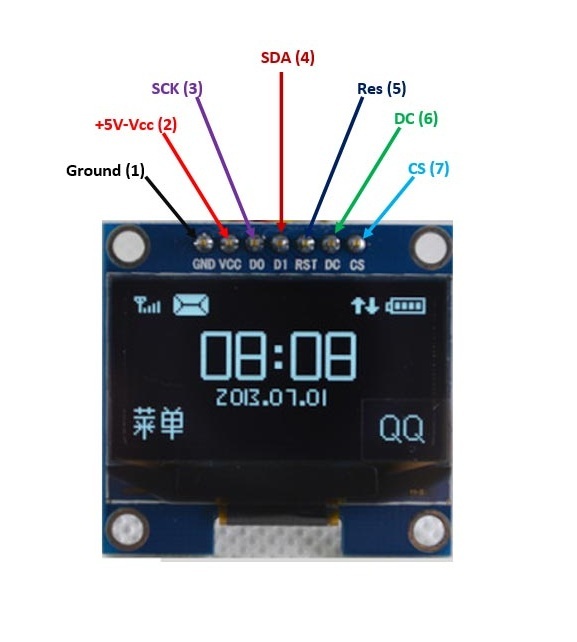
SSD1306 OLED Display Pinout
|
Pin No: |
Pin Name: |
Description |
|
1 |
Ground (Gnd) |
Connected to the ground of the circuit |
|
2 |
Supply (Vdd,Vcc,5V) |
Can be powered by either 3.3V or 5V |
|
3 |
SCK (D0,SCL,CLK) |
The display supports both IIC and SPI, for which clock is
supplied through this pin |
|
4 |
SDA (D1,MOSI) |
This is the data pin of the both, it can either be used
for IIC or for SPI |
|
5 |
RES(RST,RESET) |
When held to ground momentarily this pin resets the
module |
|
6 |
DC (A0) |
This is command pin, can either be used for SPI or for
IIC |
|
7 |
Chip Select (CS) |
Normally held low, used only when more than one SPI
device is connected to MCU |
Features of OLED Screens
The compact 0.96” OLED screen, powered by the SSD1306 driver, boasts a resolution of 128×64 pixels. It accommodates voltage inputs effortlessly between 3V and 5V, making it adaptable to 5V and 3.3V devices. This versatility aids in simplifying the design of various electronic systems, and contributes to optimized power usage in portable gadgets.
This OLED screen facilitates multiple communication protocols:
• SPI: Renowned for its high-speed data transfer rates, SPI ensures swift refresh cycles on the screen, making it suitable for high-demand projects like interactive user interfaces.
• IIC: Favorable for simple wiring arrangements, IIC supports streamlined design efforts in compact setups.
These options allow developers to tailor their approach based on project specifics, choosing between rapid data throughput and easier configuration.
Efficient at delivering sharp bitmap graphics, this OLED module provides stunning visual clarity that elevates the user's engagement. Its proficiency in displaying detailed images makes it suited for applications like smartwatches and medical equipment, where visual precision can enhance user satisfaction and system interface quality.
OLED screens come in a variety of colors and sizes, allowing customization to meet diverse project requirements. This spectrum of choices supports creative ingenuity and facilitates distinctive solutions across various fields, ranging from consumer technology to industrial measurement tools. Such flexibility offers avenues for unique design and functionality innovation.
Diverse OLED Display Modules
|
Classification |
Types |
|
Based on Colour |
Monochrome (Blue), Monochrome (White), Yellow/Blue Colour |
|
Based on Number of Pins |
3-Pin (supports only I2C), 7-Pin (supports I2C and SPI) |
|
Based on Interface IC |
SSD1306, SSD1331 |
|
Based on Size |
0.91″ (128 × 32), 0.96″ (128 × 64) |
Comparative Display Modules in Electronic Design
In the domain of electronic displays, a variety of options such as 16×2 LCD, Dot Matrix LED, 7-Segment LED, Nokia 5110 LCD, and TFT LCD each bring distinct capabilities suited to various project needs. Choosing a suitable display demands a deep dive into the specific features each type offers, along with their potential applications. This comprehensive exploration delves into the core attributes of each module, providing insights drawn from hands-on experiences to assist in making well-informed choices.
16×2 LCD Modules
The 16×2 LCD is distinguished by its ability to show alphanumeric characters, making it a cornerstone in projects that need text representation. Its straightforward design and interfacing present a pragmatic option for numerous applications. Predominantly used in device menus and basic user interfaces, the 16×2 LCD aligns with a structured development approach. This practicality is bolstered by the extensive availability of resources and guides, supporting both novice and experienced developers in their endeavors.
Dot Matrix LED Modules
Dot Matrix LED displays are celebrated for their flexibility, granting users the capability to depict a wide array of patterns and visuals using light arrays. These modules are beneficial in designs calling for visual dynamism and adaptability, traits that resonate with innovative projects and evolving signage requirements. While their setup necessitates meticulous logic configuration for precise control, these displays offer remarkable versatility. They are often used in vibrant advertising displays and interactive applications, where visual impact resonates profoundly.
7-Segment LED Modules
The 7-Segment LED is ideally suited for projects where numeric data is prominently featured, like timers and counters. Engaging with these modules shows their competence in delivering clear numerical displays, where quick understanding is essential. Utilizing straightforward digital logic, these displays easily fit into systems requiring robust and simple numeric visualizations, attesting to their sustained popularity in numerous real-time computing scenarios.
Nokia 5110 LCD Modules
The Nokia 5110 LCD, with its compact size and graphical capabilities, aids developers working on projects that need both text and basic graphics. Known for its historical application in communication devices, this module remains a preferred choice for low-power designs, thanks to its energy efficiency. Its implementation is enriched by the wisdom gained from its use in pioneering mobile technology, making it an appealing option for small, portable designs that transcend common applications.
TFT LCD Modules
TFT LCD modules provide extensive capabilities with high-resolution graphics and vivid color displays, raising the standard for visual excellence. Their deployment fits seamlessly within complex projects requiring rich graphical content and detailed design layouts. Practical uses span top-grade consumer electronics and sophisticated control panels, where detail and precision hold priority. The depth of color and clarity introduced into user interfaces through TFT technology signifies a continuous progression towards engaging and informed digital interactions.
Applications and Use Cases of OLED Displays
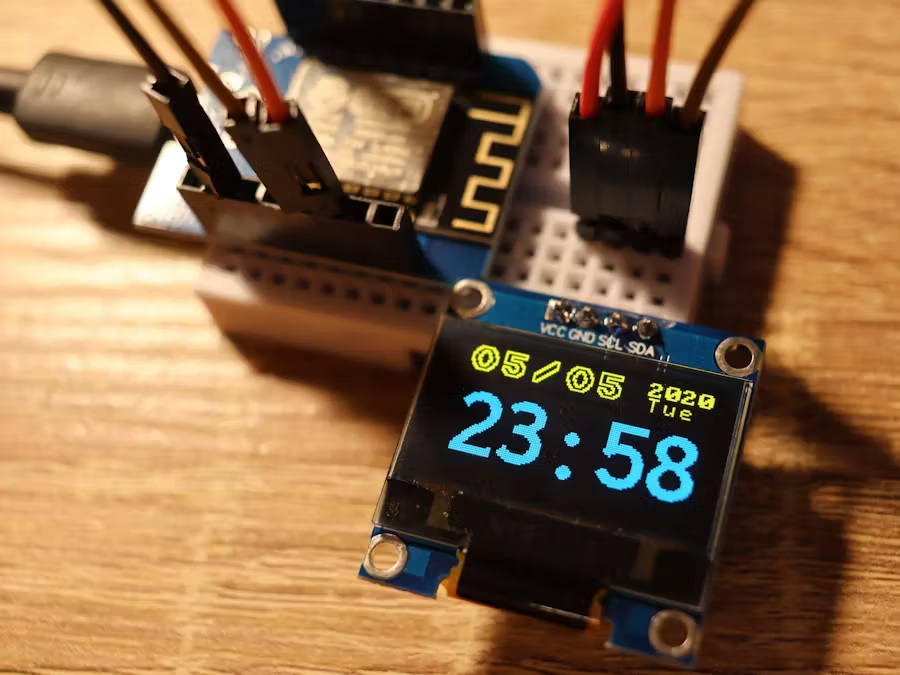
OLED displays are widely used across modern electronic systems because they combine compact size, high visual clarity, and flexible design options. Their wide viewing angles and high pixel density allow clear graphics and sharp text, making them especially suitable for microcontroller projects and space-limited devices. These characteristics support both functional display needs and visually refined interfaces.
OLED Displays in Consumer Electronics
In consumer electronics, OLED screens are commonly found in televisions, monitors, laptops, and tablets. Their ability to produce deep blacks and high contrast improves image clarity and viewing comfort. Because OLED panels do not require bulky backlighting, it can design thinner and lighter devices, improving portability while maintaining strong visual performance.
OLED Technology in Smart and Wearable Devices
OLED technology is well suited for smart devices such as watches, fitness trackers, and mobile phones. The flexibility of OLED materials allows curved and compact displays that fit naturally into wearable designs. These displays support clear visibility, customization, and smooth user interaction, helping devices remain readable and responsive in different usage conditions.
OLED Displays in Gaming Platforms
Gaming devices benefit from OLED displays due to their fast response times and precise pixel control. Portable gaming consoles using OLED panels deliver detailed visuals while managing power efficiently, since only active pixels consume energy. This balance between image quality and battery usage supports longer play sessions without sacrificing display performance.
OLED Use in Low-Light and Specialized Environments
OLED displays perform well in low-light environments because of their strong contrast and wide viewing angles. This makes them suitable for equipment used in dim or uneven lighting, such as photography tools, monitoring instruments, and specialized visual devices. Clear visibility under these conditions helps improve accuracy and user control.
Despite their advantages, OLED displays can experience image retention and gradual brightness reduction over time. These issues are commonly addressed through practical design choices such as adaptive brightness control and periodic screen refresh routines. Applying these strategies helps extend display lifespan and maintain consistent visual quality.
Ongoing developments in OLED materials and manufacturing continue to expand their range of applications. Flexible and transparent OLED displays point toward new design possibilities in future devices. As production processes improve and costs decrease, OLED technology is expected to see broader adoption across consumer, industrial, and embedded systems.
OLED Display Communication and Integration Options
In the field of OLED displays, especially with the Monochrome 7-pin SSD1306 model, thoughtfully choosing the right communication protocol is a significant consideration. This choice typically involves deciding between I2C and SPI. While SPI is preconfigured due to its notable speed benefits, modifying the resistor arrangement permits a shift to 3-Wire SPI and IIC protocols. Reviewing the OLED display datasheet deeply is an invaluable step in grasping communication strategies and device demands.
Achieving the desired display performance involves a deep dive into configuration strategies. The ability to adapt protocol choices to meet specific project demands is quite advantageous. SPI's rapid transmission speed is advantageous for scenarios requiring quick data refreshes, while IIC is appreciated for its simpler wiring and efficiency in power usage, ideal for compact setups.
During the integration process, practitioners often rely on community-driven libraries, especially those developed within the Arduino platform. These libraries streamline coding processes and have been shaped by collective experiences and inventive practices, ensuring they are user-friendly and compatible.
Effective integration with OLED modules requires more than just connecting wires correctly. Utilizing appropriate libraries in various wiring configurations facilitates robust and dependable display operations. Careful consideration of aspects such as data transmission speed, power usage, and screen refresh rates is important to enhance overall user experience and system performance.
Developing a personal understanding of OLED module integration shines a light on the subtle challenges you might encounter. Achieving success in this area often involves creative problem-solving and professional exploration. By applying innovative solutions, it can fully harness OLED technology's potential across a wide array of applications.
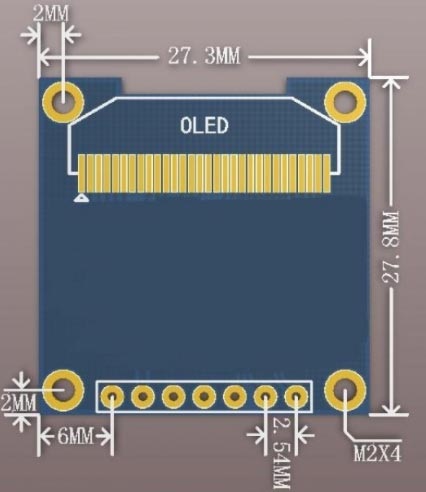
SSD1306 OLED Display Baseboard Design
Conclusion
SSD1306 OLED displays offer a strong balance of visual clarity, compact size, and flexible integration, making them a reliable choice for both simple and advanced electronic designs. Their ability to deliver sharp text and graphics without a backlight supports energy-efficient operation in space-limited applications. When paired with the right communication protocol, proper libraries, and thoughtful design practices, these displays perform well across consumer electronics, wearables, gaming devices, and embedded systems. As OLED technology continues to evolve, SSD1306-based modules remain a practical foundation for building responsive, modern, and visually refined electronic interfaces.
Related Blog
-
How Many Zeros in a Million, Billion, Trillion?
![How Many Zeros in a Million, Billion, Trillion?]()
July 29th, 2024
Million represents 106, an easily graspable figure when compared to everyday items or annual salaries. Billion, equivalent to 109, starts to stretch t... -
IRLZ44N MOSFET Datasheet, Circuit, Equivalent, Pinout
![IRLZ44N MOSFET Datasheet, Circuit, Equivalent, Pinout]()
August 28th, 2024
The IRLZ44N is a widely-used N-Channel Power MOSFET. Renowned for its excellent switching capabilities, it is highly suited for numerous applications,... -
Battery Temperature Too Low, Charging Stopped. How to Fix It?
![Battery Temperature Too Low, Charging Stopped. How to Fix It?]()
October 6th, 2024
Mobile phone battery charging issues are common but can be effectively managed. Temperature plays a big role in battery efficiency, as smartphone batt... -
BC547 Transistor Comprehensive Guide
![BC547 Transistor Comprehensive Guide]()
July 4th, 2024
The BC547 transistor is commonly used in a variety of electronic applications, ranging from basic signal amplifiers to complex oscillator circuits and... -
A Complete Guide to Multiplexers and Their Role in Digital Systems
![A Complete Guide to Multiplexers and Their Role in Digital Systems]()
September 20th, 2025
Multiplexers are components in digital systems, designed to channel multiple input signals into a single output line using binary logic and control si... -
Comprehensive Guide to SCR (Silicon Controlled Rectifier)
![Comprehensive Guide to SCR (Silicon Controlled Rectifier)]()
April 22th, 2024
Silicon Controlled Rectifiers (SCR), or thyristors, play a pivotal role in power electronics technology because of their performance and reliability. ... -
LR621, SR621SW, 364, AG1 Battery Equivalents and Replacements
![LR621, SR621SW, 364, AG1 Battery Equivalents and Replacements]()
July 15th, 2024
LR621 and SR621SW button batteries are prevalent in compact electronic devices like watches, small toys, calculators, and remote keys. Multiple manufa... -
Fundamentals of Op-Amp Circuits
![Fundamentals of Op-Amp Circuits]()
December 28th, 2023
In the intricate world of electronics, a journey into its mysteries invariably leads us to a kaleidoscope of circuit components, both exquisite and co... -
Comparing NMOS and PMOS Differences and Applications
![Comparing NMOS and PMOS Differences and Applications]()
November 15th, 2024
Understanding the differences between NMOS and PMOS transistors is important in designing efficient circuits. NMOS (N-type Metal-Oxide-Semiconductor) ... -
CR2450 vs CR2032 Comparison: All You Need to Know
![CR2450 vs CR2032 Comparison: All You Need to Know]()
September 15th, 2025
Button batteries like CR2450 and CR2032 power many everyday electronics, from watches and remotes to medical and industrial devices. Though small, the...




Hot Parts
- HMC224MS8
- M38D29GC-403FP
- MT48LC32M16A2P-75:C
- TIP2955
- CS4340CZ
- GRM1556P1H6R6DZ01D
- CL31C330JIFNFNE
- DMP4015SK3-13
- RPMD-0101W1V
- MEC1404-NU
- SC405794DW
- ZL80020GGG2
- LTC3774EUHE#PBF
- NC7WZU04P6X
- RC0603FR-07560RL
- THS4032MDGNREP
- NT7168FG-00011
- CGA2B2X7R1H221K050BA
- TT92N16KOF
- GRM0335C1H9R5BA01D
- CL31C470JGFNNNE
- T491B107K010AT
- SN75C3221PWRG4
- CGA1A2X7R1C102M030BA
- LCMXO2-640UHC-4TG144C
- DRV8837DSGR
- TLC5946PWR
- XC56301PW66
- C0603C0G1E6R2C030BG
- SKKH162/18E
- CGJ4J2X7R2A473K125AA
- SN74F240N
- MBR0580S1-7
- CS1206KKX7RZBB103
- RT0603BRE0730KL
- T495C686K010ZTE250
- VI-JW3-CX
- UAF41
- AP3201MM-G1
- ISPLSI3256-70LM
- M29W640T70ZA6E
- MB87L2070PFV-G-BND
- MCP2022A-300E/SL
- SGL8022WS
- BS616LV1010AI-70
- LXT973QC.A3
- M30612SAGP
- UC1846J/883
- VI-233-CW/S
- FS32K118LAT0MLFT