Product Overview of the Murata GRM0335C1H9R5BA01D
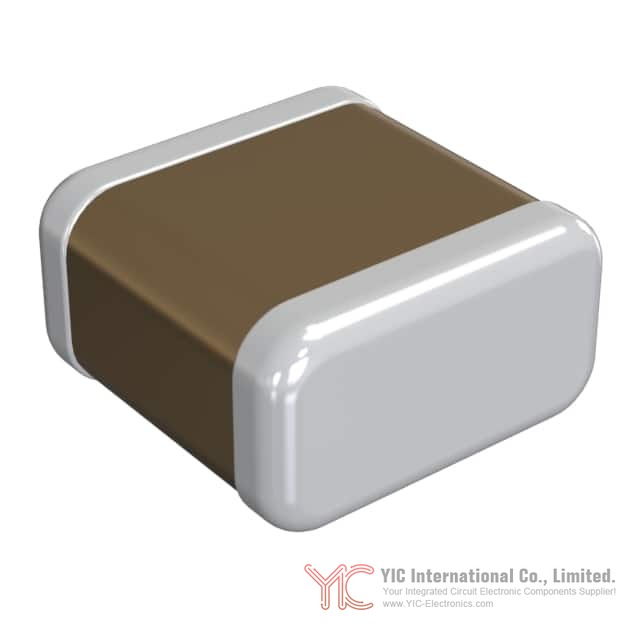
The Murata GRM0335C1H9R5BA01D is a surface-mount chip monolithic ceramic capacitor designed for general-purpose electronic applications. This component represents a fundamental building block in modern circuit design, offering stable capacitance characteristics across a wide range of operating conditions. The device features a nominal capacitance of 9.5 pF with a tight tolerance of ±0.1 pF, rated for 50V DC operation, and employs C0G (also designated as NP0) dielectric material. The 0201 package format (0603 metric equivalent) positions this capacitor in the ultra-compact category, making it suitable for high-density PCB layouts where space constraints are a primary design consideration.
The C0G/NP0 dielectric classification indicates that the GRM0335C1H9R5BA01D maintains exceptional capacitance stability across temperature variations, making it particularly valuable in precision timing circuits, RF applications, and other frequency-dependent designs where capacitance drift could compromise circuit performance. Unlike high-dielectric-constant materials that exhibit significant capacitance variation with temperature and applied voltage, the C0G/NP0 formulation ensures predictable behavior throughout the device's operational life.
Electrical Specifications and Performance Characteristics of the GRM0335C1H9R5BA01D
The GRM0335C1H9R5BA01D delivers a nominal capacitance of 9.5 pF with a tolerance band of ±0.1 pF, representing a tolerance of approximately ±1.05% around the nominal value. This precision specification reflects the stability inherent to C0G/NP0 dielectric materials and positions the device for applications requiring tight capacitance control. The rated voltage of 50V DC establishes the maximum continuous voltage that can be safely applied across the capacitor terminals without risk of dielectric breakdown.
Measurement of capacitance must be performed at the specified voltage and frequency conditions outlined in the product specifications. The output impedance of measuring equipment can affect readings when dealing with very small capacitance values, necessitating verification that the prescribed measurement voltage is actually impressed across the capacitor during testing. For applications involving AC circuits, the capacitance value may exhibit minor variations depending on the AC voltage amplitude applied, though the C0G/NP0 material minimizes such effects compared to alternative dielectric formulations.
Physical Dimensions and Packaging Configuration of the GRM0335C1H9R5BA01D
The GRM0335C1H9R5BA01D employs the 0201 package format, representing one of the smallest standardized surface-mount component sizes. In metric notation, this corresponds to 0603 dimensions, with the component measuring approximately 0.6mm in length and 0.3mm in width. The ultra-compact footprint enables designers to achieve high component density on printed circuit boards, a consideration that becomes increasingly important in portable electronics, wearable devices, and space-constrained applications.
The device is supplied in tape-and-reel packaging, a standard format for automated assembly operations. The tape configuration follows industry-standard specifications with defined pitch, sprocket hole spacing, and component cavity dimensions. The reel structure, manufactured from resin materials, accommodates the tape and maintains component integrity during storage and handling. Minimum order quantities and tape specifications vary based on the specific packaging code designation, with standard configurations providing 10mm pitch accumulation for the GRM0335C1H9R5BA01D series.
The termination structure of the GRM0335C1H9R5BA01D consists of metallic end caps that establish electrical connection between the internal ceramic dielectric and the external circuit. These terminations are designed to accept solder during assembly processes, with specific requirements regarding solder fillet geometry and adhesion strength to ensure long-term mechanical and electrical reliability.
Temperature Behavior and Capacitance Stability in the GRM0335C1H9R5BA01D
The C0G/NP0 dielectric material employed in the GRM0335C1H9R5BA01D exhibits minimal capacitance variation across the operating temperature range, a characteristic that distinguishes this device from high-dielectric-constant alternatives. While all ceramic capacitors experience some degree of temperature-dependent capacitance change, the GRM0335C1H9R5BA01D maintains capacitance stability within narrow bounds, making it suitable for applications where temperature compensation or tight tolerance maintenance is required.
Temperature-dependent characteristics must be considered during circuit design, particularly in applications such as timing circuits, resonant networks, and frequency-determining elements where capacitance precision directly impacts circuit performance. When the GRM0335C1H9R5BA01D is selected for such applications, designers should verify that capacitance variation across the anticipated operating temperature range remains within acceptable limits for the specific circuit function.
The operating temperature range for the GRM0335C1H9R5BA01D extends from -55°C to +125°C, establishing the boundaries within which the device maintains specified electrical characteristics. Selection of a capacitor with appropriate rated temperature coverage is necessary to ensure that the component's operating temperature, including self-heating effects, remains within these limits throughout the equipment's service life. Seasonal temperature variations and thermal gradients within equipment must be considered during the design phase to prevent operation outside the specified temperature envelope.
Voltage Operating Conditions and Derating Considerations for the GRM0335C1H9R5BA01D
The GRM0335C1H9R5BA01D is rated for 50V DC operation, establishing the maximum continuous voltage that should be applied across the component terminals. This voltage rating represents the threshold below which the dielectric material maintains its insulating properties and prevents electrical breakdown. Applied voltage between the capacitor terminals must remain at or below the rated voltage under all normal operating conditions.
Abnormal voltage conditions, including surge voltages, electrostatic discharge events, and pulse voltages, must not exceed the rated DC voltage. Exceeding the rated voltage can result in dielectric breakdown, manifesting as an electrical short circuit within the capacitor. The time duration until breakdown depends on both the magnitude of the applied overvoltage and the ambient temperature, with higher temperatures accelerating the breakdown process.
When the GRM0335C1H9R5BA01D is employed in AC or pulse voltage circuits, designers must verify that the AC current or pulse current flowing through the capacitor does not generate excessive self-heating. The capacitor's surface temperature, including temperature rise from dielectric losses, must remain within the maximum operating temperature limit. Self-heating should be maintained below 20°C when measured at an ambient temperature of 25°C, ensuring that the total surface temperature remains within the specified operating range.
The capacitance value of the GRM0335C1H9R5BA01D exhibits minimal voltage dependency due to the C0G/NP0 dielectric formulation, but designers should confirm that any voltage-dependent capacitance change remains acceptable for the specific circuit application. In circuits requiring tight capacitance tolerance, such as timing networks or frequency-determining elements, the voltage characteristics should be evaluated under actual operating conditions to ensure circuit performance meets design specifications.
Storage Requirements and Environmental Conditions for the GRM0335C1H9R5BA01D
Proper storage conditions are fundamental to maintaining the GRM0335C1H9R5BA01D's performance characteristics and solderability. The component should be stored in an environment maintaining a temperature range of +5°C to +40°C with relative humidity between 20% and 70%. These conditions prevent moisture absorption, oxidation of the terminations, and degradation of the solder coating that facilitates assembly.
Exposure to direct sunlight, rapid temperature changes, corrosive gas atmospheres, or high-temperature and high-humidity conditions during storage can compromise solderability and packaging performance. Corrosive gases such as hydrogen sulfide, sulfur dioxide, chlorine, and ammonia can react with the termination electrodes, resulting in poor solder wetting and reduced assembly reliability. Storage in sealed, moisture-controlled environments protects the GRM0335C1H9R5BA01D from these degradation mechanisms.
The GRM0335C1H9R5BA01D should be used within six months of receipt to minimize the risk of termination oxidation. Prolonged storage beyond this period may necessitate solderability verification before assembly. Components stored for extended periods should be subjected to heat treatment prior to capacitance measurement to ensure accurate characterization. When storage duration exceeds six months, confirmation of solderability through appropriate testing is recommended before commencing assembly operations.
Soldering Processes and Thermal Management for the GRM0335C1H9R5BA01D
The GRM0335C1H9R5BA01D accommodates both reflow and flow soldering processes, with specific thermal profiles and constraints applicable to each method. Reflow soldering, the predominant assembly technique for surface-mount components, involves heating the entire PCB and component assembly to melt solder paste and establish electrical connections. Flow soldering, applicable to specific component sizes including the GRM0335C1H9R5BA01D, immerses the assembled board in molten solder to create solder joints.
For reflow soldering operations, lead-free solder composition of Sn-3.0Ag-0.5Cu is recommended. The thermal profile must include a preheating phase to gradually raise the temperature of both the component and PCB, minimizing thermal shock that could cause internal deformation and mechanical damage. The temperature differential between the solder and the component surface should be maintained as small as possible to reduce thermal stress. Peak solder temperature should be managed within specified limits, with accumulated soldering time during repeated reflow operations constrained to prevent excessive thermal exposure.
Flow soldering of the GRM0335C1H9R5BA01D requires similar preheating protocols and temperature differential management. Excessively long soldering times or elevated soldering temperatures can result in leaching of the terminations, causing poor adhesion or reduction in capacitance value due to loss of contact between internal electrodes and terminations. The solder fillet height must be controlled to prevent excessive mechanical stress on the component during subsequent board flexing or thermal cycling.
Solder paste application for reflow soldering must be optimized to achieve appropriate fillet geometry. Excessive solder paste results in overly thick solder fillets that increase the component's susceptibility to mechanical and thermal stress, potentially causing cracking. Insufficient solder paste results in inadequate adhesive strength at the termination, risking component detachment from the PCB. Smooth solder application to the termination surface is essential for reliable joint formation.
Mechanical Stress Mitigation During Assembly and Board Handling of the GRM0335C1H9R5BA01D
The GRM0335C1H9R5BA01D, like all surface-mount chip capacitors, is susceptible to mechanical stress during assembly and subsequent handling. Unlike leaded components that provide mechanical compliance through lead flexing, chip capacitors are mounted directly on the substrate and experience direct transmission of mechanical and thermal stresses. Careful attention to mounting position, assembly machine settings, and board handling procedures is necessary to prevent component cracking and ensure long-term reliability.
Mounting position selection significantly influences the stress experienced by the GRM0335C1H9R5BA01D during PCB flexing or bending. The component should be oriented horizontally relative to the direction in which stress acts, minimizing the bending moment applied to the ceramic body. When components are mounted near board separation points, stress concentration occurs at these locations. Implementing measures such as increasing the distance between the component and separation point, mounting components parallel to the separation surface, or adding slits near the separation point can substantially reduce stress transmission to the component.
Proximity to screw holes presents another stress consideration. Board deflection occurring during screw tightening can transmit significant stress to nearby components. Mounting the GRM0335C1H9R5BA01D as far as possible from screw holes reduces the risk of stress-induced cracking. When components must be positioned near screw holes, using a torque-controlled screwdriver prevents over-tightening and excessive board deflection.
Pick-and-place machine settings require careful calibration to prevent mechanical damage during component placement. The nozzle pressure should be maintained within a static load range of 1N to 3N during mounting, preventing excessive force that could crack the ceramic body. The lowest position of the pickup nozzle must be adjusted to avoid bending the PCB during component placement. Regular maintenance of the suction nozzle and locating claw prevents accumulation of dirt particles and dust that could increase placement forces and cause component cracking.
PCB Design Considerations and Land Pattern Optimization for the GRM0335C1H9R5BA01D
PCB design fundamentally influences the mechanical stress experienced by the GRM0335C1H9R5BA01D and the reliability of solder joints. Land pattern dimensions must be optimized to provide adequate solder fillet formation while preventing excessive solder volume that could amplify mechanical stress. Recommended land dimensions for reflow soldering differ from those for flow soldering, reflecting the different thermal and mechanical characteristics of each process.
For reflow soldering of the GRM0335C1H9R5BA01D, land dimensions should be selected to achieve appropriate solder fillet height without creating excessive stress concentration. Oversized land patterns result in excessive solder volume, increasing the mechanical stress transmitted to the component during PCB flexing or thermal cycling. Undersized land patterns may result in insufficient solder coverage and reduced joint strength. Evaluation of actual SET (Solder, Equipment, and Temperature) conditions and PCB characteristics is necessary to confirm that selected land dimensions provide optimal reliability for the specific assembly process.
The thermal expansion coefficient mismatch between the PCB material and the ceramic capacitor can cause cracking due to differential thermal expansion and contraction. When the thermal expansion coefficient of the PCB material differs significantly from that of the GRM0335C1H9R5BA01D, thermal cycling induces stress that may exceed the ceramic body's mechanical strength. Fluorine resin printed circuit boards and single-layered glass epoxy boards present particular risk due to their thermal expansion characteristics. Material selection and board design should account for these thermal mismatch effects.
Board thickness, width, and support point spacing influence the amount of strain experienced by mounted components. The relationship between strain and board parameters follows established mechanical principles: increasing the distance between supporting points increases strain, decreasing the elastic modulus increases strain, decreasing board width increases strain, and decreasing board thickness increases strain (with thickness effects being particularly pronounced due to the squared relationship). Board design should maximize thickness and width while minimizing unsupported span to reduce component stress.
Post-Assembly Operations and Long-Term Reliability of the GRM0335C1H9R5BA01D
Board cropping and separation operations present significant mechanical stress risks to the GRM0335C1H9R5BA01D. Bending or twisting stress applied during board separation can cause component cracking, potentially resulting in insulation resistance degradation and electrical short circuits. Router-type separators are preferred for board cropping as they eliminate board bending during the cutting process. When router-type separators are unavailable, disc separators or jig-based separation methods must be carefully configured to minimize board deflection.
For single-sided component mounting, board separation jigs should be designed to hold the portion close to the jig and bend in the direction toward the side where components are mounted, minimizing stress at the component location. For double-sided mounting, stress cannot be completely avoided with simple jig methods, necessitating implementation of multiple stress-reduction measures including component orientation parallel to the separation surface, addition of slits near the separation point, and increased distance between components and the separation line.
Electrical testing on the assembled PCB requires careful probe placement and support to prevent board flexing. Test probe pressure can flex the PCB, resulting in cracked components or open solder joints. Support pins positioned on the back side of the PCB, as close as possible to the test probe location, prevent board warping during testing. Shock and vibration during probe contact must be minimized to avoid mechanical damage.
Washing operations following assembly must avoid excessive ultrasonic oscillation that could cause PCB resonance and component cracking. Cleaning solvent selection should be evaluated using actual cleaning equipment and conditions to confirm that residual flux and foreign substances are adequately removed without damaging the component or degrading electrical characteristics.
Coating or potting operations can introduce stress through thermal contraction of the resin during curing. Resins with low curing contraction should be selected, and the thermal expansion coefficient of the coating material should be as close as possible to that of the GRM0335C1H9R5BA01D to minimize stress. Silicone resin can be used as an under-coating to buffer stress from the primary coating material. Hygroscopic resins should be avoided as they can cause insulation resistance degradation under high-humidity conditions.
Conclusion
The Murata GRM0335C1H9R5BA01D represents a precision ceramic capacitor designed for applications requiring stable capacitance characteristics and compact form factor. Successful implementation of this component requires comprehensive understanding of its electrical specifications, thermal characteristics, and mechanical stress sensitivities. From initial storage through final assembly and long-term operation, adherence to recommended practices ensures optimal performance and reliability. The C0G/NP0 dielectric formulation provides exceptional capacitance stability, making the GRM0335C1H9R5BA01D suitable for precision timing circuits, RF applications, and other frequency-dependent designs. Careful attention to soldering processes, PCB design, and mechanical stress mitigation throughout the product lifecycle enables designers and procurement personnel to leverage this component's capabilities while minimizing reliability risks.
Frequently Asked Questions (FAQ)
- Q1. What is the significance of the C0G/NP0 dielectric designation in the GRM0335C1H9R5BA01D, and how does it differ from other ceramic capacitor types?
-
- A1. The C0G/NP0 designation indicates that the GRM0335C1H9R5BA01D employs a dielectric material formulation that maintains exceptionally stable capacitance across temperature variations and applied voltage conditions. Unlike high-dielectric-constant materials (such as X7R or X5R types) that exhibit significant capacitance drift with temperature and voltage changes, the C0G/NP0 formulation in the GRM0335C1H9R5BA01D ensures predictable and consistent performance. This stability makes the GRM0335C1H9R5BA01D particularly valuable in precision timing circuits, resonant networks, and frequency-determining applications where capacitance precision directly impacts circuit performance. The trade-off is lower capacitance density compared to high-dielectric-constant alternatives, which is acceptable for the small capacitance value of 9.5 pF.
- Q2. How should the GRM0335C1H9R5BA01D be stored to maintain its performance characteristics and solderability?
-
- A2. The GRM0335C1H9R5BA01D should be stored in sealed, original packaging within an environment maintaining a temperature range of +5°C to +40°C and relative humidity between 20% and 70%. These conditions prevent moisture absorption, oxidation of the metallic terminations, and degradation of the solder coating. Direct sunlight, rapid temperature changes, and corrosive gas atmospheres (such as hydrogen sulfide, sulfur dioxide, chlorine, or ammonia) must be avoided as they can compromise solderability and electrical performance. The component should be used within six months of receipt; storage beyond this period may require solderability verification before assembly. For extended storage periods, heat treatment prior to capacitance measurement is recommended to ensure accurate characterization.
- Q3. What are the key considerations when selecting a soldering process for the GRM0335C1H9R5BA01D?
-
- A3. The GRM0335C1H9R5BA01D accommodates both reflow and flow soldering processes, each with specific thermal profiles and constraints. Reflow soldering, the predominant method for surface-mount components, requires lead-free solder composition of Sn-3.0Ag-0.5Cu with careful thermal profile management including preheating to minimize thermal shock. Flow soldering is applicable to the GRM0335C1H9R5BA01D's size range and requires similar preheating protocols. Both processes demand careful control of temperature differentials between the solder and component surface to reduce thermal stress. Solder paste application must be optimized to achieve appropriate fillet geometry—excessive solder creates stress concentration while insufficient solder results in weak joints. Accumulated soldering time during repeated reflow operations must be constrained to prevent excessive thermal exposure that could damage the component or degrade solder joint quality.
- Q4. Why is mechanical stress management particularly important for the GRM0335C1H9R5BA01D, and what are the primary stress sources?
-
- A4. The GRM0335C1H9R5BA01D, as a surface-mount chip capacitor, is mounted directly on the PCB without mechanical compliance elements like leads. This direct mounting transmits mechanical and thermal stresses directly to the ceramic body, making the component susceptible to cracking. Primary stress sources include PCB flexing during assembly and handling, board bending during cropping or separation operations, thermal cycling causing differential expansion between the component and PCB, vibration and shock during transportation or operation, and stress concentration near board separation points or screw holes. Careful attention to mounting position (orienting the component horizontally to stress direction), assembly machine calibration (maintaining nozzle pressure within 1N to 3N), board design (optimizing thickness and support spacing), and post-assembly handling procedures is necessary to prevent component cracking and ensure long-term reliability.
- Q5. How does the 0201 package format of the GRM0335C1H9R5BA01D influence PCB design and assembly considerations?
-
- A5. The 0201 package format (0603 metric equivalent) represents one of the smallest standardized surface-mount component sizes, enabling high-density PCB layouts. However, the ultra-compact dimensions create specific design and assembly challenges. Land pattern dimensions must be carefully optimized to provide adequate solder fillet formation while preventing excessive solder volume that could amplify mechanical stress. Pick-and-place machine settings require precise calibration as the small component size makes it more susceptible to placement errors and mechanical damage. The compact footprint also means that components are often positioned in high-density areas where thermal gradients may be more pronounced and mechanical stress from adjacent components or board features may be greater. Assembly equipment must be maintained to high standards as dirt accumulation or wear in the placement mechanism can cause excessive force application to the small component.
- Q6. What precautions should be taken during PCB cropping or separation to prevent damage to the GRM0335C1H9R5BA01D?
-
- A6. PCB cropping and separation operations present significant mechanical stress risks to the GRM0335C1H9R5BA01D. Router-type separators are the preferred method as they eliminate board bending during the cutting process by using a high-speed rotating cutter. When router-type separators are unavailable, disc separators or jig-based methods must be carefully configured. For single-sided mounting, the jig should hold the portion close to the jig and bend in the direction toward the component side, minimizing stress at the component location. For double-sided mounting, multiple stress-reduction measures should be implemented including mounting components parallel to the separation surface, adding slits near the separation point, and increasing the distance between components and the separation line. Regardless of the separation method, the board should not be bent excessively, and components should be positioned as far as possible from the separation point to minimize stress transmission.
- Q7. How does temperature affect the performance of the GRM0335C1H9R5BA01D, and what design considerations are necessary?
-
- A7. The GRM0335C1H9R5BA01D employs C0G/NP0 dielectric material that exhibits minimal capacitance variation across temperature, but designers should still consider temperature effects during circuit design. The operating temperature range extends from -55°C to +125°C, establishing the boundaries within which the device maintains specified electrical characteristics. Selection of a capacitor with appropriate rated temperature coverage is necessary to ensure that the component's operating temperature, including self-heating effects from AC or pulse current, remains within these limits. Seasonal temperature variations and thermal gradients within equipment must be considered during design. In precision timing circuits or frequency-determining applications, designers should verify that capacitance variation across the anticipated operating temperature range remains within acceptable limits. Self-heating from dielectric losses should be maintained below 20°C when measured at 25°C ambient temperature to ensure total surface temperature remains within the specified operating range.
- Q8. What is the relationship between applied voltage and capacitance in the GRM0335C1H9R5BA01D, and how should this influence component selection?
-
- A8. The GRM0335C1H9R5BA01D exhibits minimal voltage dependency due to its C0G/NP0 dielectric formulation, but designers should confirm that any voltage-dependent capacitance change remains acceptable for the specific circuit application. The rated voltage of 50V DC establishes the maximum continuous voltage that should be applied across the component terminals. Applied voltage must remain at or below the rated voltage under all normal operating conditions, and abnormal voltages including surge voltages, electrostatic discharge, and pulse voltages must not exceed the rated DC voltage. Exceeding the rated voltage can result in dielectric breakdown manifesting as an electrical short circuit. In circuits requiring tight capacitance tolerance, such as timing networks or frequency-determining elements, the voltage characteristics should be evaluated under actual operating conditions to ensure circuit performance meets design specifications. The time duration until breakdown depends on both the magnitude of applied overvoltage and ambient temperature, with higher temperatures accelerating the breakdown process.
- Q9. What are the recommended land pattern dimensions for the GRM0335C1H9R5BA01D, and how do they differ between reflow and flow soldering?
-
- A9. Land pattern dimensions for the GRM0335C1H9R5BA01D must be optimized to provide adequate solder fillet formation while preventing excessive solder volume that could amplify mechanical stress. Recommended land dimensions differ between reflow and flow soldering processes, reflecting their different thermal and mechanical characteristics. For reflow soldering, land dimensions should be selected to achieve appropriate solder fillet height without creating excessive stress concentration. For flow soldering, which is applicable to the GRM0335C1H9R5BA01D's size range, land dimensions must account for the different solder flow characteristics. Oversized land patterns result in excessive solder volume, increasing mechanical stress during PCB flexing or thermal cycling. Undersized land patterns may result in insufficient solder coverage and reduced joint strength. Evaluation of actual SET (Solder, Equipment, and Temperature) conditions and PCB characteristics is necessary to confirm that selected land dimensions provide optimal reliability for the specific assembly process. The solder fillet height should be controlled so that the top of the fillet remains lower than the component thickness to minimize stress during board bending.
- Q10. How should the GRM0335C1H9R5BA01D be handled and positioned during assembly to minimize mechanical damage?
-
- A10. Careful handling and positioning of the GRM0335C1H9R5BA01D during assembly is essential to prevent mechanical damage and ensure long-term reliability. Mounting position should be selected to minimize stress imposed on the component during PCB flexing or bending, with the component oriented horizontally relative to the direction in which stress acts. Pick-and-place machine nozzle pressure should be maintained within a static load range of 1N to 3N during mounting, preventing excessive force that could crack the ceramic body. The lowest position of the pickup nozzle must be adjusted to avoid bending the PCB during component placement. Regular maintenance of the suction nozzle and locating claw prevents accumulation of dirt particles and dust that could increase placement forces. When components are mounted near board separation points, stress concentration occurs at these locations; implementing measures such as increasing distance from the separation point, mounting components parallel to the separation surface, or adding slits near the separation point can substantially reduce stress transmission. Components should be positioned as far as possible from screw holes to minimize stress from board deflection during screw tightening. Boards mounted with capacitors should be handled firmly with both hands to prevent bending, and dropped boards should not be used as cracks may have occurred in the components.
- Q11. What post-assembly operations require special attention to maintain the reliability of the GRM0335C1H9R5BA01D?
-
- A11. Several post-assembly operations require careful attention to maintain GRM0335C1H9R5BA01D reliability. Electrical testing on the assembled PCB must employ support pins positioned on the back side of the PCB, as close as possible to the test probe location, to prevent board warping and component cracking. Washing operations following assembly must avoid excessive ultrasonic oscillation that could cause PCB resonance and component cracking; cleaning solvent selection should be evaluated using actual cleaning equipment and conditions. Coating or potting operations can introduce stress through thermal contraction of the resin during curing; resins with low curing contraction should be selected, and the thermal expansion coefficient of the coating material should be as close as possible to that of the component. Hygroscopic resins should be avoided as they can cause insulation resistance degradation under high-humidity conditions. Board handling during assembly must prevent bending or twisting, and components should not be subjected to mechanical shock or vibration exceeding specified limits. When components are removed from equipment for rework, they should not be reused as their quality and reliability may be compromised.
- Q12. What are the limitations and special considerations for using the GRM0335C1H9R5BA01D in high-reliability applications?
-
- A12. The GRM0335C1H9R5BA01D is designed for general-purpose electronic equipment and is not certified for high-reliability applications such as aircraft equipment, aerospace equipment, undersea equipment, power plant control equipment, medical equipment, transportation equipment, traffic signal equipment, or disaster prevention/crime prevention equipment. Applications requiring especially high reliability for the prevention of defects that might directly cause damage to third parties' life, body, or property require consultation with the manufacturer before component selection. The GRM0335C1H9R5BA01D is not a safety-standard-certified product, and circuits using this component should incorporate fail-safe functions such as fuses if the circuit could cause electrical shock, smoke, or fire when the capacitor is shorted. Evaluation of the component in the actual system is necessary to confirm that performance and specification values meet requirements in the finished product before deployment. Since voltage dependency and temperature dependency exist in the capacitance of ceramic capacitors, capacitance may change depending on operating conditions in the actual system; various characteristics such as leakage current and noise absorptivity should be evaluated to ensure they do not adversely affect circuit performance.