Product Overview of the TDK C0603 Series High Q Ceramic Capacitors
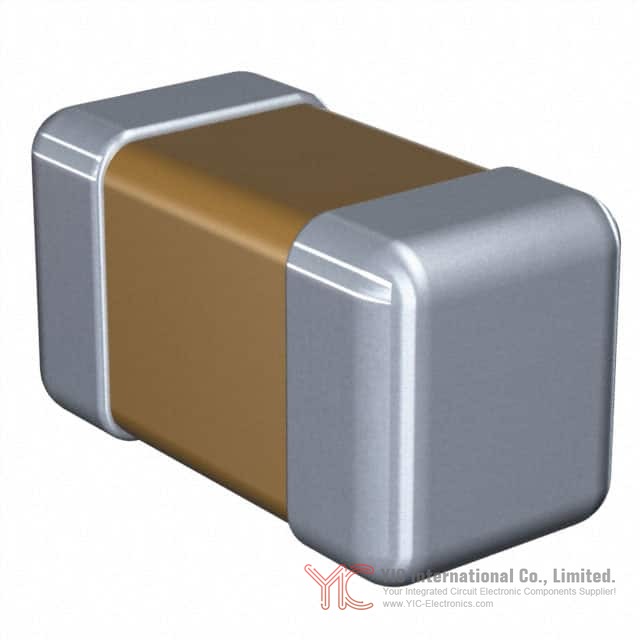
The TDK C0603 Series represents a specialized line of multilayer ceramic chip capacitors engineered for high-frequency and precision RF applications. These capacitors are Class 1 temperature-compensating devices featuring the C0G (NP0) dielectric characteristic, which provides exceptional stability across temperature, frequency, and voltage variations. The C0603 designation corresponds to the EIA CC0201 package standard, establishing a compact form factor measuring 0.60 mm in length and 0.30 mm in width with a standard thickness of 0.30 mm.
The fundamental design philosophy of the C0603 Series centers on delivering elevated quality factors compared to conventional multilayer ceramic capacitors. This performance enhancement translates into reduced power dissipation, lower energy absorption, and improved signal integrity in demanding RF environments. The series accommodates capacitance values ranging from 0.2 pF to 15 pF, making it suitable for applications requiring precise impedance matching and frequency tuning across the RF spectrum.
Physical Specifications and Package Configuration of the C0603 Series
The C0603 Series maintains standardized physical dimensions that facilitate integration into modern high-density circuit boards. The component measures 0.60 mm ±0.03 mm in length and 0.30 mm ±0.03 mm in width, with a standard thickness of 0.30 mm. This compact geometry enables placement in space-constrained applications while maintaining mechanical robustness during assembly and field operation.
The package configuration follows established industry standards, with components supplied in tape-and-reel format for automated pick-and-place assembly. The carrier tape configuration incorporates a flexible substrate capable of winding around a minimum radius of 30 mm without component damage. Component placement density within the tape meets stringent specifications, with missing components limited to less than 0.1 percent. The cover tape exhibits controlled peel-back force characteristics to ensure reliable component retention during handling and transportation while permitting clean extraction during assembly operations.
Temperature Stability and Capacitance Range of the C0603 Series
The C0603 Series employs C0G (NP0) temperature compensation characteristics, delivering temperature stability across the operating range of -55°C to +125°C with a temperature coefficient of 0 ±30 ppm/°C. This specification indicates that capacitance variation remains minimal across the full temperature spectrum, a characteristic particularly valuable in frequency-critical applications such as voltage-controlled oscillators and temperature-compensated crystal oscillators where frequency drift must be minimized.
The capacitance range table for the C0603 Series provides discrete values spanning from 0.2 pF to 15 pF in Class 1 configuration. The part number construction encodes the nominal capacitance value using a three-digit code where the first two digits represent significant figures and the third digit indicates the multiplier. For example, the designation "R2C" within a part number indicates 6.2 pF capacitance. The "R" character functions as a decimal point indicator within the part number nomenclature. This encoding system permits rapid identification of component specifications from the part number alone, streamlining procurement and inventory management processes.
Electrical Performance Characteristics of the C0603 Series High Q Capacitors
The defining characteristic of the C0603 Series lies in its elevated quality factor (Q) compared to standard multilayer ceramic capacitors. Higher Q values indicate reduced dielectric losses and lower equivalent series resistance, resulting in improved energy efficiency and reduced heat generation during operation. This performance advantage becomes particularly pronounced in high-frequency applications where power dissipation and signal attenuation directly impact system efficiency and noise performance.
The C0603 Series demonstrates excellent attenuation characteristics and exhibits a high self-resonant frequency, enabling stable operation across extended frequency ranges without the impedance anomalies that plague conventional capacitors at higher frequencies. The combination of high Q factor and elevated self-resonant frequency permits the C0603 Series to function effectively in matching networks and filter circuits where frequency response flatness and minimal insertion loss are design requirements.
Lower power dissipation and reduced energy absorption characteristics of the C0603 Series translate into practical benefits in RF power amplifier modules and low-noise amplifier stages where thermal management and signal fidelity represent critical design constraints. The capacitor's ability to maintain stable performance under high-frequency signal conditions without introducing significant losses enables designers to achieve target noise figures and power efficiency specifications.
Voltage Rating and Tolerance Specifications of the C0603 Series
The C0603 Series is available with a rated voltage of 25V DC, designated by the voltage code "1E" within the part number structure. This voltage rating establishes the maximum continuous DC voltage that may be applied across the capacitor without risk of dielectric breakdown or performance degradation. The 25V rating accommodates applications utilizing moderate voltage supplies while maintaining adequate safety margins for transient overvoltage conditions typical in RF and communication circuits.
Capacitance tolerance for the C0603 Series is available in both standard and tight tolerance configurations. Standard tolerance options provide adequate precision for most matching and filtering applications, while tight tolerance variants serve applications requiring precise capacitance values for frequency-critical tuning networks. The tolerance specification directly impacts the achievable accuracy of impedance matching networks and resonant frequency tuning circuits, making tolerance selection a significant consideration during component specification.
Part Number Decoding and Selection for C0603 Series Components
The C0603 Series part number structure follows a systematic encoding convention that permits rapid identification of component specifications. The part number format begins with the series designation "C," followed by the package code "0603" indicating the EIA CC0201 form factor. The temperature characteristic designation "C0G" identifies the Class 1 temperature-compensating dielectric material system. The voltage code "1E" specifies the 25V DC rated voltage.
The nominal capacitance value follows the voltage code, expressed in three-digit format with the third digit functioning as a multiplier. For instance, a part number containing "6R2" indicates 6.2 pF capacitance. The tolerance code follows the capacitance designation, with "C" indicating standard tolerance and other designations specifying tighter tolerance bands. The final characters in the part number represent internal TDK coding and packaging configuration information.
Understanding this part number structure enables procurement personnel to rapidly cross-reference specifications, verify component selections against design requirements, and identify suitable alternatives when supply constraints necessitate component substitution. The systematic encoding also facilitates automated inventory management and bill-of-materials processing in manufacturing environments.
Soldering and Assembly Considerations for C0603 Series Capacitors
Successful integration of C0603 Series capacitors into production assemblies requires adherence to established soldering practices and thermal profile management. The recommended soldering land pattern provides defined pad geometry that accommodates the component's physical dimensions while ensuring adequate solder coverage for mechanical retention and electrical connection. Proper land pattern design prevents solder bridging between adjacent pads and ensures uniform solder fillet formation around component terminations.
The recommended solder amount specification establishes guidelines for solder volume application during reflow soldering operations. Excessive solder application can generate tensile forces on the component body during cooling, potentially causing mechanical cracking of the ceramic dielectric material. Conversely, insufficient solder creates small fillets that may result in contact failure or inadequate mechanical retention of the component to the printed circuit board. Achieving the optimal solder volume requires careful control of solder paste deposition and reflow thermal profiles.
The recommended soldering profile specifies preheating conditions, peak temperature exposure, and cooling rates that minimize thermal stress on the component while ensuring complete solder reflow and adequate wetting of component terminations. Two solder composition options are specified: traditional tin-lead solder (Sn-37Pb) and lead-free alternatives (Sn-3.0Ag-0.5Cu). The lead-free composition requires slightly elevated peak temperatures compared to tin-lead solder, necessitating verification that the selected reflow profile remains compatible with other board-level components and substrate materials.
The recommended soldering duration establishes time windows for thermal exposure at elevated temperatures. Excessive duration at peak temperature can degrade solder joint reliability and potentially affect component performance, while insufficient duration may result in incomplete solder reflow and inadequate wetting. Careful monitoring of reflow oven performance and periodic thermal profile verification ensure consistent solder joint quality across production runs.
Packaging and Handling Requirements for the C0603 Series
The C0603 Series is supplied in tape-and-reel packaging configured for automated assembly equipment. The carrier tape exhibits specified flexibility characteristics, permitting winding around a minimum radius of 30 mm without component damage or tape deformation. The cover tape maintains controlled peel-back force to ensure reliable component retention during storage and transportation while permitting clean extraction during assembly operations.
Component placement density within the tape meets stringent specifications, with missing components limited to less than 0.1 percent. This specification ensures that automated pick-and-place equipment encounters components at expected positions, minimizing assembly line disruptions and maintaining production throughput. The cover tape shall not protrude beyond the edges of the carrier tape and shall not cover the sprocket holes, ensuring compatibility with standard tape-feeding mechanisms in automated assembly equipment.
The reel structure accommodates specified component quantities per reel, with standard configurations supporting high-volume production requirements. The reel design permits reliable unwinding and component extraction while maintaining tape tension and preventing component spillage. Proper storage conditions for tape-and-reel packaged components include controlled temperature and humidity environments to prevent moisture absorption and maintain component performance characteristics.
Environmental Compliance and Material Composition of the C0603 Series
The C0603 Series conforms to the European Union Restriction of Hazardous Substances (RoHS) Directive, which restricts the use of lead, mercury, cadmium, hexavalent chromium, polybrominated biphenyls (PBB), and polybrominated diphenyl ethers (PBDE) in electrical and electronic devices. TDK has established internal environmental assurance standards that exceed the minimum RoHS requirements, ensuring that C0603 Series capacitors meet regulatory requirements across multiple jurisdictions and customer specifications.
The C0603 Series does not contain the 15 substances identified as Substances of Very High Concern (SVHC) under the European REACH regulation. Additionally, the components comply with European Directives 2000/53/CE and 2005/673/CE regarding the restriction of hazardous substances in vehicles and electrical equipment, and Directive 2003/11/CE regarding pentabromodiphenyl ether and octabromodiphenyl ether restrictions.
The internal structure and material system of the C0603 Series employ multilayer ceramic construction with dielectric materials formulated to achieve the specified C0G temperature characteristic and Class 1 performance classification. The ceramic dielectric material system provides the stable capacitance-temperature relationship and low dielectric loss characteristics that define the C0603 Series performance envelope. Metallic terminations and internal electrode materials are selected to ensure reliable electrical connection and long-term stability under operating conditions.
Application Domains for the C0603 Series High Q Capacitors
The C0603 Series addresses a diverse range of high-frequency and RF applications where capacitance stability, low loss, and compact form factor represent design requirements. High-frequency applications including power amplifier modules benefit from the C0603 Series' elevated Q factor and reduced power dissipation, enabling efficient signal processing and thermal management in compact designs.
Cellular communication systems, including Bluetooth and other wireless protocols, utilize C0603 Series capacitors in impedance matching networks and frequency tuning circuits where precise capacitance values and temperature stability ensure reliable frequency allocation and signal integrity across operating temperature ranges. Cable and satellite television systems employ C0603 Series capacitors in filtering and matching networks that maintain signal quality across extended frequency ranges.
GPS and satellite radio receivers utilize C0603 Series capacitors in oscillator tuning networks and filter circuits where frequency stability and low phase noise are essential for accurate positioning and signal reception. Voltage-controlled oscillators (VCOs) and temperature-compensated crystal oscillators (TCXOs) rely on the C0603 Series' temperature stability and precise capacitance values to maintain frequency accuracy across environmental variations.
Filter networks and impedance matching networks in RF amplifier stages benefit from the C0603 Series' low loss characteristics and stable frequency response. Low-noise amplifier stages employ C0603 Series capacitors in input matching networks where minimal insertion loss and stable impedance transformation preserve the noise figure performance of sensitive receiver front ends. DC blocking circuits utilize the C0603 Series' stable capacitance values to establish predictable high-pass filter characteristics while minimizing signal attenuation at operating frequencies.
Conclusion
The TDK C0603 Series High Q ceramic capacitors represent a specialized component category engineered for demanding RF and high-frequency applications where conventional multilayer ceramic capacitors prove inadequate. The combination of elevated quality factors, exceptional temperature stability, compact form factor, and wide capacitance range enables designers to achieve performance objectives in frequency-critical circuits while maintaining compatibility with modern automated assembly processes. The C0603 Series' compliance with environmental regulations and availability through established distribution channels ensures reliable supply and regulatory compliance across global markets.
Frequently Asked Questions (FAQ)
- Q1. What distinguishes the C0603 Series from standard multilayer ceramic capacitors?
-
- A1. The C0603 Series incorporates design enhancements that elevate the quality factor (Q) compared to conventional multilayer ceramic capacitors. Higher Q values indicate reduced dielectric losses and lower equivalent series resistance, resulting in decreased power dissipation and improved signal integrity in high-frequency applications. The elevated self-resonant frequency permits stable operation across extended frequency ranges without the impedance anomalies that affect standard capacitors at higher frequencies. These characteristics make the C0603 Series particularly suitable for RF amplifier matching networks, oscillator tuning circuits, and filter applications where insertion loss and frequency response flatness directly impact system performance.
- Q2. How does the C0G temperature characteristic affect circuit performance in temperature-varying environments?
-
- A2. The C0G (NP0) temperature characteristic specifies a temperature coefficient of 0 ±30 ppm/°C across the operating range of -55°C to +125°C. This specification indicates that capacitance variation remains minimal across the full temperature spectrum, typically within ±0.3 percent across the entire temperature range. In frequency-critical applications such as voltage-controlled oscillators and temperature-compensated crystal oscillators, this stability prevents frequency drift that would otherwise occur if capacitance values changed significantly with temperature. For example, in a VCO tuning network, a capacitor with poor temperature stability might cause frequency deviation of several megahertz across a 100°C temperature range, whereas the C0603 Series maintains frequency stability within acceptable limits for communication system requirements.
- Q3. What is the significance of the 25V rated voltage specification for the C0603 Series?
-
- A3. The 25V DC rated voltage establishes the maximum continuous voltage that may be applied across the capacitor without risk of dielectric breakdown or performance degradation. This rating accommodates applications utilizing moderate voltage supplies while maintaining adequate safety margins for transient overvoltage conditions typical in RF and communication circuits. In practical applications, designers typically apply voltages significantly below the rated value to ensure long-term reliability and maintain performance margins. For instance, in a 12V RF amplifier circuit, the 25V rating provides a safety factor of approximately 2:1, ensuring reliable operation even if supply voltage transients exceed nominal values.
- Q4. How should the C0603 Series be soldered to ensure reliable mechanical and electrical connections?
-
- A4. Successful soldering requires adherence to the recommended soldering profile, which specifies preheating conditions, peak temperature exposure, and cooling rates that minimize thermal stress on the component. The recommended solder amount specification establishes guidelines for solder volume application during reflow soldering operations. Excessive solder can generate tensile forces on the component body during cooling, potentially causing mechanical cracking, while insufficient solder creates small fillets that may result in contact failure. The recommended soldering duration establishes time windows for thermal exposure at elevated temperatures. Two solder composition options are specified: traditional tin-lead solder (Sn-37Pb) and lead-free alternatives (Sn-3.0Ag-0.5Cu). Lead-free compositions require slightly elevated peak temperatures, necessitating verification that the selected reflow profile remains compatible with other board-level components.
- Q5. What does the part number "C0603C0G1E6R2C030BG" indicate about the component specifications?
-
- A5. The part number decodes as follows: "C" designates the series, "0603" indicates the EIA CC0201 package form factor with dimensions of 0.60 mm length and 0.30 mm width, "C0G" specifies the Class 1 temperature-compensating dielectric material system with 0 ±30 ppm/°C temperature coefficient, "1E" indicates the 25V DC rated voltage, "6R2" specifies the nominal capacitance value of 6.2 pF, and "C" indicates standard tolerance. The remaining characters represent internal TDK coding and packaging configuration information. Understanding this structure enables rapid identification of component specifications and facilitates cross-referencing against design requirements.
- Q6. How does the compact 0603 package size impact circuit design and assembly considerations?
-
- A6. The C0603 package measures 0.60 mm in length and 0.30 mm in width, representing one of the smallest standard capacitor form factors available. This compact geometry enables integration into high-density circuit boards where space constraints would preclude use of larger components. The small size requires precise land pattern design to ensure adequate solder coverage and mechanical retention while preventing solder bridging between adjacent pads. Automated pick-and-place equipment must be capable of handling components of this size, and reflow soldering profiles must be carefully controlled to prevent thermal damage to the small ceramic body. The compact form factor also reduces parasitic inductance associated with component leads, improving high-frequency performance in RF circuits.
- Q7. What environmental compliance certifications does the C0603 Series maintain?
-
- A7. The C0603 Series conforms to the European Union Restriction of Hazardous Substances (RoHS) Directive, which restricts the use of lead, mercury, cadmium, hexavalent chromium, polybrominated biphenyls (PBB), and polybrominated diphenyl ethers (PBDE) in electrical and electronic devices. The components do not contain the 15 substances identified as Substances of Very High Concern (SVHC) under the European REACH regulation. Additionally, the C0603 Series complies with European Directives 2000/53/CE and 2005/673/CE regarding hazardous substance restrictions in vehicles and electrical equipment, and Directive 2003/11/CE regarding pentabromodiphenyl ether and octabromodiphenyl ether restrictions. These certifications ensure regulatory compliance across multiple jurisdictions and customer specifications.
- Q8. What capacitance values are available within the C0603 Series, and how should tolerance specifications be selected?
-
- A8. The C0603 Series accommodates capacitance values ranging from 0.2 pF to 15 pF in Class 1 configuration. Discrete values are available at standard intervals throughout this range, with the specific values listed in the capacitance range tables provided in the technical documentation. Capacitance tolerance is available in both standard and tight tolerance configurations. Standard tolerance options provide adequate precision for most matching and filtering applications where capacitance variations of a few percent remain acceptable. Tight tolerance variants serve applications requiring precise capacitance values for frequency-critical tuning networks, such as VCO tuning circuits or precision impedance matching networks where capacitance accuracy directly impacts circuit performance. Selection between standard and tight tolerance should be based on the specific circuit requirements and the sensitivity of circuit performance to capacitance variations.
- Q9. How should C0603 Series capacitors be stored and handled to maintain performance characteristics?
-
- A9. The C0603 Series is supplied in tape-and-reel packaging configured for automated assembly equipment. Components should be stored in controlled temperature and humidity environments to prevent moisture absorption and maintain performance characteristics. The carrier tape exhibits specified flexibility characteristics, permitting winding around a minimum radius of 30 mm without component damage. The cover tape maintains controlled peel-back force to ensure reliable component retention during storage and transportation while permitting clean extraction during assembly operations. Component placement density within the tape meets stringent specifications, with missing components limited to less than 0.1 percent. Proper handling procedures should prevent mechanical shock or vibration that might damage the ceramic dielectric material or dislodge components from the carrier tape.
- Q10. What applications benefit most from the elevated Q factor and low loss characteristics of the C0603 Series?
-
- A10. Applications that benefit most from the C0603 Series' elevated Q factor and low loss characteristics include power amplifier modules where reduced power dissipation enables efficient thermal management, low-noise amplifier stages where minimal insertion loss preserves noise figure performance, voltage-controlled oscillators where low phase noise improves frequency stability, and impedance matching networks where flat frequency response and minimal attenuation maintain signal integrity. Cellular communication systems, GPS receivers, satellite radio systems, and cable television equipment all employ C0603 Series capacitors in applications where frequency response flatness, low insertion loss, and stable impedance transformation represent design requirements. The combination of high Q factor and elevated self-resonant frequency enables the C0603 Series to function effectively across extended frequency ranges without the impedance anomalies that plague conventional capacitors at higher frequencies.