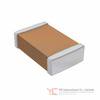
Product Overview of CL31C470JGFNNNE
CL31C470JGFNNNE from Samsung Electro-Mechanics is a multilayer ceramic capacitor (MLCC) specified as 47 pF ±5%, 500 V, C0G/NP0 in a 1206 (3216 metric) package. It is a chip-type normal series MLCC designed to provide charge storage, timing stability, and low-loss signal coupling in general electronic circuits.
As a C0G/NP0 Class I dielectric device, CL31C470JGFNNNE offers near-zero temperature coefficient and excellent linearity, making it suitable where capacitance must remain almost constant with temperature, voltage, and time. The 500 V rating enables use in higher-voltage sections, including portions of DC‑DC converters, signal conditioning networks, and industrial control electronics.
The 1206 body size (3216 metric) offers a balance between voltage capability, mechanical robustness, and ease of automated assembly. CL31C470JGFNNNE is RoHS3 compliant, with an MSL level of 1 (unlimited floor life in typical conditions) and is classified as REACH unaffected, ECCN EAR99.
---
Electrical Characteristics and Performance of CL31C470JGFNNNE
CL31C470JGFNNNE uses a C0G/NP0 Class I ceramic dielectric. This underpins several key electrical behaviors relevant to precision and high-stability circuits:
Capacitance and Tolerance of CL31C470JGFNNNE
- Nominal capacitance: 47 pF
- Tolerance code “J”: ±5%
- Capacitance is expressed in picofarads with two significant digits plus the number of zeros; for CL31C470JGFNNNE the “470” code corresponds to 47 pF.
- As a Class I capacitor, the measured capacitance follows the RS-198-1-F-2002 standard, using defined measurement voltage and frequency.
Temperature Characteristics of CL31C470JGFNNNE (C0G/NP0)
- C0G/NP0 exhibits negligible capacitance change over temperature.
- Unlike Class II dielectrics (X5R, X6S, X7R, etc.), Class I C0G/NP0 is used when capacitance stability outweighs volumetric efficiency.
- In practice, C0G/NP0 capacitors such as CL31C470JGFNNNE are used in timing, filtering, and RF networks where predictable behavior from low to high ambient temperature is required.
Loss Characteristics and Linearity of CL31C470JGFNNNE
- Class I MLCCs like CL31C470JGFNNNE are characterized by very low loss, typically expressed with a high Q factor (Q = 1/DF).
- Low dissipation factor (tan δ) and high Q support use in RF circuits, resonant networks, and precision filters where insertion loss and linearity matter.
- Samsung Electro-Mechanics explicitly recommends Class I MLCCs for coupling circuits, filter circuits, and time-constant circuits requiring good linearity and low loss.
Voltage Characteristics and CL31C470JGFNNNE
- Rated voltage: 500 V.
- “Rated voltage code” in the part number defines the maximum continuous operating voltage; CL31C470JGFNNNE is intended for circuits up to 500 V under specified conditions.
- While DC and AC bias effects are a major concern for high‑K Class II MLCCs, C0G/NP0 dielectric in CL31C470JGFNNNE exhibits minimal capacitance change versus applied voltage in typical use.
- Derating concepts in the catalog apply generically: some MLCCs are tested at 150% of rated voltage; for parts marked as “derated,” a derating curve versus temperature is used to maintain equivalent lifetime. For CL31C470JGFNNNE, the general guidance is that applied voltage (including peak of AC or DC+AC) must not exceed the rated 500 V.
Insulation Resistance and Reliability Behavior of CL31C470JGFNNNE
- Ceramic dielectrics used in MLCCs provide high insulation resistance (IR) with low DC leakage.
- IR is measured 1 minute after applying the rated DC voltage, allowing charging current to decay.
- While the datasheet outlines IR behavior in general, the 500 V Class I implementation of CL31C470JGFNNNE targets use where low leakage at high voltage is required (e.g., high‑impedance nodes in precision analog systems).
Aging and Stability of CL31C470JGFNNNE
- Aging (time-dependent capacitance decrease) is a phenomenon of high‑K Class II dielectrics; Class I C0G/NP0 capacitors such as CL31C470JGFNNNE show negligible aging.
- For systems that must maintain capacitance over years without recalibration, Class I behavior is advantageous.
Impedance and Frequency Characteristics of CL31C470JGFNNNE
- MLCCs behave as capacitors at low frequency and as inductors at sufficiently high frequency due to ESL.
- The impedance Z = R + jX includes ESR (dielectric and electrode loss) and reactance.
- Self-resonant frequency (SRF) occurs where capacitive reactance XC and inductive reactance XL cancel; at SRF, CL31C470JGFNNNE’s impedance is essentially its ESR.
- For RF design, CL31C470JGFNNNE’s 47 pF value and C0G/NP0 dielectric support narrow drift in resonant frequency across temperature and voltage compared to Class II alternatives.
Self-Heating and AC Application of CL31C470JGFNNNE
- When AC or pulse currents flow, self-heating arises from ESR.
- The general guideline from Samsung Electro-Mechanics is:
- MLCC surface temperature must remain within the specified maximum operating temperature.
- Self-heating should not cause more than a 20 °C temperature rise.
- For a 47 pF C0G/NP0 device such as CL31C470JGFNNNE, currents are typically lower than in bulk decoupling roles, but high‑frequency or high‑voltage AC (e.g., resonant converters or RF matching networks) still require verification of temperature rise.
---
CL31C470JGFNNNE within the Samsung Electro-Mechanics MLCC Portfolio
CL31C470JGFNNNE is part of the Samsung Electro-Mechanics multilayer ceramic capacitor lineup, which is structured into multiple reliability and feature categories:
Normal Capacitors_Standard and CL31C470JGFNNNE
- Normal Standard MLCCs are described as general-purpose chip capacitors that:
- Temporarily charge and reduce noise in electronic circuits.
- Offer a broad selection of sizes and capacitance ranges.
- Are structurally suited to high‑speed automatic PCB mounting.
- CL31C470JGFNNNE fits in this Normal Capacitors_Standard family with a high-voltage, tight-tolerance C0G/NP0 variant in 1206.
Normal Capacitors_High Level I vs CL31C470JGFNNNE
- High Level I capacitors are “industrial grade” with improved moisture resistance and strengthened outgoing bending tests (65 °C, 90%RH, 1Vr, 500 h).
- Typical applications: servers, network equipment, base stations, solar inverters, and DC‑DC converters.
- While CL31C470JGFNNNE is not explicitly marked as High Level I in the provided extract, it can coexist in designs that also use High Level I MLCCs where higher reliability is needed on specific rails.
Normal Capacitors_High Level II vs CL31C470JGFNNNE
- High Level II capacitors target outdoor industrial use, with reinforced reliability (85 °C, 85%RH, 1Vr, 1000 h) and excellent bending strength.
- Used in base stations, solar inverters, and DC‑DC converters.
- CL31C470JGFNNNE as a Normal Standard C0G/NP0 device can be deployed alongside High Level II parts for functions where 500 V and ultra‑stable C0G dielectric are required.
Specialized MLCC Families alongside CL31C470JGFNNNE
Although CL31C470JGFNNNE is a standard MLCC, the same catalog also describes specialized families:
- Molded Frame Capacitors (MFC):
- Enhanced solder crack resistance, high board bending strength (up to 10 mm vs 5 mm spec), improved moisture resistance via epoxy molding compound, and acoustic noise reduction.
- Land Side Capacitors (LSC):
- Ultra‑thin, space-saving MLCCs mounted between solder balls in modules, providing local decoupling and noise reduction in slim designs.
- High Bending Strength Capacitors:
- Soft termination (metal/epoxy) to absorb mechanical stress such as board bending.
- Low Acoustic Noise Capacitors:
- THMC and ANSC types to reduce audible noise from piezoelectric effects in Class II bodies.
- Low ESL Capacitors:
- Reverse and multi-terminal (3T, 8T) configurations to lower ESL and enable high-speed energy transfer with fewer parts.
CL31C470JGFNNNE is a conventional 2‑terminal MLCC, but system designs can mix this high‑stability C0G/NP0 part with the above specialized types to address mechanical stress, audible noise, or high‑speed power integrity constraints.
---
Construction, Materials, and Reliability Attributes of CL31C470JGFNNNE
Physical Construction of CL31C470JGFNNNE
The internal structure of CL31C470JGFNNNE follows the Samsung normal MLCC design:
- Ceramic body: multilayer ceramic dielectric (C0G/NP0 for this part).
- Inner electrodes: Ni or Ni/Cu (internal Cu applied only on limited products, per catalog).
- Plating stack: Ni barrier plating followed by Sn finish.
- Terminations: Cu or Cu+metal epoxy termination structure, supporting solder wetting and mechanical anchoring.
This configuration is optimized for:
- Stable capacitance with low dielectric loss.
- Good solderability on standard SMT pads with Sn-based solders.
- Compatibility with high-speed automatic chip placement.
Reliability Framework Relevant to CL31C470JGFNNNE
The catalog defines generalized reliability test conditions:
- Endurance and operational life tests often run at fractions or multiples of rated voltage (100%–150%) depending on whether the part is “derated” and on model-specific conditions.
- Some parts guarantee 2 mm or 3 mm board bending performance.
- Moisture resistance and temperature cycling test procedures are defined, including pre- and post‑measurement heat treatments (150 °C for 1 hour, then 24 ± 2 hours at room temperature for Class II, and similar “latter measurement” conditions for Class I).
- Reliability test conditions are defined with all size codes in inch, and special tests are used for camera strobe capacitors.
ROHS and MSL Status of CL31C470JGFNNNE
- RoHS Status: RoHS3 Compliant.
- MSL: 1 (unlimited).
- REACH Status: Unaffected.
- ECCN: EAR99.
These attributes facilitate global sourcing and streamlined storage/handling without moisture bag control typically required for higher MSL devices.
---
Typical Applications and Use Cases for CL31C470JGFNNNE
Samsung’s catalog illustrates application categories where MLCCs such as CL31C470JGFNNNE are used:
Consumer and Mobile Systems with CL31C470JGFNNNE
- Smartphones and tablets:
- Power management with multiple PMICs and external passive networks.
- RF front-ends, filters, and timing circuits benefiting from stable low‑value C0G/NP0 capacitors such as CL31C470JGFNNNE.
- Laptops:
- Around CPU, memory, storage, and Wi‑Fi blocks, CL31C470JGFNNNE can be used for precision filters, reference nodes, and high‑voltage sensing lines.
Data Center and Network Infrastructure with CL31C470JGFNNNE
- Servers:
- High-performance CPUs, PCIe 5.0, and DDR5 require robust power and signal conditioning.
- While bulk decoupling often uses high-capacitance Class II MLCCs, CL31C470JGFNNNE can appear in sense circuits, high-voltage monitoring, and stable timing paths in hot zones where Class I stability is an advantage.
- Network base stations:
- With high‑integration FPGA/DSP devices and elevated ambient temperatures (outdoor radio units), CL31C470JGFNNNE can serve in RF filters and high‑voltage conditioning stages.
Industrial and Power Electronics with CL31C470JGFNNNE
- DC‑DC converters and power systems:
- Gate drive isolation networks, snubber circuits, and high‑voltage sensing nodes may employ a 500 V C0G/NP0 capacitor such as CL31C470JGFNNNE for accuracy and low loss.
- Solar inverters and industrial controllers:
- High-voltage analog measurement, EMI filters, and timing networks can benefit from the 500 V rating combined with tight tolerance and minimal drift.
Everyday example: In a 400 V industrial DC bus measurement circuit, CL31C470JGFNNNE can be placed across part of a resistor divider to stabilize frequency response and noise behavior without significant capacitance change over temperature or bus voltage variations.
---
Design-In Considerations for CL31C470JGFNNNE in Real Circuits
Operating Voltage and Derating for CL31C470JGFNNNE
- Applied DC voltage and the peak of any superimposed AC must not exceed the 500 V rating of CL31C470JGFNNNE.
- For DC+AC, design around the maximum instantaneous value.
- For AC or pulse-only conditions, the peak-to-peak voltage must not exceed 500 V.
- Surges, spikes, and ESD events should be managed so that the stress on CL31C470JGFNNNE remains within specification; otherwise dielectric breakdown and short failure are possible.
Self-Heating and Ripple with CL31C470JGFNNNE
- In higher-frequency or high‑voltage AC use, verify that the temperature rise of CL31C470JGFNNNE does not exceed 20 °C and that its surface remains below the maximum operating temperature.
- Example: In a high‑Q resonant tank, monitor the capacitor’s surface temperature under worst‑case drive conditions during validation.
Impedance, ESL, and RF Use of CL31C470JGFNNNE
- The small 47 pF value and C0G dielectric position CL31C470JGFNNNE for RF, where its SRF and low ESR can be exploited.
- Network or impedance analyzers should be used with appropriate AC drive levels to avoid measurement distortion from AC voltage characteristics.
Mechanical Stress, Vibration, and CL31C470JGFNNNE
- Board bending and shocks can induce cracking in ceramic bodies.
- General recommendations from the catalog apply to CL31C470JGFNNNE:
- Avoid areas of high flex, such as near connectors, panel edges, and screw holes.
- Consider using high bending strength MLCCs or soft termination variants for locations that see frequent bending; CL31C470JGFNNNE itself is a standard termination part.
Circuit-Level Protection with CL31C470JGFNNNE
- For systems where a short failure in CL31C470JGFNNNE could be hazardous, external safety measures (e.g., fuses, current-limiting resistors) are advised so that MLCC failure does not result in equipment damage or personal injury.
---
Mounting, Soldering, and PCB Design Guidelines for CL31C470JGFNNNE
Mounting Orientation and Placement of CL31C470JGFNNNE
- Mount the major axis of the 1206 CL31C470JGFNNNE in parallel with the direction in which bending stress is lowest on the PCB.
- Avoid placing CL31C470JGFNNNE close to PCB v‑cut or depanelization lines; when proximity is unavoidable, follow catalog-recommended orientations to minimize breakage from routing or snapping.
- Keep CL31C470JGFNNNE away from screw holes where board deflection from tightening torque is concentrated.
Pick-and-Place Considerations for CL31C470JGFNNNE
- Nozzle pressure: keep within approximately 300 g.f to avoid cracking.
- On double-sided boards, support the PCB when placing components on the second side so CL31C470JGFNNNE on the opposite side is not stressed by board flex.
- Maintain and clean suction nozzles and claws to avoid uneven forces during placement.
Reflow Soldering Profile for CL31C470JGFNNNE
- Reflow soldering is the primary method for mounting CL31C470JGFNNNE.
- Follow the catalog’s reflow profile:
- Preheat PCB and components so temperature differences are minimized.
- Keep peak temperature and time within recommended limits (typically lead-free profiles with controlled time above liquidus).
- Limit the number of reflow cycles (recommended less than three).
- Using too low a peak temperature can cause:
- Poor wetting.
- Solder voids.
- Reduced adhesion and increased risk of tombstoning.
- After reflow, natural air cooling is recommended rather than forced rapid cooling to reduce thermal shock.
Solder Amount and Land Pattern for CL31C470JGFNNNE
- Excess solder increases fillet height and stress on CL31C470JGFNNNE during board bending or thermal cycling.
- Too little solder reduces mechanical anchoring and can lead to detached capacitors.
- Samsung Electro-Mechanics provides recommended land dimensions for reflow footprints; these should be followed for CL31C470JGFNNNE to control solder volume and mechanical behavior.
Flow Soldering and Rework with CL31C470JGFNNNE
- For flow soldering, peak temperature (~260 °C) and time (~5 s) must be respected; preheating is required to reduce thermal shock.
- Manual soldering with an iron is the highest risk step:
- Preheat PCB and CL31C470JGFNNNE.
- Avoid direct contact between iron tip and ceramic body.
- Minimize contact time; control ΔT between iron and preheat temperature.
- Spot heaters provide more uniform heating and can be preferable for rework, provided nozzle distance and air temperature are controlled.
PCB Handling, Cutting, and Assembly with CL31C470JGFNNNE
- Avoid bending or twisting PCBs after CL31C470JGFNNNE is mounted.
- During depanelization, use methods that minimize board deflection (e.g., routing and supported breaking rather than rough snapping).
- When inserting large through-hole components or tightening shields and screws near CL31C470JGFNNNE, support the PCB to avoid flexing.
Adhesives, Flux, and Coating around CL31C470JGFNNNE
- If adhesives are used before soldering CL31C470JGFNNNE:
- Choose adhesives with appropriate thermal expansion, low curing shrinkage, and compatibility with MLCC materials.
- Avoid excessive adhesive volume that can spill onto pads and degrade solder joints.
- Flux:
- Apply thin and evenly; excessive flux can generate gas and degrade solderability.
- Halogen content should be ≤0.1%; strong acidic flux can corrode terminations.
- Coating:
- Coating or potting resins should have expansion close to ceramic, low curing shrinkage, and minimal hygroscopic behavior.
- Excessive stress from coating contraction can crack CL31C470JGFNNNE or degrade insulation resistance.
---
Packaging and Handling of CL31C470JGFNNNE
Taping and Reel Packaging of CL31C470JGFNNNE
- CL31C470JGFNNNE is supplied on tape and reel designed for automatic handling according to IEC 60286-3.
- Available tape types:
- Cardboard (paper) tape with 4 mm pitch or 1/2 mm pitch variants.
- Embossed plastic tape for some sizes.
- Cover tape peel-off force: 10 g.f to 70 g.f, ensuring stable pick-and-place without damage.
Reel and Box Options for CL31C470JGFNNNE
- Reel sizes are standardized (e.g., 7" and 13" reels) with inner and outer box options:
- 7" reel inner box configurations (e.g., 5 reels per inner box) and corresponding outer cartons.
- 13" reel packaging with inner and outer box stacks.
- Labels on reels and boxes typically include:
- Chip size (e.g., 1206 for CL31C470JGFNNNE).
- Temperature characteristic (C0G/NP0).
- Nominal capacitance (47 pF).
- Model name (CL31C470JGFNNNE).
- Lot and reel numbers.
- Quantity.
Storage Conditions and Shelf Life for CL31C470JGFNNNE
- Recommended storage:
- Temperature: 0–40 °C.
- Relative humidity: 0–70%.
- Oxidation and corrosion accelerate above 70% RH; lower humidity improves solderability.
- Shelf life: up to 6 months from shipment is recommended; beyond that, solderability should be checked before use.
- Store CL31C470JGFNNNE away from corrosive gases such as hydrogen sulfide, sulfur dioxide, chlorine, and ammonia.
Operational Environment for CL31C470JGFNNNE
- Avoid:
- Exposure to water, oil, direct sunlight, ozone, strong UV, excessive vibration/shock, and high humidity.
- Contact between terminations and conductive foreign objects or liquids.
- At system level, if smoke, odor, or abnormal heating is detected, power should be removed to avoid secondary damage.
Transportation Considerations for CL31C470JGFNNNE
- Packages must be handled to prevent deformation, shocks, and excessive vibration.
- Dropping or strong impact can crack MLCC ceramics; affected units should not be used.
---
Conclusion: Applying CL31C470JGFNNNE in Stable, Long-Life Platforms
CL31C470JGFNNNE from Samsung Electro-Mechanics is a 47 pF, 500 V, C0G/NP0, 1206 multilayer ceramic capacitor tailored for environments that demand stable capacitance, low loss, and predictable behavior over temperature, voltage, and time. Positioned within the Normal Capacitors_Standard catalog, CL31C470JGFNNNE complements High Level and specialized MLCC families in mixed-technology assemblies, from smartphones and laptops to servers, base stations, and industrial power systems.
By combining a high rated voltage, Class I dielectric, tight tolerance, RoHS3 compliance, and MSL 1 robustness, CL31C470JGFNNNE fits high‑voltage sensing, RF filtering, timing networks, and precision analog functions. When mounted following Samsung Electro-Mechanics guidelines on layout, soldering, and mechanical handling, CL31C470JGFNNNE supports long-term, stable operation in demanding electronic platforms.
---
Frequently Asked Questions (FAQ)
- Q1. What are the key electrical specifications of CL31C470JGFNNNE?
-
- A1. CL31C470JGFNNNE is a multilayer ceramic capacitor with:
- - Capacitance: 47 pF.
-
- - Tolerance: ±5% (code “J”).
- - Dielectric: C0G/NP0 (Class I temperature compensation).
-
- - Rated voltage: 500 V.
- - Package size: 1206 (3216 metric).
-
- As a Class I C0G/NP0 MLCC, it exhibits low loss and near-zero temperature coefficient of capacitance.
- Q2. In which applications is CL31C470JGFNNNE typically used?
-
- A2. Based on the catalog’s application guidance, MLCCs of the CL31C470JGFNNNE type are suitable for:
- - Precision and RF circuits in smartphones, tablets, laptops, and PCs (timing, filters, coupling).
-
- - High-voltage sensing and filtering in DC‑DC converters, power supplies, and solar inverters.
- - High-stability nodes in servers, base stations, and industrial controls where wide temperature swings and long lifetimes are expected.
-
- The 500 V rating and C0G dielectric particularly suit high‑voltage, high‑stability analog and RF roles.
- Q3. How does the C0G/NP0 dielectric of CL31C470JGFNNNE benefit design compared to X7R or X5R?
-
- A3. C0G/NP0 in CL31C470JGFNNNE provides:
- - Very small capacitance change with temperature.
-
- - Minimal capacitance shift with applied voltage (DC or AC).
- - Negligible aging over time.
-
- - Low dissipation factor and high Q.
- In contrast, Class II dielectrics like X7R or X5R offer higher capacitance per volume but show larger variations with temperature, DC bias, AC voltage, and aging. CL31C470JGFNNNE is therefore more suitable for precision filters, resonant circuits, and timing functions, especially at high voltage.
-
- Q4. What should be considered regarding voltage derating for CL31C470JGFNNNE?
- A4. The general rules for MLCCs in the catalog apply to CL31C470JGFNNNE:
-
- - For DC or DC+AC usage, the maximum applied instantaneous voltage must not exceed 500 V.
- - For AC or pulse-only conditions, the peak-to-peak voltage must not exceed 500 V.
-
- - The catalog describes “derated MLCCs” where test voltage equals 100% of rated; to achieve equivalent life to parts tested at 150% of rated, voltage and temperature derating curves are applied. While CL31C470JGFNNNE is specified at 500 V, designers often choose an operating margin below this rated voltage when long life and harsh environmental conditions are expected.
- Q5. Is CL31C470JGFNNNE suitable for outdoor or high-humidity environments?
-
- A5. The catalog defines High Level I and High Level II MLCC grades for enhanced moisture and humidity performance (e.g., 65 °C/90%RH/500 h and 85 °C/85%RH/1000 h tests). CL31C470JGFNNNE belongs to the Normal Standard family. It can be used in systems that operate outdoors or at elevated humidity, but if the capacitor is placed where humidity, condensation, or moisture cycling is significant, combining it with protective measures (e.g., controlled enclosure, appropriate coating) or considering high-level MLCCs for the most exposed nodes is advisable. Storage should always avoid corrosive gases and high humidity.
- Q6. How does CL31C470JGFNNNE perform under mechanical stress such as board bending or vibration?
-
- A6. As a standard termination MLCC, CL31C470JGFNNNE must be protected against excessive board bending and vibration. The catalog notes that:
- - Bending during depanelization, screw tightening, or connector insertion can crack ceramic capacitors.
-
- - Vibration and shocks must be controlled below specified levels.
- - For locations that experience higher mechanical stress, Samsung Electro-Mechanics offers High Bending Strength capacitors with soft termination or Molded Frame Capacitors.
-
- In practice, CL31C470JGFNNNE should be placed away from high-strain regions and mounted according to recommended orientation and land patterns.
- Q7. What mounting and reflow conditions are recommended for CL31C470JGFNNNE?
-
- A7. CL31C470JGFNNNE follows the general Samsung MLCC reflow recommendations:
- - Use a standard lead-free reflow profile with controlled preheat, ramp, peak, and cooling.
-
- - Minimize ΔT between board and component; preheat to reduce thermal shock.
- - Keep the number of reflow cycles below three unless otherwise validated.
-
- - Control solder paste volume to avoid overly large fillets or insufficient solder.
- - In pick-and-place, limit placement pressure to around 300 g.f and support the board for double-sided assembly.
-
- Q8. How should CL31C470JGFNNNE be stored and what is the shelf life?
- A8. The catalog suggests:
-
- - Storage temperature: 0–40 °C.
- - Relative humidity: 0–70%.
-
- - Avoid corrosive atmospheres such as hydrogen sulfide, sulfur dioxide, and chlorine.
- - Recommended shelf life: within 6 months from shipment for best solderability. Beyond 6 months, solderability should be checked before use.
-
- These conditions apply directly to CL31C470JGFNNNE reels and boxes as supplied.
- Q9. Is CL31C470JGFNNNE affected by capacitance aging?
-
- A9. Capacitance aging is defined in the catalog for Class II (high dielectric constant) MLCCs; their capacitance decreases logarithmically with time and can reset after heat treatment (150 °C, 1 hour). CL31C470JGFNNNE is a Class I C0G/NP0 capacitor, where aging is negligible. This makes it suitable for applications that demand long-term capacitance stability without recalibration.
- Q10. Can CL31C470JGFNNNE be used in high-frequency RF circuits?
-
- A10. Yes. The 47 pF value, C0G/NP0 dielectric, low loss, and stable behavior versus temperature and voltage make CL31C470JGFNNNE suitable for RF filters, matching networks, and resonators. The general impedance guidance from the catalog—regarding SRF, ESR, and measurement via network/impedance analyzers—should be followed. Designers should confirm that CL31C470JGFNNNE’s SRF and Q at the operating frequency meet system requirements.
- Q11. How does CL31C470JGFNNNE behave with AC or pulse voltages?
-
- A11. For CL31C470JGFNNNE:
- - The peak or peak-to-peak value (depending on waveform) must remain below 500 V.
-
- - Self-heating due to ESR must be checked so that the capacitor’s surface stays within its maximum operating temperature and the temperature rise is ≤20 °C.
- - AC and pulse applications are specifically considered in the catalog’s sections on self-heating and applied voltage, and these constraints should be applied during design verification.
-
- Q12. What environmental and safety constraints apply to CL31C470JGFNNNE?
- A12. The catalog’s general disclaimer and limitation of use apply to CL31C470JGFNNNE:
-
- - Use must remain within the published electrical and environmental specifications; out-of-spec storage or installation voids any warranty.
- - For applications requiring especially high reliability—such as transportation, aerospace, nuclear, medical, disaster-prevention, and similar fields—usage conditions (voltage, current, temperature, etc.) should be discussed with the manufacturer’s engineering support.
-
- - Even in less stringent applications, external safeguards (fuses, protective circuitry, redundancy) are recommended where MLCC failure could lead to property damage or personal injury.
- Q13. How should CL31C470JGFNNNE be tested in-circuit without damaging it?
-
- A13. When probing boards that contain CL31C470JGFNNNE:
- - Support the PCB near the test point to avoid bending when the test probe presses down.
-
- - Avoid shock or vibration when contacting probes.
- - Ensure that any test voltages do not exceed the 500 V rating.
-
- - Avoid long-duration or repeated tests that apply excessive AC stress or ripple beyond design conditions, as this can accelerate self-heating and aging of surrounding circuitry.
- Q14. Which flux and cleaning processes are appropriate for CL31C470JGFNNNE?
-
- A14. For CL31C470JGFNNNE:
- - Use flux with halogen content ≤0.1%. Strong acidic flux can corrode terminations and degrade performance.
-
- - Apply flux thin and uniformly; excessive flux can generate gas and impair solderability.
- - Cleaning is generally unnecessary for rosin flux; if cleaning is used, the solution must be compatible with MLCC materials and should be fresh.
-
- - Excessive ultrasonic cleaning power or high-pressure jets can crack solder joints or MLCCs; cleaning processes must be validated so that CL31C470JGFNNNE and neighboring components remain intact.
- Q15. Are there any special considerations when coating or potting around CL31C470JGFNNNE?
-
- A15. Yes. The catalog’s coating cautions apply to CL31C470JGFNNNE:
- - Resin thermal expansion coefficient should be close to ceramic to reduce stress.
-
- - Prefer resins with low curing shrinkage and minimal hygroscopic properties.
- - Avoid strong acidic or halogenated resins that could corrode terminations or degrade insulation resistance.
-
- - Excessive resin thickness and uncontrolled curing profiles can create mechanical stress that cracks the capacitor body or degrades IR.