Product Overview of the DMP4015SK3
The DMP4015SK3 is a p-channel enhancement-mode MOSFET manufactured by Diodes Incorporated, engineered specifically for high-efficiency power-management applications. This device represents a new generation of power MOSFETs designed to minimize on-state resistance while maintaining superior switching performance, making it particularly suited for applications requiring both efficiency and reliability.
The DMP4015SK3 operates with a maximum drain-source voltage rating of 40V and supports continuous drain currents up to 35A at 25°C junction temperature. The device is housed in a TO-252 (DPAK) surface-mount package, which provides a compact form factor suitable for modern power-management circuit designs. The combination of low on-resistance, fast switching speed, and robust thermal characteristics positions this device as a versatile solution for various power conversion topologies.
Electrical Architecture and Operating Principles of the DMP4015SK3
The DMP4015SK3 operates as a p-channel device, meaning the primary charge carriers are holes, and the device conducts when a negative gate-source voltage is applied. This architecture differs from n-channel MOSFETs and requires careful consideration in circuit design, particularly regarding gate drive requirements and signal polarity.
The gate threshold voltage of the DMP4015SK3 ranges from -1.5V to -2.5V, with a typical value of -2V. This relatively low threshold voltage allows the device to be driven by standard logic-level gate drivers, reducing the complexity of the gate drive circuit. The gate-source voltage rating of ±25V provides adequate margin for various gate drive implementations.
The drain-source breakdown voltage is specified at -40V, establishing the maximum voltage the device can withstand between drain and source terminals. This 40V rating accommodates applications in intermediate voltage power supplies, such as 24V or 36V systems commonly found in industrial and automotive environments.
The zero gate voltage drain current (IDSS) is specified at a maximum of -1μA at -40V drain-source voltage, indicating excellent leakage characteristics. This low leakage current minimizes standby power consumption and reduces thermal stress during idle periods. The gate-source leakage current is bounded at ±100nA, further demonstrating the device's ability to maintain stable operation across extended temperature ranges.
On-Resistance Performance and Thermal Management in the DMP4015SK3
The on-resistance of the DMP4015SK3 represents one of its defining characteristics. At a gate-source voltage of -10V and drain current of -9.8A, the maximum on-resistance is specified at 11mΩ. When driven at a lower gate voltage of -4.5V with the same drain current, the on-resistance increases to 15mΩ. This voltage-dependent behavior is typical of MOSFET devices and reflects the relationship between gate overdrive and channel conductivity.
The on-resistance exhibits significant temperature dependence. At 25°C junction temperature with -10V gate drive, the device achieves its minimum on-resistance. As junction temperature increases to 150°C, the on-resistance increases proportionally due to reduced carrier mobility in the semiconductor material. This temperature coefficient must be considered when designing circuits that operate across wide temperature ranges, particularly in applications subject to thermal cycling or ambient temperature variations.
The forward transfer admittance (Yfs) is specified at 26S under standard test conditions, indicating the transconductance of the device. This parameter reflects how effectively the gate voltage controls the drain current and influences the device's switching speed and frequency response.
The body diode of the DMP4015SK3, which provides reverse current conduction capability, exhibits a forward voltage drop of approximately -1V at -1A source current. This diode characteristic is important in applications involving freewheeling or reverse current paths, such as in synchronous buck converters or inductive load switching circuits.
The maximum power dissipation of the DMP4015SK3 is rated at 4.6W at 25°C ambient temperature, decreasing to 2.2W at 70°C ambient temperature. These ratings assume the device is mounted on an FR-4 substrate with appropriate thermal management. The thermal resistance from junction to ambient (RθJA) is specified at 36°C/W under steady-state conditions, while the junction-to-case thermal resistance (RθJC) is 4.5°C/W. These thermal parameters are fundamental to predicting junction temperature rise under given power dissipation levels.
For applications requiring transient thermal analysis, the DMP4015SK3 provides transient thermal resistance data as a function of pulse duration. Single-pulse thermal resistance can be significantly lower than steady-state values, allowing the device to handle brief current spikes without exceeding temperature limits. This characteristic is particularly valuable in switching applications where current peaks occur for microsecond to millisecond durations.
Gate Charge Characteristics and Switching Dynamics of the DMP4015SK3
The total gate charge (Qg) of the DMP4015SK3 is specified at 47.5nC when measured at -20V drain-source voltage and -5V gate-source voltage. This gate charge is subdivided into gate-source charge (Qgs) of 14.2nC and gate-drain charge (Qgd) of 14.6nC. Understanding these charge components is essential for gate drive design, as they determine the energy required to switch the device and influence switching losses.
The input capacitance (Ciss) of the DMP4015SK3 is specified at 4,234pF at -20V drain-source voltage. This relatively large input capacitance reflects the gate-source and gate-drain capacitances in parallel and affects the gate drive circuit's ability to rapidly charge and discharge the gate node. The output capacitance (Coss) is 1,036pF, while the reverse transfer capacitance (Crss) is 526pF. These capacitance values are frequency-dependent and are typically measured at 1MHz.
The gate resistance of the DMP4015SK3 is specified at 7.77Ω, representing the intrinsic resistance of the gate structure. This parameter influences the RC time constant of the gate circuit and contributes to switching delays.
Switching speed is characterized by several timing parameters. The turn-on delay time (tD(ON)) is specified at 13.2ns, representing the time between gate voltage application and the onset of drain current increase. The turn-on rise time (tr) is 10ns, indicating the rate at which drain current increases during the switching transition. The turn-off delay time (tD(OFF)) is 302.7ns, while the turn-off fall time (tF) is 137.9ns. These timing parameters are measured under specific test conditions: -10V gate-source voltage, -20V drain-source voltage, 6Ω gate resistance, and -1A drain current.
The asymmetry between turn-on and turn-off times reflects the different physical mechanisms governing these transitions. Turn-on is typically faster because the gate voltage directly enhances the channel conductivity. Turn-off is slower because the gate voltage must first discharge the gate-drain charge, which couples to the drain voltage through the Miller effect, creating a plateau in the gate voltage waveform during the transition.
Safe Operating Area and Avalanche Performance of the DMP4015SK3
The safe operating area (SOA) of the DMP4015SK3 defines the boundaries within which the device can operate without risk of permanent damage. The SOA is bounded by several limits: the maximum continuous drain current rating, the maximum drain-source voltage rating, and the maximum power dissipation limit.
For pulsed operation, the DMP4015SK3 supports drain currents up to -100A with pulse durations of 10 microseconds and a duty cycle of 1%. This pulsed current rating is significantly higher than the continuous rating, reflecting the device's ability to handle brief current transients without thermal damage.
The avalanche performance of the DMP4015SK3 is particularly noteworthy for applications involving inductive loads. The device is rated for an avalanche current (IAS) of -22A with a 1mH inductor, and an avalanche energy (EAS) of 242mJ under the same conditions. These ratings indicate the device's ability to withstand unclamped inductive switching events, where the drain voltage momentarily exceeds the rated BVDSS due to the energy stored in an inductor being discharged through the device.
The DMP4015SK3 undergoes 100% unclamped inductive switch (UIS) testing during production, ensuring that each device meets the specified avalanche performance. This production testing provides confidence that the device will reliably handle transient overvoltage events that may occur in real-world applications.
The maximum body diode forward current is specified at -5.5A, representing the maximum reverse current the device can conduct through its intrinsic body diode without damage. This rating is important in applications where the device must conduct reverse current, such as in synchronous rectification circuits.
Package Design and Mechanical Specifications of the DMP4015SK3
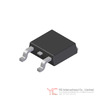
The DMP4015SK3 is housed in a TO-252 (DPAK) package, a widely adopted surface-mount package for power semiconductors. This package features three terminals: drain (D), gate (G), and source (S), with the drain terminal connected to a large copper tab that facilitates heat dissipation.
The package dimensions are precisely specified to ensure compatibility with standard PCB assembly equipment and thermal management structures. The overall package height is approximately 9.91mm, with a width of 6.10mm and length of 6.58mm. The copper tab extends beyond the package body, providing a solderable surface for thermal connection to the PCB.
The package material is molded plastic with a "green" molding compound, complying with environmental standards. The terminal finish is matte tin over annealed copper, providing excellent solderability and corrosion resistance. The package meets UL flammability classification 94V-0, indicating its suitability for applications requiring flame-retardant materials.
The moisture sensitivity level of the DMP4015SK3 is Level 1 per J-STD-020, indicating that the device can be stored indefinitely at room temperature without special moisture control measures. This low moisture sensitivity simplifies inventory management and reduces the risk of moisture-related failures during assembly.
The suggested pad layout for the DMP4015SK3 is optimized for thermal performance and electrical connectivity. The drain pad is significantly larger than the gate and source pads, reflecting the importance of thermal coupling between the device and the PCB. Proper pad design and PCB layout are essential for achieving the specified thermal resistance values.
Environmental Compliance and Reliability Standards for the DMP4015SK3
The DMP4015SK3 complies with RoHS (Restriction of Hazardous Substances) Directive 2002/95/EC, 2011/65/EU (RoHS 2), and 2015/863/EU (RoHS 3). This compliance ensures that the device does not contain prohibited substances such as lead, mercury, cadmium, or hexavalent chromium, making it suitable for applications in regions with strict environmental regulations.
The device is classified as a "green" product, meeting the definition of halogen- and antimony-free components. Specifically, the device contains less than 900ppm bromine, less than 900ppm chlorine (with a combined total of less than 1500ppm), and less than 1000ppm antimony compounds. This classification is important for applications in sensitive environments or industries with strict material requirements.
The DMP4015SK3 is qualified to JEDEC standards as referenced in AEC-Q specifications, indicating its suitability for high-reliability applications. The operating temperature range is -55°C to +150°C, providing adequate margin for applications in harsh environments, including automotive and industrial settings.
The device is available in tape-and-reel packaging with a quantity of 2,500 units per reel, facilitating high-volume manufacturing and automated assembly processes. The marking information on the device includes the product type designation (P4015S) and a date code (YYWW format) indicating the manufacturing week and year.
Conclusion
The DMP4015SK3 represents a well-engineered solution for power-management applications requiring a combination of low on-resistance, fast switching performance, and robust thermal characteristics. Its 40V rating, 35A continuous current capability, and 11mΩ on-resistance at -10V gate drive make it suitable for intermediate-voltage power conversion circuits. The device's avalanche rating and 100% UIS testing provide confidence in its ability to handle transient overvoltage events. Environmental compliance, low moisture sensitivity, and JEDEC qualification ensure reliability across diverse operating conditions. Circuit designers should carefully consider the device's temperature-dependent on-resistance, gate charge characteristics, and thermal management requirements when integrating the DMP4015SK3 into their applications.
Frequently Asked Questions (FAQ)
- Q1. What is the significance of the DMP4015SK3's 11mΩ on-resistance specification, and how does it affect circuit efficiency?
-
- A1. The 11mΩ on-resistance of the DMP4015SK3 (measured at -10V gate drive and -9.8A drain current) directly determines the power dissipation when the device conducts current. Power loss is calculated as I²R, so a 14A current through 11mΩ results in approximately 2.16W of dissipation. Lower on-resistance reduces conduction losses, improving overall circuit efficiency. This is particularly important in high-frequency switching applications where conduction losses can dominate total power consumption. Designers should verify that the thermal management design can handle the calculated power dissipation at the expected operating current and ambient temperature.
- Q2. How does temperature affect the on-resistance of the DMP4015SK3, and what design considerations does this impose?
-
- A2. The on-resistance of the DMP4015SK3 increases with junction temperature due to reduced carrier mobility in the semiconductor material. At elevated temperatures, the device exhibits higher on-resistance, which in turn generates more heat, creating a positive feedback loop. Designers must account for this temperature coefficient when calculating worst-case power dissipation. For applications operating at high ambient temperatures or with limited cooling, the actual on-resistance may be significantly higher than the 25°C specification. Thermal management design should ensure that junction temperature remains within acceptable limits to prevent excessive power dissipation and potential thermal runaway.
- Q3. What does the gate threshold voltage specification of -1.5V to -2.5V mean for gate drive circuit design?
-
- A3. The gate threshold voltage (VGS(TH)) is the gate-source voltage at which the device begins to conduct significant drain current. For the DMP4015SK3, this occurs at approximately -2V. Gate drive circuits must supply a gate voltage more negative than this threshold to turn the device on. The specification range of -1.5V to -2.5V reflects manufacturing tolerance. To ensure reliable operation across all manufactured devices, gate drive circuits should supply a gate voltage significantly more negative than the maximum threshold (typically -10V or lower). This provides adequate overdrive margin and ensures consistent switching performance.
- Q4. Why is the DMP4015SK3's avalanche rating important, and in what applications is it critical?
-
- A4. The avalanche rating specifies the device's ability to withstand transient overvoltage events that exceed the rated drain-source voltage. In applications with inductive loads, such as motor drivers or switching power supplies, the energy stored in the inductor must be dissipated when the device switches off. If this energy is not properly managed through a freewheeling diode or clamp circuit, the drain voltage can spike well above the rated 40V. The DMP4015SK3's 242mJ avalanche energy rating indicates it can safely absorb this energy without damage. The 100% production testing of avalanche performance ensures that every device meets this specification, making it suitable for applications where transient overvoltage events are expected.
- Q5. How should the thermal resistance specifications (RθJA and RθJC) be used in thermal design calculations?
-
- A5. Thermal resistance specifications define the temperature rise per unit of power dissipation. The junction-to-ambient thermal resistance (RθJA) of 36°C/W indicates that for every watt of power dissipated, the junction temperature rises 36°C above ambient temperature. The junction-to-case thermal resistance (RθJC) of 4.5°C/W represents the temperature rise from the junction to the device case. To calculate junction temperature, use the formula: TJ = TA + (PD × RθJA), where TA is ambient temperature and PD is power dissipation. For applications requiring lower junction temperatures, designers can reduce thermal resistance by improving PCB thermal design, using thermal vias, or adding heat sinks. The transient thermal resistance data allows designers to calculate temperature rise for brief current pulses, which may be significantly lower than steady-state values.
- Q6. What is the significance of the DMP4015SK3's gate charge specification, and how does it affect switching losses?
-
- A6. Gate charge (Qg) represents the total charge that must be supplied to the gate to switch the device from off to on. The DMP4015SK3's 47.5nC gate charge must be supplied by the gate drive circuit during each switching transition. The energy required to charge the gate is approximately Qg × VGS, where VGS is the gate drive voltage. Higher gate charge requires more energy and time to switch the device, increasing switching losses and limiting maximum switching frequency. The gate charge is subdivided into gate-source charge (Qgs) and gate-drain charge (Qgd), which have different effects on switching dynamics. The gate-drain charge creates the Miller plateau during switching transitions, where the gate voltage remains relatively constant while the drain voltage changes rapidly.
- Q7. How does the DMP4015SK3's body diode forward voltage affect circuit design in applications requiring reverse current conduction?
-
- A7. The DMP4015SK3's body diode exhibits a forward voltage drop of approximately -1V at -1A source current. In applications such as synchronous buck converters or freewheeling circuits, reverse current must flow through this diode when the main device is off. The -1V forward voltage drop represents power dissipation that must be accounted for in thermal calculations. In some applications, an external Schottky diode with lower forward voltage may be paralleled with the DMP4015SK3 to reduce reverse conduction losses. However, the body diode provides inherent reverse current capability without requiring additional components, simplifying circuit design in applications where reverse current is occasional or low-magnitude.
- Q8. What does the DMP4015SK3's "green" device classification mean, and why is it important?
-
- A8. The "green" device classification indicates that the DMP4015SK3 is halogen- and antimony-free, containing less than 900ppm bromine, less than 900ppm chlorine, and less than 1000ppm antimony compounds. This classification is important for applications in sensitive environments, such as medical devices, aerospace systems, or consumer electronics subject to environmental regulations. The green classification also indicates compliance with RoHS directives, ensuring the device does not contain prohibited substances. For manufacturers operating in regions with strict environmental regulations or serving customers with material requirements, the green classification simplifies compliance verification and reduces the risk of supply chain disruptions due to material restrictions.
- Q9. How should the DMP4015SK3's continuous drain current rating of 35A at 25°C be interpreted in practical applications?
-
- A9. The continuous drain current rating of 35A at 25°C represents the maximum current the device can conduct indefinitely without exceeding its maximum junction temperature limit. This rating assumes the device is mounted on an appropriate PCB with thermal management as specified in the datasheet. At higher ambient temperatures or with reduced thermal management, the maximum allowable continuous current decreases. For example, at 70°C ambient temperature, the continuous current rating drops to 27A. Designers must verify that their application's expected current does not exceed the rating at the worst-case ambient temperature and thermal conditions. For applications requiring currents above the continuous rating, pulsed operation may be possible if the duty cycle and pulse duration allow adequate cooling between pulses.
- Q10. What are the key differences between the DMP4015SK3's turn-on and turn-off switching times, and why do they differ?
-
- A10. The DMP4015SK3's turn-on delay time (13.2ns) plus rise time (10ns) totals approximately 23ns, while the turn-off delay time (302.7ns) plus fall time (137.9ns) totals approximately 441ns. Turn-off is significantly slower than turn-on due to the Miller effect, where the gate-drain capacitance couples the drain voltage change back to the gate node. During turn-off, the gate voltage must first discharge the gate-drain charge, creating a plateau where the gate voltage remains relatively constant while the drain voltage rises. This plateau extends the turn-off time and increases switching losses. The asymmetry between turn-on and turn-off times affects circuit design, particularly in applications requiring symmetric switching or precise timing control. Gate drive circuits may be optimized to provide faster turn-off by supplying higher gate current during the turn-off transition.
- Q11. How does the DMP4015SK3's input capacitance (Ciss) affect gate drive circuit design?
-
- A11. The input capacitance (Ciss) of 4,234pF represents the total capacitance seen by the gate drive circuit when driving the DMP4015SK3. This capacitance must be charged and discharged during each switching cycle, requiring gate current from the drive circuit. The gate drive current is related to capacitance by I = C × dV/dt, where dV/dt is the rate of gate voltage change. Higher input capacitance requires higher gate current to achieve fast switching transitions. For high-frequency applications, the gate drive circuit must supply sufficient current to charge and discharge this capacitance within the desired switching time. Insufficient gate drive current results in slower switching transitions, increased switching losses, and potential thermal issues. The input capacitance is voltage-dependent, typically decreasing at higher drain-source voltages.
- Q12. What precautions should be taken when using the DMP4015SK3 in applications with unclamped inductive loads?
-
- A12. Unclamped inductive loads present a significant risk to MOSFET devices because the energy stored in the inductor must be dissipated when the device switches off. Without proper protection, the drain voltage can spike well above the rated 40V, potentially causing device failure. The DMP4015SK3's avalanche rating of 242mJ provides some protection, but this should not be relied upon as the primary protection mechanism. Best practice is to use a freewheeling diode or clamp circuit to provide a controlled path for the inductive current. A Schottky diode connected in parallel with the load inductor (cathode to the positive supply, anode to the load) provides a low-impedance path for reverse current, limiting voltage spikes. Alternatively, a zener diode or transient voltage suppressor can be used to clamp the drain voltage to a safe level. The DMP4015SK3's 100% production testing of avalanche performance provides confidence that the device will survive occasional transient overvoltage events, but active protection is preferred for reliable long-term operation.