Product Overview of YAGEO X7R Series Ceramic Multilayer Capacitors
The YAGEO X7R series represents a comprehensive line of surface-mount ceramic multilayer capacitors engineered for applications requiring high voltage tolerance and mechanical flexibility. These components operate across a voltage range from 16V to 3000V, with capacitance values spanning from 0.47pF to 2.2µF. The X7R designation indicates the dielectric material classification, which provides stable capacitance performance across a defined temperature range, making these capacitors suitable for diverse industrial and telecommunications environments.
The series is manufactured with lead-free terminations that comply with RoHS requirements, addressing environmental and regulatory standards while maintaining performance integrity. The flexible termination system represents a significant advancement in mechanical reliability, particularly for applications involving high flexure stress on circuit boards.
Core Design Architecture and Construction of YAGEO X7R Series Capacitors
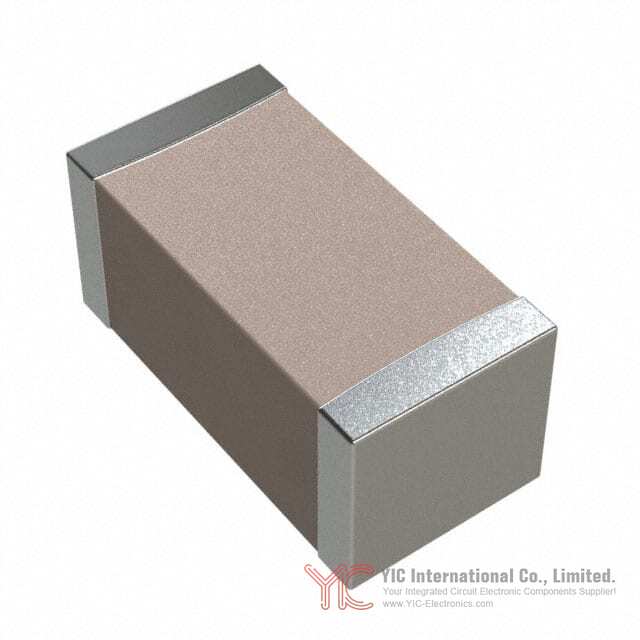
The YAGEO X7R series employs a multilayer construction methodology that maximizes capacitance density within a compact form factor. The capacitor structure consists of a rectangular ceramic dielectric block containing multiple interleaved metal electrodes. This configuration creates numerous parallel capacitive elements within a single component, resulting in high capacitance per unit volume.
The internal electrodes connect to two end terminations through a soft termination system. These terminations receive a protective coating of plated nickel-tin (NiSn), which provides corrosion resistance and facilitates reliable solder connections during assembly. The soft termination design, illustrated in the component's cross-sectional architecture, allows the termination layer to flex independently from the ceramic body, reducing mechanical stress concentration at the electrode-termination interface.
This construction approach addresses a fundamental challenge in ceramic capacitor design: the brittle nature of ceramic materials combined with the rigid solder joints used in surface-mount assembly. By incorporating flexibility into the termination system, YAGEO X7R capacitors demonstrate improved resistance to thermal cycling and mechanical vibration, which are common stressors in high-reliability applications.
Physical Specifications and Dimensional Standards for YAGEO X7R Series Components
The YAGEO X7R series is available in multiple case sizes, with the 1206 package (3216 metric designation) representing one of the standard offerings. This package measures 3.2mm in length and 1.6mm in width, providing a balance between component density and handling ease in automated assembly processes.
The thickness of YAGEO X7R series capacitors varies according to the capacitance value and voltage rating. Higher capacitance values and higher voltage ratings typically require increased thickness to accommodate the additional internal electrode layers. The specification tables define discrete thickness classes, allowing designers to select components that fit within specific board height constraints while meeting electrical requirements.
The dimensional consistency of the YAGEO X7R series ensures compatibility with standard pick-and-place equipment and solder reflow processes. The standardized footprint dimensions facilitate seamless integration into existing manufacturing workflows without requiring equipment recalibration or process modification.
Electrical Performance Characteristics of YAGEO X7R Series Capacitors
The X7R dielectric material provides stable capacitance performance across the operating temperature range of -55°C to +125°C, with maximum capacitance variation of ±15% across this temperature span. This temperature stability distinguishes X7R capacitors from NPO (C0G) types, which offer superior stability but at higher cost and with more limited capacitance values.
The rated voltage for YAGEO X7R series components extends to 630V in the CS1206KKX7RZBB103 variant, with other models in the series supporting voltages up to 3000V. The voltage rating represents the maximum continuous DC voltage that can be safely applied across the capacitor terminals without risk of dielectric breakdown or accelerated degradation.
Capacitance tolerance for the YAGEO X7R series is available in multiple grades: ±2%, ±5%, ±10%, and ±20%. The tolerance grade selection depends on application requirements and cost considerations. The ±10% tolerance grade provides a practical balance between cost and performance for most general-purpose applications, while ±5% and ±2% grades serve applications requiring tighter capacitance control.
The dissipation factor (DF) of YAGEO X7R series capacitors remains low across the operating frequency range, typically below 2.5% at 1kHz. This characteristic indicates minimal energy loss during capacitor operation, reducing heat generation and improving overall circuit efficiency.
Capacitance Range and Thickness Classification in YAGEO X7R Series Products
The YAGEO X7R series offers capacitance values following the E-6 and E-12 series standards, which define preferred value sequences used throughout the electronics industry. The E-12 series provides finer granularity in capacitance selection, offering 12 distinct values per decade, while the E-6 series provides 6 values per decade with wider spacing between available options.
For the 1206 package size, capacitance values range from 10nF to 100µF depending on the voltage rating. Lower voltage ratings (16V, 25V) accommodate higher capacitance values within the same physical package, while higher voltage ratings (630V, 1000V, 2200V, 3000V) restrict the maximum available capacitance due to the increased thickness required for dielectric breakdown protection.
The thickness classes are defined in discrete increments, typically ranging from 1.0mm to 2.5mm for the 1206 package. Designers must verify that the selected capacitance and voltage combination produces a thickness compatible with their board assembly process and mechanical constraints. The specification tables clearly indicate which thickness class corresponds to each capacitance-voltage combination, eliminating ambiguity during component selection.
Flexible Termination Technology and Lead-Free Compliance in YAGEO X7R Series
The flexible termination system employed in the YAGEO X7R series represents a technological advancement addressing mechanical reliability concerns in ceramic capacitor applications. Traditional rigid terminations create stress concentration points where the ceramic body meets the solder joint, particularly during thermal cycling when differential expansion between the ceramic and the PCB substrate creates mechanical strain.
The soft termination design incorporates a compliant layer that accommodates this differential expansion, distributing stress more evenly across the termination interface. This approach reduces the likelihood of termination cracking, which represents one of the primary failure modes in ceramic capacitors subjected to thermal cycling or mechanical vibration.
The lead-free termination composition complies with RoHS (Restriction of Hazardous Substances) directives, eliminating lead from the solder interface while maintaining electrical and mechanical performance. The nickel-tin plating provides corrosion resistance and ensures reliable wetting during reflow soldering, even after extended storage periods.
Thermal and Mechanical Stress Resistance of YAGEO X7R Series Capacitors
The YAGEO X7R series demonstrates enhanced resistance to thermal stresses through both material selection and design optimization. The X7R dielectric material exhibits lower temperature coefficient compared to other Class 2 materials, reducing capacitance drift during temperature excursions. The flexible termination system further improves thermal cycling performance by accommodating the mechanical stresses generated by differential thermal expansion.
Mechanical performance improvements address the needs of applications involving high flexure stress on circuit boards. Flexible PCBs, boards subjected to vibration, and assemblies experiencing mechanical shock all benefit from the improved mechanical compliance of the YAGEO X7R series. The soft termination design allows the component to flex with the board substrate rather than resisting deformation, reducing the peak stress experienced at the termination interface.
The combination of improved thermal and mechanical performance extends component lifetime in demanding environments, reducing field failure rates and improving overall system reliability. Applications in telecommunications base stations, industrial power supplies, and automotive electronics particularly benefit from these performance enhancements.
Packaging and Supply Format Options for YAGEO X7R Series Components
The YAGEO X7R series is supplied in tape-and-reel format, the standard packaging method for surface-mount components. Two reel sizes are available: 7-inch reels and 13-inch reels, accommodating different production volumes and storage requirements. The tape width conforms to industry standards, ensuring compatibility with standard pick-and-place equipment.
Two tape material options are available: paper/polyethylene (PE) tape and blister tape. Paper/PE tape provides cost-effective packaging suitable for standard storage conditions, while blister tape offers enhanced moisture barrier properties for components requiring extended shelf life or storage in humid environments.
The quantity per reel varies based on component size and tape format, with larger reels accommodating higher component counts. Standard packaging quantities range from 500 to 5000 units per reel, allowing procurement to match production requirements and minimize excess inventory.
Application Scenarios and Environmental Suitability of YAGEO X7R Series Capacitors
The YAGEO X7R series addresses three primary application categories: high flexure stress circuit boards, switch-mode power supplies, and telecommunications base station equipment. Each application presents distinct environmental and performance requirements that the X7R series is engineered to address.
High flexure stress applications include flexible PCBs and assemblies subjected to mechanical vibration or repeated bending. The soft termination technology enables these components to survive repeated mechanical stress cycles that would cause failure in conventional rigid-termination capacitors. Automotive electronics, portable medical devices, and industrial control systems frequently employ flexible PCBs where the YAGEO X7R series provides reliable performance.
Switch-mode power supplies (SMPS) represent a second major application category. These circuits operate at high switching frequencies and generate significant thermal cycling due to the rapid on-off transitions of power semiconductors. The stable capacitance performance of the X7R dielectric and the improved thermal stress resistance of the flexible termination system make the YAGEO X7R series well-suited for SMPS filtering and energy storage applications.
Telecommunications base station equipment operates in demanding environmental conditions with wide temperature ranges and high reliability requirements. The YAGEO X7R series provides the performance stability and mechanical robustness necessary for these applications, where field service and component replacement represent significant operational costs.
Soldering and Assembly Recommendations for YAGEO X7R Series Installation
The YAGEO X7R series is designed for reflow soldering, the standard assembly method for surface-mount components. The lead-free termination composition requires reflow temperatures compatible with lead-free solder alloys, typically in the range of 240-260°C peak temperature. The exact reflow profile depends on the specific solder alloy and PCB material used in the assembly process.
The soft termination design provides some tolerance for assembly process variations, but proper reflow technique remains important for achieving reliable solder joints. Excessive reflow temperatures or extended dwell times at elevated temperatures can degrade the termination coating and compromise long-term reliability. Conversely, insufficient reflow temperature results in cold solder joints with high contact resistance and poor mechanical strength.
Pre-reflow handling of YAGEO X7R series components should follow standard practices for surface-mount devices. Components should be stored in moisture-controlled environments, with humidity levels maintained below 60% relative humidity. Extended exposure to high humidity can result in moisture absorption by the ceramic material, which can cause delamination or electrical degradation during reflow soldering.
Quality Assurance and Testing Standards for YAGEO X7R Series Capacitors
The YAGEO X7R series undergoes comprehensive testing to verify compliance with published electrical and mechanical specifications. Testing procedures follow international standards including IEC 60068-1 for environmental testing conditions and IEC 61071 for ceramic capacitor testing methodology.
Electrical testing includes capacitance measurement, dissipation factor determination, and insulation resistance verification. These measurements are performed under standardized atmospheric conditions: temperature 15-35°C, relative humidity 25-75%, and air pressure 86-106 kPa. Capacitors are allowed to reach thermal equilibrium at the measurement temperature before testing to ensure accurate results.
Mechanical testing verifies the integrity of the termination system and the overall component structure. Thermal cycling tests subject components to repeated temperature excursions from -55°C to +125°C, simulating the thermal stresses experienced during manufacturing and field operation. Vibration testing verifies mechanical robustness under dynamic stress conditions.
The comprehensive testing program ensures that YAGEO X7R series components meet published specifications and perform reliably in customer applications. Test data provides confidence in component selection and supports design validation activities.
Conclusion
The YAGEO X7R series represents a mature, well-engineered solution for applications requiring high-voltage ceramic capacitors with enhanced mechanical reliability. The combination of flexible termination technology, lead-free compliance, and stable X7R dielectric performance addresses the needs of modern electronic systems operating in demanding thermal and mechanical environments. The comprehensive range of capacitance values and voltage ratings, coupled with multiple packaging options, enables designers to select components precisely matched to application requirements. The YAGEO X7R series provides a foundation for reliable circuit design across telecommunications, industrial power, and automotive applications.
Frequently Asked Questions (FAQ)
- Q1. What is the difference between X7R and NPO dielectric materials in YAGEO X7R series capacitors?
-
- A1. X7R dielectric material provides stable capacitance performance across the temperature range -55°C to +125°C with maximum variation of ±15%, making it suitable for general-purpose applications with moderate temperature stability requirements. NPO (C0G) material offers superior temperature stability with capacitance variation below ±0.3%, but is limited to lower capacitance values and higher cost. The YAGEO X7R series uses X7R material to balance performance, cost, and available capacitance range for most industrial and telecommunications applications.
- Q2. Why does the YAGEO X7R series employ flexible termination technology, and what advantages does it provide?
-
- A2. Flexible termination technology accommodates mechanical stress at the interface between the ceramic body and the solder joint. During thermal cycling, the ceramic material and PCB substrate expand and contract at different rates, creating mechanical strain. Rigid terminations concentrate this stress at the termination interface, leading to cracking and component failure. The soft termination design distributes stress more evenly, extending component lifetime in applications involving thermal cycling, mechanical vibration, or flexible PCBs. This technology is particularly valuable in automotive electronics, portable devices, and industrial equipment where thermal and mechanical stresses are significant.
- Q3. What voltage ratings are available in the YAGEO X7R series, and how does voltage rating affect component size?
-
- A3. The YAGEO X7R series offers voltage ratings from 16V to 3000V, with common ratings including 16V, 25V, 50V, 100V, 200V, 630V, 1000V, 2200V, and 3000V. Higher voltage ratings require thicker ceramic dielectric material to prevent electrical breakdown, resulting in larger component thickness. For a given package size (such as 1206), higher voltage ratings reduce the maximum available capacitance value. Designers must balance voltage rating requirements against capacitance needs and physical space constraints when selecting components.
- Q4. How should YAGEO X7R series capacitors be stored to maintain performance before assembly?
-
- A4. YAGEO X7R series components should be stored in moisture-controlled environments with relative humidity maintained below 60%. Extended exposure to high humidity can result in moisture absorption by the ceramic material, potentially causing delamination or electrical degradation during reflow soldering. Components should be stored in sealed packaging with desiccant material when possible. Before assembly, components should be allowed to reach room temperature to prevent condensation on the component surface, which could compromise solder joint quality.
- Q5. What reflow soldering temperatures are recommended for YAGEO X7R series components?
-
- A5. The YAGEO X7R series is designed for lead-free reflow soldering with peak temperatures in the range of 240-260°C. The exact reflow profile depends on the specific solder alloy and PCB material used. Excessive reflow temperatures or extended dwell times at elevated temperatures can degrade the lead-free termination coating and compromise long-term reliability. Conversely, insufficient reflow temperature results in cold solder joints with high contact resistance. Manufacturers should follow published reflow profiles and verify solder joint quality through inspection or testing.
- Q6. What capacitance tolerance grades are available for YAGEO X7R series capacitors, and how should tolerance be selected?
-
- A6. The YAGEO X7R series offers capacitance tolerance grades of ±2%, ±5%, ±10%, and ±20%. The ±10% tolerance grade provides a practical balance between cost and performance for most general-purpose applications. The ±5% and ±2% grades serve applications requiring tighter capacitance control, such as precision filtering or frequency-dependent circuits. The ±20% tolerance grade offers the lowest cost option for applications with relaxed capacitance requirements. Tolerance selection should be based on circuit performance requirements and cost constraints.
- Q7. How do the E-6 and E-12 capacitance series affect component availability in the YAGEO X7R series?
-
- A7. The YAGEO X7R series offers capacitance values following both E-6 and E-12 series standards. The E-12 series provides 12 distinct values per decade, offering finer granularity in capacitance selection and increasing the likelihood of finding an exact match for circuit requirements. The E-6 series provides 6 values per decade with wider spacing between available options, typically at lower cost. Designers should specify E-12 series values when precise capacitance matching is required, and may consider E-6 series values when cost optimization is a priority and circuit performance permits wider capacitance tolerance.
- Q8. What are the primary application scenarios for YAGEO X7R series capacitors?
-
- A8. The YAGEO X7R series addresses three primary application categories: high flexure stress circuit boards (flexible PCBs, vibration-prone assemblies), switch-mode power supplies (SMPS filtering and energy storage), and telecommunications base station equipment. The flexible termination technology makes the series particularly suitable for applications involving mechanical stress or thermal cycling. The stable X7R dielectric performance and lead-free compliance address the needs of modern electronic systems operating in demanding environments. The comprehensive voltage and capacitance range enables the series to serve diverse applications from consumer electronics to industrial and telecommunications equipment.
- Q9. How does the YAGEO X7R series comply with environmental and regulatory requirements?
-
- A9. The YAGEO X7R series employs lead-free terminations that comply with RoHS (Restriction of Hazardous Substances) directives, eliminating lead from the solder interface. The nickel-tin plating provides corrosion resistance and ensures reliable wetting during reflow soldering. The series is manufactured using processes that minimize environmental impact while maintaining performance integrity. Compliance with RoHS requirements enables the YAGEO X7R series to serve applications in regions with strict environmental regulations and supports corporate sustainability initiatives.
- Q10. What packaging options are available for YAGEO X7R series components, and how should packaging be selected?
-
- A10. The YAGEO X7R series is supplied in tape-and-reel format with two reel sizes: 7-inch and 13-inch. Two tape material options are available: paper/polyethylene (PE) tape for standard storage conditions, and blister tape for enhanced moisture barrier properties. Packaging selection should be based on production volume, storage duration, and environmental conditions. Higher production volumes may justify 13-inch reels to reduce per-unit packaging cost. Extended storage or humid storage environments may require blister tape to prevent moisture absorption. Standard pick-and-place equipment accommodates both reel sizes and tape materials without modification.
- Q11. How does thermal cycling affect YAGEO X7R series capacitor performance, and what design considerations apply?
-
- A11. Thermal cycling creates mechanical stress due to differential thermal expansion between the ceramic material and the PCB substrate. The YAGEO X7R series addresses this challenge through the flexible termination system, which accommodates mechanical stress and reduces the likelihood of termination cracking. Applications involving wide temperature ranges or rapid temperature changes benefit from the improved thermal cycling performance of the YAGEO X7R series. Design considerations include proper PCB layout to minimize mechanical stress concentration, adequate solder joint fillet formation to distribute stress, and component placement away from high-stress board regions when possible.
- Q12. What quality assurance testing is performed on YAGEO X7R series capacitors?
-
- A12. The YAGEO X7R series undergoes comprehensive testing including electrical measurements (capacitance, dissipation factor, insulation resistance), thermal cycling tests (-55°C to +125°C), and vibration testing. Testing procedures follow international standards including IEC 60068-1 and IEC 61071. Electrical testing is performed under standardized atmospheric conditions to ensure measurement accuracy and repeatability. Mechanical testing verifies the integrity of the termination system and overall component structure. The comprehensive testing program ensures that components meet published specifications and perform reliably in customer applications.