Product Overview of TDK CGA Series Multilayer Ceramic Capacitors
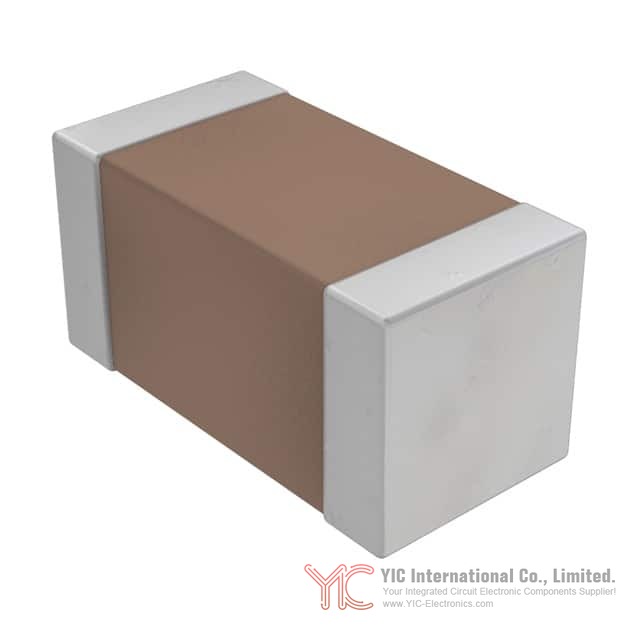
The TDK CGA series represents a comprehensive family of surface-mounted multilayer ceramic chip capacitors engineered specifically for automotive applications. These components are designed to operate reliably under the demanding conditions encountered in modern vehicle electronics, including advanced driver assistance systems (ADAS), autonomous driving system electronic control units (ECUs), and general automotive power distribution networks. The CGA series encompasses eight distinct package sizes, ranging from the compact 0603 format (0201 EIA) through to the larger 5750 format (2220 EIA), providing design flexibility across diverse circuit topologies and space constraints.
The monolithic construction of CGA series capacitors distinguishes them from alternative capacitor technologies. This integrated architecture, where multiple dielectric layers and internal electrodes are stacked in a unified structure, delivers mechanical robustness that withstands the thermal cycling, vibration, and mechanical stress inherent to automotive environments. The simplified internal geometry compared to other capacitor types yields favorable frequency response characteristics, manifesting as reduced equivalent series resistance (ESR) and equivalent series inductance (ESL). These electrical properties translate directly into improved circuit performance, particularly in high-frequency filtering applications and power supply decoupling scenarios.
Structural Design and Manufacturing Principles of CGA Series Capacitors
The CGA series employs a layered construction methodology where alternating strata of ceramic dielectric material and internal metallic electrodes are precisely stacked and sintered into a monolithic component. This manufacturing approach creates a structure fundamentally different from wound or rolled capacitor designs. Each internal electrode connects to the external termination through a conductive pathway, establishing the capacitive element between adjacent layers.
The monolithic architecture provides several engineering advantages. The rigid, unified structure resists mechanical deformation during assembly processes such as surface mounting and thermal cycling. Unlike capacitors with flexible internal connections, the CGA series maintains dimensional stability and electrical performance consistency throughout the component's operational lifetime. The simplified internal geometry minimizes parasitic inductance pathways, enabling the capacitor to function effectively at higher frequencies where competing technologies experience performance degradation.
The manufacturing process involves precise control of ceramic material composition, layer thickness, and electrode geometry. These parameters directly influence the final electrical characteristics, including capacitance value, voltage rating, and temperature stability. The consistency achieved through automated manufacturing processes ensures that individual components within a production batch exhibit minimal variation in performance parameters.
Size Portfolio and Package Options in the CGA Series Range
The CGA series provides eight distinct package sizes, each designated by both metric and EIA nomenclature conventions. The CGA1 package, measuring 0603 millimeters in metric dimensions (0201 in EIA designation), represents the smallest offering with a standard thickness of 0.30 millimeters. This compact format suits applications where circuit board real estate is severely constrained, such as in densely populated automotive control modules.
The CGA2 package (1005 metric / 0402 EIA) with standard thickness of 0.50 millimeters provides a modest increase in physical dimensions while maintaining a relatively compact footprint. The CGA3 package (1608 metric / 0603 EIA) with 0.80 millimeter standard thickness represents a mid-range option balancing component size against capacitance density.
The CGA4 package (2012 metric / 0805 EIA) offers multiple thickness options: 0.60 millimeters, 0.85 millimeters, and 1.25 millimeters. This flexibility allows designers to select thickness based on specific circuit requirements and available board space. The CGA5 (3216 metric / 1206 EIA) and CGA6 (3225 metric / 1210 EIA) packages provide larger surface areas suitable for applications requiring higher capacitance values or lower ESR characteristics.
The CGA8 package (4532 metric / 1812 EIA) and CGA9 package (5750 metric / 2220 EIA) represent the largest offerings in the series. The CGA9 package provides multiple thickness options including 2.00 millimeters, 2.30 millimeters, and 2.50 millimeters, accommodating diverse design requirements in applications demanding substantial capacitance values or specific frequency response characteristics.
Electrical Performance Characteristics of CGA Series Capacitors
The CGA series delivers electrical performance characteristics optimized for automotive power management and signal conditioning applications. The monolithic construction yields low ESR values, reducing self-heating during ripple current operation and minimizing voltage drop across the capacitor during transient current events. This low-loss characteristic proves particularly valuable in power supply decoupling applications where rapid current transients occur during microprocessor state transitions or sensor signal processing.
The low ESL characteristic of CGA series capacitors results from the simplified internal geometry and direct connection pathways between internal electrodes and external terminations. Reduced inductance enables the capacitor to respond rapidly to voltage transients, maintaining stable supply voltages during high-frequency switching events. This performance characteristic becomes increasingly important as automotive electronics incorporate higher-frequency switching regulators and faster digital signal processors.
The frequency response of CGA series capacitors extends well into the megahertz range, with impedance characteristics remaining favorable across the frequency spectrum relevant to automotive applications. This broad frequency response capability allows a single capacitor value to function effectively across multiple filtering and decoupling scenarios within a circuit design.
Temperature Stability and Dielectric Material Selection for CGA Series
The CGA series offers multiple dielectric material options, each providing distinct temperature stability characteristics suited to different application requirements. The COG (Class I) dielectric material provides the most stable temperature performance, maintaining capacitance within ±30 parts per million per degree Celsius across the operating temperature range of -55°C to +125°C. This exceptional stability makes COG-type CGA capacitors suitable for precision timing circuits, resonant circuits, and applications where capacitance drift would degrade circuit performance.
The X5R dielectric material (Class II) maintains capacitance within ±15 percent across the temperature range of -55°C to +85°C. This material offers a balance between temperature stability and capacitance density, allowing higher capacitance values in smaller physical packages compared to COG materials. X5R materials suit general-purpose filtering and decoupling applications where moderate temperature stability suffices.
The X7R dielectric material extends the upper temperature limit to +125°C while maintaining ±15 percent capacitance tolerance across the -55°C to +125°C range. This extended temperature range aligns with automotive thermal requirements, where under-hood components experience sustained elevated temperatures. X7R materials provide the optimal balance for most automotive applications, offering adequate temperature stability while maximizing capacitance density.
The X7S dielectric material (±22 percent tolerance, -55°C to +125°C) and X7T material (+22 percent, -33 percent tolerance, -55°C to +125°C) provide additional options for applications where temperature stability requirements are less stringent but higher capacitance values are needed within compact packages.
The selection of dielectric material directly influences the capacitance range available within each package size. Designers must evaluate the specific temperature stability requirements of their application against the available capacitance values to identify the optimal material selection.
Voltage Ratings and Derating Considerations in CGA Series Applications
The CGA series provides voltage ratings extending to 75 volts, accommodating the diverse supply voltages encountered in automotive electronics. Lower voltage ratings (6.3V, 10V, 16V) suit low-voltage signal conditioning circuits and microprocessor supply decoupling. Mid-range ratings (25V, 50V) address general-purpose power distribution applications. Higher ratings (75V) serve specialized applications including sensor interface circuits and high-voltage signal conditioning.
Voltage derating becomes a critical design consideration when CGA series capacitors operate at elevated temperatures. As component temperature increases, the effective voltage rating decreases to maintain reliability margins. For certain product variants, when component temperature exceeds 125°C, the allowable voltage must be reduced according to manufacturer-specified derating curves. This derating relationship reflects the increased electrical stress on the dielectric material at elevated temperatures.
Designers must account for both ambient temperature and self-heating effects when determining the actual operating voltage stress on the capacitor. Self-heating results from ESR losses during ripple current operation. In applications with substantial ripple current, the capacitor temperature may exceed the ambient circuit board temperature, necessitating additional voltage derating beyond what ambient temperature alone would suggest.
Capacitance Range and Tolerance Specifications Across CGA Series Models
The CGA series provides capacitance values ranging from picofarad levels through 100 microfarads, with the specific range available depending on package size and dielectric material selection. Smaller packages (CGA1, CGA2) typically accommodate capacitance values in the picofarad to nanofarad range, while larger packages (CGA8, CGA9) extend into the microfarad range.
Capacitance values are specified using a three-digit code where the first two digits represent significant figures and the third digit represents the multiplier. For example, the designation "102" indicates 10 × 10² = 1000 picofarads (1 nanofarad). The designation "225" indicates 22 × 10⁵ = 2,200,000 picofarads (2.2 microfarads). The letter "R" designates a decimal point when required.
Capacitance tolerance is specified as ±20 percent for standard CGA series components, with the tolerance code "M" appearing in the part number designation. This tolerance range reflects the manufacturing process capabilities and the inherent variability of ceramic dielectric materials. Designers must account for this tolerance range when calculating circuit performance, particularly in applications where capacitance value directly influences circuit behavior such as timing circuits or resonant filters.
Application Scenarios for CGA Series in Automotive Electronics
The CGA series finds application across multiple functional areas within automotive electronic systems. In power supply decoupling applications, CGA capacitors suppress voltage transients that occur when microprocessor cores transition between active and idle states. The low ESR and ESL characteristics enable rapid response to these transient events, maintaining stable supply voltages that prevent logic errors or system resets.
In ADAS and autonomous driving system ECUs, CGA capacitors provide filtering for analog sensor signal conditioning circuits. These applications require stable reference voltages and low-noise signal paths to ensure accurate sensor data acquisition. The temperature stability of X7R and COG dielectric materials proves particularly valuable in these applications, where temperature-induced capacitance drift would degrade sensor accuracy.
Power distribution networks in automotive systems employ CGA capacitors at multiple hierarchical levels. Bulk capacitors handle low-frequency ripple from switching regulators, while smaller-value CGA capacitors provide high-frequency filtering near integrated circuit power pins. This multi-level approach ensures voltage stability across the frequency spectrum relevant to modern automotive electronics.
In LC resonance circuits, COG-type CGA capacitors provide the temperature stability necessary to maintain resonant frequency accuracy across the automotive temperature range. These circuits appear in radio frequency applications, sensor interface circuits, and signal conditioning networks where frequency stability directly impacts system performance.
Selection Methodology for CGA Series Capacitors in Design Implementation
Selecting appropriate CGA series capacitors requires systematic evaluation of multiple parameters. The designer must first establish the required capacitance value based on circuit analysis, accounting for the ±20 percent tolerance range. The circuit topology determines whether the nominal value or a value adjusted for tolerance extremes should be used in calculations.
The voltage rating selection must account for both the nominal circuit voltage and transient overvoltage conditions that may occur during fault conditions or switching transients. A safety margin of at least 20 percent between the maximum expected voltage and the capacitor voltage rating provides adequate reliability margin for automotive applications.
The temperature stability requirement depends on the specific circuit function. Precision timing circuits and resonant filters demand COG materials despite their lower capacitance density. General-purpose filtering and decoupling applications typically accept X7R materials, which provide adequate stability while maximizing capacitance density. Applications with minimal temperature stability requirements may employ X5R or X7S materials to achieve higher capacitance values in smaller packages.
Package size selection balances competing requirements: smaller packages reduce circuit board area but limit available capacitance values, while larger packages provide greater capacitance density but consume more board space. The designer must evaluate the specific circuit constraints and select the smallest package that provides the required capacitance value within acceptable tolerance and temperature stability parameters.
The frequency response characteristics of the selected capacitor must align with the circuit's frequency content. Applications with high-frequency switching or fast signal transients benefit from the low ESL characteristics of CGA capacitors, while lower-frequency applications may accept alternative capacitor technologies.
Conclusion
The TDK CGA series represents a mature, well-established family of multilayer ceramic capacitors specifically engineered for automotive applications. The monolithic construction delivers mechanical robustness and favorable frequency response characteristics that distinguish CGA capacitors from alternative technologies. The comprehensive package size portfolio, ranging from 0603 to 5750 formats, accommodates diverse circuit requirements and space constraints. Multiple dielectric material options provide flexibility in balancing temperature stability against capacitance density. The voltage ratings extending to 75 volts address the full spectrum of automotive supply voltages. Systematic evaluation of capacitance requirements, voltage ratings, temperature stability needs, and package constraints enables designers to select optimal CGA series components for specific automotive applications.
Frequently Asked Questions (FAQ)
- Q1. What distinguishes the monolithic structure of CGA series capacitors from alternative multilayer ceramic capacitor designs?
-
- A1. The CGA series employs a unified, integrated construction where ceramic dielectric layers and internal electrodes are stacked and sintered into a single rigid component. This differs from some alternative designs that incorporate flexible internal connections or wound structures. The monolithic approach provides superior mechanical strength, resists deformation during thermal cycling and vibration, and minimizes parasitic inductance pathways. The simplified internal geometry enables low ESR and ESL characteristics that support high-frequency operation, making CGA capacitors particularly suitable for automotive applications experiencing thermal stress and vibration.
- Q2. How does the ±20 percent capacitance tolerance of CGA series components affect circuit design calculations?
-
- A2. The ±20 percent tolerance range means that a capacitor specified as 1000 picofarads may actually measure between 800 and 1200 picofarads. In circuit designs where capacitance value directly influences performance—such as timing circuits, resonant filters, or precision signal conditioning—designers must account for this tolerance range. For non-critical filtering applications, the tolerance may have minimal impact. For precision applications, designers should either select components with tighter tolerance specifications if available, or design circuits that remain functional across the full tolerance range. Some designs employ multiple capacitors in parallel to reduce the effective tolerance percentage.
- Q3. What is the practical difference between COG, X5R, X7R, and X7S dielectric materials in automotive applications?
-
- A3. COG materials maintain capacitance within ±30 parts per million per degree Celsius across -55°C to +125°C, providing exceptional stability for precision circuits but offering lower capacitance density. X5R materials maintain ±15 percent across -55°C to +85°C, suitable for general applications with moderate temperature stability needs. X7R materials extend to +125°C while maintaining ±15 percent tolerance, providing the optimal balance for most automotive applications. X7S materials offer ±22 percent tolerance across the full temperature range, allowing higher capacitance values in smaller packages but with reduced temperature stability. The selection depends on whether the circuit prioritizes temperature stability or capacitance density.
- Q4. How should designers account for voltage derating when CGA series capacitors operate at elevated temperatures?
-
- A4. Voltage derating reduces the allowable operating voltage as component temperature increases, protecting the dielectric material from excessive electrical stress. Designers must consider both ambient circuit board temperature and self-heating effects from ripple current losses. For applications with substantial ripple current, the capacitor temperature may exceed ambient temperature, requiring additional voltage derating. Manufacturer derating curves specify the relationship between temperature and maximum allowable voltage. Designers should select voltage ratings with sufficient margin above the maximum expected voltage, accounting for both ambient temperature and self-heating effects, to ensure adequate reliability throughout the component's operational lifetime.
- Q5. What factors determine the appropriate package size selection for CGA series capacitors in a specific circuit design?
-
- A5. Package size selection involves balancing available circuit board area against required capacitance value and acceptable performance characteristics. Smaller packages (CGA1, CGA2) minimize board area but limit available capacitance values, typically restricting selection to picofarad and nanofarad ranges. Larger packages (CGA8, CGA9) provide higher capacitance density, enabling microfarad-level values in single components. The designer must identify the smallest package that provides the required capacitance value within acceptable tolerance and temperature stability parameters. Frequency response requirements also influence selection—applications with high-frequency switching benefit from the low ESL characteristics of all CGA packages, while lower-frequency applications may accept alternative technologies.
- Q6. How do ESR and ESL characteristics of CGA series capacitors influence their performance in power supply decoupling applications?
-
- A6. Low ESR reduces self-heating during ripple current operation and minimizes voltage drop across the capacitor during transient current events. In power supply decoupling, rapid current transients occur when microprocessor cores transition between active and idle states. Low ESL enables rapid response to these transients, maintaining stable supply voltages that prevent logic errors or system resets. The combination of low ESR and ESL allows CGA capacitors to suppress voltage transients more effectively than alternative technologies with higher parasitic values. This performance becomes increasingly important as automotive processors operate at higher frequencies and experience faster state transitions.
- Q7. What role do CGA series capacitors play in multi-level power distribution networks within automotive systems?
-
- A7. Automotive power distribution networks employ CGA capacitors at multiple hierarchical levels to ensure voltage stability across the frequency spectrum. Bulk capacitors handle low-frequency ripple from switching regulators, smoothing the output voltage and providing energy storage during transient load changes. Smaller-value CGA capacitors positioned near integrated circuit power pins provide high-frequency filtering, suppressing switching noise and maintaining stable local supply voltages. This multi-level approach addresses both low-frequency and high-frequency voltage variations, ensuring that integrated circuits receive clean, stable power supplies across all operating conditions. The specific capacitance values and package sizes selected for each hierarchical level depend on the frequency content and magnitude of voltage variations at that location in the power distribution network.
- Q8. How do temperature stability characteristics of CGA series capacitors affect their suitability for LC resonance circuits in automotive applications?
-
- A8. LC resonance circuits depend on precise capacitance and inductance values to maintain resonant frequency accuracy. Temperature-induced capacitance drift directly shifts the resonant frequency, degrading circuit performance. COG-type CGA capacitors maintain capacitance within ±30 parts per million per degree Celsius, providing the temperature stability necessary to maintain resonant frequency accuracy across the automotive temperature range of -55°C to +125°C. This exceptional stability makes COG materials the preferred choice for resonance circuits, despite their lower capacitance density compared to Class II materials. Applications such as radio frequency circuits, sensor interface circuits, and signal conditioning networks that depend on frequency stability benefit from the temperature stability of COG-type CGA capacitors.
- Q9. What design considerations apply when CGA series capacitors operate in high-ripple-current environments within automotive power systems?
-
- A9. High ripple current generates heat within the capacitor through ESR losses, raising component temperature above ambient levels. Designers must account for this self-heating effect when selecting voltage ratings and evaluating temperature stability. The actual component temperature may exceed the ambient circuit board temperature by 10-30°C or more, depending on ripple current magnitude and capacitor ESR. This elevated temperature requires additional voltage derating beyond what ambient temperature alone would suggest. Designers should calculate expected ripple current based on circuit analysis, estimate self-heating effects using manufacturer-provided ESR data, and apply appropriate voltage derating based on the resulting component temperature. Selecting capacitors with lower ESR values reduces self-heating and allows higher ripple current capacity within the same package size.
- Q10. How does the AEC-Q200 qualification of CGA series capacitors relate to automotive reliability requirements?
-
- A10. AEC-Q200 represents an automotive industry standard qualification that establishes reliability and performance requirements for passive components used in automotive applications. CGA series capacitors qualified to AEC-Q200 have undergone rigorous testing including thermal cycling, vibration, humidity exposure, and electrical stress testing to verify performance under automotive operating conditions. This qualification provides assurance that components will maintain specified electrical characteristics and mechanical integrity throughout their operational lifetime in automotive environments. Designers specifying AEC-Q200 qualified components gain confidence that the capacitors will perform reliably in demanding automotive applications including under-hood environments, high-vibration locations, and temperature-cycling scenarios that characterize automotive service conditions.