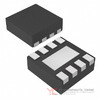
Product Overview – MCP1501 Buffered Voltage Reference
The MCP1501 is a high-precision buffered voltage reference from Microchip Technology, designed to provide a stable DC reference voltage under varying load, supply, and temperature conditions. It combines a low-drift bandgap reference with an integrated buffer amplifier capable of both sourcing and sinking load current, enabling direct driving of precision analog circuits without additional external buffering.
The MCP1501 operates from a supply voltage (VDD) range of 1.65 V to 5.5 V, depending on the output voltage option, and can source or sink up to ±20 mA at the reference output. It features a maximum temperature coefficient of 50 ppm/°C, initial accuracy of 0.1% at 25°C, and typical operating current of 140 µA. The low supply current and wide temperature range of -40°C to +125°C support a broad range of industrial, automotive, medical, and battery-powered designs.
AEC-Q100 qualification is available for the 6‑lead SOT‑23 variant, aligning the MCP1501 with automotive reliability requirements. Available package options include 6‑Lead SOT‑23, 8‑Lead SOIC, and 2 mm × 2 mm 8‑Lead WDFN (with exposed pad).
---
Internal Architecture and Operating Principle of the MCP1501
The MCP1501 internal architecture is centered around a low-drift bandgap reference combined with chopper-based amplifiers and a buffered output stage. This structure is designed to maintain a precise output voltage while reducing long-term and temperature-related drift.
Key internal functional blocks of the MCP1501 include:
- 1.2 V bandgap reference with curvature compensation
- Chopper-based op amps to minimize offset and drift
- Internal low-voltage regulator (down to about 1.2–1.5 V in the core)
- Fine and coarse output tuning networks
- Output driver stage capable of sourcing and sinking ±20 mA
- Digital control and calibration circuitry
- Shutdown logic controlled by the SHDN pin
The MCP1501 uses a curvature-compensated bandgap reference to achieve a stable 1.2 V internal reference. This reference is processed by fine and coarse tuning stages to generate the desired output option (for example 2.048 V or 2.500 V). A low-pass filter is used to reduce noise, and the final buffer amplifier drives the OUT pin.
In SOT‑23 packages, the feedback path is internally tied between the output and the reference amplifier. In SOIC and WDFN packages, the FEEDBACK pin is made externally available, allowing Kelvin connections between OUT and FEEDBACK to compensate for PCB trace resistance and IR-drop in high-current applications.
The device also integrates a power-on reset and internal digital control that ensures proper startup. A dedicated SHDN pin allows the MCP1501 to enter a low-power shutdown mode (output tristated) after startup has completed.
---
Electrical Performance Metrics of the MCP1501
The MCP1501 provides a set of performance parameters that collectively define its suitability as a precision reference in demanding applications. Key metrics include initial accuracy, temperature coefficient, line and load regulation, dropout voltage, power-supply rejection, and output noise.
Initial accuracy
At 25°C, the MCP1501 offers typical output accuracy of ±0.1% for each output voltage variant. For example, for MCP1501-25, the nominal output is 2.500 V with limits of 2.4975 V to 2.5025 V at 25°C. Similar tight tolerance ranges apply to other variants:
- MCP1501-10: 1.0230 V to 1.0250 V around a 1.024 V nominal
- MCP1501-12: 1.2488 V to 1.2513 V around a 1.250 V nominal
- MCP1501-18: 1.7982 V to 1.8018 V around a 1.800 V nominal
- MCP1501-20: 2.0460 V to 2.0500 V around a 2.048 V nominal
- MCP1501-30: 2.9970 V to 3.0030 V around a 3.000 V nominal
- MCP1501-33: 3.2967 V to 3.3033 V around a 3.300 V nominal
- MCP1501-40: 4.0919 V to 4.1001 V around a 4.096 V nominal
- MCP1501-45: 4.4955 V to 4.5045 V around a 4.500 V nominal
- MCP1501-50: 4.9950 V to 5.0050 V around a 5.000 V nominal
Temperature coefficient (TC)
The MCP1501 specifies a maximum output temperature coefficient of 50 ppm/°C. This describes the drift of the output voltage versus temperature over the operating range. The TC is defined as:
TCOUTPUT = (VOUT(MAX) – VOUT(MIN)) × 10⁶ / (ΔT × VOUT(NOM))
where:
- VOUT(MAX) and VOUT(MIN) are the max/min output voltages over the specified temperature range
- VOUT(NOM) is the average output voltage
- ΔT is the temperature span
This quantifies how tightly the reference voltage stays within a narrow window over -40°C to +125°C.
Line regulation
Line regulation describes how the output changes with supply voltage variation. For MCP1501, the line regulation is specified up to 50 ppm/V maximum. In formula form:
Line Regulation (%) = (ΔVOUT / ΔVIN) × 100%
Line Regulation (ppm/V) = (ΔVOUT / VOUT(NOM)) × 10⁶ / ΔVIN
This metric indicates that even with changes in supply voltage (within the supported VDD range), the output reference changes only minimally, which benefits systems with imperfect or noisy supply rails.
Load regulation
Load regulation specifies the output variation with changes in load current. For the MCP1501:
- Sink load regulation: 10 ppm/mA typical, 40 ppm/mA maximum for -5 mA < ILOAD
- Source load regulation: 15 ppm/mA typical, 70 ppm/mA maximum for ILOAD < +5 mA
Under typical conditions, with a change in load current of a few milliamps, the deviation in output voltage is only a few tens of ppm per milliampere.
Dropout voltage
Dropout voltage is defined as the minimum difference between VDD and VOUT at which the reference can maintain regulation at a specified load. For MCP1501, the dropout voltage is typically 200 mV for -5 mA < ILOAD < +5 mA. This allows the device to maintain accurate output even when the supply is only slightly above the reference voltage.
Power-supply rejection ratio (PSRR)
PSRR describes how much of the supply ripple or noise appears at the output. For the MCP1501, PSRR is specified at 94 dB at 60 Hz, with a 100 mV peak-to-peak sinusoidal variation on VIN. This high rejection helps keep the reference stable even with AC ripple superimposed on the supply.
Output noise
Output noise is specified for two ranges:
- 0.1 Hz to 10 Hz as a peak-to-peak value (µVPP)
- 0.1 Hz to 10 kHz as an RMS value (µVRMS)
For lower voltage variants such as MCP1501-10:
- 18 µVPP from 0.1 Hz to 10 Hz
- 30 µVRMS from 0.1 Hz to 10 kHz
For higher variants such as MCP1501-40:
- 57 µVPP from 0.1 Hz to 10 Hz
- 97 µVRMS from 0.1 Hz to 10 kHz
The relation µVPP ≈ 6 × µVRMS is used as a guideline. These figures support precision data acquisition and high-resolution converter applications where low-frequency reference noise directly impacts system resolution.
Supply current and shutdown current
The MCP1501 typical supply current is 140 µA under no-load conditions, with a maximum of 550 µA over full conditions. For many variants, a typical 350 µA supply current at 25°C with no load is specified at the higher end. In shutdown, the current reduces dramatically, with a typical 205 nA at 25°C, which is beneficial in power-constrained systems.
---
Voltage Options and Operating Conditions for the MCP1501
The MCP1501 series provides ten fixed output voltage options, identified in the part number suffix (e.g., MCP1501‑25 for 2.500 V):
- MCP1501-10: 1.024 V
- MCP1501-12: 1.250 V
- MCP1501-18: 1.800 V
- MCP1501-20: 2.048 V
- MCP1501-25: 2.500 V
- MCP1501-30: 3.000 V
- MCP1501-33: 3.300 V
- MCP1501-40: 4.096 V
- MCP1501-45: 4.500 V (SOT‑23 only)
- MCP1501-50: 5.000 V (SOT‑23 only)
Each MCP1501 voltage option has a corresponding minimum supply voltage requirement:
- MCP1501-10: VDD = 1.65 V to 5.5 V
- MCP1501-12: VDD = 1.65 V to 5.5 V
- MCP1501-18: VDD = 2.0 V to 5.5 V
- MCP1501-20: VDD = 2.25 V to 5.5 V
- MCP1501-25: VDD = 2.70 V to 5.5 V
- MCP1501-30: VDD = 3.2 V to 5.5 V
- MCP1501-33: VDD = 3.5 V to 5.5 V
- MCP1501-40: VDD = 4.3 V to 5.5 V
- MCP1501-45: VDD = 4.7 V to 5.5 V
- MCP1501-50: VDD = 5.2 V to 5.5 V
These minimum VDD values ensure that the internal regulator, bandgap, and buffer stages can maintain regulation with suitable headroom.
Power-on reset behavior of the MCP1501
The MCP1501 incorporates an internal reset mechanism related to supply rise and drop:
- Power-on reset release voltage VPOR: ~1.45 V (typical) on a rising VDD
- Power-on reset rearm voltage: ~0.8 V (typical) on falling VDD
On a rising supply, the internal circuits are held in reset until VDD reaches VPOR, after which normal operation is enabled. On a dropping supply, when VDD falls below the rearm voltage, the internal reset is asserted. For consistent startup behavior across power cycles, it is recommended that VDD fall below the rearm voltage before the next power-up.
Operating and storage temperature range
- MCP1501 operating ambient temperature (TA): -40°C to +125°C
- MCP1501 storage temperature: -65°C to +150°C
These ranges make MCP1501 suitable for environments such as industrial control and under-the-hood automotive systems.
---
Pin Functions and Application-Level Usage of the MCP1501
The MCP1501 pinout is provided for SOT‑23-6, SOIC‑8, and 2×2 WDFN‑8 packages. Core pins are common across packages.
MCP1501 reference output (OUT)
The OUT pin is the buffered reference output. It delivers the fixed reference voltage at up to ±20 mA load. In the SOT‑23 package, OUT is the only access point for the reference; in the SOIC and WDFN packages, OUT is used together with FEEDBACK.
In normal operation, the MCP1501 output driver is active. In shutdown mode (SHDN low), both the output driver and FEEDBACK are tristated, effectively removing the reference from the circuit.
MCP1501 feedback input (FEEDBACK)
FEEDBACK is the buffer amplifier feedback pin and is available on SOIC and WDFN packages. It is internally wired to OUT in the SOT‑23 variant. In most applications using SOIC or WDFN, OUT should be connected directly to FEEDBACK at the device pins.
A key usage advantage emerges when routing OUT to a remote node with significant trace resistance or high load current. If the remote node is connected to FEEDBACK via a separate sense trace, the MCP1501 can regulate the voltage at that remote sense point instead of at the device pin, compensating for the IR-drop along the load trace. This technique, similar to remote sensing in power supply design, helps maintain a more accurate reference at the actual point of use.
MCP1501 ground pins (GND)
GND pins are the supply returns:
- SOT‑23: pins 2, 3, and 5 are grounds
- SOIC: pins 2, 4, 5, and 6 are grounds
- WDFN: pins 2, 4, 5, and 6 are grounds, plus an exposed thermal pad (EP) that is recommended to be connected to ground
GND should be tied to the system ground plane, with low impedance paths to minimize noise coupling and voltage drops.
MCP1501 shutdown input (SHDN)
The SHDN pin is an active-low digital input that powers down the output stage:
- SHDN low: device output and feedback are disabled (tristate)
- SHDN high: normal operation
The device should first be fully powered up before the SHDN function is used. Therefore, SHDN is not intended as a power-on reset control, but as a runtime enable/disable control for power saving or system-level reference gating.
Typical logic threshold at SHDN (VIN = 5.5 V):
- VIL(max): 1.35 V
- VIH(min): 3.80 V
MCP1501 supply input (VDD)
VDD is the power supply input and also the input to the internal reference circuitry. It must be within the specified range for the chosen MCP1501 variant (see earlier section). A local 0.1 µF capacitor should be placed as close to the VDD pin as possible to stabilize the supply and reduce high-frequency noise.
MCP1501 exposed thermal pad (EP) in WDFN
The EP is not internally connected, but connecting it to ground is recommended. This improves thermal dissipation and reduces thermal resistance. Soldering the EP to a ground copper area on the PCB lowers junction temperature during high load operation and enhances long-term stability.
---
Thermal Characteristics and Packaging Options for the MCP1501
The MCP1501 is offered in three package types, each with different thermal behavior:
- 6‑Lead SOT‑23
- 8‑Lead SOIC
- 8‑Lead 2×2 mm WDFN with exposed thermal pad
Typical thermal resistance θJA values:
- MCP1501 SOT‑23‑6: 190.5 °C/W
- MCP1501 SOIC‑8: 149.5 °C/W
- MCP1501 DFN‑8 (2×2 WDFN): 141.3 °C/W
Lower θJA indicates better heat dissipation, which allows the MCP1501 to support higher load currents and elevated ambient temperatures with reduced junction temperature rise. The WDFN package, especially with an adequately sized ground pad, is well suited for applications with frequent ±20 mA load usage or harsher ambient conditions.
RoHS and REACH status
The MCP1501 complies with RoHS3 requirements and is classified as REACH unaffected. The Moisture Sensitivity Level (MSL) is 1 (unlimited), allowing standard reflow and handling procedures with broad flexibility in assembly environments.
---
Typical Application Scenarios for the MCP1501
The MCP1501 buffered reference is targeted toward systems requiring a precise, low-drift reference that can directly drive loads without external buffer amplifiers. Typical application categories include:
Precision data acquisition systems
In data acquisition modules, MCP1501 provides a stable reference for ADCs. For example, an MCP1501‑40 (4.096 V) may be used as the reference for a 12-bit or 16-bit ADC to achieve 1 mV-per-LSB or other convenient scaling. Low output noise (57 µVPP from 0.1 Hz to 10 Hz for MCP1501‑40) and high PSRR help maintain ADC resolution in the presence of supply noise.
High-resolution data converters
High-resolution DACs and sigma-delta converters often require accurate reference voltages to reach full specified linearity and effective number of bits (ENOB). MCP1501, with 0.1% initial accuracy and 50 ppm/°C maximum TC, supports designs where reference stability directly impacts output accuracy. Buffer capability allows the MCP1501 to drive the reference inputs of multiple converters or the reference plus auxiliary loads such as reference scaling networks.
Medical equipment
Medical instruments frequently demand stable readings over long durations and wide temperature variations. MCP1501 can serve as a reference in patient monitoring, diagnostic equipment, or portable medical devices. Its low supply current (140 µA typical) and wide operating temperature range (-40°C to +125°C) align with both portable and stationary equipment needs.
Industrial controls
In industrial control systems, the MCP1501 can serve as a reference for loop controllers, programmable logic controllers, or signal conditioning circuits. With AEC-Q100 qualification for the 6‑lead SOT‑23 package, MCP1501 meets stringent reliability expectations in harsh electrical and temperature environments commonly found in industrial and automotive systems.
Battery-powered devices
Battery-operated equipment benefits from MCP1501’s low supply current and shutdown capability. For instance, in a portable sensor node, MCP1501 can be enabled only during measurement cycles and placed in shutdown the rest of the time, reducing overall power consumption to the nA level when the reference is not needed.
Electric vehicle battery management systems
MCP1501 is suitable for electric vehicle battery management systems (BMS), where a stable reference is used for measuring cell voltages, pack voltages, and currents. High PSRR and low drift help maintain calibration across a wide range of operating temperatures and supply fluctuations typical of EV environments.
---
Design Considerations for Line/Load Regulation and Temperature Performance with the MCP1501
Effective use of the MCP1501 in a system design involves understanding how its line, load, and temperature behavior affect overall accuracy.
Line regulation example with MCP1501
Suppose an MCP1501‑20 (2.048 V) is used as the reference. If a 0.25 V change in supply results in a 2 µV shift in output, the line regulation can be expressed as:
Error (%) = (ΔVOUT / ΔVIN) × 100%
= (2 µV / 0.25 V) × 100%
= 0.0008%
In ppm/volt:
Error (ppm/V) = (ΔVOUT / VOUT(NOM)) × 10⁶ / ΔVIN
= (2 µV / 2.048 V) × 10⁶ / 0.25 V
≈ 3.9 ppm/V
This demonstrates how relatively large supply variations produce only small output deviations with MCP1501.
Load regulation usage in practice
For MCP1501, load regulation may be as low as 10 ppm/mA typical (for sink) and 15 ppm/mA typical (for source) in the ±5 mA range. For a 2.500 V reference (MCP1501‑25) with a +5 mA load change, a typical error is:
Source load error ≈ 15 ppm/mA × 5 mA = 75 ppm
75 ppm of 2.500 V ≈ 0.000075 × 2.500 V = 187.5 µV
In a 16-bit system with a 2.500 V full-scale reference (LSB ≈ 38 µV), this 187.5 µV shift is about 5 LSBs. Designing the load so that variations are smaller, or using remote sensing (OUT and FEEDBACK) to compensate IR-drop at the load, can reduce effective error in the application.
Temperature coefficient implications
With the MCP1501’s maximum temperature coefficient of 50 ppm/°C, a system spanning -40°C to +85°C (a 125°C range) could see, in the worst case, up to:
TC-related drift = 50 ppm/°C × 125°C = 6250 ppm = 0.625%
For a 2.500 V reference, this corresponds to 0.015625 V over the full range. Actual drift in typical designs is often lower than the worst-case bound, but the specification allows designers to budget reference error correctly within overall system accuracy.
Noise and filtering strategies with MCP1501
Noise in the reference path translates into conversion noise for ADCs and jitter in DAC outputs. The MCP1501’s internal low-pass filter already reduces noise, but additional filtering or decoupling may be placed close to the OUT pin if the load can tolerate slightly slower response. For example, adding a small capacitor from OUT to GND (with appropriate stability analysis) can further attenuate high-frequency noise in ultra-low noise applications.
Using FEEDBACK for IR-drop compensation with MCP1501
In applications drawing larger currents (up to ±20 mA), a voltage drop across PCB traces between the reference and the load can be non-negligible. By routing OUT through a heavier copper trace to the load and bringing back a separate thin sense trace from the load node to FEEDBACK, the MCP1501 will regulate at the load itself. This can significantly reduce effective load regulation error in systems where wiring resistance would otherwise degrade accuracy.
---
Conclusion – Applying the MCP1501 in Precision Systems
The MCP1501 buffered voltage reference combines a low-drift bandgap core, chopper-stabilized amplifiers, and a robust output buffer into a compact, low-power device. With 0.1% initial accuracy, 50 ppm/°C maximum temperature coefficient, and strong line and load regulation characteristics, it supports a wide range of high-precision applications.
The broad selection of fixed output voltages from 1.024 V to 5.000 V, coupled with multiple packages (including an AEC‑Q100-qualified SOT‑23 and a thermally efficient WDFN), allows the MCP1501 to be integrated into diverse systems—from low-power battery instruments to automotive and industrial control modules.
Features such as remote-sense capability via the FEEDBACK pin (for SOIC and WDFN), low typical operating current, and an ultra-low shutdown current enhance design flexibility. The MCP1501’s combination of electrical performance, thermal behavior, and package options offers a versatile reference solution for accurate analog and mixed-signal designs.
---
Frequently Asked Questions (FAQ)
- Q1. What is the maximum output current that the MCP1501 can source or sink?
-
- A1. The MCP1501 can source and sink up to ±20 mA of load current (at 25°C). The absolute maximum output current is ±30 mA, but normal operation and specifications are based on ±20 mA. Designers should size loads and choose trace widths accordingly to stay within these limits and maintain specified accuracy.
- Q2. What fixed output voltage options are available in the MCP1501 family?
-
- A2. The MCP1501 offers ten fixed voltage variants:
- - MCP1501-10: 1.024 V
-
- - MCP1501-12: 1.250 V
- - MCP1501-18: 1.800 V
-
- - MCP1501-20: 2.048 V
- - MCP1501-25: 2.500 V
-
- - MCP1501-30: 3.000 V
- - MCP1501-33: 3.300 V
-
- - MCP1501-40: 4.096 V
- - MCP1501-45: 4.500 V (available only in 6‑Lead SOT‑23)
-
- - MCP1501-50: 5.000 V (available only in 6‑Lead SOT‑23)
- These options cover common reference levels used in data converters and precision analog circuits.
-
- Q3. How accurate is the MCP1501 output at room temperature?
- A3. At 25°C, the MCP1501 has a typical initial accuracy of ±0.1% for each voltage option. For example, MCP1501‑25 (2.500 V nominal) ranges from 2.4975 V to 2.5025 V at 25°C. Similar tight tolerance ranges apply to all variants, as listed in the DC Characteristics table.
-
- Q4. What is the temperature coefficient of the MCP1501 and how does it affect long-term accuracy?
- A4. The MCP1501 specifies a maximum temperature coefficient of 50 ppm/°C over the full operating range (-40°C to +125°C). This means the output voltage changes by at most 50 parts per million for each degree Celsius. For example, over a 100°C variation, the worst-case drift is 0.5% of nominal. Systems requiring tight accuracy across temperature can factor this into their error budget and may calibrate at multiple temperatures if needed.
-
- Q5. What supply voltage range does the MCP1501 support for each variant?
- A5. The MCP1501 family supports a VDD range from 1.65 V up to 5.5 V, with the minimum VDD depending on the output voltage:
-
- - MCP1501-10 and MCP1501-12: 1.65 V to 5.5 V
- - MCP1501-18: 2.0 V to 5.5 V
-
- - MCP1501-20: 2.25 V to 5.5 V
- - MCP1501-25: 2.70 V to 5.5 V
-
- - MCP1501-30: 3.2 V to 5.5 V
- - MCP1501-33: 3.5 V to 5.5 V
-
- - MCP1501-40: 4.3 V to 5.5 V
- - MCP1501-45: 4.7 V to 5.5 V
-
- - MCP1501-50: 5.2 V to 5.5 V
- Selecting VDD at least 200 mV above VOUT is recommended to maintain regulation under load.
-
- Q6. What is the dropout voltage of the MCP1501 and when is it relevant?
- A6. Dropout voltage for MCP1501 is typically 200 mV for loads within -5 mA to +5 mA. Dropout is the minimum headroom between VDD and VOUT at which the reference can still maintain its specified output. For example, for MCP1501‑25 (2.500 V), a minimum VDD of about 2.7 V is specified, providing sufficient headroom to keep dropout below this 200 mV range.
-
- Q7. How does the MCP1501 handle power-on and power-down events?
- A7. The MCP1501 includes an internal reset mechanism. On a rising VDD, the device remains in reset until the supply reaches the power-on reset release voltage (VPOR ≈ 1.45 V typical), after which the reference output becomes active. On a falling VDD, when the supply drops below the rearm voltage (~0.8 V typical), the internal reset asserts again. For consistent startup behavior, VDD should be allowed to fall below the rearm voltage before the next power cycle.
-
- Q8. Can the SHDN pin of the MCP1501 be used as a power-on reset input?
- A8. The SHDN pin is intended for runtime enable/disable operation after the device has powered up. The datasheet recommends allowing the MCP1501 to power up first, then using SHDN for shutdown control. SHDN is active low; when low, the output and feedback are tristated. It is not intended to replace the internal power-on reset function associated with the VDD ramp.
-
- Q9. What are the logic levels required to control the MCP1501 SHDN pin?
- A9. With VIN (VDD) at 5.5 V, the approximate logic thresholds for SHDN are:
-
- - VIL(max) ≈ 1.35 V for a logic low (shutdown active)
- - VIH(min) ≈ 3.80 V for a logic high (normal operation)
-
- These limits allow SHDN to be driven directly by standard CMOS logic powered from the same or a compatible supply.
- Q10. What output noise levels can be expected from the MCP1501?
-
- A10. Output noise depends on the voltage option. For example:
- - MCP1501‑10: 18 µVPP from 0.1 Hz to 10 Hz, 30 µVRMS from 0.1 Hz to 10 kHz
-
- - MCP1501‑40: 57 µVPP from 0.1 Hz to 10 Hz, 97 µVRMS from 0.1 Hz to 10 kHz
- The relationship VPP ≈ 6 × VRMS applies. These low noise levels make MCP1501 suitable for high-resolution ADC and DAC references.
-
- Q11. How should the FEEDBACK pin of the MCP1501 be connected in a PCB design?
- A11. In SOT‑23 packages, FEEDBACK is internally connected to OUT and is not externally accessible. In SOIC and WDFN packages, FEEDBACK should typically be connected directly to OUT at the device to create a local feedback loop. For applications with significant trace resistance between the device and the load, FEEDBACK can be routed separately to the remote load node, allowing the MCP1501 to compensate for IR-drop and regulate the voltage at the load itself.
-
- Q12. What are the thermal performance characteristics of the MCP1501 packages?
- A12. The MCP1501 exhibits the following typical junction-to-ambient thermal resistances:
-
- - SOT‑23‑6: 190.5 °C/W
- - SOIC‑8: 149.5 °C/W
-
- - DFN‑8 (2×2 mm WDFN): 141.3 °C/W
- Thermal resistance is lower for larger and pad-equipped packages. The WDFN with an exposed pad offers improved heat dissipation, particularly when the pad is soldered to a grounded copper area on the PCB.
-
- Q13. Is the MCP1501 suitable for automotive and extended temperature applications?
- A13. Yes. The MCP1501 operates from -40°C to +125°C. The 6‑Lead SOT‑23 package is AEC‑Q100 qualified, making it appropriate for automotive applications where AEC‑Q100 compliance and extended temperature operation are required.
-
- Q14. How much current does the MCP1501 consume in normal operation and in shutdown?
- A14. In normal operation, the MCP1501 typically draws about 140 µA of supply current, with a maximum up to around 550 µA depending on conditions and device variant. In shutdown mode, the current reduces significantly to approximately 205 nA at 25°C. This makes MCP1501 practical for power-sensitive systems where the reference can be switched off when not in use.
-
- Q15. What are the environmental compliance and MSL ratings for the MCP1501?
- A15. The MCP1501 is RoHS3 compliant and classified as REACH unaffected. The Moisture Sensitivity Level (MSL) is 1 (unlimited), meaning standard handling and multiple reflow cycles are permissible without special moisture control beyond normal industry practices.
-
- Q16. Does the MCP1501 require any external components for stable operation?
- A16. At minimum, the MCP1501 requires a decoupling capacitor on VDD, typically 0.1 µF placed close to the pin, to stabilize the supply and reduce noise. The reference output is internally buffered and designed to be stable driving typical loads. Additional external capacitors on OUT may be used if the application demands extra filtering; designers should confirm stability for very large capacitive loads.
-
- Q17. What are typical application areas for the MCP1501?
- A17. The MCP1501 is designed for:
-
- - Precision data acquisition systems
- - High-resolution ADCs and DACs
-
- - Medical equipment
- - Industrial controls
-
- - Battery-powered devices
- - Electric vehicle battery management systems
-
- Its combination of accuracy, low drift, low power consumption, and buffer capability makes it applicable across these domains where a reliable reference voltage is required.