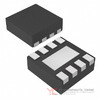
Product Overview of the MCP1501 Series
The MCP1501 series represents a family of buffered voltage references manufactured by Microchip Technology, designed to deliver stable, low-drift reference voltages across demanding industrial and precision measurement applications. Available in ten voltage variants ranging from 1.024V to 5.000V, the MCP1501 series addresses the fundamental requirement in modern electronics for accurate voltage standards that remain stable across temperature, supply voltage, and load variations.
The device operates across an extended temperature range from -40°C to +125°C and achieves an initial accuracy specification of 0.1%, making it suitable for applications where precision analog signal conditioning is required. The MCP1501 series is offered in three package options: 6-Lead SOT-23, 8-Lead SOIC, and 8-Lead 2mm x 2mm WDFN, with the SOT-23 variant qualified to AEC-Q100 automotive standards for vehicle-based applications.
Core Architecture and Operating Principles of the MCP1501 Series
The MCP1501 series employs a band gap reference architecture as its fundamental design approach. Band gap circuits generate stable reference voltages by combining two voltage sources with opposite temperature coefficients, resulting in a voltage that remains relatively independent of temperature variations. The MCP1501 series implements a second-order temperature-compensated band gap design, which allows the device to achieve both high initial accuracy and low temperature coefficient performance across the specified voltage and temperature operating ranges.
A distinguishing feature of the MCP1501 series is its integration of chopper-based amplifier architecture. This design approach effectively reduces temperature-dependent offsets that would otherwise degrade the temperature coefficient performance. The chopper amplifier continuously switches between different signal paths at a high frequency, averaging out offset errors and drift components. Additional filtering circuitry removes the chopper switching frequency from the output, ensuring clean reference voltage delivery to downstream circuits.
The band gap curvature compensation within the MCP1501 series is determined during device characterization and trimmed for optimal accuracy at the factory. This factory trimming process ensures that each device variant delivers its specified output voltage with minimal deviation across the operating temperature range.
Electrical Performance Specifications of the MCP1501 Series
The MCP1501 series operates from a single supply voltage ranging from its minimum specified voltage (dependent on the selected output voltage variant) up to 5.5V maximum. The device draws a typical operating current of 140 microamperes, making it suitable for battery-powered applications where power consumption must be minimized. The absolute maximum ratings specify that the device can sink or source up to 30 milliamperes of output current, though the specified load regulation performance is typically measured at 20 milliamperes.
The input voltage range for each MCP1501 variant is carefully specified to ensure the device maintains regulation across its operating temperature range. For example, the MCP1501-30 variant (3.0V output) requires a minimum input voltage of approximately 3.6V to maintain proper regulation, while the MCP1501-40 variant (4.096V output) requires approximately 4.7V minimum input voltage. These dropout voltage specifications reflect the internal voltage drop required by the reference circuit to maintain stable output voltage.
The device incorporates an internal reset circuit that releases when the supply voltage rises above a specified threshold during power-up, and resets when the supply voltage falls below a specified threshold during power-down. This automatic reset function ensures the device initializes properly when power is applied, though the shutdown pin should only be used after the device has completed its initial power-up sequence.
Output Voltage Stability and Temperature Characteristics of the MCP1501 Series
Temperature coefficient represents one of the most significant performance metrics for the MCP1501 series. The maximum temperature coefficient specification of 50 parts per million per degree Celsius (ppm/°C) across the -40°C to +125°C operating range indicates how much the output voltage will drift relative to its nominal value as temperature changes. This specification is measured using a standardized calculation that divides the total voltage change across the temperature range by the nominal output voltage and the temperature span.
To illustrate this concept, consider the MCP1501-20 variant with a 2.048V nominal output. If the output voltage measures 2.0480V at +25°C and 2.0479V at +125°C, the temperature coefficient would be calculated as approximately 24 ppm/°C, well within the 50 ppm/°C maximum specification. This low drift rate means that over a 100°C temperature excursion, the output voltage would change by less than 0.1% of its nominal value.
The MCP1501 series also exhibits output voltage hysteresis, which represents the error that accumulates after the device is cycled through its entire operating temperature range. This hysteresis is measured by comparing the output voltage at +25°C before and after temperature excursions to both the maximum (+125°C) and minimum (-40°C) operating temperatures. The hysteresis specification ensures that the device returns to its original output voltage value within acceptable limits after thermal cycling.
Long-term drift characterizes how the output voltage changes over extended periods at constant temperature. Testing conducted at +25°C ambient temperature shows that the MCP1501 series maintains excellent long-term stability, with drift rates measured in parts per million per thousand hours. This long-term stability is particularly important for applications requiring calibration intervals measured in years rather than months.
Load and Line Regulation Performance of the MCP1501 Series
Line regulation describes how the output voltage changes when the input supply voltage varies. The MCP1501 series specifies a maximum line regulation of 50 parts per million per volt (ppm/V), meaning that for every volt change in the input supply voltage, the output voltage will change by no more than 50 ppm of its nominal value. This specification can be understood through a practical example: if the input voltage to an MCP1501-25 (2.5V output) changes by 1 volt, the output voltage will change by no more than 125 microvolts (50 ppm × 2.5V).
Line regulation performance varies slightly across the operating temperature range, with the MCP1501 series typically exhibiting better line regulation at room temperature and slightly degraded performance at temperature extremes. The device achieves this line regulation performance through its buffered output stage, which includes feedback circuitry that continuously monitors and corrects for input voltage variations.
Load regulation specifies how the output voltage changes when the load current drawn from the device varies. The MCP1501 series specifies a maximum load regulation of 40 parts per million per milliampere (ppm/mA). This means that for every milliampere increase in load current, the output voltage will change by no more than 40 ppm of its nominal value. For the MCP1501-25 variant, a 10 milliampere increase in load current would result in an output voltage change of no more than 1 millivolt (40 ppm/mA × 10 mA × 2.5V).
Load regulation performance is significantly influenced by printed circuit board layout and thermal management. When high load currents flow through the device, internal power dissipation increases, causing the device temperature to rise slightly. This self-heating effect can degrade load regulation performance if the device is not properly mounted on a large ground plane with good thermal mass. The MCP1501 series should be mounted away from PCB edges, screw holes, and large components to minimize mechanical stress effects on output voltage.
Power Supply Rejection and Noise Performance of the MCP1501 Series
Power supply rejection ratio (PSRR) measures how effectively the MCP1501 series rejects noise and ripple present on the input supply voltage. The PSRR varies with frequency, with the device providing excellent rejection at low frequencies and gradually degrading as frequency increases. At low frequencies (below 1 kHz), the MCP1501 series typically achieves PSRR values exceeding 60 decibels, meaning that input noise is attenuated by a factor of 1000 or more.
The frequency-dependent nature of PSRR reflects the bandwidth limitations of the internal feedback network. At frequencies below approximately 1 to 2 MHz, the device's internal feedback loop actively rejects input voltage variations. At frequencies above this bandwidth, input noise passes through to the output with minimal attenuation. This bandwidth characteristic explains why an optional 2.2 microfarad input capacitor is recommended when the input supply voltage contains excessive noise. Such a capacitor provides additional filtering at frequencies above the device's internal bandwidth, rejecting noise in the 1 to 2 MHz range.
Output noise of the MCP1501 series is specified as 30 microvolts RMS measured across the 0.1 Hz to 10 kHz frequency band for the 1.024V variant. This low noise specification reflects the chopper-based amplifier architecture, which effectively eliminates 1/f noise (flicker noise) that typically dominates the noise performance of conventional voltage references. The noise specification scales approximately with the output voltage, so higher voltage variants exhibit proportionally higher absolute noise levels but maintain similar noise-to-signal ratios.
Pin Configuration and Functional Description of the MCP1501 Series
The MCP1501 series in SOIC and WDFN packages provides eight pins, while the SOT-23 package provides six pins with some functions integrated internally. The buffered reference output (OUT) pin delivers the regulated reference voltage to the application circuit. On SOIC and WDFN packages, this pin should be connected to the feedback (FEEDBACK) pin at the device location, typically through a short PCB trace.
The feedback pin serves as the input to the internal buffer amplifier's feedback network. By connecting the feedback pin directly to the output pin at the device location, the feedback network monitors the actual voltage at the device output rather than at a distant load. This local feedback arrangement ensures that the device compensates for any voltage drops in PCB traces or interconnect resistance between the device and the load.
In applications requiring high load currents or highly variable load currents, the separate output and feedback pins can be routed independently to the point of load. The output pin connects to the load through a series resistor or trace, while the feedback pin connects directly to the load point. This Kelvin-source connection arrangement allows the device to sense and compensate for voltage drops caused by load current flowing through PCB traces, effectively removing IR-drop effects from the output voltage seen by the load.
The power supply input (VDD) pin accepts the input voltage and also serves as the reference for the internal band gap circuit. A 0.1 microfarad ceramic capacitor should be connected very close to the VDD pin to provide high-frequency decoupling and minimize noise coupling into the device. The system ground (GND) pin provides the return path for both the internal circuitry and the load current.
The shutdown (SHDN) pin is a digital input that places the device into a low-power shutdown state when driven low. When shutdown is active, both the output driver and feedback network are tristated, drawing minimal current from the supply. The shutdown pin should only be used after the device has completed its initial power-up sequence, as using shutdown during the power-up transient can interfere with the internal reset circuit.
The exposed thermal pad (EP) on WDFN packages is not internally connected but should be soldered to the ground plane on the PCB. This thermal pad provides a low-impedance path for heat dissipation, improving thermal performance when the device operates at elevated load currents or ambient temperatures.
Package Options and Thermal Management for the MCP1501 Series
The MCP1501 series is available in three package options, each offering different trade-offs between size, thermal performance, and ease of assembly. The 6-Lead SOT-23 package provides the smallest footprint and is qualified to AEC-Q100 automotive standards, making it suitable for vehicle-based applications. However, the SOT-23 package offers limited thermal performance due to its small size and minimal thermal pad area.
The 8-Lead SOIC package provides a larger footprint than SOT-23 but maintains compatibility with standard surface-mount assembly equipment. The SOIC package includes both separate output and feedback pins, allowing for Kelvin-source connections in high-current applications. The SOIC package provides moderate thermal performance suitable for applications with load currents up to approximately 15 milliamperes.
The 8-Lead 2mm x 2mm WDFN package offers the best thermal performance of the three options due to its exposed thermal pad and compact size. The WDFN package is recommended for applications requiring maximum load current capability or operation in high ambient temperature environments. The exposed thermal pad should be soldered to a large ground plane with multiple thermal vias to maximize heat dissipation.
Mechanical stress during PCB assembly can cause permanent shifts in the output voltage of the MCP1501 series. Devices in the SOT-23 package are generally more prone to assembly stress than WDFN devices. To minimize stress-related output voltage shifts, the reference should be mounted on low-stress areas of the PCB, away from PCB edges, screw holes, and large components that might flex during assembly or thermal cycling.
Application Circuit Design with the MCP1501 Series
Application Circuit Design with the MCP1501 Series
Basic Configuration and Decoupling Strategies for the MCP1501 Series
The basic application circuit for the MCP1501 series consists of the device itself, a 0.1 microfarad input decoupling capacitor connected very close to the VDD pin, and the output connected to the feedback pin. An output capacitor is not required for stability of the voltage reference, but may be optionally added to provide noise filtering or act as a charge reservoir for switching loads such as successive approximation register (SAR) analog-to-digital converters.
When the input voltage contains excessive noise or ripple, a 2.2 microfarad ceramic capacitor can be added at the input to provide additional filtering. This capacitor provides rejection of input voltage noise in the 1 to 2 MHz frequency range, complementing the device's internal power supply rejection at lower frequencies. The combination of the device's internal PSRR and the external input capacitor provides comprehensive noise rejection across the entire frequency spectrum.
The output of the MCP1501 series should be connected to the feedback pin through a short PCB trace to minimize the impedance of this connection. Any routing impedance or IR-drop between the output and feedback pins will cause the feedback network to sense a different voltage than what appears at the load. By keeping this connection short and using a wide PCB trace, the feedback network accurately monitors the output voltage at the device location.
Output Filtering and Noise Reduction Techniques for the MCP1501 Series
For applications where the output noise of the MCP1501 series exceeds the requirements of the downstream circuitry, an external RC low-pass filter can be implemented. A typical filter configuration uses a 10 kilohm resistor in series with the output and a 1 microfarad capacitor to ground, creating a first-order low-pass filter with a cutoff frequency of approximately 15.9 Hz. This filter attenuates noise at frequencies above the cutoff frequency at a rate of 20 decibels per decade.
The RC filter should be followed by an operational amplifier buffer to isolate the filter from the load impedance and provide additional drive capability. The buffer amplifier also provides faster response time than the voltage reference alone, improving transient response when the load current changes rapidly. A suitable buffer amplifier for this application is the MCP6286, which offers low offset voltage and low noise performance compatible with precision reference applications.
The cutoff frequency of the RC filter is calculated using the formula: fc = 1 / (2π × R × C). For the example values of 10 kilohms and 1 microfarad, the cutoff frequency is 15.9 Hz. This low cutoff frequency provides excellent noise filtering but introduces a corresponding phase lag that may affect system stability in applications with fast-changing load currents. The designer must balance noise filtering requirements against transient response requirements when selecting filter component values.
Negative Voltage Reference Generation Using the MCP1501 Series
The MCP1501 series can be used to generate negative voltage references through an inverting amplifier configuration. In this circuit, the output of the MCP1501 series drives one input of a precision operational amplifier through a resistor, while the other input is biased to ground. A feedback resistor of equal value is connected around the amplifier, creating an inverting amplifier with a gain of -1.
For example, an MCP1501-25 (2.5V output) connected to an inverting amplifier with equal input and feedback resistors produces a -2.5V output. Similarly, an MCP1501-40 (4.096V output) produces a -4.096V output. The MCP6061 operational amplifier is suitable for this application, offering low offset voltage and low noise performance. The inverting amplifier approach allows the MCP1501 series to serve as the basis for both positive and negative reference voltage generation in systems requiring dual-polarity references.
Data Converter Reference Implementation with the MCP1501 Series
The MCP1501 series is widely used as the reference voltage source for analog-to-digital converters (ADCs) and digital-to-analog converters (DACs). The precision and low noise characteristics of the MCP1501 series directly determine the accuracy and resolution of the data converter. For a 12-bit ADC with a 2.5V reference, each least significant bit represents approximately 610 microvolts. The 0.1% initial accuracy and low temperature coefficient of the MCP1501-25 ensure that the reference voltage remains stable within the resolution of the ADC across temperature and supply voltage variations.
In successive approximation register (SAR) ADC applications, the reference voltage must respond quickly to load current changes as the SAR logic switches between different conversion phases. The MCP1501 series provides excellent transient response characteristics, recovering to within 1% of the final value in less than 1 microsecond when the load current changes by 10 milliamperes. An optional output capacitor (typically 10 to 100 nanofarads) can be added to provide charge storage for the SAR ADC's sampling switches, reducing the transient voltage deviation during the sampling phase.
PCB Layout Considerations and Stress Mitigation for the MCP1501 Series
Proper PCB layout is fundamental to achieving the specified performance of the MCP1501 series. The device should be mounted on a large ground plane with good thermal mass to minimize the effects of self-heating on load regulation performance. When high load currents flow through the device, the internal power dissipation increases, causing the device temperature to rise. This temperature increase causes a small change in the output voltage due to the temperature coefficient of the reference. By providing a large ground plane with good thermal conductivity, the heat generated by the device is distributed across a larger area, minimizing the temperature rise.
For systems with high ground currents, variations in the local ground potential can degrade load regulation performance. These variations are typically solved by ensuring the local ground for the device is shared with the point of load. In some cases, it may be necessary to implement a Kelvin-source connection where the device ground is specifically connected from the point of load such that zero IR-drop from unassociated circuitry is seen on the device output voltage.
The separate output and feedback pins available on SOIC and WDFN packages should be shorted together on the PCB adjacent to the device when the load is located close to the reference. However, when the load is located at a distance from the reference, these pins can be routed separately and connected near the point of load. This approach reduces or eliminates routing-related voltage drop in the system by allowing the feedback network to sense the actual voltage at the load rather than at the device output.
Transient Response and Capacitive Load Handling in the MCP1501 Series
The MCP1501 series exhibits excellent transient response characteristics when the load current changes rapidly. The device recovers to within 1% of the final value in less than 1 microsecond for a 10 milliampere load current step. This fast transient response reflects the high bandwidth of the internal feedback network and the buffered output stage.
The maximum capacitive load that can be connected directly to the output without series resistance is 10 nanofarads. Larger capacitors can be implemented if a series resistor is used to limit the charging current and prevent excessive transient overshoot. The transient response with series resistance and capacitive load depends on both the resistor value and the capacitor value. Typical values range from 100 ohms to 1 kilohm in series with capacitors up to 100 nanofarads.
The transient response also depends on the input supply voltage and the source impedance of the input supply. At lower input voltages, the device's output impedance increases, resulting in slower transient response. Similarly, if the input supply has high source impedance, the device's ability to source or sink current is limited, degrading transient response. For optimal transient response, the input supply should have low source impedance, and the input voltage should be as high as practical within the device's maximum rating of 5.5V.
Conclusion
The MCP1501 series represents a comprehensive solution for precision voltage reference requirements in data acquisition, industrial control, and medical equipment applications. The combination of low temperature coefficient, high initial accuracy, excellent load and line regulation, and low noise performance makes the MCP1501 series suitable for applications requiring stable reference voltages across wide temperature and supply voltage ranges. The availability of ten voltage variants and three package options provides flexibility in system design, while the AEC-Q100 qualification of the SOT-23 package extends applicability to automotive environments. Proper attention to PCB layout, thermal management, and decoupling strategies ensures that the specified performance is achieved in production systems.
Frequently Asked Questions (FAQ)
- Q1. What is the difference between the MCP1501 series and other voltage reference devices available in the market?
-
- A1. The MCP1501 series distinguishes itself through its chopper-based amplifier architecture, which effectively eliminates temperature-dependent offsets and 1/f noise that typically degrade the performance of conventional voltage references. This architecture, combined with second-order temperature compensation, allows the MCP1501 series to achieve a maximum temperature coefficient of 50 ppm/°C while maintaining 0.1% initial accuracy. The buffered output stage capable of sinking and sourcing 20 milliamperes of current provides flexibility in application design that many competing references do not offer.
- Q2. How should the output and feedback pins of the MCP1501 series be connected in SOIC and WDFN packages?
-
- A2. In SOIC and WDFN packages, the output and feedback pins should be connected together at the device location through a short PCB trace when the load is located close to the reference. This connection allows the feedback network to monitor the actual output voltage at the device. When the load is located at a distance from the reference, the output and feedback pins can be routed separately to the point of load, with the feedback pin connected directly to the load point. This Kelvin-source arrangement allows the device to compensate for voltage drops in PCB traces caused by load current, effectively removing IR-drop effects from the output voltage seen by the load.
- Q3. What is the purpose of the 0.1 microfarad capacitor connected to the VDD pin?
-
- A3. The 0.1 microfarad capacitor provides high-frequency decoupling of the power supply input. This capacitor should be connected very close to the VDD pin to minimize the inductance of the connection. The capacitor provides a low-impedance path for high-frequency noise and transient currents, preventing these disturbances from coupling into the device's internal circuitry. Without this capacitor, high-frequency noise on the input supply can couple into the band gap reference circuit, degrading the output noise performance and potentially causing instability.
- Q4. Can the MCP1501 series be used in battery-powered applications?
-
- A4. Yes, the MCP1501 series is well-suited for battery-powered applications. The typical operating current of 140 microamperes is low enough to allow extended battery life in many applications. The shutdown pin can be used to reduce current consumption to microamperes when the reference voltage is not needed, further extending battery life. The wide input voltage range of the MCP1501 series allows it to operate from battery voltages ranging from approximately 3.6V to 5.5V, depending on the selected output voltage variant. For applications requiring even lower current consumption, the shutdown feature can be used to disable the device between measurement cycles.
- Q5. What is the maximum load current that the MCP1501 series can supply?
-
- A5. The MCP1501 series can sink or source up to 30 milliamperes of output current according to the absolute maximum ratings. However, the specified load regulation performance is typically measured at 20 milliamperes. At load currents approaching 30 milliamperes, the device's output impedance increases, and the load regulation performance may degrade. For applications requiring sustained load currents above 20 milliamperes, the designer should verify that the load regulation performance remains acceptable through the device's operating temperature range. Additionally, at high load currents, the internal power dissipation increases significantly, requiring careful attention to thermal management and PCB layout.
- Q6. How does temperature affect the output voltage of the MCP1501 series?
-
- A6. The output voltage of the MCP1501 series changes with temperature at a rate specified by the temperature coefficient, with a maximum value of 50 ppm/°C. This means that over a 100°C temperature change, the output voltage will change by no more than 0.5% of its nominal value. For example, an MCP1501-25 (2.5V nominal) will change by no more than 12.5 millivolts over the -40°C to +125°C operating range. The temperature coefficient is minimized through the second-order temperature compensation and chopper-based amplifier architecture. The actual temperature coefficient of individual devices is typically much lower than the maximum specification, often in the range of 20 to 30 ppm/°C.
- Q7. What is the purpose of the shutdown pin, and how should it be used?
-
- A7. The shutdown pin is a digital input that places the device into a low-power shutdown state when driven low. When shutdown is active, both the output driver and feedback network are tristated, and the device draws minimal current from the supply. The shutdown pin is useful in applications where the reference voltage is not continuously needed, allowing the device to be disabled between measurement cycles to reduce power consumption. However, the shutdown pin should only be used after the device has completed its initial power-up sequence. Using shutdown during the power-up transient can interfere with the internal reset circuit and prevent proper device initialization.
- Q8. How should the MCP1501 series be used to generate a negative voltage reference?
-
- A8. A negative voltage reference can be generated using an inverting amplifier configuration. The output of the MCP1501 series drives the inverting input of an operational amplifier through a resistor, while the non-inverting input is biased to ground. A feedback resistor of equal value is connected around the amplifier. This configuration produces an output voltage equal to the negative of the MCP1501 output voltage. For example, an MCP1501-25 (2.5V output) produces a -2.5V output, while an MCP1501-40 (4.096V output) produces a -4.096V output. The MCP6061 operational amplifier is suitable for this application.
- Q9. What is the difference between line regulation and load regulation?
-
- A9. Line regulation describes how the output voltage changes when the input supply voltage varies, while load regulation describes how the output voltage changes when the load current varies. The MCP1501 series specifies a maximum line regulation of 50 ppm/V, meaning that for every volt change in the input supply voltage, the output voltage will change by no more than 50 ppm of its nominal value. Load regulation is specified as a maximum of 40 ppm/mA, meaning that for every milliampere increase in load current, the output voltage will change by no more than 40 ppm of its nominal value. Both specifications are important for understanding how the reference voltage will behave in real applications where both supply voltage and load current vary.
- Q10. How does the MCP1501 series achieve such low noise performance?
-
- A10. The MCP1501 series achieves low noise performance through its chopper-based amplifier architecture. The chopper amplifier continuously switches between different signal paths at a high frequency, effectively averaging out offset errors and 1/f noise (flicker noise) that typically dominates the noise performance of conventional voltage references. Additional filtering circuitry removes the chopper switching frequency from the output, ensuring clean reference voltage delivery. The output noise specification of 30 microvolts RMS (measured across 0.1 Hz to 10 kHz for the 1.024V variant) reflects this low-noise design approach. For applications requiring even lower noise, an external RC low-pass filter followed by an operational amplifier buffer can further reduce the output noise.
- Q11. What is the purpose of the exposed thermal pad on WDFN packages?
-
- A11. The exposed thermal pad on WDFN packages is not internally connected but should be soldered to the ground plane on the PCB. This thermal pad provides a low-impedance path for heat dissipation, improving thermal performance when the device operates at elevated load currents or ambient temperatures. By connecting the thermal pad to a large ground plane with multiple thermal vias, the heat generated by the device is distributed across a larger area, minimizing the temperature rise. This improved thermal performance allows the WDFN package to handle higher load currents than the SOT-23 or SOIC packages while maintaining acceptable temperature coefficients and load regulation performance.
- Q12. Can the MCP1501 series be used in automotive applications?
-
- A12. Yes, the MCP1501 series in the 6-Lead SOT-23 package is qualified to AEC-Q100 automotive standards, making it suitable for vehicle-based applications. The AEC-Q100 qualification ensures that the device meets the reliability and performance requirements for automotive environments, including extended temperature ranges and thermal cycling. The MCP1501 series' low temperature coefficient, high initial accuracy, and excellent load and line regulation make it well-suited for automotive applications such as battery management systems, engine control modules, and sensor signal conditioning. However, the SOIC and WDFN packages are not AEC-Q100 qualified, so the SOT-23 package must be used for automotive applications requiring this qualification.