Hello Guest

Sign in / Register

Welcome,{$name}!

/ Logout
English
EnglishDeutschItaliaFrançais한국의русскийSvenskaNederlandespañolPortuguêspolski繁体中文SuomiGaeilgeSlovenskáSlovenijaČeštinaMelayuMagyarországHrvatskaDanskromânescIndonesiaΕλλάδαБългарски езикGalegolietuviųMaoriRepublika e ShqipërisëالعربيةአማርኛAzərbaycanEesti VabariikEuskeraБеларусьLëtzebuergeschAyitiAfrikaansBosnaíslenskaCambodiaမြန်မာМонголулсМакедонскиmalaɡasʲພາສາລາວKurdîსაქართველოIsiXhosaفارسیisiZuluPilipinoසිංහලTürk diliTiếng ViệtहिंदीТоҷикӣاردوภาษาไทยO'zbekKongeriketবাংলা ভাষারChicheŵaSamoaSesothoCрпскиKiswahiliУкраїнаनेपालीעִבְרִיתپښتوКыргыз тилиҚазақшаCatalàCorsaLatviešuHausaગુજરાતીಕನ್ನಡkannaḍaमराठी
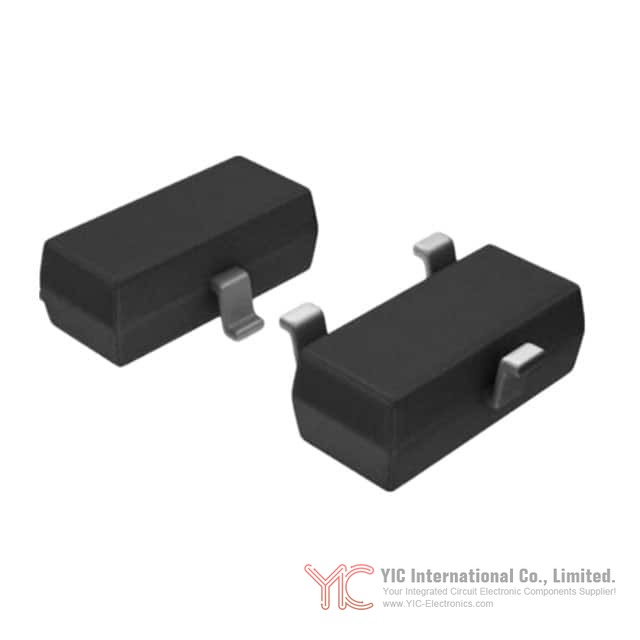
SM712 Image

View larger Image

Image may be representation.
See specs for product details.

SM712

Manufacturer Part Number: SM712
Manufacturer/Brand: MDD
Part of Description: TVS DIODE 12V/7V, 20V/12V SOT23
Datasheets: SM712.pdf
RoHs Status: Lead free / RoHS Compliant
Stock Condition: 85514 pcs Stock
Ship From: Hong Kong
Shipment Way: DHL/Fedex/TNT/UPS/EMS

Request Quote

Please complete all required fields with your contact information.Click "SUBMIT REQUEST" we will contact you shortly by email. Or Email us: Info@Y-IC.com.

Part No.
Quantity
Target Price(USD)

Inquiry Online

  • Contact Name
  • Company
  • E-mail
  • Phone
  • Message
  • Verify
  • Specifications
  • QC & Packaging
  • Shipping
  • Payment
  • Part NumberSM712
  • ManufacturerMDD
  • DescriptionTVS DIODE 12V/7V, 20V/12V SOT23
  • CategoryCircuit Protection > Transient Voltage Suppressors (TVS) - TVS Diodes
  • Part Status85514 pcs Stock
  • Voltage - Reverse Standoff (Typ)12V (Max), 7V (Max)
  • Voltage - Breakdown (Min)13.3V, 7.5V
  • TypeZener
  • Supplier Device PackageSOT-23
  • SeriesSOT-23
  • Power Line ProtectionYes
  • Power - Peak Pulse400W
  • Package / CaseSOT-23
  • PackageTape & Reel (TR)
  • Operating Temperature-55°C ~ 150°C (TJ)
  • Mounting TypeSurface Mount
  • Current - Peak Pulse (10/1000µs)5A (8/20µs)
  • Capacitance @ Frequency75pF @ 1MHz
  • Bidirectional Channels2
  • ApplicationsGeneral Purpose
  • SM712 Details PDFSM712 PDF - DE.pdf

QC (Quality Warranty)

All products are carefully inspected before shipment according to our Quality Management practices. We ensure each part is genuine, meets specification requirements, and is functionally checked against original datasheets.
Our quality process supports reliable part performance and minimized risk of defects in customer applications.

Visual Inspection X-Ray Analysis Decapsulation Analysis Spectrometer Dimension Verification Dimension Verification Dimension Verification

Packaging

ESD Protection & Handling

All ESD-sensitive components are handled under anti-static control procedures.
Products are sealed in ESD-safe packaging to prevent electrostatic damage.
Proper labeling is applied for identification and traceability.
This ensures product integrity during storage, handling, and shipment.

Global Shipment by DHL/FedEx/TNT/UPS

Delivery time
Deliverytime will need 2-4days to most of country all over the world for DHL/UPS/FEDEX/TNT.
Shipping fees reference DHL.
1). You can offer your express delivery account for shipment, ifyou haven’t any express account for shipment, we can offer our account inadvance.
2). Use our account for shipment, Shipment charges(ReferenceDHL, Different Countries has different price.)

Shipment charges: (Reference DHL)
Weight(KG) Price(USD$)
0.00kg-1.00kg USD$60.00
1.00kg-2.00kg USD$70.00
2.00kg-3.00kg USD$80.00

More details: https://www.yic-electronics.com/shipment-way.htm
Please feel free contact us. Send any inquires or question toour Email Info@YIC-Electronics.com
We can do the best to you. Thank you very much your support.

Payment Way: Wire Transfer = Telegraphic Transfer(T/T) or PayPal or Western Union

Wire Transfer (T/T)

Our HSBC bank name: The Hongkong and Shanghai Banking Corporation Limited (HSBC Hong Kong)

Benefit Company Name: YIC International Co., Limited
Bank charges and payment account details, please click "Payment Way".

Western Union


Complete payment by Western Union.
Step 1. Go to your local Western Union branch, or go to their website (www.westernunion.com)
Step 2. Follow their instructions.


Bank charges and payment account details, please click "Payment Way".

PayPal Account:

PayPal Golden Key Supplier

PayPal Account:
PayPal Account ID: Info@YIC-Electronics.com
Company: YIC International Co., Limited

If you want to pay via Credit Card, please choose "Pay with my PayPal account" to continue by paypal.(www.paypal.com
Bank charges details, please click "Payment Way".

SM712 TVS Diode: Bidirectional Protection for RS‑485 and High-Speed Data Interfaces

Product overview – SM712 TVS diode

The SM712 TVS diode is a surface-mount transient voltage suppressor designed to clamp surge and transient voltages on sensitive signal lines. It provides protection by diverting surge current away from protected circuitry when line voltage exceeds its breakdown region, and it returns to a high-impedance state once the transient subsides.

With a minimum breakdown voltage of 7 V and clamp voltages of 18 V and 26 V, the SM712 TVS diode is suited to protect differential data interfaces and low-voltage lines that must withstand surge events while maintaining signal integrity. The device is offered in a compact SOT‑23 package and is specified for a peak pulse current of 12 A, enabling robust protection in space-constrained designs.

Structural and functional characteristics of the SM712 TVS diode

The SM712 TVS diode is built as a transient suppression element optimized for line protection. Its main functional role is to remain electrically transparent under normal operating conditions and switch to a low-impedance path during transients.

When line voltage remains below the minimum breakdown voltage of 7 V, the SM712 TVS diode contributes negligible leakage current, allowing signals to pass with minimal loading. When a surge raises the line voltage above its breakdown region, the device conducts, clamping the voltage to specified levels (18 V or 26 V depending on polarity or line condition) and routing surge current to ground or a reference potential. This behavior protects downstream ICs whose absolute maximum ratings are typically lower than the SM712 clamp levels.

Internally, the SM712 TVS diode is optimized for fast response to transients. In surge scenarios, the transition from high impedance to conduction occurs on the order of nanoseconds. The combination of specified breakdown and clamp voltages with a 12 A peak pulse current capability allows the SM712 to handle typical surge conditions encountered on communication and low-voltage control lines, such as those conforming to industrial and communication interface standards.

Electrical performance parameters of the SM712 TVS diode

The SM712 TVS diode’s suitability for a specific design is determined primarily by its electrical parameters. Key ratings include:

• Breakdown voltage (VBR): The SM712 TVS diode has a minimum breakdown voltage of 7 V, with a typical breakdown region around 7.5 V. This defines the threshold above which the device begins to conduct more heavily. For data or control lines nominally operating below this level (such as common differential bus voltages), this ensures normal operation remains unaffected while providing room for minor line fluctuations.

• Clamp voltages: The SM712 TVS diode specifies clamp voltages of 18 V and 26 V under surge conditions. During a transient, once breakdown is reached, the device limits the line voltage to these clamp levels. Protection-sensitive ICs typically have absolute maximum ratings below these clamps, so the SM712 is used on interfaces where those clamp voltages remain within the survivable transient range of the protected devices.

• Peak pulse current (Ipp): Rated at 12 A, the SM712 TVS diode can conduct substantial surge currents for short durations. This rating reflects the maximum surge current the device can handle under specified test waveforms without damage. In practical design, this enables the SM712 to address surges such as those generated by electrostatic discharge (ESD), electrical fast transients (EFT), or induced surge events on long cables.

• Surface-mount construction: The SM712 TVS diode is implemented in a way that supports low-inductance current paths when properly laid out on the PCB. Low parasitic inductance improves clamping performance because voltage overshoot during fast transients is reduced.

Together, these parameters guide how the SM712 TVS diode behaves in surge conditions: it begins to conduct at approximately 7–7.5 V and limits the subsequent transient to clamp levels of 18 V and 26 V while safely carrying surge currents up to 12 A.

Package, mounting, and mechanical features of the SM712 TVS diode

The SM712 TVS diode is supplied in an industry-standard SOT‑23 package, aligning with a widespread footprint familiar to PCB designers. This package style enables:

• Compact layout: The SOT‑23 form factor allows placement adjacent to connector pins or IC input pins, which shortens trace lengths between protected nodes and the protection device. Reduced trace length helps minimize parasitic inductance and voltage overshoot during surge events.

• Surface-mount assembly: The SM712 TVS diode is compatible with standard reflow processes used for SMD assembly. This supports automated high-volume production and straightforward integration into existing SMT lines.

• Pin configuration: In SOT‑23, the SM712 TVS diode pins are arranged to permit symmetrical routing for differential pairs or single-ended lines, depending on the specific application. Designers can position the device at the interface between external connectors and internal circuitry to create a defined protection boundary.

From a mechanical standpoint, the SOT‑23 package of the SM712 TVS diode also influences thermal behavior under surge. While transients are short in duration, the package must safely dissipate the associated energy. The rated 12 A peak pulse current reflects the combination of the die structure and SOT‑23 package capability under the test conditions used by the manufacturer.

Typical application scenarios of the SM712 TVS diode

The SM712 TVS diode is suited to protecting signal and communication lines that must endure surge events without degrading normal signal performance. One representative scenario involves differential data interfaces that operate around low voltages, such as those used in common industrial and building automation systems.

In such systems, long cable runs expose communication lines to ESD, induced lightning surges, and switching transients. The SM712 TVS diode can be placed close to the external connector, with each line routed through the device. When a surge appears, the SM712 clamps the voltage to 18 V or 26 V, shunting current away from the transceiver inputs. After the transient, the device reverts to its high-impedance state, allowing normal communication to resume.

Another scenario is the protection of low-voltage control or sensor lines in distributed systems. For example, a sensor node in an industrial environment connected via a twisted-pair cable to a central controller can experience surge events caused by nearby inductive load switching. With the SM712 TVS diode installed at the interface, these transient voltages are limited before reaching vulnerable ADC inputs or microcontroller pins.

In practice, the SM712 TVS diode is typically positioned:

• At the boundary between external field wiring and internal electronics.

• On each exposed line where surge paths from the external environment could reach sensitive circuitry.

• Close to the line entry point to minimize the length of unprotected traces.

By combining its 7 V minimum breakdown voltage with 18 V and 26 V clamp capabilities and 12 A peak current handling, the SM712 TVS diode supports these application scenarios without imposing significant loading on the protected signal lines during normal operation.

Comparison and selection considerations for the SM712 TVS diode

When considering the SM712 TVS diode among protection options, several selection dimensions emerge from its specifications:

• Operating voltage of the protected line: The SM712 TVS diode’s 7 V minimum breakdown voltage and 7.5 V nominal breakdown region fit lines whose normal operating voltage stays comfortably below this threshold. This ensures that the device does not enter breakdown during normal operation and that leakage remains low.

• Acceptable clamp voltage: With clamp voltages of 18 V and 26 V, the SM712 TVS diode is suitable where protected components can tolerate transient exposures at or below these levels. Designers should align the SM712’s clamp ratings with the absolute maximum ratings of transceivers, controllers, or interface ICs connected to the protected line.

• Surge environment: The SM712 TVS diode’s 12 A peak pulse current rating corresponds to a specific transient waveform used for characterization. In systems where surge currents are expected to be similar or lower, the device provides a suitable safety margin. For environments where surge specifications are higher, multiple devices, different layout strategies, or higher-rated protection devices might be evaluated.

• Board space and integration: The SOT‑23 package of the SM712 TVS diode is suitable where PCB area is constrained and where a single compact device per line (or per differential pair, based on topology) is preferred over larger packages. The small footprint makes it feasible to place the device directly at each connector pin or each interface channel.

• Mounting and assembly flow: The SM712 TVS diode integrates easily into SMT assembly without requiring special handling beyond standard ESD precautions applicable to semiconductor devices. This simplifies adoption in existing designs already using SOT‑23 discretes.

When these aspects are considered together, the SM712 TVS diode offers a combination of breakdown voltage, clamp behavior, surge current capability, and compact packaging that aligns with protection requirements for many low-voltage data and control interfaces.

Conclusion – SM712 TVS diode protection capabilities in perspective

The SM712 TVS diode provides a defined clamping response for surge protection on low-voltage signal and communication lines. Its minimum breakdown voltage of 7 V, clamp voltages of 18 V and 26 V, and 12 A peak pulse current rating form a coordinated parameter set that can be matched to interface and IC ratings in surge-exposed systems.

The SOT‑23 surface-mount package allows the SM712 TVS diode to be placed close to connectors or transceivers, which contributes to effective surge handling and helps maintain signal quality. By conducting surge currents during transient events and returning to a high-impedance state afterward, the SM712 supports reliable operation of protected circuits across a range of applications involving long cables, distributed sensors, and communication interfaces.

Frequently Asked Questions (FAQ)

Q1. What types of interfaces are best suited for the SM712 TVS diode?
A1. The SM712 TVS diode is designed for protection of low-voltage signal lines, especially differential or single-ended data and control interfaces that operate below its 7 V minimum breakdown voltage. Typical examples include communication buses and sensor or control lines that are exposed to surge events through external cabling.
Q2. How does the 7 V minimum breakdown voltage of the SM712 TVS diode affect normal operation?
A2. Under normal conditions, the protected line voltage remains below the SM712 TVS diode’s 7 V minimum breakdown threshold, so the device behaves as a high-impedance element with only small leakage current. This means it does not interfere with normal signaling. When a transient pushes the line above the breakdown region (around 7.5 V), the device enters conduction and begins clamping the voltage.
Q3. Why does the SM712 TVS diode specify clamp voltages of both 18 V and 26 V?
A3. The SM712 TVS diode’s 18 V and 26 V clamp levels describe the voltages to which the device limits surges under specified test conditions and polarities. Depending on the direction and magnitude of the transient, the line voltage is confined to one of these clamps. Designers compare these clamp values against the absolute maximum ratings of connected ICs to confirm compatibility.
Q4. Can the SM712 TVS diode protect against high-energy surges on long cable runs?
A4. The SM712 TVS diode is rated for 12 A peak pulse current, which enables it to handle significant transient energy under its specified test waveform. In many systems with long cables, this is sufficient for typical ESD, EFT, and induced surge events. For applications with known higher surge levels (for example, compliance with more severe surge standards), a detailed surge budget and coordination with other protection elements may be considered.
Q5. What is the impact of the SOT‑23 package of the SM712 TVS diode on layout and performance?
A5. The SOT‑23 package makes the SM712 TVS diode compact and easy to place close to connectors or IC pins. Short trace lengths between the protected line and the device reduce parasitic inductance, which helps limit voltage overshoot during fast transients. The small SOT‑23 footprint also supports high-density boards where several protected channels must be placed near each other.
Q6. How should the SM712 TVS diode be positioned on the PCB for effective protection?
A6. For effective operation, the SM712 TVS diode is typically placed at the boundary between external connectors and internal circuitry, as close as possible to the point where the surge can enter the board. Minimizing the unprotected trace length between the connector pin and the SM712 reduces the likelihood of excessive voltage developing on the trace before the device clamps the transient.
Q7. Is the SM712 TVS diode suitable for applications with frequent transient events?
A7. The SM712 TVS diode is designed to withstand repeated transient events within its energy handling capability and thermal limits. In systems where lower-level transients occur frequently, the device handles such events by clamping without sustaining damage, provided that the cumulative energy and peak currents remain within its specified ratings. Design verification under representative surge conditions is recommended.
Q8. How does the SM712 TVS diode behave after a transient event has ended?
A8. Once the surge voltage falls back below the breakdown region, the SM712 TVS diode returns to its high-impedance state. The line voltage then returns to its normal operating level, and the device no longer conducts significant current, thereby allowing the protected circuit to resume regular operation with minimal residual loading.
Q9. What factors should be considered when pairing the SM712 TVS diode with a specific transceiver or IC?
A9. When pairing the SM712 TVS diode with a transceiver or IC, the protected device’s absolute maximum ratings for line voltage and surge conditions should be compared with the SM712’s 18 V and 26 V clamp voltages and 12 A peak pulse current. The nominal operating voltage of the line must remain below the 7 V minimum breakdown voltage to avoid unintended conduction. Board layout should also be arranged so that the protection device and the protected IC are connected with low-inductance paths.
Q10. Can multiple SM712 TVS diodes be used together in one design?
A10. Multiple SM712 TVS diodes can be used in a single design to protect multiple lines or channels. Each exposed line can have its own SM712 placed at the interface with external connections. In multi-channel interfaces, arranging one SM712 per channel or per differential pair allows each signal path to have localized protection matched to its surge exposure.
Slide the scroll wheel to view more.
Click to see more

User Review

  • Kent***orimoto

    Used this processor in a wireless networking project. Stable operation and good integration with existing software tools. Performance is sufficient for embedded communication applications.

    June 9th, 2026

  • Oliv***ughes

    Good capacitor quality. Used in a power supply rebuild and measured values were close to spec. No issues after several days of continuous operation.

    June 5th, 2026

  • Kevi***rner

    Very good MCU for legacy embedded projects. I used the LPC2387FBD100 in an industrial control board replacement and it integrated more smoothly than expected. Ethernet and peripheral support were enough for our needs. Been running continuously for over a week without instability.

    May 25th, 2026

  • Nath***ill

    Good supervisor IC for automotive power systems. Reliable reset behavior.

    May 19th, 2026

  • Jack***III

    Good price

    May 15th, 2026

  • Davi***ung

    Good SoC for networking applications. Stable signal processing and low power consumption.

    May 6th, 2026

  • Andr***ee

    Overall is good

    April 28th, 2026

  • Emil***ark

    Accurate frequency output for timing circuits. Works well in low-power signal designs.

    April 23th, 2026

  • Jose***Dong

    Quick response and clear answers.

    April 16th, 2026

  • Marc***echLab

    Excellent quality. All chips passed testing and showed consistent electrical characteristics.

    April 7th, 2026

  • Circ***MasterX

    Good packaging and fast shipping. Performance is stable, but I wish there was clearer labeling on each component.

    April 2th, 2026

  • SamT***Reviews

    Excellent ICs. Used them in a communication module and performance was stable.

    March 27th, 2026

  • Kevi***.

    Good quality parts. No failures during testing.

    March 17th, 2026

  • Bria***.

    Good

    March 13th, 2026

  • Mari***.

    Superb performance.

    March 2th, 2026

  • Emma***

    Excellent ICs for DIY projects. Came well-packaged, genuine parts, and all tested good on my bench. No fails on 50 pieces.

    February 26th, 2026

  • Gadg***an123

    Good

    February 10th, 2026

  • Quan***PartsLab

    Great service

    February 6th, 2026

  • Vect***upplyChain

    The sales rep was professional and responsive.

    January 27th, 2026

  • Puls***vePurchasing

    Components were packed carefully with anti-static protection and cushioning. Everything arrived in good condition.

    January 23th, 2026

  • Pixe***ocure

    Components were packed well. Appreciated the attention to detail.

    January 13th, 2026

  • Byte***dgeBuyer

    Good Quality & Fast Response

    January 5th, 2026

  • Circ***AtlasGlobal

    JUST WHAT I WANT

    December 30th, 2025

  • Allo***taImports

    Very professional

    December 26th, 2025

  • Apex***i

    Quick response and prompt shipping

    December 19th, 2025

  • Hexa***e Circuits

    We were surprised by how quickly our order was processed. From inquiry to delivery, everything was smooth. A trustworthy IC distributor with good stock levels.

    December 11th, 2025

  • Core***se Inc.

    Good customer service

    December 2th, 2025

  • Skyl***Drew

    Delivered ahead of schedule.

    November 28th, 2025

  • Byte***ad

    We purchased a batch of XC6SLX25T-2CSG324C from yic-electronics. Clean markings, fresh 2024 date codes, and antistatic packaging—service was efficient and polite.

    November 17th, 2025

  • avl_***rcing_julia

    Smooth checkout and same-day ship via FedEx. Parts arrived dry-packed, correct MSL labels, and fresh date codes.

    November 13th, 2025

  • Liam***hnson

    Price is good. Order processed quickly, and tracking provided the same night.

    November 3th, 2025

  • Yuko***kamura

    Prices were reasonable compared to other brokers. One reel had minor box damage, but the inner pack was intact.

    October 31th, 2025

  • Opti***

    Excellent prices and top-notch customer service. Even the standard shipping was surprisingly fast. Components were well-packed and genuine. Totally satisfied with the purchase.

    October 21th, 2025

  • Thom***Gray

    Clear communication and on-time delivery.

    October 15th, 2025

  • Aaro***ughes

    Excellent supplier. Great communication and reliable service throughout the process.

    October 9th, 2025

  • Auro***hip

    Good experience overall. The order was processed smoothly, packaging was secure, and the delivery time was acceptable.

    September 29th, 2025

  • Jimm***

    I had a great experience with this company. They were very professional and efficient, and they had the obsolete parts I needed in stock. Once payment was processed, the delivery was quick—my goods arrived within two weeks. The customer service was friendly professional, with seamless communication throughout. Overall, everything went smoothly, and I would definitely recommend them.

    September 19th, 2025

  • Jaso***in

    The purchase was easy and fast. Polite and helpful seller, great price.

    September 8th, 2025

  • NeoB***

    Schnelle Lieferung, Produkt entspricht der Beschreibung, hochwertige Verarbeitung, stabile Funktion, alles passt perfekt, sehr zufrieden mit dem Kauf.

    September 2th, 2025

  • Tobi***

    Quick response, good price and clear communication. Very satisfied with the service

    August 28th, 2025

  • Zóc***Nights

    Not bad

    August 19th, 2025

  • 3174***41@gmail.com

    Bought once to know that YIC electronic components quality is good, and the price is not expensive, very affordable, fast delivery!
    Really recommend buying electronic components here!

    April 14th, 2025

  • Yush***nagahata

    YIC is an excellent company.
    The deliverry time is fast, and we find it very usueful for procuring electronic components.
    We look forward to continuing our relationship in the future.
    Go YIC! Keep up the great work!

    February 20th, 2025

  • SAMI*** INSTALLATION

    Fantastic! Shure I would buy again with YIC

    January 23th, 2025

  • Aadh***x

    The experience with YIC International was great. They not only provided support for the proposed parts but also proactively suggested additional parts that could be useful for us. They have reviewed all the parts properly and corrected our requirements. The delivery and other logistical support were excellent.

    January 22th, 2025

  • Ke*

    A Reliable and Trustworthy Partner
    Received original, high-quality components with fast shipping from YIC electronics.

    November 25th, 2024

  • Nana***risnawan

    Great component supplier, a place that easy to find electronics parts at a good price and delivery.

    August 6th, 2024

  • Alge***n Gholson

    Great products, fast delivery.
    The quality and service of YIC Electronics' components are at the top of the industry. Highly recommended.

    February 20th, 2024

  • Frey***.

    Our partnership with YIC Electronics has been exceptionally satisfying. Their unwavering commitment to outstanding customer service, coupled with their highly competitive pricing and unwavering dedication to top-notch, high-performance product quality, has consistently impressed us. YIC Electronics stands out as a true industry leader in every aspect of their service. Their swift and efficient logistics feedback further underscores their professionalism and reliability.

    August 25th, 2023

  • Jo C***n

    High Quality Products!
    I received genuine, high-quality electronic parts. Thank you YIC electronics.

    August 12th, 2023

  • Edwa***W.

    Yic-electronics suppliers are top notch quality and consistent reliability, I have generated several orders from their website and their service has exceeded expectations in providing electronic components for our business needs.

    August 6th, 2023

  • Anna***

    Yic-electronics is a good partner for our company, we have been cooperating with each other for 4 years, and the cooperation is all smooth and there is no dispute about the goods. Our latest transaction with Yic-electronics happened a month ago, and the process was very smooth, thanks to Yic-electronics's help!

    June 17th, 2023

0 Articles

Post a Review

Hello , welcome to comment on this product
Rating *
5.0

Please limit the remark to 500 words

Your personal information will be hidden

FAQFrequently Asked Questions

  • What are the key design considerations when using the SM712 TVS diode in a 12V automotive power rail protection circuit, especially regarding clamping voltage and transient energy handling? The SM712 is rated for a reverse standoff voltage of 12V (max) and clamps transients to a maximum of 26V during an 8/20µs surge event with 17A peak pulse current. In automotive environments where load dump transients can exceed 40V, this clamping level must be evaluated against the absolute maximum ratings of downstream ICs. The 400W peak pulse power rating allows it to absorb moderate-energy surges, but sustained or high-repetition transients may require additional filtering or a higher-power TVS. Ensure PCB layout minimizes loop inductance by placing the SM712 as close as possible to the protected connector or input stage.
  • Can the SM712 be used bidirectionally for protecting signals that swing both above and below ground, such as in RS-485 or CAN bus interfaces? Yes, the SM712 features two bidirectional channels in a single SOT-23-3 package, making it suitable for differential signal lines like CAN or RS-485. Each channel can suppress transients in both polarities, with a breakdown voltage starting at 7.5V and clamping at 12V under surge conditions. However, its 75pF capacitance at 1MHz may introduce signal integrity concerns at data rates above 10 Mbps—verify eye diagram compliance in high-speed applications. The device’s low leakage and symmetric response make it a viable choice for robust industrial communication interfaces.
  • How does the SOT-23-3 package of the SM712 impact thermal performance and long-term reliability under repeated surge events? The SOT-23-3 package has limited thermal mass and relies on PCB copper pour for heat dissipation. While the SM712 can handle 400W peak pulse power for short durations (8/20µs), repeated surges without adequate thermal relief can cause junction temperatures to approach the 125°C limit. Designers should use generous thermal vias and wide traces connected to ground planes to improve heat sinking. Operating near the upper temperature range (-55°C to 125°C) reduces effective surge tolerance, so derating is advised in high-ambient environments.
  • Is the SM712 compatible with 5V logic lines, and what risks arise from its 7V reverse standoff voltage in such applications? The SM712’s minimum breakdown voltage is 7.5V, which exceeds the absolute maximum rating of most 5V CMOS logic families (typically 6.5V or lower). Applying the SM712 directly across 5V signal lines risks damaging downstream components during normal operation or minor overshoot. For 5V systems, consider a lower-voltage TVS (e.g., 5.5V standoff) unless the signal line operates with sufficient headroom or includes series current-limiting resistors. Using the SM712 here without proper analysis may lead to latent failures or reduced system reliability.
  • What alternatives exist if the SM712’s 75pF capacitance is too high for a high-speed USB 2.0 or Ethernet PHY interface? For high-speed data lines sensitive to capacitive loading (e.g., USB 2.0 at 480 Mbps or Gigabit Ethernet), the SM712’s 75pF capacitance may distort signal edges or cause impedance mismatches. Lower-capacitance alternatives such as the PESD5V0S1BA (0.5pF typical) or NXP PUSB3FR4 (0.3pF) are better suited. If bidirectional protection is still needed, ensure the replacement maintains similar clamping performance and package footprint. Always validate signal integrity through TDR measurements or eye diagram testing when substituting TVS devices in high-speed paths.
  • How should the SM712 be laid out on a PCB to minimize parasitic inductance and maximize transient suppression effectiveness? To optimize performance, place the SM712 as close as possible to the point of transient entry (e.g., connector pins). Use short, wide traces to connect the TVS between the signal line and ground, and employ multiple ground vias beneath the device to reduce loop inductance. Avoid daisy-chaining ground connections through long traces, as this increases impedance during fast transients. A solid ground plane beneath the SOT-23-3 package enhances both thermal dissipation and high-frequency bypassing, critical for meeting IEC 61000-4-2 ESD or surge immunity requirements.
  • Does the SM712 meet industry standards for ESD, EFT, and surge protection, and what test levels can it realistically support in end systems? While the SM712 itself is not certified to specific immunity standards, its 400W peak pulse power and 17A surge current capability allow it to contribute to system-level compliance with IEC 61000-4-2 (ESD up to ±8kV contact discharge), IEC 61000-4-4 (EFT bursts), and IEC 61000-4-5 (surge up to 1kV/42Ω). Actual system performance depends on PCB layout, grounding strategy, and coordination with other protection elements. For certification, conduct pre-compliance testing with the SM712 integrated into the final assembly, as standalone component specs do not guarantee system-level robustness.
  • What is the supply status and lifecycle outlook for the SM712, and how might obsolescence risk affect long-term product designs? The SM712 is currently available in high volume (157,900+ units) from Sangdest Microelectronics (SMC Diode Solutions) and is RoHS3 compliant, indicating active production. However, as a general-purpose TVS in a standard SOT-23-3 package, it may face competition from newer low-capacitance or integrated solutions. Designers should monitor supplier lifecycle notifications and consider second-source options like Littelfuse SP1012 or Bourns CDSOD323-T12LC for critical long-life applications. Locking in procurement agreements or qualifying alternates early mitigates future supply chain disruptions.
  • Can the SM712 be paralleled with another TVS diode to increase surge current handling, and what are the risks of doing so? Paralleling the SM712 with another identical device is not recommended due to potential current imbalance caused by slight variations in breakdown voltage and dynamic resistance. Uneven current sharing can cause one diode to absorb most of the surge energy, leading to premature failure. If higher surge capability is needed, select a single TVS with a higher power rating (e.g., 600W or 1500W in SMC or DO-214AA packages) rather than paralleling SOT-23 devices. This approach ensures predictable performance and avoids reliability issues from mismatched transient responses.
  • In what scenarios would the SM712 be preferred over a Zener diode for transient suppression, despite both being labeled as “Zener type” TVS? Although the SM712 is classified as a Zener-type TVS, it is engineered specifically for transient suppression with optimized response time (<1ns), lower clamping voltage under surge conditions, and higher peak pulse power (400W) compared to standard Zener diodes. In applications like power rail protection or I/O line clamping where fast, high-energy transients occur, the SM712 provides superior performance. General-purpose Zeners lack the robust surge structure and may fail catastrophically under similar stress. Use the SM712 when system reliability depends on consistent, repeatable clamping behavior during ESD, inductive switching, or lightning-induced surges.