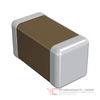
Product Overview: The Murata GRM1555C2A5R1CA01D Ceramic Capacitor
The Murata GRM1555C2A5R1CA01D is a chip monolithic ceramic capacitor designed for general-purpose electronic equipment applications. This component features a 5.1 pF capacitance value with a tolerance of ±0.25 pF, rated for 100V DC operation, and employs C0G (also designated NP0) dielectric material. The device is packaged in a 0402 form factor (1005 metric), making it suitable for compact, high-density circuit board designs where space constraints are a primary consideration.
The C0G dielectric classification indicates that this capacitor exhibits minimal capacitance variation across temperature ranges, making it particularly valuable for applications requiring stable, predictable performance. The 0402 package dimensions—measuring 1.0mm × 0.5mm—allow for automated assembly processes and integration into modern surface-mount technology (SMT) production workflows.
Electrical Specifications and Performance Characteristics of the GRM1555C2A5R1CA01D
The GRM1555C2A5R1CA01D delivers a nominal capacitance of 5.1 pF with a tight tolerance band of ±0.25 pF. This precision specification ensures that the component meets the requirements of circuits where exact capacitance values are necessary for proper operation. The rated voltage of 100V DC provides adequate headroom for most general-purpose applications while maintaining safety margins during normal operation.
Capacitance measurement for the GRM1555C2A5R1CA01D should be performed at the voltage and frequency specified in the product documentation to ensure accuracy. When measuring high-capacitance variants, the output voltage of measuring equipment may decrease; therefore, verification that the prescribed measurement voltage is actually applied to the capacitor is necessary. For circuits utilizing AC voltage, the capacitance values may vary depending on the AC voltage amplitude applied, requiring careful consideration during component selection.
Temperature Behavior and Capacitance Stability in the GRM1555C2A5R1CA01D
The C0G dielectric material used in the GRM1555C2A5R1CA01D provides superior temperature stability compared to higher-dielectric-constant alternatives. This characteristic makes the component well-suited for applications where capacitance must remain relatively constant across the operating temperature range. The capacitance of the GRM1555C2A5R1CA01D will experience minimal change when subjected to temperature variations within the specified operating limits.
For circuits requiring exceptionally tight capacitance tolerances—such as timing circuits or frequency-determining networks—the temperature characteristics of the GRM1555C2A5R1CA01D should be verified under actual application conditions. While the C0G material exhibits excellent stability, designers should confirm that the capacitance remains within acceptable limits across the full temperature range encountered in the target application.
High-dielectric-constant ceramic capacitors exhibit aging characteristics where capacitance decreases over time. The GRM1555C2A5R1CA01D, with its C0G formulation, demonstrates significantly reduced aging compared to higher-K materials, making it suitable for long-term applications where capacitance stability is paramount.
Voltage Operating Conditions and the GRM1555C2A5R1CA01D
The GRM1555C2A5R1CA01D is rated for 100V DC operation, and this maximum voltage must not be exceeded during normal circuit operation. Applied voltage between the capacitor terminals shall remain at or below the rated voltage specification. Abnormal voltages—including surge voltages, electrostatic discharge events, and pulse voltages—must not exceed the rated DC voltage to prevent dielectric breakdown and internal short circuits.
When the GRM1555C2A5R1CA01D is used in AC or pulse voltage circuits, designers must account for the AC current or pulse current flowing through the component. This current generates heat through dielectric losses, potentially raising the capacitor's surface temperature. The surface temperature, including self-heating effects, must remain within the maximum operating temperature limit. For applications involving high-frequency or pulse voltage operation, thermal analysis should confirm that the capacitor's temperature rise remains below 20°C when measured at an ambient temperature of 25°C.
The capacitance of ceramic capacitors can change sharply depending on applied voltage. While the GRM1555C2A5R1CA01D exhibits minimal voltage-dependent capacitance variation due to its C0G formulation, designers should verify that any capacitance change remains within acceptable circuit tolerances, particularly in applications where precise capacitance values are required.
Storage Requirements and Environmental Conditions for the GRM1555C2A5R1CA01D
The GRM1555C2A5R1CA01D should be stored in controlled environmental conditions to maintain solderability and electrical performance. The recommended storage temperature range is +5°C to +40°C with relative humidity between 20% and 70%. These conditions prevent oxidation of the termination electrodes and maintain the component's readiness for assembly.
Prolonged storage beyond six months may result in oxidation of the termination electrodes, potentially degrading solderability. Components stored for extended periods should have their solderability confirmed before use. Storage in the original sealed packaging is recommended to minimize exposure to atmospheric contaminants.
The GRM1555C2A5R1CA01D must not be stored in environments containing corrosive gases such as hydrogen sulfide, sulfur dioxide, chlorine, or ammonia. These substances can react with the termination electrodes, causing poor solderability and potential electrical performance degradation. Additionally, direct sunlight exposure and rapid humidity changes should be avoided during storage, as these conditions can cause photochemical changes to the terminal electrodes and resin coatings, further compromising solderability and electrical characteristics.
Packaging and Handling of the GRM1555C2A5R1CA01D
The GRM1555C2A5R1CA01D is supplied in tape-and-reel packaging designed for automated pick-and-place assembly. The component is enclosed between top and bottom carrier tapes, with the reel constructed from resin material. Standard reel dimensions and tape specifications ensure compatibility with industry-standard component placement equipment.
The minimum quantity per reel for the GRM1555C2A5R1CA01D follows established packaging standards. Tape specifications include defined pitch dimensions, sprocket hole spacing, and component cavity dimensions. The peeling force required to remove the component from the carrier tape is controlled to prevent damage during automated handling while ensuring secure retention during storage and transportation.
Proper handling of the GRM1555C2A5R1CA01D during storage and transport is necessary to prevent mechanical damage. The component should not be subjected to excessive vibration, shock, or pressure. Mechanical damage from dropping or impact can cause cracking of the ceramic body, leading to potential short circuits or degraded insulation resistance. When boards containing mounted GRM1555C2A5R1CA01D components are handled, they should be firmly supported at the edges with both hands to prevent flexing that could stress the solder joints or crack the ceramic element.
Soldering Processes for the GRM1555C2A5R1CA01D: Reflow and Flow Methods
Reflow soldering is the primary assembly method for the GRM1555C2A5R1CA01D in modern manufacturing environments. The process involves applying solder paste to the PCB pads, placing the component, and then heating the assembly in a controlled thermal profile. Lead-free solder composition (Sn-3.0Ag-0.5Cu) is recommended for the GRM1555C2A5R1CA01D.
Preheating is essential before reflow soldering to minimize thermal shock. The component and PCB should be preheated to the temperature range specified in the product documentation. This gradual temperature increase reduces internal stress caused by differential thermal expansion between the ceramic body and the PCB. The temperature differential (ΔT) between the solder and the component surface should be kept as small as possible to prevent mechanical damage.
The reflow soldering profile for the GRM1555C2A5R1CA01D specifies maximum temperatures and time durations. Peak solder temperature should be carefully controlled, and the accumulated time at elevated temperatures must remain within specified limits. When multiple reflow cycles are necessary, the total accumulated soldering time must not exceed the allowable range to prevent leaching of the termination electrodes and loss of capacitance.
Flow soldering can be applied to the GRM1555C2A5R1CA01D only for specific chip sizes within the GRM series. The process parameters differ from reflow soldering, with preheating requirements and temperature profiles tailored to the flow soldering method. Excessively long soldering times or high temperatures during flow soldering can cause leaching of the terminations, resulting in poor adhesion or reduced capacitance values.
The solder fillet height must be carefully controlled for both reflow and flow soldering methods. Excessive solder creates stress concentration points that increase the risk of cracking during board flexing or thermal cycling. Conversely, insufficient solder results in weak adhesion and potential component separation. The solder should rise smoothly to the end surface of the chip without forming excessive fillets.
Post-Soldering Operations and Board-Level Considerations for the GRM1555C2A5R1CA01D
After soldering, the GRM1555C2A5R1CA01D should not be subjected to rapid cooling. Allowing the component and PCB to cool gradually reduces thermal stress and the risk of cracking. When rework or correction of solder joints is necessary, preheating to the specified temperature range is required before applying heat with a soldering iron or spot heater.
Soldering iron corrections should be performed quickly to minimize thermal shock. A soldering iron tip of 3mm diameter or smaller is recommended, and the iron should not make direct contact with the component body. Solder wire of 0.5mm diameter or smaller should be used for manual soldering operations. Spot heater corrections, which apply heat more uniformly across the component and board, tend to produce less thermal shock than localized soldering iron heating.
Washing and cleaning operations following soldering must be carefully controlled. Excessive ultrasonic oscillation during cleaning can cause PCB resonance, resulting in cracked chips or broken solder joints. Cleaning solvents should be selected based on evaluation with actual cleaning equipment to ensure that residual flux and foreign substances are completely removed without damaging the component.
Electrical testing of the GRM1555C2A5R1CA01D after mounting on the PCB requires proper support to prevent board flexing. Test probe pressure can flex the PCB, causing cracked chips or open solder joints. Support pins should be positioned on the back side of the PCB as close as possible to the test probe contact points to prevent warping.
Mechanical Stress Management and Reliability of the GRM1555C2A5R1CA01D
The GRM1555C2A5R1CA01D is susceptible to mechanical stress from PCB flexing, bending, and twisting. Unlike leaded components, chip capacitors are mounted directly on the substrate and experience stress more readily. Proper mounting position selection minimizes stress during board handling and operation.
When mounting the GRM1555C2A5R1CA01D, the component should be oriented horizontally to the direction in which stress acts on the board. This orientation distributes stress more evenly across the component. Mounting positions should be selected to minimize stress during board flexing or bending, particularly near board separation points or screw holes where stress concentrations occur.
PCB design significantly influences the stress experienced by the GRM1555C2A5R1CA01D. Land pattern dimensions and solder fillet geometry directly affect stress distribution. Oversized land patterns can result in excessive solder fillets that multiply mechanical and thermal stresses. Proper land dimensions, as specified in the product documentation for both reflow and flow soldering methods, should be carefully implemented.
Board thickness, material, and structure affect thermal expansion and contraction, which in turn influences stress on the GRM1555C2A5R1CA01D. When the thermal expansion coefficient of the PCB material differs significantly from that of the ceramic capacitor, thermal cycling can cause cracking. Fluorine resin PCBs and single-layer glass epoxy boards present particular risk due to their thermal expansion characteristics.
Board separation and cropping operations present significant mechanical stress risks to the GRM1555C2A5R1CA01D. Router-type separators are preferred because they perform cutting without bending the board, thereby suppressing stress. When disc separators are used, proper alignment of top and bottom blades, correct V-groove angle and depth, and accurate positioning are necessary to prevent board deflection stress that could crack the component.
Vibration and shock during operation must be controlled to prevent mechanical damage to the GRM1555C2A5R1CA01D. The component should be mounted to avoid resonance conditions. Mechanical shock from dropping or impact can cause cracking of the ceramic body, potentially leading to short circuits or degraded insulation resistance. Dropped components should not be used, as internal damage may not be immediately apparent.
Operational Guidelines and System Integration of the GRM1555C2A5R1CA01D
The maximum operating temperature for the GRM1555C2A5R1CA01D depends on the specific variant and must not be exceeded. The surface temperature of the component, including self-heating effects from AC or pulse current, must remain within the maximum operating temperature limit. Designers should consider temperature distribution within the equipment and seasonal temperature variations when selecting operating conditions.
The GRM1555C2A5R1CA01D should not be used in environments containing corrosive gases, moisture condensation, direct sunlight, ozone, ultraviolet radiation, or toxic substances. These environmental factors can cause corrosion of the termination electrodes, moisture penetration into the ceramic body, and deterioration of electrical characteristics and insulation resistance.
During equipment operation, the GRM1555C2A5R1CA01D should not be touched directly with bare hands to avoid electrical shock hazard. The component terminals must not come into contact with conductive objects or conductive liquids, including acidic or alkaline solutions, which could cause short circuits or corrosion.
High-dielectric-constant ceramic capacitors can exhibit piezoelectric effects when used in AC or pulse circuits, causing the capacitor to vibrate at specific frequencies and generate audible noise. While the GRM1555C2A5R1CA01D uses C0G material with minimal piezoelectric effects, designers should be aware of this phenomenon in applications involving mechanical vibration or shock combined with AC voltage.
Circuit design should incorporate fail-safe functions such as fuses when capacitor failure could result in electrical shock, smoke, or fire. Although the GRM1555C2A5R1CA01D is not a safety-standard-certified product, proper circuit design can mitigate risks associated with potential component failure.
Conclusion
The Murata GRM1555C2A5R1CA01D represents a precision ceramic capacitor solution for applications requiring stable, predictable performance in compact form factors. Its C0G dielectric material provides excellent temperature and voltage stability, making it suitable for timing circuits, frequency-determining networks, and other precision applications. Successful implementation requires careful attention to storage conditions, soldering processes, mechanical stress management, and operational environment. Proper PCB design, component mounting practices, and assembly procedures are necessary to ensure long-term reliability and prevent premature failure from mechanical or thermal stress.
Frequently Asked Questions (FAQ)
- Q1. What is the significance of the C0G dielectric material used in the GRM1555C2A5R1CA01D?
-
- A1. The C0G (also designated NP0) dielectric material provides minimal capacitance variation across temperature ranges, typically within ±30 ppm/°C or better. This stability makes the GRM1555C2A5R1CA01D suitable for applications where precise, temperature-independent capacitance values are required, such as timing circuits, oscillator networks, and frequency-determining circuits. Unlike higher-dielectric-constant materials, C0G capacitors exhibit reduced aging characteristics and minimal voltage-dependent capacitance changes.
- Q2. How should the GRM1555C2A5R1CA01D be stored to maintain solderability?
-
- A2. The GRM1555C2A5R1CA01D should be stored in sealed original packaging at temperatures between +5°C and +40°C with relative humidity between 20% and 70%. Prolonged storage beyond six months may cause oxidation of the termination electrodes, degrading solderability. Components stored for extended periods should have solderability confirmed before use. Storage in environments containing corrosive gases (hydrogen sulfide, sulfur dioxide, chlorine, ammonia) must be avoided, as these substances react with termination electrodes and compromise electrical performance.
- Q3. What is the maximum voltage that can be safely applied to the GRM1555C2A5R1CA01D?
-
- A3. The GRM1555C2A5R1CA01D is rated for 100V DC maximum. Applied voltage between the terminals must not exceed this rating. Abnormal voltages including surge voltages, electrostatic discharge, and pulse voltages must also remain below the rated DC voltage. Exceeding the rated voltage can cause dielectric breakdown and internal short circuits. In circuits where voltage spikes or surges may occur, protective measures such as voltage clamping devices should be implemented.
- Q4. Can the GRM1555C2A5R1CA01D be used in AC or pulse voltage circuits?
-
- A4. Yes, the GRM1555C2A5R1CA01D can be used in AC or pulse voltage circuits, but designers must account for AC or pulse current flowing through the component. This current generates heat through dielectric losses, potentially raising the capacitor's surface temperature. The surface temperature, including self-heating effects, must remain within the maximum operating temperature limit. Thermal analysis should confirm that the capacitor's temperature rise remains below 20°C when measured at 25°C ambient temperature. If self-heating exceeds acceptable limits, a larger capacitor or different circuit topology should be considered.
- Q5. What are the recommended soldering methods for the GRM1555C2A5R1CA01D?
-
- A5. Reflow soldering is the primary recommended method for the GRM1555C2A5R1CA01D in modern manufacturing. Lead-free solder (Sn-3.0Ag-0.5Cu) should be used. Preheating to the specified temperature range is essential to minimize thermal shock. The temperature differential between the solder and component surface should be kept as small as possible. Flow soldering can be applied to specific GRM series sizes but requires different process parameters. Both methods require careful control of solder fillet height to prevent excessive stress that could cause cracking.
- Q6. How does PCB design affect the reliability of the GRM1555C2A5R1CA01D?
-
- A6. PCB design significantly influences GRM1555C2A5R1CA01D reliability through multiple mechanisms. Land pattern dimensions directly affect solder fillet geometry; oversized patterns create excessive fillets that multiply mechanical and thermal stresses. Board thickness, material, and structure affect thermal expansion and contraction; when the PCB's thermal expansion coefficient differs significantly from the ceramic capacitor's, thermal cycling can cause cracking. Fluorine resin and single-layer glass epoxy boards present particular risk. Proper land dimensions as specified in product documentation should be carefully implemented to minimize stress concentration.
- Q7. What precautions should be taken during PCB board separation or cropping?
-
- A7. Board separation and cropping present significant mechanical stress risks to the GRM1555C2A5R1CA01D. Router-type separators are preferred because they perform cutting without bending the board, thereby suppressing stress. When disc separators are used, proper alignment of top and bottom blades, correct V-groove angle and depth, and accurate positioning are necessary to prevent board deflection stress. For single-sided mounting, the board separation jig should hold the portion close to the jig and bend in the direction toward the component-mounted side. For double-sided mounting, components should be mounted parallel to the board separation surface, and slits should be added near components at the separation point.
- Q8. How should the GRM1555C2A5R1CA01D be handled during pick-and-place assembly?
-
- A8. During pick-and-place assembly, the nozzle pressure should be adjusted to a static load of 1N to 3N to prevent excessive force that could crack the component. The pickup nozzle's lowest position should be adjusted so as not to bend the PCB. Suction nozzles and locating claws must be maintained, checked, and replaced periodically, as dirt accumulation or wear can impose uneven forces on the chip, causing cracking. The component should not be subjected to bending forces during mounting, and support pins should be used on the back side of the PCB to prevent warping.
- Q9. What environmental conditions should be avoided during GRM1555C2A5R1CA01D operation?
-
- A9. The GRM1555C2A5R1CA01D should not be used in environments containing corrosive gases (hydrogen sulfide, sulfur dioxide, chlorine, ammonia), moisture condensation, direct sunlight, ozone, ultraviolet radiation, or toxic substances. These environmental factors can cause corrosion of termination electrodes, moisture penetration into the ceramic body, and deterioration of electrical characteristics and insulation resistance. The component should be protected from water or oil splatter, excessive vibration or mechanical shock, and rapid temperature changes. Use damp-proof countermeasures if operating in condensation-prone environments.
- Q10. What is the minimum solder fillet height requirement for the GRM1555C2A5R1CA01D?
-
- A10. For flow soldering, the top of the solder fillet should be lower than the thickness of the component to minimize cracking risk during board bending or other stressful conditions. For reflow soldering, proper land dimensions as specified in product documentation should be followed to achieve optimal solder fillet geometry. Excessive solder creates stress concentration points that increase cracking risk, while insufficient solder results in weak adhesion and potential component separation. The solder should rise smoothly to the end surface of the chip without forming excessive fillets. Proper solder paste application and reflow profile control are necessary to achieve correct fillet geometry.
- Q11. How long can the GRM1555C2A5R1CA01D be stored before solderability is affected?
-
- A11. Prolonged storage beyond six months may result in oxidation of the termination electrodes, potentially degrading solderability. Components stored for extended periods should have their solderability confirmed before use through appropriate testing. To maintain solderability, the GRM1555C2A5R1CA01D should be stored in sealed original packaging at temperatures between +5°C and +40°C with relative humidity between 20% and 70%. Even if the storage period is short, the specified atmospheric conditions must not be exceeded. Direct sunlight exposure and rapid humidity changes should be avoided during storage.
- Q12. What mechanical stresses can cause cracking in the GRM1555C2A5R1CA01D?
-
- A12. The GRM1555C2A5R1CA01D can crack from multiple mechanical stress sources: PCB flexing or bending during handling or operation, excessive pressure from pick-and-place equipment, mechanical shock from dropping, impact from sharp objects (soldering iron tips, tweezers, chassis edges), board deflection during cropping or separation, and vibration or shock during transportation or operation. Mounting position selection is critical; the component should be oriented horizontally to the direction in which stress acts. Proper PCB design, support pin placement, and careful handling procedures are necessary to prevent cracking. Dropped components should not be used, as internal damage may not be immediately apparent but could lead to premature failure.
- Q13. Are there any restrictions on the use of the GRM1555C2A5R1CA01D in high-reliability applications?
-
- A13. The GRM1555C2A5R1CA01D is designed for general-purpose electronic equipment. For applications requiring especially high reliability—such as aircraft equipment, aerospace equipment, undersea equipment, power plant control equipment, medical equipment, transportation equipment, traffic signal equipment, or disaster prevention/crime prevention equipment—consultation with the manufacturer is recommended before use. The GRM1555C2A5R1CA01D is not a safety-standard-certified product. For applications where capacitor failure could result in electrical shock, smoke, or fire, fail-safe functions such as fuses should be incorporated into the circuit design.
- Q14. What is the recommended approach for reworking or correcting solder joints on the GRM1555C2A5R1CA01D?
-
- A14. Rework should be performed only when necessary, as repeated heating increases the risk of damage. Preheating to the specified temperature range is required before applying heat with a soldering iron or spot heater to minimize thermal shock. Soldering iron corrections should be performed quickly; a soldering iron tip of 3mm diameter or smaller is recommended, and the iron should not make direct contact with the component body. Solder wire of 0.5mm diameter or smaller should be used. Spot heater corrections, which apply heat more uniformly, tend to produce less thermal shock. After soldering, allow the component and PCB to cool gradually rather than rapidly.
- Q15. How does the GRM1555C2A5R1CA01D compare to higher-dielectric-constant ceramic capacitors?
-
- A15. The GRM1555C2A5R1CA01D uses C0G dielectric material, which provides superior temperature stability (minimal capacitance variation across temperature ranges) and reduced aging characteristics compared to higher-dielectric-constant materials like X7R or X5R. However, C0G capacitors have lower capacitance density, meaning larger physical sizes are required for equivalent capacitance values. The GRM1555C2A5R1CA01D is ideal for precision applications where stable, predictable capacitance is required, such as timing circuits and frequency-determining networks. Higher-dielectric-constant materials are better suited for applications where high capacitance values in small packages are prioritized over temperature stability. Selection depends on specific application requirements regarding capacitance stability, temperature range, and physical size constraints.