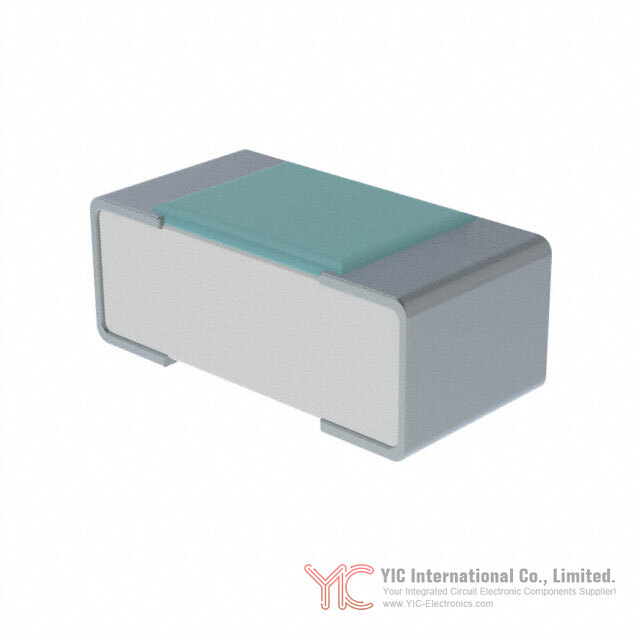
Product overview: RK73H1ETTP3901F
RK73H1ETTP3901F from KOA Speer Electronics, Inc. is a 3.9 kΩ ±1% thick film chip resistor in a 0402 (1005 metric) package, rated at 0.1 W (1/10 W). It belongs to the RK73H precision thick film chip resistor series, which offers 0.5% and 1% tolerance options.
The RK73H1ETTP3901F is designed as a moisture‑resistant, automotive AEC‑Q200 tested component, suitable for applications that demand stable performance across a range of environmental and thermal conditions. It is compatible with both flow and reflow soldering processes and uses lead‑free terminal plating that complies with EU RoHS requirements, with the usual exemption for Pb‑glass contained in electrode, resistor element and glass.
2.
Series positioning and key characteristics of RK73H1ETTP3901F
RK73H1ETTP3901F is part of the broader RK73H precision thick film chip resistor series, which is characterized by:
- Precision tolerance options of 0.5% and 1% across the series
- A wide package size lineup from 01005 to 2512, covering RK73H 1F, 1H, 1E, 1J, 2A, 2B, 2E, 2H, W2H, 3A, W3A, and W3A2 types
- AEC‑Q200 tested types including:
- 0201 (1H)
- 0402 (1E) – the package class that includes RK73H1ETTP3901F
- 0603 (1J)
- 0805 (2A)
- 1206 (2B)
- 1210 (2E)
- 2010 (2H / W2H)
- 2512 (3A / W3A / W3A2)
Within this series, RK73H1ETTP3901F is a 1E‑type 0402 part with a 3.9 kΩ nominal resistance and 1% tolerance, aimed at precision biasing, sensing and signal conditioning in space‑constrained designs.
The series uses a metal‑glaze thick film resistive element that supports long‑term heat and weather resistance, contributing to stability in harsh environments such as automotive compartments or industrial equipment.
3.
Mechanical design, dimensions and construction of RK73H1ETTP3901F
RK73H1ETTP3901F follows the 0402 (1005 metric) footprint, allowing high‑density placement on modern PCBs. While the datasheet segment provided does not list exact dimensional values for each side of the chip, the construction is representative of the RK73H series:
- Ceramic substrate carrying a metal‑glaze thick film resistive element
- Protective overcoat providing insulation and environmental protection
- Plated terminations designed for lead‑free soldering, compatible with standard SMT processes
- Geometry optimized for automated placement and reliable solder joint formation in 0402 assemblies
RK73H 2H, 3A and 3A2 types in the series are noted as still available with a modified terminal dimension “d” of 0.4 +0.2/‑0.1 mm; while this does not apply directly to RK73H1ETTP3901F, it indicates that the series supports variant terminal configurations in larger sizes for power handling and board layout flexibility.
The mechanical robustness of the RK73H1ETTP3901F construction, combined with the small 0402 footprint, makes it suitable for densely packed automotive ECUs, sensor modules and portable electronics.
4.
Electrical ratings and derating behavior of RK73H1ETTP3901F
RK73H1ETTP3901F is rated at 0.1 W (1/10 W). The associated rated voltage is defined by:
Rated voltage = √(Power rating × Resistance value)
or the maximum working voltage, whichever is lower.
For RK73H1ETTP3901F with R = 3.9 kΩ and P = 0.1 W, the calculated rated voltage is:
√(0.1 W × 3900 Ω) ≈ √390 ≈ 19.7 V
The actual usable voltage must not exceed either this calculated value or the series’ specified maximum working voltage (from the complete series datasheet), whichever is lower. This aligns the device for low‑ to medium‑voltage signal lines and bias networks rather than direct mains operation.
The RK73H series, including RK73H1ETTP3901F, defines derating based on both ambient temperature and terminal part temperature:
- For ambient temperatures at or above 70°C, power must be reduced following the derating curve provided in the full catalog.
- When the terminal part temperature exceeds the rated terminal part temperature, power must also be derated according to the terminal‑temperature‑based curve.
Where there is any uncertainty on whether to use “rated ambient temperature” or “rated terminal part temperature,” the series guidance is to give priority to the rated terminal part temperature. This reflects that actual resistor stress depends strongly on local heating and PCB thermal behavior rather than just ambient conditions.
Example application scenario for RK73H1ETTP3901F:
In an automotive sensor interface operating in a compartment that can reach 85–105°C ambient, power dissipation in RK73H1ETTP3901F must be chosen such that the measured terminal temperature remains within the rated terminal temperature. If the PCB is densely populated and heat dissipation is limited, the effective continuous power allowed for the resistor can be significantly lower than 0.1 W, even though ambient might be near 70–85°C. Designers should therefore verify terminal temperature in situ.
5.
Temperature rise characteristics of RK73H1ETTP3901F on PCB
The RK73H series, including RK73H1ETTP3901F, provides temperature rise data measured under defined conditions:
- Room temperature: 25°C
- PCB: FR‑4, thickness 1.6 mm
- Copper foil thickness: 35 μm
Temperature rise curves are provided in the full documentation for:
- RK73H 1F–1J
- RK73H 2A–2E
- RK73H W2H–W3A2
RK73H1ETTP3901F as a 1E/0402‑class fits within the 1F–1J group. The actual temperature rise for RK73H1ETTP3901F in a given design will depend on:
- Board copper area connected to the terminations
- Local airflow or encapsulation
- Proximity to heat‑generating components
- Layer stack‑up and thermal vias
The datasheet explicitly notes that temperature rise values vary per board and conditions, even when using the same part. The supplied measurements are therefore reference data rather than guaranteed absolute values.
Practical interpretation for RK73H1ETTP3901F:
If RK73H1ETTP3901F is used in a current‑limiting role on a densely packed, small PCB with minimal copper around it, its terminal temperature may rise more than indicated by the reference curves. Conversely, on a board with generous copper planes and good airflow, the temperature rise may be lower. Measuring actual terminal temperature in prototype hardware is recommended when operating near the rated power.
6.
Pulse loading and one‑pulse limiting power of RK73H1ETTP3901F
RK73H1ETTP3901F, as a thick film resistor, can tolerate short pulses of power beyond its continuous rating up to a one‑pulse limiting power curve defined for the RK73H series. The series specifies:
- The maximum applicable voltage is equal to the maximum overload voltage.
- The one‑pulse limiting electric power curve indicates a safe region for single pulse loads versus pulse duration.
- The resistor’s behavior under continuous repetitive pulses is not guaranteed by the one‑pulse data; designers need to verify this in their actual equipment.
For RK73H1ETTP3901F, this means:
- It can be used in circuits that see occasional transients, inrush events or diagnostic pulses, provided these events stay within the one‑pulse limiting region.
- If the circuit imposes frequent or continuous pulse loading (for example, PWM‑driven loads with steep edges), actual testing is required to confirm that RK73H1ETTP3901F meets long‑term reliability targets.
Example:
In an automotive input protection network where RK73H1ETTP3901F forms part of a voltage divider that occasionally experiences load dump or ESD‑clamped transients, the one‑pulse limiting power curve can be used to estimate whether a single event (after protection) remains within safe power limits. However, if that same resistor is used in a repetitive pulse measurement circuit, endurance testing on the real board is advised.
7.
Reliability, environmental compliance and AEC‑Q200 qualification of RK73H1ETTP3901F
RK73H1ETTP3901F is part of the RK73H series, which offers several features addressing reliability and regulatory requirements:
- AEC‑Q200 tested status for the 0402 (1E) package class, which includes RK73H1ETTP3901F. This covers a range of electrical, mechanical and environmental stress tests typically expected for automotive passive components.
- Excellent heat resistance and weather resistance achieved through the use of metal‑glaze thick film technology, improving stability in environments with wide temperature swings, humidity variations and exposure to automotive or industrial atmospheres.
- Moisture resistance, making RK73H1ETTP3901F suitable for use in applications where condensation, high humidity or temperature cycling could occur.
- Lead‑free terminals and EU RoHS compliance, with the standard exemption for Pb‑glass contained in electrodes, the resistive element and glass. This supports deployment in global markets without additional compliance processing.
Together, these attributes position RK73H1ETTP3901F for use in long‑lifetime platforms, such as automotive control modules, industrial controllers, instrumentation, and other electronics requiring stable performance over extended service periods.
8.
Practical application considerations for integrating RK73H1ETTP3901F
When implementing RK73H1ETTP3901F in a design, several practical aspects derived from the RK73H documentation should be considered:
Soldering compatibility
- RK73H1ETTP3901F is suitable for both flow and reflow soldering processes.
- This flexibility allows it to be incorporated into mixed‑technology boards where some components may use wave solder and others reflow, or into fully SMT reflow lines.
Resistance value and tolerance selection within the RK73H family
- RK73H1ETTP3901F specifically provides 3.9 kΩ at 1% tolerance.
- The RK73H series supports nominal resistance grids (E‑series) such as E24 for certain subtypes (e.g., RK73H1F with 10 Ω ≤ R ≤ 2 MΩ, and RK73H1H with 1 Ω ≤ R ≤ 9.1 Ω and 1 MΩ ≤ R ≤ 10 MΩ).
- For designs that share a common BOM across multiple resistance values, the RK73H series framework allows reuse of footprint and assembly processes while adjusting only the resistance value.
Thermal design and derating for RK73H1ETTP3901F
- Ensure the maximum continuous power dissipation is chosen considering both ambient conditions and the measured terminal temperature in the target hardware.
- On boards with limited heat dissipation, RK73H1ETTP3901F should be operated below its 0.1 W nominal to maintain terminal temperatures within the rated range.
Pulse and transient behavior
- Use the one‑pulse limiting power information from the series to check any single event over‑stresses on RK73H1ETTP3901F.
- For repetitive or complex pulse patterns, perform validation tests on actual assemblies.
Example use case: precision bias and sensing in automotive ECU
A typical application for RK73H1ETTP3901F is as part of a voltage divider feeding an ADC channel in an engine control unit:
- The 3.9 kΩ value can be combined with another RK73H resistor to set an appropriate scaling factor from a 5 V or 12 V rail to the ADC input range.
- The 1% tolerance supports tighter gain accuracy and reduces the need for calibration.
- AEC‑Q200 testing and moisture‑resistant construction align with ECU environmental requirements.
- 0402 size allows routing in high‑density areas near microcontrollers and sensor connectors.
9.
Conclusion: where RK73H1ETTP3901F fits in modern designs
RK73H1ETTP3901F is a 3.9 kΩ ±1% 0402 thick film chip resistor from KOA Speer’s RK73H precision series, combining small footprint, 0.1 W power rating, and AEC‑Q200 tested status for automotive applications. The metal‑glaze thick film construction supports heat and weather resistance, while moisture resistance and RoHS‑compliant terminals enable deployment across a wide range of environments and markets.
By understanding its derating behavior, temperature rise characteristics, and one‑pulse limiting power within the RK73H framework, designers can confidently apply RK73H1ETTP3901F in precision signal paths, bias networks, and sensing circuits where stable performance and qualified reliability are required.
Frequently Asked Questions (FAQ)
- Q1. What are the basic electrical specifications of RK73H1ETTP3901F?
-
- A1. RK73H1ETTP3901F is a 3.9 kΩ resistor with ±1% tolerance in a 0402 (1005 metric) package. It is rated at 0.1 W (1/10 W). The rated voltage is defined as the square root of (power rating × resistance value) or the series’ maximum working voltage, whichever is lower; for 3.9 kΩ at 0.1 W this yields about 19.7 V, subject to the maximum working voltage specified for the RK73H series.
- Q2. Is RK73H1ETTP3901F suitable for automotive applications?
-
- A2. Yes. RK73H1ETTP3901F belongs to the RK73H 1E (0402) type, which is AEC‑Q200 tested according to the series documentation. It also offers moisture resistance and heat/weather resistance through a metal‑glaze thick film structure, making it suitable for automotive and other high‑reliability environments.
- Q3. What is the package size and how does RK73H1ETTP3901F fit into the RK73H lineup?
-
- A3. RK73H1ETTP3901F is a 0402 (1005 metric) chip resistor, corresponding to the 1E type in the RK73H series. The overall series spans sizes from 01005 to 2512, so RK73H1ETTP3901F is positioned near the smaller end of the lineup for high‑density layouts.
- Q4. How should I calculate the maximum operating voltage for RK73H1ETTP3901F?
-
- A4. For RK73H1ETTP3901F, the rated voltage is calculated as √(Power rating × Resistance value). With 0.1 W and 3.9 kΩ, this is approximately 19.7 V. The usable maximum is the lower of this calculated value and the RK73H series’ maximum working voltage. The resistor should not be used above the specified maximum overload voltage.
- Q5. How does temperature affect the power rating of RK73H1ETTP3901F?
-
- A5. For ambient temperatures at or above 70°C, the power rating for RK73H1ETTP3901F must be derated according to the RK73H derating curve. Additionally, if the terminal part temperature exceeds the rated terminal part temperature, power must be further reduced based on the terminal‑temperature‑based derating curve. If there is any conflict between ambient‑based and terminal‑temperature‑based criteria, the rated terminal part temperature takes priority.
- Q6. Can RK73H1ETTP3901F handle pulse loads and transients?
-
- A6. RK73H1ETTP3901F follows the RK73H series’ one‑pulse limiting electric power specification. It can withstand single pulse events within the series’ one‑pulse limiting curve, up to the maximum overload voltage. However, the series notes that pulse endurance values are not guaranteed for continuous or repetitive pulses; such use cases require validation on actual equipment.
- Q7. What guidance is available for understanding the temperature rise of RK73H1ETTP3901F on a PCB?
-
- A7. The RK73H series includes temperature rise data for RK73H 1F–1J types, which covers the 1E/0402 category that includes RK73H1ETTP3901F. Measurements are based on a 1.6 mm FR‑4 board with 35 μm copper at 25°C. The datasheet stresses that temperature rise varies with board design and conditions, so actual terminal temperatures for RK73H1ETTP3901F should be measured in the target application, especially when operated near the rated power.
- Q8. Is RK73H1ETTP3901F compatible with standard SMT soldering processes?
-
- A8. Yes. RK73H1ETTP3901F is specified as suitable for both flow and reflow soldering. Its lead‑free terminal surface is standard and aligns with common lead‑free soldering profiles used in modern SMT production.
- Q9. What environmental and regulatory standards does RK73H1ETTP3901F meet?
-
- A9. RK73H1ETTP3901F uses lead‑free terminations that meet EU RoHS requirements, with the industry‑standard exemption for Pb‑glass contained in the electrode, resistor element and glass. It is also AEC‑Q200 tested as part of the 0402 (1E) RK73H type, covering mechanical and environmental stresses relevant to automotive deployment.
- Q10. How does the metal‑glaze thick film construction of RK73H1ETTP3901F benefit practical designs?
-
- A10. The metal‑glaze thick film structure used in RK73H1ETTP3901F provides enhanced heat and weather resistance. This supports stable resistance and long‑term reliability under conditions such as high temperature operation, humidity, and thermal cycling commonly experienced in automotive, industrial and outdoor electronic systems.
- Q11. Does the RK73H series, including RK73H1ETTP3901F, support a wide range of resistance values?
-
- A11. Yes. The RK73H series covers a wide resistance range across multiple package sizes. For example, RK73H1F covers 10 Ω to 2 MΩ and RK73H1H covers 1 Ω to 9.1 Ω and 1 MΩ to 10 MΩ with nominal values on the E24 grid. RK73H1ETTP3901F is one specific 3.9 kΩ, 1% member of this broader lineup, enabling consistent footprint and process usage across many resistance values.
- Q12. Are there any special precautions before using RK73H1ETTP3901F in high‑power or high‑temperature conditions?
-
- A12. When using RK73H1ETTP3901F under higher power levels or at elevated temperatures, the documentation advises:
- Check the terminal part temperature as well as ambient temperature.
- Apply the terminal‑temperature‑based derating curve when the terminal temperature exceeds its rated value.
- Review the precautions in the delivery specification and the “Introduction of the derating curves based on the terminal part temperature” section in the RK73H catalog before finalizing the design. - Q13. How should RK73H1ETTP3901F be evaluated for use in continuous pulse applications?
-
- A13. For continuous or repetitive pulse loads, the series explicitly recommends verifying RK73H1ETTP3901F on actual equipment. The one‑pulse limiting power data provide guidance only for single pulse conditions and do not guarantee long‑term endurance under repeated pulsing. Prototyping and stress testing in the real system are necessary to confirm reliability in such use cases.