Hello Guest

Sign in / Register

Welcome,{$name}!

/ Logout
English
EnglishDeutschItaliaFrançais한국의русскийSvenskaNederlandespañolPortuguêspolski繁体中文SuomiGaeilgeSlovenskáSlovenijaČeštinaMelayuMagyarországHrvatskaDanskromânescIndonesiaΕλλάδαБългарски езикGalegolietuviųMaoriRepublika e ShqipërisëالعربيةአማርኛAzərbaycanEesti VabariikEuskeraБеларусьLëtzebuergeschAyitiAfrikaansBosnaíslenskaCambodiaမြန်မာМонголулсМакедонскиmalaɡasʲພາສາລາວKurdîსაქართველოIsiXhosaفارسیisiZuluPilipinoසිංහලTürk diliTiếng ViệtहिंदीТоҷикӣاردوภาษาไทยO'zbekKongeriketবাংলা ভাষারChicheŵaSamoaSesothoCрпскиKiswahiliУкраїнаनेपालीעִבְרִיתپښتوКыргыз тилиҚазақшаCatalàCorsaLatviešuHausaગુજરાતીಕನ್ನಡkannaḍaमराठी
Intel
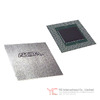
EP20K1000CF672C9 Image

View larger Image

Image may be representation.
See specs for product details.

EP20K1000CF672C9

Manufacturer Part Number: EP20K1000CF672C9
Manufacturer/Brand: Intel
Part of Description: IC FPGA 508 I/O 672FBGA
Datasheets: 1.EP20K1000CF672C9.pdf 2.EP20K1000CF672C9.pdf 3.EP20K1000CF672C9.pdf 4.EP20K1000CF672C9.pdf 5.EP20K1000CF672C9.pdf 6.EP20K1000CF672C9.pdf 7.EP20K1000CF672C9.pdf
RoHs Status: Lead free / RoHS Compliant
Stock Condition: 11068 pcs Stock
Ship From: Hong Kong
Shipment Way: DHL/Fedex/TNT/UPS/EMS

Request Quote

Please complete all required fields with your contact information.Click "SUBMIT REQUEST" we will contact you shortly by email. Or Email us: Info@Y-IC.com.

Part No.
Quantity
Target Price(USD)

Inquiry Online

  • Contact Name
  • Company
  • E-mail
  • Phone
  • Message
  • Verify
  • Specifications
  • QC & Packaging
  • Shipping
  • Payment

QC (Quality Warranty)

All products are carefully inspected before shipment according to our Quality Management practices. We ensure each part is genuine, meets specification requirements, and is functionally checked against original datasheets.
Our quality process supports reliable part performance and minimized risk of defects in customer applications.

Visual Inspection X-Ray Analysis Decapsulation Analysis Spectrometer Dimension Verification Dimension Verification Dimension Verification

Packaging

ESD Protection & Handling

All ESD-sensitive components are handled under anti-static control procedures.
Products are sealed in ESD-safe packaging to prevent electrostatic damage.
Proper labeling is applied for identification and traceability.
This ensures product integrity during storage, handling, and shipment.

Global Shipment by DHL/FedEx/TNT/UPS

Delivery time
Deliverytime will need 2-4days to most of country all over the world for DHL/UPS/FEDEX/TNT.
Shipping fees reference DHL.
1). You can offer your express delivery account for shipment, ifyou haven’t any express account for shipment, we can offer our account inadvance.
2). Use our account for shipment, Shipment charges(ReferenceDHL, Different Countries has different price.)

Shipment charges: (Reference DHL)
Weight(KG) Price(USD$)
0.00kg-1.00kg USD$60.00
1.00kg-2.00kg USD$70.00
2.00kg-3.00kg USD$80.00

More details: https://www.yic-electronics.com/shipment-way.htm
Please feel free contact us. Send any inquires or question toour Email Info@YIC-Electronics.com
We can do the best to you. Thank you very much your support.

Payment Way: Wire Transfer = Telegraphic Transfer(T/T) or PayPal or Western Union

Wire Transfer (T/T)

Our HSBC bank name: The Hongkong and Shanghai Banking Corporation Limited (HSBC Hong Kong)

Benefit Company Name: YIC International Co., Limited
Bank charges and payment account details, please click "Payment Way".

Western Union


Complete payment by Western Union.
Step 1. Go to your local Western Union branch, or go to their website (www.westernunion.com)
Step 2. Follow their instructions.


Bank charges and payment account details, please click "Payment Way".

PayPal Account:

PayPal Golden Key Supplier

PayPal Account:
PayPal Account ID: Info@YIC-Electronics.com
Company: YIC International Co., Limited

If you want to pay via Credit Card, please choose "Pay with my PayPal account" to continue by paypal.(www.paypal.com
Bank charges details, please click "Payment Way".

User Review

  • Kevi***rner

    Very good MCU for legacy embedded projects. I used the LPC2387FBD100 in an industrial control board replacement and it integrated more smoothly than expected. Ethernet and peripheral support were enough for our needs. Been running continuously for over a week without instability.

    May 25th, 2026

  • Nath***ill

    Good supervisor IC for automotive power systems. Reliable reset behavior.

    May 19th, 2026

  • Jack***III

    Good price

    May 15th, 2026

  • Davi***ung

    Good SoC for networking applications. Stable signal processing and low power consumption.

    May 6th, 2026

  • Andr***ee

    Overall is good

    April 28th, 2026

  • Emil***ark

    Accurate frequency output for timing circuits. Works well in low-power signal designs.

    April 23th, 2026

  • Jose***Dong

    Quick response and clear answers.

    April 16th, 2026

  • Marc***echLab

    Excellent quality. All chips passed testing and showed consistent electrical characteristics.

    April 7th, 2026

  • Circ***MasterX

    Good packaging and fast shipping. Performance is stable, but I wish there was clearer labeling on each component.

    April 2th, 2026

  • SamT***Reviews

    Excellent ICs. Used them in a communication module and performance was stable.

    March 27th, 2026

  • Kevi***.

    Good quality parts. No failures during testing.

    March 17th, 2026

  • Bria***.

    Good

    March 13th, 2026

  • Mari***.

    Superb performance.

    March 2th, 2026

  • Emma***

    Excellent ICs for DIY projects. Came well-packaged, genuine parts, and all tested good on my bench. No fails on 50 pieces.

    February 26th, 2026

  • Gadg***an123

    Good

    February 10th, 2026

  • Quan***PartsLab

    Great service

    February 6th, 2026

  • Vect***upplyChain

    The sales rep was professional and responsive.

    January 27th, 2026

  • Puls***vePurchasing

    Components were packed carefully with anti-static protection and cushioning. Everything arrived in good condition.

    January 23th, 2026

  • Pixe***ocure

    Components were packed well. Appreciated the attention to detail.

    January 13th, 2026

  • Byte***dgeBuyer

    Good Quality & Fast Response

    January 5th, 2026

  • Circ***AtlasGlobal

    JUST WHAT I WANT

    December 30th, 2025

  • Allo***taImports

    Very professional

    December 26th, 2025

  • Apex***i

    Quick response and prompt shipping

    December 19th, 2025

  • Hexa***e Circuits

    We were surprised by how quickly our order was processed. From inquiry to delivery, everything was smooth. A trustworthy IC distributor with good stock levels.

    December 11th, 2025

  • Core***se Inc.

    Good customer service

    December 2th, 2025

  • Skyl***Drew

    Delivered ahead of schedule.

    November 28th, 2025

  • Byte***ad

    We purchased a batch of XC6SLX25T-2CSG324C from yic-electronics. Clean markings, fresh 2024 date codes, and antistatic packaging—service was efficient and polite.

    November 17th, 2025

  • avl_***rcing_julia

    Smooth checkout and same-day ship via FedEx. Parts arrived dry-packed, correct MSL labels, and fresh date codes.

    November 13th, 2025

  • Liam***hnson

    Price is good. Order processed quickly, and tracking provided the same night.

    November 3th, 2025

  • Yuko***kamura

    Prices were reasonable compared to other brokers. One reel had minor box damage, but the inner pack was intact.

    October 31th, 2025

  • Opti***

    Excellent prices and top-notch customer service. Even the standard shipping was surprisingly fast. Components were well-packed and genuine. Totally satisfied with the purchase.

    October 21th, 2025

  • Thom***Gray

    Clear communication and on-time delivery.

    October 15th, 2025

  • Aaro***ughes

    Excellent supplier. Great communication and reliable service throughout the process.

    October 9th, 2025

  • Auro***hip

    Good experience overall. The order was processed smoothly, packaging was secure, and the delivery time was acceptable.

    September 29th, 2025

  • Jimm***

    I had a great experience with this company. They were very professional and efficient, and they had the obsolete parts I needed in stock. Once payment was processed, the delivery was quick—my goods arrived within two weeks. The customer service was friendly professional, with seamless communication throughout. Overall, everything went smoothly, and I would definitely recommend them.

    September 19th, 2025

  • Jaso***in

    The purchase was easy and fast. Polite and helpful seller, great price.

    September 8th, 2025

  • NeoB***

    Schnelle Lieferung, Produkt entspricht der Beschreibung, hochwertige Verarbeitung, stabile Funktion, alles passt perfekt, sehr zufrieden mit dem Kauf.

    September 2th, 2025

  • Tobi***

    Quick response, good price and clear communication. Very satisfied with the service

    August 28th, 2025

  • Zóc***Nights

    Not bad

    August 19th, 2025

  • 3174***41@gmail.com

    Bought once to know that YIC electronic components quality is good, and the price is not expensive, very affordable, fast delivery!
    Really recommend buying electronic components here!

    April 14th, 2025

  • Yush***nagahata

    YIC is an excellent company.
    The deliverry time is fast, and we find it very usueful for procuring electronic components.
    We look forward to continuing our relationship in the future.
    Go YIC! Keep up the great work!

    February 20th, 2025

  • SAMI*** INSTALLATION

    Fantastic! Shure I would buy again with YIC

    January 23th, 2025

  • Aadh***x

    The experience with YIC International was great. They not only provided support for the proposed parts but also proactively suggested additional parts that could be useful for us. They have reviewed all the parts properly and corrected our requirements. The delivery and other logistical support were excellent.

    January 22th, 2025

  • Ke*

    A Reliable and Trustworthy Partner
    Received original, high-quality components with fast shipping from YIC electronics.

    November 25th, 2024

  • Nana***risnawan

    Great component supplier, a place that easy to find electronics parts at a good price and delivery.

    August 6th, 2024

  • Alge***n Gholson

    Great products, fast delivery.
    The quality and service of YIC Electronics' components are at the top of the industry. Highly recommended.

    February 20th, 2024

  • Frey***.

    Our partnership with YIC Electronics has been exceptionally satisfying. Their unwavering commitment to outstanding customer service, coupled with their highly competitive pricing and unwavering dedication to top-notch, high-performance product quality, has consistently impressed us. YIC Electronics stands out as a true industry leader in every aspect of their service. Their swift and efficient logistics feedback further underscores their professionalism and reliability.

    August 25th, 2023

  • Jo C***n

    High Quality Products!
    I received genuine, high-quality electronic parts. Thank you YIC electronics.

    August 12th, 2023

  • Edwa***W.

    Yic-electronics suppliers are top notch quality and consistent reliability, I have generated several orders from their website and their service has exceeded expectations in providing electronic components for our business needs.

    August 6th, 2023

  • Anna***

    Yic-electronics is a good partner for our company, we have been cooperating with each other for 4 years, and the cooperation is all smooth and there is no dispute about the goods. Our latest transaction with Yic-electronics happened a month ago, and the process was very smooth, thanks to Yic-electronics's help!

    June 17th, 2023

0 Articles

Post a Review

Hello , welcome to comment on this product
Rating *
5.0

Please limit the remark to 500 words

Your personal information will be hidden

FAQFrequently Asked Questions

  • When considering the EP20K1000CF672C9 FPGA for a new design, what are the critical power delivery network (PDN) design considerations to ensure stable operation given its significant logic density and 508 I/O count, and what impact could suboptimal PDN have on the EP20K1000CF672C9's performance? Designing a robust Power Delivery Network (PDN) for the EP20K1000CF672C9 is paramount due to its 38400 logic elements and 508 I/O pins, which can draw substantial current, especially during high-speed switching. A typical current draw can exceed several amperes depending on the utilization and clock frequency. Therefore, the PDN must effectively minimize voltage droop and noise. This involves careful selection and placement of decoupling capacitors (both ceramic and tantalum) with low Equivalent Series Resistance (ESR) and Equivalent Series Inductance (ESL) to address high-frequency noise and transient current demands. Interspersed bulk capacitors are necessary for lower frequencies. Trace widths and lengths on the PCB should be optimized to maintain low impedance, and multiple voltage planes or power rails might be required to distribute current efficiently and prevent voltage drops across the EP20K1000CF672C9. Insufficient PDN design can lead to timing violations, functional failures, increased bit errors, and reduced reliability of the EP20K1000CF672C9.
  • For designers integrating the Intel EP20K1000CF672C9 into high-performance systems, what are the implications of the 0°C ~ 85°C (TJ) operating temperature range on the surrounding component selection and the need for active cooling solutions, particularly when operating at higher utilization levels or clock speeds? The specified 0°C ~ 85°C junction temperature (TJ) range for the EP20K1000CF672C9 necessitates careful thermal management. When the EP20K1000CF672C9 is heavily utilized, especially with high clock frequencies, its power dissipation will increase, potentially pushing its junction temperature towards the upper limit. Designers must select surrounding components with compatible or better thermal specifications and ensure adequate PCB thermal conductivity. For designs that push the limits of the EP20K1000CF672C9's capabilities or operate in environments with higher ambient temperatures, active cooling solutions such as heatsinks with forced airflow or even liquid cooling might be required to maintain the junction temperature within the acceptable range and prevent performance degradation or premature failure.
  • When migrating a design from a previous generation FPGA or a different vendor's device, what specific challenges or architectural differences should be anticipated when transitioning to the Intel APEX-20KC series, using the EP20K1000CF672C9 as an example, particularly concerning memory architecture and routing resources? Transitioning to the Intel APEX-20KC series, such as the EP20K1000CF672C9, from older FPGA families or competing architectures requires a thorough understanding of its unique features. The EP20K1000CF672C9 boasts 327680 total RAM bits, organized in a specific manner that might differ from other FPGAs. Designers should scrutinize how this on-chip memory is partitioned and accessed, and whether it supports dual-port configurations or other advanced features needed for the application. Furthermore, the routing fabric and logic element structure within the EP20K1000CF672C9, while powerful, may have different routing delays and congestion characteristics compared to other devices. A careful review of the Intel Quartus Prime software's resource utilization reports and timing analysis during the migration process is crucial to identify and mitigate potential bottlenecks introduced by these architectural differences.
  • What are the key considerations for PCB layout and routing when using the 672-FBGA (27x27) package for the EP20K1000CF672C9, particularly concerning signal integrity for its 508 I/O pins and the management of high-speed clock signals? The 672-FBGA (27x27) package of the EP20K1000CF672C9 presents a dense I/O interface, requiring meticulous PCB layout. For optimal signal integrity with 508 I/O pins, designers should implement controlled impedance traces, maintain appropriate spacing between adjacent signals, and minimize stub lengths. Routing of high-speed clock signals on the EP20K1000CF672C9 necessitates dedicated clock trees, impedance matching, and careful consideration of trace length uniformity to minimize skew. Ground stitching and adequate via placement are critical for return path continuity. The large physical footprint of the 27x27mm package also implies that trace routing density around the component will be high, demanding a multi-layer PCB stack-up with sufficient ground and power planes to facilitate signal routing and provide effective decoupling.
  • How does the specific logic density of 38400 logic elements and 3840 LABs/CLBs in the EP20K1000CF672C9 compare to industry benchmarks for complex embedded systems, and what are the practical implications for design complexity and potential for feature creep when targeting this particular FPGA? With 38400 logic elements and 3840 Logic Array Blocks/Configurable Logic Blocks (LABs/CLBs), the EP20K1000CF672C9 offers a substantial capacity that is well-suited for complex embedded systems requiring significant custom logic, digital signal processing, or control functions. This density allows for the implementation of large intellectual property (IP) cores, multiple processing elements, and extensive custom hardware acceleration. Practically, this capacity can encourage "feature creep," where designers may be tempted to add more functionality than initially planned due to the perceived abundant resources. However, engineers must still manage resource utilization carefully to avoid routing congestion, excessive timing closure challenges, and inefficient power consumption, even with the ample logic available in the EP20K1000CF672C9.
  • What are the implications of the 1.71V ~ 1.89V core voltage requirement for the EP20K1000CF672C9 on power supply design, and are there specific power sequencing requirements or concerns related to this tight voltage tolerance that engineers must address for reliable startup? The tight 1.71V to 1.89V core voltage range for the EP20K1000CF672C9 demands a highly regulated and stable power supply. Achieving this precise voltage requires voltage regulators with excellent transient response and low ripple characteristics, often using digital LDOs or highly efficient DC-DC converters with ample filtering. Power sequencing can be critical; designers must ensure that the core voltage power rail is stable and within its operating range before or concurrently with other necessary voltage rails powering the I/O or external components connected to the EP20K1000CF672C9. Exceeding the upper voltage limit can damage the device, while dropping below the lower limit can lead to functional instability or incorrect operation. Consult the device datasheet for specific power-up and power-down sequencing recommendations to ensure the reliable operation of the EP20K1000CF672C9.
  • Given the 1637 quantity available and its status as a significant FPGA, what are the supply chain risks and long-term availability considerations for the EP20K1000CF672C9 for projects with extended production cycles, and are there any recommended alternative parts or superseding devices from Intel? The availability of 1637 units for the EP20K1000CF672C9 suggests a current supply, but for projects with extended production cycles, long-term availability and potential obsolescence are critical considerations. Intel's product lifecycle management for such high-density FPGAs should be investigated. It's advisable to consult Intel's official product lifecycle statements or contact them directly regarding the longevity of the APEX-20KC series and specifically the EP20K1000CF672C9. Proactive design considerations should include identifying potential second-source options or functionally equivalent newer generation FPGAs from Intel that could serve as replacements if the EP20K1000CF672C9 becomes end-of-life. This foresight minimizes the risk of costly redesigns later in the product's life.
  • For applications requiring high-speed data transfer, what are the practical limitations and performance trade-offs associated with the 508 I/O pins on the EP20K1000CF672C9, especially concerning signal integrity at higher frequencies and the achievable data rates per pin when routed on a standard PCB? The 508 I/O pins on the EP20K1000CF672C9 offer significant bandwidth potential for high-speed data transfer. However, achieving maximum data rates is contingent on several factors, including the clock frequency, the specific I/O standards supported (e.g., LVDS, SSTL), and the PCB trace characteristics. Practical limitations arise from signal integrity issues such as reflections, crosstalk, and attenuation, which become more pronounced at higher frequencies. Designers must carefully characterize the impedance of their PCB traces, use appropriate termination schemes, and manage routing density to maintain signal quality. The achievable data rate per pin will be influenced by the selected I/O standard and the signal integrity budget for the EP20K1000CF672C9. It is crucial to perform detailed signal integrity simulations and timing analysis in tools like Intel Quartus Prime.
  • When implementing complex algorithms or DSP functions on the EP20K1000CF672C9, how does the 327680 total RAM bits capacity and its specific organization impact the design of memory-intensive applications, and are there any common pitfalls to avoid regarding memory access patterns or efficiency? The 327680 total RAM bits available on the EP20K1000CF672C9 can be configured as various memory blocks (e.g., RAM, ROM, dual-port RAM) to support complex algorithms and DSP functions. The key is understanding how these bits are organized into smaller memory blocks. Designers need to carefully plan memory allocation to efficiently map their data structures and algorithms. Common pitfalls include inefficient memory access patterns that lead to port contention or suboptimal data throughput, or failing to leverage the dual-port capabilities where applicable for parallel access. For instance, implementing a FIFO buffer or a complex lookup table requires careful consideration of read and write operations to maximize the effective bandwidth of the on-chip RAM in the EP20K1000CF672C9. Consulting the FPGA toolchain's memory instantiation guides and performing resource utilization analysis is vital.
  • What are the fundamental differences in architectural approach and performance characteristics between Intel's APEX-20KC series, as exemplified by the EP20K1000CF672C9, and modern high-performance SoC FPGAs, particularly in terms of embedded processing capabilities and integration of hard intellectual property (IP)? The EP20K1000CF672C9 belongs to the APEX-20KC series, which represents a mature FPGA architecture primarily focused on configurable logic and on-chip memory. In contrast, modern high-performance System-on-Chip (SoC) FPGAs typically integrate hard processor cores (like ARM Cortex), dedicated DSP blocks with enhanced capabilities, and hard intellectual property (IP) for common interfaces (e.g., PCIe, DDR memory controllers). While the EP20K1000CF672C9 offers immense flexibility in custom hardware design through its logic elements, it lacks the integrated hard intellectual property and embedded processing power found in newer SoC FPGAs. Designers choosing the EP20K1000CF672C9 for a project should be aware that any embedded processing requirements would need to be implemented in soft logic, which is generally less efficient and consumes more resources than a hard processor core.
  • For designs employing the EP20K1000CF672C9 in industrial automation or harsh environments, what are the implications of the 0°C ~ 85°C (TJ) operating temperature range on long-term reliability, and what measures should be taken to mitigate potential thermal-related failures? Operating the EP20K1000CF672C9 within its specified 0°C ~ 85°C junction temperature range is crucial for its long-term reliability, especially in industrial settings where temperature fluctuations can be common. While 85°C TJ is a specified limit, sustained operation at the upper end of this range can accelerate component aging and increase the probability of intermittent faults or premature failure. To mitigate thermal-related failures, robust thermal management strategies are essential. This includes ensuring adequate airflow within the enclosure, selecting appropriate heatsinks if required, optimizing PCB thermal vias to dissipate heat away from the EP20K1000CF672C9, and potentially implementing fan control mechanisms. Additionally, under-utilizing the FPGA's full capacity can help maintain lower junction temperatures, further enhancing reliability.
  • When considering the 1772000 gates and 38400 logic elements of the EP20K1000CF672C9, what is the typical power consumption profile during active operation and standby modes, and what strategies can be employed to minimize power draw in battery-operated or power-constrained applications? The power consumption of the EP20K1000CF672C9 is directly proportional to its utilization, clock frequency, and the number of I/O pins switching. With 1772000 gates and 38400 logic elements, the active power consumption can range from several watts to tens of watts under full load. Standby power consumption, while significantly lower, is still a factor to consider. For power-constrained applications, strategies to minimize power draw include: aggressively optimizing the design to reduce logic utilization, implementing clock gating to disable unused logic blocks, reducing clock frequencies where possible, using lower-power I/O standards, and leveraging power-saving modes offered by the EP20K1000CF672C9 if available. Careful floorplanning and placement within the FPGA can also help optimize routing and reduce dynamic power consumption.
  • For engineers developing designs with the EP20K1000CF672C9, what are the implications of the 508 I/O pins for pin assignment strategies, and how can effective pin planning minimize routing congestion and timing closure issues within the 672-FBGA package? With 508 I/O pins on the EP20K1000CF672C9, strategic pin assignment is critical for successful PCB design and FPGA implementation. Effective pin planning aims to minimize routing congestion by grouping related signals, placing high-speed I/Os near the FPGA's edge, and distributing I/O types strategically across the package. Designers should consider critical signals that require dedicated clock routing or have tight timing constraints, assigning them to I/O pins that are closest to the associated logic blocks to minimize trace lengths. By performing an initial pin assignment based on an understanding of the system architecture and the EP20K1000CF672C9's physical layout, engineers can significantly improve the chances of achieving timing closure and reduce the complexity of routing on the PCB.
  • What level of complexity and which types of applications are best suited for the EP20K1000CF672C9, given its 1772000 gates and 327680 RAM bits, and are there any application areas where its architecture might be less optimal compared to specialized ASICs or newer FPGA families? The EP20K1000CF672C9, with its substantial gate count (1772000) and significant RAM capacity (327680 bits), is well-suited for complex digital signal processing, high-performance control systems, large-scale data buffering, and custom acceleration engines where flexibility and hardware customization are paramount. It excels in applications requiring a significant amount of configurable logic and on-chip memory for algorithms that do not necessarily benefit from hard processor cores or specialized fixed-function blocks. However, for applications demanding extremely high clock speeds for specific functions (e.g., high-frequency RF processing) or those requiring tight integration with embedded processors with high performance, newer generation SoC FPGAs or even ASICs might offer a more power-efficient and performant solution compared to implementing these features entirely in the soft logic of the EP20K1000CF672C9.
  • How does the 672-FBGA (27x27) package type for the EP20K1000CF672C9 influence board-level assembly and rework processes, particularly in high-volume manufacturing environments, and what precautions are necessary to prevent damage during these stages? The 672-FBGA (27x27) package for the EP20K1000CF672C9, while offering a high density of I/O, presents specific challenges for board-level assembly and rework. The fine pitch of the solder balls and the large package size necessitate precise pick-and-place equipment and a well-controlled reflow soldering process. Stencil thickness, solder paste volume, and the reflow profile are critical parameters that must be carefully optimized to ensure good solder joint formation and prevent solder bridging or opens. Reworking BGAs, especially large ones like the 27x27mm package of the EP20K1000CF672C9, can be challenging and requires specialized hot air or infrared rework stations and experienced technicians. Excessive heat or mechanical stress during assembly or rework can lead to package cracking or damage to the solder balls, impacting the functionality of the EP20K1000CF672C9. ESD precautions are also paramount throughout these processes.