Hello Guest

Sign in / Register

Welcome,{$name}!

/ Logout
English
EnglishDeutschItaliaFrançais한국의русскийSvenskaNederlandespañolPortuguêspolski繁体中文SuomiGaeilgeSlovenskáSlovenijaČeštinaMelayuMagyarországHrvatskaDanskromânescIndonesiaΕλλάδαБългарски езикGalegolietuviųMaoriRepublika e ShqipërisëالعربيةአማርኛAzərbaycanEesti VabariikEuskeraБеларусьLëtzebuergeschAyitiAfrikaansBosnaíslenskaCambodiaမြန်မာМонголулсМакедонскиmalaɡasʲພາສາລາວKurdîსაქართველოIsiXhosaفارسیisiZuluPilipinoසිංහලTürk diliTiếng ViệtहिंदीТоҷикӣاردوภาษาไทยO'zbekKongeriketবাংলা ভাষারChicheŵaSamoaSesothoCрпскиKiswahiliУкраїнаनेपालीעִבְרִיתپښتوКыргыз тилиҚазақшаCatalàCorsaLatviešuHausaગુજરાતીಕನ್ನಡkannaḍaमराठी
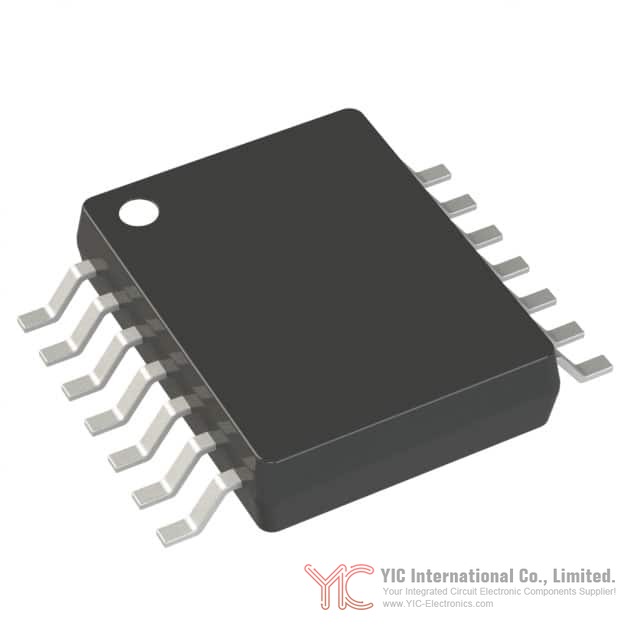
AD8504ARUZ-REEL Image

View larger Image

Image may be representation.
See specs for product details.

AD8504ARUZ-REEL

Manufacturer Part Number: AD8504ARUZ-REEL
Manufacturer/Brand: Analog Devices Inc.
Part of Description: IC CMOS 4 CIRCUIT 14TSSOP
Datasheets: AD8504ARUZ-REEL.pdf
RoHs Status: Lead free / RoHS Compliant
Stock Condition: 26962 pcs Stock
Ship From: Hong Kong
Shipment Way: DHL/Fedex/TNT/UPS/EMS

Request Quote

Please complete all required fields with your contact information.Click "SUBMIT REQUEST" we will contact you shortly by email. Or Email us: Info@Y-IC.com.

Part No.
Quantity
Target Price(USD)

Inquiry Online

  • Contact Name
  • Company
  • E-mail
  • Phone
  • Message
  • Verify
  • Specifications
  • QC & Packaging
  • Shipping
  • Payment

QC (Quality Warranty)

All products are carefully inspected before shipment according to our Quality Management practices. We ensure each part is genuine, meets specification requirements, and is functionally checked against original datasheets.
Our quality process supports reliable part performance and minimized risk of defects in customer applications.

Visual Inspection X-Ray Analysis Decapsulation Analysis Spectrometer Dimension Verification Dimension Verification Dimension Verification

Packaging

ESD Protection & Handling

All ESD-sensitive components are handled under anti-static control procedures.
Products are sealed in ESD-safe packaging to prevent electrostatic damage.
Proper labeling is applied for identification and traceability.
This ensures product integrity during storage, handling, and shipment.

Global Shipment by DHL/FedEx/TNT/UPS

Delivery time
Deliverytime will need 2-4days to most of country all over the world for DHL/UPS/FEDEX/TNT.
Shipping fees reference DHL.
1). You can offer your express delivery account for shipment, ifyou haven’t any express account for shipment, we can offer our account inadvance.
2). Use our account for shipment, Shipment charges(ReferenceDHL, Different Countries has different price.)

Shipment charges: (Reference DHL)
Weight(KG) Price(USD$)
0.00kg-1.00kg USD$60.00
1.00kg-2.00kg USD$70.00
2.00kg-3.00kg USD$80.00

More details: https://www.yic-electronics.com/shipment-way.htm
Please feel free contact us. Send any inquires or question toour Email Info@YIC-Electronics.com
We can do the best to you. Thank you very much your support.

Payment Way: Wire Transfer = Telegraphic Transfer(T/T) or PayPal or Western Union

Wire Transfer (T/T)

Our HSBC bank name: The Hongkong and Shanghai Banking Corporation Limited (HSBC Hong Kong)

Benefit Company Name: YIC International Co., Limited
Bank charges and payment account details, please click "Payment Way".

Western Union


Complete payment by Western Union.
Step 1. Go to your local Western Union branch, or go to their website (www.westernunion.com)
Step 2. Follow their instructions.


Bank charges and payment account details, please click "Payment Way".

PayPal Account:

PayPal Golden Key Supplier

PayPal Account:
PayPal Account ID: Info@YIC-Electronics.com
Company: YIC International Co., Limited

If you want to pay via Credit Card, please choose "Pay with my PayPal account" to continue by paypal.(www.paypal.com
Bank charges details, please click "Payment Way".

Micropower CMOS Operational Amplifiers AD8504: Precision Signal Processing for Ultra-Low-Power Applications

Product Overview of the AD8504 Micropower CMOS Operational Amplifier

The AD8504 is a low-power, precision CMOS operational amplifier manufactured by Analog Devices Inc., designed specifically for applications where power consumption must be minimized without compromising signal processing quality. This device represents a significant advancement in micropower amplifier technology, delivering a maximum supply current of just 1 microampere per amplifier while maintaining precision specifications suitable for demanding measurement and signal conditioning tasks.

The AD8504 integrates four independent operational amplifier circuits within a single 14-lead TSSOP surface-mount package, making it an efficient solution for multi-channel signal processing in space-constrained designs. The quad-channel architecture allows designers to implement complex signal conditioning, filtering, and detection functions while maintaining the ultra-low power consumption profile that distinguishes this device from conventional operational amplifiers.

Core Performance Characteristics of the AD8504 Series

The AD8504 achieves its micropower operation through advanced CMOS circuit design while maintaining precision specifications that rival higher-power alternatives. The maximum input offset voltage of 3 millivolts ensures accurate signal representation across the operating range, while the typical input bias current of 1 picoampere minimizes loading effects on high-impedance signal sources. These characteristics combine to deliver precision signal processing without the need for system calibration, reducing design complexity and time-to-market for end applications.

The device operates with unity gain stability, meaning it can be configured as a unity-gain buffer or follower without requiring frequency compensation networks. This simplifies circuit design and reduces component count, particularly valuable in portable applications where board space and power budget are constrained. The no phase reversal characteristic ensures predictable behavior in feedback configurations, allowing designers to implement stable control loops and signal processing chains with confidence.

Supply Voltage Flexibility and Operating Range of the AD8504

The AD8504 accommodates both single-supply and dual-supply configurations, providing design flexibility across diverse application requirements. In single-supply mode, the device operates from +1.8 volts to +5.5 volts, enabling integration into modern low-voltage battery-powered systems. The dual-supply option ranges from ±0.9 volts to ±2.75 volts, supporting applications requiring bipolar signal processing or symmetric supply architectures.

This voltage flexibility proves particularly valuable in portable equipment where battery voltage naturally decreases as the cell discharges. The AD8504 maintains specified performance across its entire supply voltage range, ensuring consistent signal processing quality throughout the battery's operational life. The ability to operate at supply voltages as low as 1.8 volts positions the device for integration into next-generation ultra-low-power systems, including wearable medical devices and energy-harvesting applications.

The supply current remains remarkably stable across the operating voltage range, with typical values remaining near the 1-microampere specification even as supply voltage varies. This consistency simplifies power budget calculations and enables accurate prediction of battery life in portable applications. Performance characteristics remain well-controlled across the industrial temperature range of -40°C to +85°C, with extended specifications available for -40°C to +125°C operation in demanding environments.

Input and Output Characteristics of the AD8504

The AD8504 implements rail-to-rail input and output operation, a feature that maximizes the dynamic range available for signal processing. Rail-to-rail input capability means the common-mode input voltage can extend from ground (or the negative supply in dual-supply configurations) to the positive supply rail, allowing the device to process signals across the full supply voltage span without requiring input biasing networks. This characteristic proves particularly valuable in low-voltage systems where every millivolt of dynamic range contributes meaningfully to signal-to-noise ratio and measurement resolution.

Rail-to-rail output operation ensures the amplifier can swing its output voltage from near ground potential to near the positive supply rail, maximizing the available output signal swing. In low-voltage applications, this capability becomes critical for achieving adequate signal levels without requiring additional output buffering or level-shifting circuitry. The combination of rail-to-rail input and output characteristics allows designers to implement high-gain signal conditioning stages in single-supply systems without the complexity traditionally required for low-voltage operation.

The input bias current remains exceptionally low across the common-mode input voltage range, maintaining the 1-picoampere specification even as the input voltage approaches the supply rails. This consistency ensures predictable circuit behavior in high-impedance sensor applications, where input bias current can introduce significant errors if not carefully managed. The output saturation voltage characteristics demonstrate the device's ability to deliver useful signal levels even when driving moderate load currents, with saturation voltage remaining well-controlled across the temperature range.

Precision and Accuracy Features of the AD8504

The AD8504 achieves its precision specifications through careful circuit design and manufacturing process control. The maximum input offset voltage of 3 millivolts represents the maximum deviation from ideal zero-input-zero-output behavior, a specification that directly impacts the accuracy of precision measurement systems. The offset voltage distribution across production units shows tight clustering around the nominal value, indicating consistent manufacturing quality and predictable device-to-device performance.

The input offset voltage temperature coefficient, specified at typical values well below 10 microvolts per degree Celsius, ensures that temperature variations in the operating environment produce minimal changes in amplifier offset. This stability proves particularly valuable in portable applications where ambient temperature may fluctuate significantly, such as outdoor environmental monitoring or wearable medical devices. The offset voltage remains stable across the common-mode input voltage range, eliminating the need for input-dependent calibration adjustments.

The common-mode rejection ratio (CMRR) exceeds 80 decibels across the audio frequency range, providing strong rejection of common-mode interference signals that appear equally on both amplifier inputs. This characteristic proves valuable in sensor applications where differential signal levels may be small compared to common-mode noise from power supply ripple or electromagnetic interference. The power supply rejection ratio (PSRR) similarly exceeds 80 decibels, ensuring that supply voltage variations produce minimal changes in amplifier output, a critical requirement in battery-powered systems where supply voltage naturally decreases over time.

Thermal Management and Reliability of the AD8504

The AD8504 in its 14-lead TSSOP package exhibits thermal resistance characteristics suitable for surface-mount assembly on standard printed circuit boards. The junction-to-ambient thermal resistance remains low enough to allow continuous operation at rated specifications without requiring heat sinks or forced-air cooling, a significant advantage in portable applications where thermal management complexity must be minimized.

The device is fully specified over the industrial temperature range of -40°C to +85°C, with extended specifications available for operation to +125°C. This temperature range coverage enables deployment in diverse environments, from consumer portable equipment operating in controlled indoor conditions to industrial remote sensors exposed to extreme ambient temperatures. The thermal characteristics remain predictable across this range, allowing designers to implement temperature-compensated circuits if application requirements demand temperature-independent performance.

The AD8504 incorporates electrostatic discharge (ESD) protection circuitry to safeguard against damage during handling and assembly. While this protection provides a baseline level of ESD immunity, proper ESD precautions should be maintained throughout the manufacturing and assembly process to ensure device reliability and prevent performance degradation. The device's CMOS construction inherently provides good ESD immunity compared to bipolar alternatives, reducing the risk of damage from typical handling scenarios.

Packaging and Integration Options for the AD8504

The AD8504 is available in a 14-lead TSSOP surface-mount package, a standard form factor widely supported by modern assembly equipment and compatible with high-density printed circuit board designs. The TSSOP package provides excellent thermal characteristics for a surface-mount device while maintaining a compact footprint suitable for portable applications. The package dimensions comply with JEDEC standards, ensuring compatibility with industry-standard assembly processes and solder reflow profiles.

The quad-channel integration within a single package provides significant advantages for multi-channel applications. Rather than requiring four separate dual-channel devices or eight individual single-channel amplifiers, the AD8504 consolidates four complete amplifier circuits into a single component. This integration reduces board area, simplifies routing, and decreases the overall component count, all factors that contribute to lower manufacturing costs and improved reliability through reduced solder joint count.

The 14-lead TSSOP package includes dedicated supply pins for each amplifier pair, allowing independent biasing and supply decoupling if application requirements demand isolation between channels. This flexibility supports applications where different channels operate at different supply voltages or require independent power management. The compact package dimensions make the AD8504 suitable for integration into space-constrained portable devices, including wearable sensors and handheld measurement instruments.

Application Scenarios for the AD8504 in Portable and Remote Systems

The AD8504's combination of micropower operation, precision specifications, and rail-to-rail characteristics makes it well-suited for diverse portable and remote sensing applications. In portable medical equipment such as bedside monitors and pulse oximeters, the AD8504 provides precision signal conditioning for physiological sensors while minimizing power consumption to extend battery life. The low input bias current proves particularly valuable in these applications, where sensor impedance may be high and input bias current-induced errors must be minimized.

Glucose meters and other point-of-care diagnostic devices benefit from the AD8504's ability to process small sensor signals with high precision while operating from battery supplies. The rail-to-rail input and output characteristics allow these devices to extract maximum signal information from miniature sensors, improving measurement resolution and diagnostic accuracy. The micropower operation extends battery life between charging cycles, a critical requirement for devices intended for frequent use throughout the day.

Remote environmental monitoring systems, including temperature and humidity sensors deployed in inaccessible locations, rely on the AD8504's low power consumption to achieve extended operational life from primary batteries or energy-harvesting sources. The device's ability to operate from supply voltages as low as 1.8 volts enables integration with modern low-power wireless transceivers, creating complete sensor nodes that can operate for months or years on a single battery charge.

Smoke and fire detection systems utilize the AD8504 for signal conditioning from photodiode sensors and thermal sensors. The precision offset voltage specification ensures accurate threshold detection, while the low power consumption allows these safety-critical devices to operate continuously without excessive battery drain. Vibration monitoring systems similarly benefit from the AD8504's precision and low power characteristics, enabling condition-based maintenance systems that detect equipment degradation before failure occurs.

Current sensing applications leverage the AD8504's low input bias current and precision offset voltage to implement accurate current measurement circuits. The device can be configured as a transimpedance amplifier to convert small currents from current-sensing resistors into measurable voltage signals, with the low offset voltage ensuring accurate measurement of small currents without requiring calibration. Low-power filter applications utilize the AD8504's unity-gain stability and precision characteristics to implement active filtering stages that condition sensor signals before analog-to-digital conversion.

Conclusion

The AD8504 represents a mature solution for applications requiring precision signal processing with minimal power consumption. The combination of 1-microampere supply current, 3-millivolt maximum offset voltage, and rail-to-rail input and output operation addresses the core requirements of modern portable and remote sensing systems. The quad-channel integration within a compact TSSOP package provides efficient implementation of multi-channel signal conditioning, while the flexible supply voltage range accommodates diverse system architectures. The device's proven performance across the industrial temperature range and its availability in standard surface-mount packaging make it a practical choice for production applications requiring reliable, low-power signal processing.

Frequently Asked Questions (FAQ)

Q1. What is the primary advantage of the AD8504's 1-microampere supply current specification compared to conventional operational amplifiers?
A1. The 1-microampere supply current per amplifier enables extended battery life in portable applications. For example, a portable device powered by a 100-milliampere-hour battery could theoretically operate for over 100,000 hours (approximately 11 years) if the AD8504 were the only current-consuming component. While real applications consume additional current for sensors, signal processing, and wireless transmission, the AD8504's micropower operation significantly extends battery life compared to conventional amplifiers that typically consume milliamperes per channel.
Q2. How does the rail-to-rail input and output capability improve performance in low-voltage applications?
A2. Rail-to-rail operation maximizes the available signal swing in low-voltage systems. In a 1.8-volt single-supply system, a conventional amplifier might limit input signals to a 0.5-volt to 1.3-volt range, wasting 0.2 volts of headroom at each rail. The AD8504 can process signals from near ground to near the positive supply rail, utilizing the full 1.8-volt span. This expanded dynamic range improves signal-to-noise ratio and measurement resolution, allowing smaller sensor signals to be processed without additional amplification stages.
Q3. Can the AD8504 be used in applications requiring both single-supply and dual-supply operation?
A3. Yes, the AD8504 supports both configurations. Single-supply operation from +1.8V to +5.5V suits battery-powered portable devices, while dual-supply operation from ±0.9V to ±2.75V supports applications requiring bipolar signal processing or symmetric supply architectures. The same device can be configured for either mode by adjusting the power supply connections and biasing networks, providing design flexibility across different application requirements.
Q4. What does the "no phase reversal" characteristic mean, and why is it important?
A4. No phase reversal means the amplifier output maintains the correct polarity relationship with the input signal across all operating conditions. In some amplifier designs, if the input signal exceeds certain limits or supply voltage drops below a threshold, the output can invert unexpectedly. The AD8504 guarantees this won't occur, ensuring predictable behavior in feedback circuits and signal processing chains. This characteristic is particularly important in control systems and threshold detectors where output polarity errors could cause system malfunction.
Q5. How does the 3-millivolt maximum offset voltage specification impact system design?
A5. The offset voltage represents the input voltage that would produce zero output voltage in an ideal amplifier. With a 3-millivolt maximum offset, a gain-of-100 amplifier stage could produce up to 300 millivolts of output error with zero input signal. In precision measurement applications, this offset must be accounted for through calibration or offset cancellation circuits. The tight offset voltage distribution across production units and its stability across temperature and supply voltage variations allow designers to implement predictable offset compensation without requiring individual device calibration.
Q6. What is the significance of the 1-picoampere input bias current specification?
A6. Input bias current represents the small current that flows into the amplifier inputs. At 1 picoampere, this current is negligible in most applications, but becomes significant when interfacing with very high-impedance sensors. For example, a 1-gigaohm sensor impedance would produce only 1 millivolt of error voltage from the 1-picoampere bias current. This low bias current eliminates the need for input buffering or bias current compensation in high-impedance applications, simplifying circuit design and reducing component count.
Q7. How should the AD8504 be protected from electrostatic discharge during handling and assembly?
A7. Although the AD8504 includes ESD protection circuitry, proper ESD precautions should be maintained throughout manufacturing and assembly. This includes using grounded work surfaces, ESD-safe handling tools, and antistatic wrist straps when handling devices. Components should be stored in antistatic bags or conductive foam, and assembly equipment should be properly grounded. While the CMOS construction provides inherent ESD immunity superior to bipolar alternatives, these precautions prevent potential damage that could degrade device performance or cause latent failures.
Q8. What thermal considerations apply when using the AD8504 in high-temperature environments?
A8. The AD8504 is specified for operation to +85°C (industrial range) or +125°C (extended range), with performance characteristics remaining well-controlled across these ranges. The thermal resistance of the TSSOP package is low enough that continuous operation at rated specifications requires no heat sinking. However, designers should verify that the actual junction temperature remains within specification by calculating power dissipation and accounting for ambient temperature and board thermal characteristics. In applications approaching the maximum temperature limit, thermal simulation or testing should confirm adequate margin.
Q9. How does the common-mode rejection ratio (CMRR) specification of 80 decibels affect noise immunity?
A9. An 80-decibel CMRR means that common-mode signals (noise appearing equally on both inputs) are attenuated by a factor of 10,000 compared to differential signals. If a 1-volt power supply ripple appears on both amplifier inputs, the CMRR specification guarantees that this noise contributes less than 0.1 millivolts to the output. This strong rejection of common-mode interference proves valuable in sensor applications where differential signal levels may be small compared to environmental noise, allowing accurate measurement without requiring extensive shielding or filtering.
Q10. What is the practical difference between the AD8504 and the AD8502 mentioned in the datasheet?
A10. The AD8502 is a dual-channel version (two amplifiers) available in an 8-lead SOT-23 package, while the AD8504 is a quad-channel version (four amplifiers) in a 14-lead TSSOP package. Both devices share identical electrical specifications and performance characteristics. The choice between them depends on application requirements: the AD8502 suits applications requiring only two channels or where the smaller SOT-23 package is preferred, while the AD8504 provides more channels in a slightly larger package, offering better integration for multi-channel applications.
Q11. Can the AD8504 be used for precision current measurement applications?
A11. Yes, the AD8504 is well-suited for current sensing through transimpedance amplifier configurations. A current-sensing resistor converts the measured current into a proportional voltage, which the AD8504 amplifies with high precision. The low input bias current ensures minimal loading on the sensing resistor, while the low offset voltage enables accurate measurement of small currents without calibration. For example, measuring 1-milliampere through a 1-kilohm sensing resistor produces 1 volt, which can be amplified to a convenient measurement range with minimal error.
Q12. How does the unity-gain stability characteristic simplify circuit design?
A12. Unity-gain stability means the amplifier can be configured as a buffer (unity-gain follower) without requiring frequency compensation networks. Conventional amplifiers often require compensation capacitors to prevent oscillation in unity-gain configurations, adding component count and design complexity. The AD8504 eliminates this requirement, allowing direct implementation of high-impedance buffers, voltage followers, and unity-gain summing amplifiers without additional components. This simplification reduces board area and cost while improving reliability through reduced component count.
Slide the scroll wheel to view more.
Click to see more

User Review

  • Kent***orimoto

    Used this processor in a wireless networking project. Stable operation and good integration with existing software tools. Performance is sufficient for embedded communication applications.

    June 9th, 2026

  • Oliv***ughes

    Good capacitor quality. Used in a power supply rebuild and measured values were close to spec. No issues after several days of continuous operation.

    June 5th, 2026

  • Kevi***rner

    Very good MCU for legacy embedded projects. I used the LPC2387FBD100 in an industrial control board replacement and it integrated more smoothly than expected. Ethernet and peripheral support were enough for our needs. Been running continuously for over a week without instability.

    May 25th, 2026

  • Nath***ill

    Good supervisor IC for automotive power systems. Reliable reset behavior.

    May 19th, 2026

  • Jack***III

    Good price

    May 15th, 2026

  • Davi***ung

    Good SoC for networking applications. Stable signal processing and low power consumption.

    May 6th, 2026

  • Andr***ee

    Overall is good

    April 28th, 2026

  • Emil***ark

    Accurate frequency output for timing circuits. Works well in low-power signal designs.

    April 23th, 2026

  • Jose***Dong

    Quick response and clear answers.

    April 16th, 2026

  • Marc***echLab

    Excellent quality. All chips passed testing and showed consistent electrical characteristics.

    April 7th, 2026

  • Circ***MasterX

    Good packaging and fast shipping. Performance is stable, but I wish there was clearer labeling on each component.

    April 2th, 2026

  • SamT***Reviews

    Excellent ICs. Used them in a communication module and performance was stable.

    March 27th, 2026

  • Kevi***.

    Good quality parts. No failures during testing.

    March 17th, 2026

  • Bria***.

    Good

    March 13th, 2026

  • Mari***.

    Superb performance.

    March 2th, 2026

  • Emma***

    Excellent ICs for DIY projects. Came well-packaged, genuine parts, and all tested good on my bench. No fails on 50 pieces.

    February 26th, 2026

  • Gadg***an123

    Good

    February 10th, 2026

  • Quan***PartsLab

    Great service

    February 6th, 2026

  • Vect***upplyChain

    The sales rep was professional and responsive.

    January 27th, 2026

  • Puls***vePurchasing

    Components were packed carefully with anti-static protection and cushioning. Everything arrived in good condition.

    January 23th, 2026

  • Pixe***ocure

    Components were packed well. Appreciated the attention to detail.

    January 13th, 2026

  • Byte***dgeBuyer

    Good Quality & Fast Response

    January 5th, 2026

  • Circ***AtlasGlobal

    JUST WHAT I WANT

    December 30th, 2025

  • Allo***taImports

    Very professional

    December 26th, 2025

  • Apex***i

    Quick response and prompt shipping

    December 19th, 2025

  • Hexa***e Circuits

    We were surprised by how quickly our order was processed. From inquiry to delivery, everything was smooth. A trustworthy IC distributor with good stock levels.

    December 11th, 2025

  • Core***se Inc.

    Good customer service

    December 2th, 2025

  • Skyl***Drew

    Delivered ahead of schedule.

    November 28th, 2025

  • Byte***ad

    We purchased a batch of XC6SLX25T-2CSG324C from yic-electronics. Clean markings, fresh 2024 date codes, and antistatic packaging—service was efficient and polite.

    November 17th, 2025

  • avl_***rcing_julia

    Smooth checkout and same-day ship via FedEx. Parts arrived dry-packed, correct MSL labels, and fresh date codes.

    November 13th, 2025

  • Liam***hnson

    Price is good. Order processed quickly, and tracking provided the same night.

    November 3th, 2025

  • Yuko***kamura

    Prices were reasonable compared to other brokers. One reel had minor box damage, but the inner pack was intact.

    October 31th, 2025

  • Opti***

    Excellent prices and top-notch customer service. Even the standard shipping was surprisingly fast. Components were well-packed and genuine. Totally satisfied with the purchase.

    October 21th, 2025

  • Thom***Gray

    Clear communication and on-time delivery.

    October 15th, 2025

  • Aaro***ughes

    Excellent supplier. Great communication and reliable service throughout the process.

    October 9th, 2025

  • Auro***hip

    Good experience overall. The order was processed smoothly, packaging was secure, and the delivery time was acceptable.

    September 29th, 2025

  • Jimm***

    I had a great experience with this company. They were very professional and efficient, and they had the obsolete parts I needed in stock. Once payment was processed, the delivery was quick—my goods arrived within two weeks. The customer service was friendly professional, with seamless communication throughout. Overall, everything went smoothly, and I would definitely recommend them.

    September 19th, 2025

  • Jaso***in

    The purchase was easy and fast. Polite and helpful seller, great price.

    September 8th, 2025

  • NeoB***

    Schnelle Lieferung, Produkt entspricht der Beschreibung, hochwertige Verarbeitung, stabile Funktion, alles passt perfekt, sehr zufrieden mit dem Kauf.

    September 2th, 2025

  • Tobi***

    Quick response, good price and clear communication. Very satisfied with the service

    August 28th, 2025

  • Zóc***Nights

    Not bad

    August 19th, 2025

  • 3174***41@gmail.com

    Bought once to know that YIC electronic components quality is good, and the price is not expensive, very affordable, fast delivery!
    Really recommend buying electronic components here!

    April 14th, 2025

  • Yush***nagahata

    YIC is an excellent company.
    The deliverry time is fast, and we find it very usueful for procuring electronic components.
    We look forward to continuing our relationship in the future.
    Go YIC! Keep up the great work!

    February 20th, 2025

  • SAMI*** INSTALLATION

    Fantastic! Shure I would buy again with YIC

    January 23th, 2025

  • Aadh***x

    The experience with YIC International was great. They not only provided support for the proposed parts but also proactively suggested additional parts that could be useful for us. They have reviewed all the parts properly and corrected our requirements. The delivery and other logistical support were excellent.

    January 22th, 2025

  • Ke*

    A Reliable and Trustworthy Partner
    Received original, high-quality components with fast shipping from YIC electronics.

    November 25th, 2024

  • Nana***risnawan

    Great component supplier, a place that easy to find electronics parts at a good price and delivery.

    August 6th, 2024

  • Alge***n Gholson

    Great products, fast delivery.
    The quality and service of YIC Electronics' components are at the top of the industry. Highly recommended.

    February 20th, 2024

  • Frey***.

    Our partnership with YIC Electronics has been exceptionally satisfying. Their unwavering commitment to outstanding customer service, coupled with their highly competitive pricing and unwavering dedication to top-notch, high-performance product quality, has consistently impressed us. YIC Electronics stands out as a true industry leader in every aspect of their service. Their swift and efficient logistics feedback further underscores their professionalism and reliability.

    August 25th, 2023

  • Jo C***n

    High Quality Products!
    I received genuine, high-quality electronic parts. Thank you YIC electronics.

    August 12th, 2023

  • Edwa***W.

    Yic-electronics suppliers are top notch quality and consistent reliability, I have generated several orders from their website and their service has exceeded expectations in providing electronic components for our business needs.

    August 6th, 2023

  • Anna***

    Yic-electronics is a good partner for our company, we have been cooperating with each other for 4 years, and the cooperation is all smooth and there is no dispute about the goods. Our latest transaction with Yic-electronics happened a month ago, and the process was very smooth, thanks to Yic-electronics's help!

    June 17th, 2023

0 Articles

Post a Review

Hello , welcome to comment on this product
Rating *
5.0

Please limit the remark to 500 words

Your personal information will be hidden

FAQFrequently Asked Questions

  • What are the typical power consumption implications when using the AD8504ARUZ-REEL in battery-powered instrumentation where minimizing quiescent current is critical, and how does the specified 750nA per channel current consumption scale with active versus idle states? The AD8504ARUZ-REEL exhibits a very low quiescent current of 750nA per channel. This characteristic makes it highly suitable for battery-operated devices where extended operational life is a priority. The stated current consumption is for each of the four circuits within the AD8504ARUZ-REEL when operating normally. While the datasheet doesn't explicitly detail distinct "idle" states with significantly lower current draw beyond this baseline, the inherent low power design of the CMOS technology means that if the inputs are biased such that the output is not constantly driving current, the overall consumption will remain very close to this 750nA per channel figure. Engineers should consider the output stage loading; driving capacitive loads or sourcing significant current will increase the instantaneous power draw, but the quiescent characteristic is exceptionally low.
  • For a low-voltage sensor interface requiring precise signal amplification with minimal drift, how does the AD8504ARUZ-REEL's 500µV input offset voltage specification translate to effective resolution and potential linearity errors at the 1.8V minimum supply voltage? The AD8504ARUZ-REEL's 500µV input offset voltage can represent a significant portion of the full-scale range for low-level signals, particularly when operating at the minimum supply voltage of 1.8V. For instance, if amplifying a signal that swings from 0V to 100mV, a 500µV offset could introduce up to 0.5% error if uncorrected. To achieve higher effective resolution and linearity, designers may need to implement auto-calibration or offset correction circuitry in their system to nullify this inherent offset. Careful consideration of the signal-to-noise ratio and the required accuracy of the amplified signal is paramount when evaluating the AD8504ARUZ-REEL's suitability for high-precision, low-voltage applications.
  • When designing a multi-channel analog front-end for a portable medical device operating near its power limits, what are the practical considerations for the AD8504ARUZ-REEL's 7 kHz gain-bandwidth product (GBWP) and 0.004 V/µs slew rate in terms of achievable bandwidth and potential signal distortion for signals up to 1 kHz? The AD8504ARUZ-REEL has a limited gain-bandwidth product (GBWP) of 7 kHz and a slew rate of 0.004 V/µs. For accurate amplification of signals up to 1 kHz, especially at higher gains, these parameters become critical. The GBWP dictates the maximum gain at which the amplifier can operate without significantly attenuating the signal. For example, if a gain of 10 is required, the effective bandwidth is reduced to 7 kHz / 10 = 700 Hz. The slew rate limits the maximum rate of change of the output voltage. For a sine wave of 1 kHz with an amplitude of, say, 1V, the maximum instantaneous rate of change is 2π * 1000 Hz * 1V ≈ 6.28 V/ms or 0.00628 V/µs. This exceeds the AD8504ARUZ-REEL's slew rate, suggesting potential distortion or inability to accurately reproduce such a signal at higher amplitudes. Designers should carefully calculate the required bandwidth and slew rate based on the signal characteristics and the chosen gain to ensure faithful signal reproduction.
  • For robust industrial control systems requiring operation in fluctuating temperature environments, how does the AD8504ARUZ-REEL's specified -40°C to 125°C operating temperature range influence critical electrical parameters like input offset voltage and bias current, and what mitigation strategies are recommended? The AD8504ARUZ-REEL's broad operating temperature range of -40°C to 125°C is beneficial for industrial applications. However, like all semiconductor devices, its electrical parameters will exhibit some temperature dependency. While specific drift coefficients are not provided in this summary, it's reasonable to expect that the input offset voltage (500µV) and input bias current (1pA) will vary with temperature. For highly sensitive applications, particularly those requiring sub-microvolt accuracy, thermal management and potential offset calibration might be necessary. Designing for a stable operating temperature for the AD8504ARUZ-REEL, perhaps by localizing heat sources or using thermal vias on the PCB, can significantly improve long-term stability and reduce the need for complex compensation.
  • Considering the AD8504ARUZ-REEL's rail-to-rail output capability, what are the potential challenges and design considerations when driving capacitive loads, and what is the practical limit of the 5 mA output current to maintain stability without external buffering? The AD8504ARUZ-REEL's rail-to-rail output is advantageous for maximizing dynamic range, but driving capacitive loads can lead to instability due to the amplifier's internal compensation and output impedance. The 5 mA output current per channel is the maximum available, and driving larger capacitive loads beyond a certain threshold, even at lower currents, can cause oscillations or reduce phase margin, leading to signal distortion. A common rule of thumb is to keep the capacitive load below a few hundred picofarads for optimal stability without external buffering. If larger capacitive loads are unavoidable, a small series resistor (e.g., 10-100 ohms) at the output of the AD8504ARUZ-REEL, followed by a small capacitor (e.g., 10-100pF) to ground, can help isolate the amplifier and maintain stability, though this will introduce a low-pass filter.
  • In a system requiring the integration of multiple op-amps for signal conditioning, what are the advantages and potential crosstalk concerns of using the AD8504ARUZ-REEL's four-circuit configuration in a single 14-TSSOP package, especially when operating with high-frequency signals? The AD8504ARUZ-REEL's integrated four-circuit design offers significant advantages in terms of board space reduction and potentially reduced manufacturing costs. However, with four operational amplifiers sharing a single package and substrate, there is a potential for signal crosstalk, especially at higher frequencies where parasitic coupling becomes more pronounced. The 7 kHz GBWP suggests it's not intended for very high-frequency applications, but even at lower frequencies, significant signal swings on one channel could induce noise on adjacent channels. To mitigate crosstalk in the AD8504ARUZ-REEL, careful PCB layout is crucial. This includes adequate separation of the amplifier channels, proper grounding techniques, and potentially using separate power and ground planes for critical signal paths.
  • For a cost-sensitive consumer electronics product, how does the AD8504ARUZ-REEL's typical lead time and available quantity of 2400 units influence long-term production planning and potential supply chain risks, especially considering it's a RoHS 3 compliant component? The availability of 2400 units of the AD8504ARUZ-REEL suggests a moderate stock level, suitable for prototyping and initial production runs. For sustained, high-volume manufacturing, engineers should proactively engage with Analog Devices or authorized distributors to understand the typical lead times for larger quantities and the product's long-term supply roadmap. Given it is RoHS 3 compliant, it meets current environmental regulations, which is a positive factor for market access. However, for critical products, establishing secondary sourcing or understanding the obsolescence risk of the AD8504ARUZ-REEL is a prudent design practice.
  • When implementing the AD8504ARUZ-REEL in an embedded system requiring very low input bias current, how does the 1 pA specification impact the choice of external passive components and the required cleanliness of the PCB assembly process? The extremely low input bias current of 1 pA for the AD8504ARUZ-REEL necessitates meticulous attention to PCB design and assembly. Any surface contamination, flux residue, or moisture on the PCB near the input pins can create parasitic current paths that far exceed this specification, rendering the low bias current feature ineffective. This means using high-quality, low-ionic flux during soldering and ensuring thorough cleaning. Furthermore, the selection of external components, such as resistors and capacitors connected to the input, must also prioritize low leakage and minimal surface contamination. Even connector mating surfaces need to be considered in the overall system leakage budget.
  • How does the AD8504ARUZ-REEL's 4-circuit integration and 14-TSSOP package affect PCB layout density and routing complexity when designing a compact device, and are there any specific footprint considerations for optimal thermal performance? The 14-TSSOP package of the AD8504ARUZ-REEL, with its relatively small footprint and four op-amps, allows for high component density on a PCB. However, this density can increase routing complexity, especially when isolating sensitive analog signals. Routing should be done carefully to maintain signal integrity and minimize crosstalk between the four channels. For thermal management, while the AD8504ARUZ-REEL itself has a low power consumption, the surrounding components and the overall power dissipation within the package should be considered. Adding thermal vias from the ground pins of the AD8504ARUZ-REEL to internal or bottom-side ground planes can help dissipate heat effectively, especially in dense designs where airflow might be limited.
  • In a scenario where an alternative amplifier to the AD8504ARUZ-REEL is being considered, what are the key differentiating factors in terms of performance (e.g., GBWP, slew rate, offset voltage) and package type (e.g., comparing 14-TSSOP to alternatives like SOT-23 or SOIC) that would necessitate a redesign? When evaluating alternatives to the AD8504ARUZ-REEL, engineers must scrutinize performance metrics beyond just the core amplifier type. For example, if an alternative offers a significantly higher GBWP (e.g., 1 MHz instead of 7 kHz) but also has a much higher quiescent current (e.g., 1 mA per channel), it might not be suitable for low-power applications. Similarly, a higher slew rate (e.g., 1 V/µs) in an alternative might be beneficial for faster signal transients, but if its input offset voltage is much larger (e.g., 5 mV), it could compromise precision. Package type differences are also significant; a smaller SOT-23 package might offer higher density but could have poorer thermal performance or more limited pin count for external compensation components compared to the AD8504ARUZ-REEL's 14-TSSOP. A careful cross-analysis of these key parameters and their impact on the specific application requirements of the AD8504ARUZ-REEL is essential to avoid costly redesigns.