Product Overview of the ADL5303 Logarithmic Converter IC
The ADL5303 is a monolithic logarithmic detector designed specifically for low-frequency signal power measurement in fiber optic systems. This integrated circuit delivers a 160 dB dynamic range, spanning from 100 pA to 10 mA, making it suitable for applications requiring precise optical power detection across an exceptionally wide measurement window. The device operates from a single positive supply voltage between 3.0 V and 5.5 V, consuming approximately 4.5 mA during normal operation and only 60 μA when disabled, positioning it as an efficient solution for battery-operated and power-constrained applications.
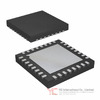
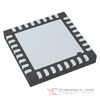
The ADL5303 combines proprietary design techniques with laser-trimmed precision to achieve both wide measurement range and high accuracy. Its monolithic construction integrates all necessary signal conditioning, logarithmic conversion, and output buffering functions on a single chip, eliminating the need for external discrete components in many applications. The device is housed in a compact 16-lead LFCSP package with an exposed pad, providing a miniature form factor suitable for space-constrained optical receiver modules and measurement instruments.
Core Architecture and Operating Principles of the ADL5303
The ADL5303 employs a translinear logarithmic amplifier architecture centered on a low-offset JFET amplifier with an optimally scaled NPN transistor in its feedback path. The input photodiode current flows into the collector of this NPN transistor, which operates within a feedback loop that maintains the summing node at a constant voltage independent of input current magnitude. This voltage-independent operation at the summing node is fundamental to achieving logarithmic conversion across the full dynamic range.
The logarithmic relationship emerges from the exponential current-voltage characteristic of the NPN transistor. As input current increases, the feedback mechanism adjusts the base-emitter voltage to maintain constant summing node voltage, and this adjustment voltage directly correlates to the logarithm of the input current. The device internally implements this relationship through laser-trimmed scaling factors that establish the precise decibel-to-voltage conversion ratio.
An adaptive biasing scheme operates on the photodiode bias pin to optimize performance across the entire current range. At very low input currents, the photodiode operates with minimal reverse bias to reduce dark current effects. As input current increases, the reverse bias voltage automatically increases to improve photodiode response time and bandwidth. This adaptive approach maintains consistent performance characteristics across the 160 dB measurement span without requiring manual bias adjustment.
Input Interface Design and Photodiode Current Measurement in the ADL5303
The ADL5303 input interface is optimized for direct connection to photodiode detectors used in fiber optic receivers. The INPT pin (Pin 3) serves as the current input node where photodiode current flows toward the device. The input node voltage is internally preset to 0.5 V with a temperature drift of only 0.04 mV/°C, providing a stable transimpedance environment for the photodiode.
Guard pins labeled VSUM (Pins 2 and 4) flank the INPT pin and track the voltage at the summing node. These guard pins minimize leakage current into the input node by establishing an equipotential surface around the sensitive input trace. The exposed pad of the device should be connected to the VSUM pins to provide continuous guard coverage, further reducing leakage paths that could compromise measurement accuracy at very low currents.
The input guard offset voltage, defined as the difference between the input node voltage and the guard voltage, is specified to remain within ±20 mV across the operating temperature range. This tight specification ensures that the photodiode experiences a well-defined bias condition regardless of temperature variations or component tolerances.
The ADL5303 accepts input currents ranging from 100 pA to 10 mA, representing eight full decades of measurement range. Within the core measurement window of 1 nA to 1 mA, the device maintains law conformance error below 0.1 dB peak, with extended range operation from 10 nA to 1 mA achieving 0.05 dB peak error. This performance level enables accurate optical power measurement in systems ranging from very dim light detection to high-power optical signal monitoring.
Logarithmic Output Characteristics and Decibel Scaling in the ADL5303
The logarithmic output appears at the VLOG pin (Pin 7) and provides a voltage representation of the input current on a decibel scale. The output slope is laser-trimmed to 200 mV/dB at 25°C, with temperature stability maintained between 193 and 207 mV/dB across the 0°C to 70°C operating range. This slope specification means that each 10 mV change at the VLOG output corresponds to a 1 dB change in input power, providing a convenient scaling factor for system designers.
The logarithmic intercept, defined as the output voltage corresponding to 100 pA input current, is laser-trimmed to 100 pA at 25°C with a specified range of 60 to 140 pA. The intercept temperature drift across the full operating range of 0°C to 70°C remains within 35 to 175 pA, ensuring that the absolute voltage reference point for decibel calculations remains stable across environmental variations.
The VLOG output can swing from a minimum of 0.1 V to a maximum of 1.6 V, with an output resistance of 5 kΩ. This relatively high output impedance is intentional, as it allows external resistors to be connected for slope and intercept adjustment without significantly loading the output. The output bandwidth at the VLOG pin is inherently limited by the translinear amplifier architecture; at very low input currents such as 1 nA, the bandwidth is approximately 2 kHz, increasing linearly with input current to reach the maximum 10 MHz bandwidth at 10 mA input current.
Reference Voltage and Buffer Output Configuration of the ADL5303
The ADL5303 includes an on-board 2 V reference output at the VREF pin (Pin 6) to facilitate system calibration and intercept repositioning. This reference voltage is laser-trimmed to 2.0 V at 25°C with a temperature stability specification of ±0.08 V across the full operating temperature range of -40°C to +85°C. The reference output has a low output impedance of 2 Ω, allowing it to drive external circuits without significant voltage drop.
The output buffer stage consists of a high-impedance input amplifier with inverting and noninverting inputs (BFNG at Pin 13 and BFIN at Pin 9) that drive a low-impedance output (VOUT at Pin 11). This buffer configuration allows the VLOG signal to be conditioned, filtered, or rescaled before final output. The buffer input offset voltage is specified as ±20 mV, with input bias current of 0.4 μA flowing out of the input pins. The incremental input resistance is 35 MΩ, providing minimal loading on the VLOG signal.
The buffer output can swing from ground to within 0.1 V of the positive supply voltage when driving a 1 kΩ load to ground. The output resistance is 0.5 Ω, enabling the buffer to drive low-impedance loads such as analog-to-digital converter inputs or transmission lines without significant attenuation. The buffer achieves a small-signal bandwidth of 10 MHz with a slew rate of 15 V/μs, supporting high-speed signal conditioning applications.
Photodiode Bias Control and Adaptive Biasing in the ADL5303
The VPDB pin (Pin 5) provides the photodiode bias output, which should be connected to the photodiode cathode when adaptive bias control is desired. The ADL5303 implements an adaptive biasing scheme that automatically adjusts the reverse bias voltage applied to the photodiode based on the input current level. At the minimum input current of 100 pA, the device applies approximately 0.1 V reverse bias to the photodiode, minimizing dark current generation.
As input current increases, the reverse bias voltage increases linearly, reaching 2.0 V at the maximum input current of 10 mA. This progressive increase in reverse bias improves the photodiode response time and bandwidth at higher power levels, where faster signal acquisition becomes beneficial. The transresistance of the photodiode bias circuit is specified as 200 mV/mA, indicating the voltage change per unit of input current change.
The adaptive biasing approach eliminates the need for external bias adjustment circuits and automatically optimizes photodiode performance across the entire measurement range. For applications where fixed bias is preferred, the VPDB pin can be left floating, and external bias can be applied directly to the photodiode cathode through a separate circuit.
Power Supply Requirements and Low-Power Operation of the ADL5303
The ADL5303 operates from a single positive supply voltage ranging from 3.0 V to 5.5 V, with typical operation at 5 V. The device requires two supply pins (VPS1 at Pin 12 and VPS2 at Pin 10) that should be connected together to the positive supply rail. Two ground pins (GND at Pins 14 and 15) should be connected to the system ground plane.
During normal operation with the device enabled, the quiescent current consumption is approximately 4.5 mA at 5 V supply, rising to a maximum of 5.6 mA across process and temperature variations. This quiescent current represents the baseline power consumption independent of input signal level, making it suitable for continuous monitoring applications. When the device is disabled through the PWDN pin, the quiescent current drops to 60 μA, enabling power-down modes for battery-operated systems.
The power-down control input (PWDN at Pin 16) accepts logic-level signals to enable or disable the device. The logic high threshold is specified as 2 V minimum, while the logic low threshold is 1 V maximum, providing compatibility with standard logic signal levels across the -40°C to +85°C operating temperature range and 2.7 V to 5.5 V supply voltage range.
The maximum power dissipation with the exposed pad soldered to a PCB is 0.6 W, with a junction-to-ambient thermal resistance of 61.6°C/W on a 2-layer JEDEC board without forced air flow. The junction-to-case thermal resistance is 1.2°C/W. These thermal specifications allow designers to estimate temperature rise under various operating conditions and ensure that the device remains within the maximum junction temperature of 125°C.
Temperature Stability and Thermal Performance of the ADL5303
The ADL5303 maintains stable performance across the operating temperature range of -40°C to +85°C through laser-trimmed compensation circuits. The input node voltage exhibits a temperature drift of only 0.04 mV/°C, ensuring that the photodiode bias point remains stable across environmental variations. This low drift rate means that over a 125°C temperature span, the input node voltage changes by only 5 mV, a negligible amount compared to the 0.5 V nominal value.
The logarithmic slope temperature coefficient is specified such that the slope remains between 193 and 207 mV/dB across the 0°C to 70°C range, representing a maximum deviation of ±7 mV/dB from the 200 mV/dB nominal value. This slope stability translates to a maximum decibel measurement error of ±0.35 dB due to temperature variation alone across a 70°C temperature span.
The intercept temperature drift is specified as a change of ±40 pA across the -40°C to +85°C operating range, representing a maximum voltage change of approximately 8 mV at the VLOG output. This intercept stability ensures that the absolute reference point for decibel calculations remains consistent across temperature extremes.
The reference voltage exhibits a temperature drift of ±0.08 V across the full -40°C to +85°C operating range, with the drift distributed as ±0.1 V across the 0°C to 70°C range. This reference stability supports accurate system calibration across environmental variations.
Bandwidth and Noise Performance of the ADL5303
The ADL5303 exhibits input-current-dependent bandwidth characteristics inherent to translinear logarithmic amplifier architectures. At very low input currents, the bandwidth is limited to approximately 2 kHz at 1 nA input current. As input current increases, the bandwidth increases proportionally, reaching the maximum specified value of 10 MHz at input currents above 1 mA. This bandwidth variation reflects the fundamental trade-off between gain and bandwidth in translinear circuits; lower gains at high currents permit higher bandwidth operation.
The wideband noise at the VLOG output is specified as 1 μV/√Hz for input currents exceeding 1 μA. The total noise voltage increases with decreasing input current due to the increasing transimpedance gain at lower currents. At 1 nA input current, the total wideband noise reaches approximately 10 mV RMS, while at 1 mA input current, the noise drops to approximately 0.1 mV RMS.
The spot noise spectral density at the VLOG output shows relatively flat response across the frequency range from 100 Hz to 10 MHz at high input currents, with increased noise at lower frequencies and at very low input currents. The noise performance is optimized for the typical operating range of 1 μA to 10 mA, where the device achieves its best signal-to-noise ratio.
The output buffer stage contributes additional noise through its input-referred noise specification of 1 μV/√Hz. When the buffer is configured as a unity-gain follower or with gain, the output noise depends on the buffer configuration and any external filtering applied at the VLOG input.
Practical Configuration and Adjustment Methods for the ADL5303
The ADL5303 provides multiple methods for adjusting the logarithmic slope and intercept to match specific system requirements. The default logarithmic slope of 200 mV/dB is established by an internal 5 kΩ resistor connected from the VLOG pin to ground. This slope can be modified by connecting an external shunt resistor in parallel with the internal resistor to decrease the slope, or by using the output buffer with external feedback resistors to increase the slope.
For applications requiring slope adjustment, an external resistor connected from VLOG to ground will decrease the slope proportionally to the parallel combination of the external resistor and the internal 5 kΩ resistor. For example, connecting a 5 kΩ external resistor in parallel with the internal resistor reduces the effective impedance to 2.5 kΩ, doubling the slope to 400 mV/dB.
The intercept can be adjusted by modifying the voltage at the summing node through the VSUM pins. The default summing node voltage of 0.5 V can be altered over a wide range by connecting an external voltage source to the VSUM pins. Changing the summing node voltage shifts the intercept without affecting the slope, allowing independent adjustment of the two logarithmic parameters.
For low supply voltage applications where the full 1.6 V output swing cannot be utilized, the slope and intercept can be adjusted to fit the available voltage span. At 3.0 V supply, the output range is reduced, and external adjustment may be necessary to maintain adequate resolution across the measurement range.
A capacitor connected at the VLOG pin provides a simple low-pass filter function, reducing high-frequency noise and bandwidth as needed for specific applications. The filter cutoff frequency is determined by the capacitor value and the 5 kΩ output impedance of the VLOG stage.
The output buffer can be configured in multiple ways to condition the VLOG signal. When configured as a unity-gain follower, the buffer provides low-impedance output suitable for driving analog-to-digital converters or transmission lines. When configured with gain using external feedback resistors, the buffer can amplify the VLOG signal to utilize the full output voltage range available from the buffer stage.
Applications and System Integration of the ADL5303
The ADL5303 is optimized for three primary application categories: high-accuracy optical power measurement, wide-range baseband log compression, and versatile detector functionality for automatic power control loops.
In optical power measurement applications, the ADL5303 directly interfaces with photodiode detectors in fiber optic receivers, converting the photodiode current to a logarithmic voltage output that directly represents optical power in decibels. The 160 dB dynamic range enables measurement of optical signals ranging from very dim light levels to high-power optical signals without requiring manual range switching or gain adjustment. The laser-trimmed accuracy and temperature stability ensure that absolute optical power can be determined with high precision across environmental variations.
For baseband log compression applications, the ADL5303 compresses wide-dynamic-range signals into a narrower voltage range suitable for analog-to-digital conversion or further signal processing. The logarithmic compression reduces the number of bits required in subsequent analog-to-digital converters while maintaining adequate resolution across the full signal range. This compression is particularly valuable in receiver systems where the input signal dynamic range exceeds the resolution capability of available analog-to-digital converters.
In automatic power control loop applications, the ADL5303 serves as a detector that provides feedback for controlling optical transmitter power or receiver gain. The logarithmic output directly represents power in decibels, simplifying the control algorithm compared to linear detectors that would require logarithmic conversion in software or firmware. The 10 MHz maximum bandwidth supports control loop frequencies up to several megahertz, enabling fast response to power variations.
The miniature 16-lead LFCSP package facilitates integration into compact optical receiver modules and measurement instruments. The low quiescent current and power-down capability make the device suitable for portable instruments and battery-operated applications. The single positive supply requirement simplifies power distribution in systems that already provide a 3 V to 5.5 V rail.
System integration typically requires minimal external components. The photodiode connects directly to the INPT pin with guard connections to the VSUM pins. The VPDB pin connects to the photodiode cathode for adaptive bias control. The VLOG output can be directly connected to an analog-to-digital converter input or to the output buffer for signal conditioning. Decoupling capacitors on the supply pins and a low-pass filter capacitor at the VLOG pin complete the typical integration circuit.
Conclusion
The ADL5303 logarithmic converter IC delivers a comprehensive solution for optical power measurement and signal detection in fiber optic systems. Its 160 dB dynamic range, laser-trimmed accuracy, and temperature-stable performance enable precise measurement across eight decades of input current with minimal external circuitry. The adaptive photodiode biasing, integrated reference voltage, and flexible output buffer provide system designers with multiple configuration options to match specific application requirements. The compact LFCSP package and low power consumption position the device as an efficient choice for both laboratory instruments and field-deployed optical receivers. The combination of wide measurement range, high accuracy, and practical ease of use makes the ADL5303 a versatile platform for optical signal detection applications spanning from very low light levels to high-power optical monitoring.
Frequently Asked Questions (FAQ)
- Q1. What is the maximum input current range that the ADL5303 can measure, and how does this compare to typical photodiode output currents in fiber optic receivers?
-
- A1. The ADL5303 accepts input currents from 100 pA to 10 mA, representing eight full decades of measurement range. In typical fiber optic receiver applications, photodiode output currents range from a few picoamperes in very dim light conditions to several milliamperes in high-power optical signal detection. The 100 pA lower limit of the ADL5303 is well-suited for detecting optical signals at the sensitivity limit of most photodiodes, while the 10 mA upper limit accommodates high-power optical monitoring without requiring external current limiting or attenuation circuits.
- Q2. How does the temperature stability of the ADL5303 affect measurement accuracy in outdoor or industrial environments where temperature variations can exceed 50°C?
-
- A2. The ADL5303 maintains measurement accuracy across the -40°C to +85°C operating range through laser-trimmed compensation circuits. The input node voltage drift of 0.04 mV/°C and the logarithmic slope stability of ±7 mV/dB across 70°C temperature span result in a maximum decibel measurement error of approximately ±0.35 dB due to temperature variation alone. In outdoor environments experiencing a 50°C temperature swing, the measurement error would be approximately ±0.25 dB, which is acceptable for most optical power monitoring applications. For applications requiring higher accuracy, the on-board 2 V reference can be used for periodic calibration to compensate for any residual temperature drift.
- Q3. What is the significance of the adaptive photodiode biasing feature, and when would a designer choose to disable it?
-
- A3. The adaptive photodiode biasing automatically adjusts the reverse bias voltage from 0.1 V at 100 pA input current to 2.0 V at 10 mA input current. This adaptive approach optimizes photodiode response time and bandwidth across the entire measurement range without requiring manual adjustment. At very low light levels, minimal bias reduces dark current noise, while at higher power levels, increased bias improves response speed. A designer would disable adaptive biasing by leaving the VPDB pin floating and applying fixed external bias when the photodiode characteristics require a specific bias voltage independent of input signal level, or when the photodiode is already biased through a separate circuit.
- Q4. How should the guard pins (VSUM) be connected to minimize measurement errors at very low input currents?
-
- A4. The VSUM guard pins (Pins 2 and 4) should be connected together and also connected to the exposed pad of the device to provide continuous guard coverage around the sensitive INPT pin. This guard connection minimizes leakage current paths that could compromise measurement accuracy at very low input currents where leakage becomes significant relative to the signal current. At 100 pA input current, even a few picoamperes of leakage current represents a significant measurement error. The guard pins track the voltage at the summing node, establishing an equipotential surface that prevents charge injection into the input node. PCB layout should route the INPT trace in close proximity to the VSUM traces to maximize the guarding effectiveness.
- Q5. What is the relationship between input current and bandwidth in the ADL5303, and how does this affect system design?
-
- A5. The ADL5303 exhibits input-current-dependent bandwidth due to the translinear amplifier architecture. At 1 nA input current, the bandwidth is approximately 2 kHz, increasing linearly with input current to reach 10 MHz at input currents above 1 mA. This bandwidth variation reflects the fundamental trade-off between transimpedance gain and bandwidth; lower input currents require higher gain, which reduces bandwidth. System designers must account for this bandwidth limitation when measuring low-level signals that contain high-frequency components. For applications requiring constant bandwidth across the measurement range, external filtering or signal conditioning may be necessary. Alternatively, the output buffer can be configured with external components to provide bandwidth extension or filtering as needed.
- Q6. How can the logarithmic slope be adjusted to accommodate different system requirements or supply voltage constraints?
-
- A6. The default logarithmic slope of 200 mV/dB is established by an internal 5 kΩ resistor. To decrease the slope, connect an external resistor in parallel with the VLOG pin to ground; the resulting slope will be proportional to the parallel combination of the external and internal resistors. For example, a 5 kΩ external resistor doubles the slope to 400 mV/dB. To increase the slope beyond the internal value, configure the output buffer with external feedback resistors to provide gain. For low supply voltage applications where the full 1.6 V output swing cannot be utilized, slope adjustment allows the logarithmic output to fit within the available voltage span. A capacitor at the VLOG pin provides additional low-pass filtering to reduce noise and bandwidth as needed.
- Q7. What external components are required for a typical ADL5303 application, and what is the minimum circuit complexity?
-
- A7. The ADL5303 requires minimal external components for basic operation. At minimum, decoupling capacitors (typically 0.1 μF ceramic and 10 μF electrolytic) should be connected across the supply pins to ground. A photodiode connects to the INPT pin with guard connections to the VSUM pins. The VPDB pin connects to the photodiode cathode for adaptive bias control. A low-pass filter capacitor (typically 10 pF to 100 pF) at the VLOG pin reduces high-frequency noise. The VLOG output can connect directly to an analog-to-digital converter input, or the output buffer can be used for signal conditioning. For applications requiring slope or intercept adjustment, external resistors are added as described in the configuration section. This minimal component count simplifies PCB layout and reduces system cost.
- Q8. How does the ADL5303 compare to alternative approaches for measuring optical power, such as using a transimpedance amplifier followed by a logarithmic amplifier?
-
- A8. The ADL5303 integrates the transimpedance amplifier and logarithmic converter functions on a single chip, eliminating the need for separate components and reducing PCB area, power consumption, and design complexity. A discrete implementation using a transimpedance amplifier followed by a logarithmic amplifier would require multiple integrated circuits, additional passive components, and careful PCB layout to minimize noise coupling between stages. The ADL5303's monolithic construction provides superior noise performance through optimized internal layout and laser-trimmed matching of internal components. The integrated adaptive photodiode biasing eliminates the need for external bias control circuits. The single-chip approach also reduces system cost and improves reliability by reducing the number of components and interconnections.
- Q9. What precautions should be taken during PCB layout and assembly to ensure reliable operation of the ADL5303?
-
- A9. The ADL5303 is an ESD-sensitive device and requires standard ESD precautions during handling and assembly. The INPT pin and VSUM pins are particularly sensitive due to their high impedance and low-level signal characteristics. PCB layout should minimize the length of traces connecting the photodiode to the INPT and VSUM pins to reduce parasitic capacitance and noise coupling. The VSUM traces should surround the INPT trace to provide effective guarding. The exposed pad should be soldered to the PCB and connected to the VSUM pins to provide low-leakage guard coverage. Supply decoupling capacitors should be placed close to the supply pins with short traces to ground. High-speed signal traces should be routed away from the INPT and VLOG traces to minimize noise coupling. The VLOG output should be filtered with a capacitor to ground to reduce high-frequency noise before connection to subsequent circuits.
- Q10. How should the ADL5303 be calibrated in a production environment to ensure measurement accuracy across a population of devices?
-
- A10. The ADL5303 is laser-trimmed at the factory to meet the specified accuracy requirements, with the logarithmic slope trimmed to 200 mV/dB and the intercept trimmed to 100 pA. In production environments, a two-point calibration procedure can verify and adjust for any residual errors. The first calibration point uses a known low-level optical signal (typically 1 nA input current) to verify the intercept; if adjustment is needed, the summing node voltage can be modified through the VSUM pins. The second calibration point uses a known high-level optical signal (typically 1 mA input current) to verify the slope; if adjustment is needed, an external resistor can be connected in parallel with the VLOG pin to modify the slope. Alternatively, the output buffer can be configured with gain to provide slope adjustment. For applications requiring high accuracy, periodic recalibration at temperature extremes can verify that temperature compensation is adequate for the specific operating environment.
- Q11. What is the maximum output current capability of the ADL5303 output buffer, and what load impedances can it drive?
-
- A11. The ADL5303 output buffer provides a peak current drive capacity of ±20 mA, enabling it to drive low-impedance loads such as analog-to-digital converter inputs or transmission lines. The output resistance is specified as 0.5 Ω, which is negligible compared to typical load impedances. The output can swing from ground to within 0.1 V of the positive supply voltage when driving a 1 kΩ load to ground. For higher impedance loads (10 kΩ or greater), the output voltage swing approaches the full supply range. The slew rate of 15 V/μs supports fast signal transitions required in high-speed applications. The buffer can drive multiple loads in parallel as long as the total current does not exceed ±20 mA and the output voltage remains within the specified range.
- Q12. How does the ADL5303 perform in applications where the input signal contains high-frequency components superimposed on a slowly varying optical power level?
-
- A12. The ADL5303 is optimized for low-frequency signal power measurement in fiber optic systems, with the input-current-dependent bandwidth limiting high-frequency response at low input currents. At 1 nA input current, the bandwidth is only 2 kHz, which would attenuate high-frequency components above this frequency. At higher input currents such as 1 mA, the bandwidth extends to 10 MHz, allowing high-frequency components to pass through. For applications where high-frequency components must be preserved at low input current levels, external bandwidth extension circuits or alternative detector architectures may be required. Alternatively, if the high-frequency components represent noise rather than signal information, the low bandwidth at low currents provides beneficial noise filtering. The output buffer can be configured with external components to provide additional filtering or bandwidth shaping as needed for specific applications.