- English
-
EnglishDeutschItaliaFrançais한국의русскийSvenskaNederlandespañolPortuguêspolski繁体中文SuomiGaeilgeSlovenskáSlovenijaČeštinaMelayuMagyarországHrvatskaDanskromânescIndonesiaΕλλάδαБългарски езикGalegolietuviųMaoriRepublika e ShqipërisëالعربيةአማርኛAzərbaycanEesti VabariikEuskeraБеларусьLëtzebuergeschAyitiAfrikaansBosnaíslenskaCambodiaမြန်မာМонголулсМакедонскиmalaɡasʲພາສາລາວKurdîსაქართველოIsiXhosaفارسیisiZuluPilipinoසිංහලTürk diliTiếng ViệtहिंदीТоҷикӣاردوภาษาไทยO'zbekKongeriketবাংলা ভাষারChicheŵaSamoa日本語SesothoCрпскиKiswahiliУкраїнаनेपालीעִבְרִיתپښتوКыргыз тилиҚазақшаCatalàCorsaLatviešuHausaગુજરાતીಕನ್ನಡkannaḍaमराठी

Your Guide to PCF8563 RTC Module: Pinout, Features, and Applications
The PCF8563

PCF8563
NXP
PCF8563 NXP
In Stock: 45200 pcs
is a low-power real-time clock (RTC) chip that keeps track of time using a built-in 32.768 kHz oscillator. It connects easily to microcontrollers via the I2C interface and supports alarms and timers for time-based functions. With its wide voltage range, compact size, and reliable performance across harsh temperatures, it’s a solid choice for applications like battery-powered devices, electronic meters, and portable systems where space and power are limited.
Catalog
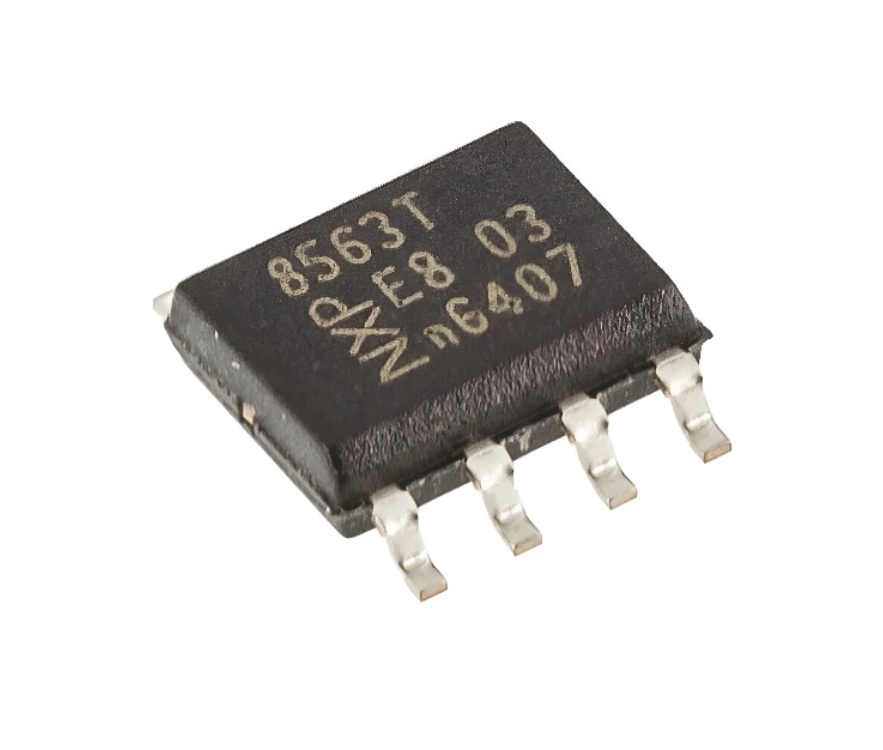
Overview of PCF8563
The PCF8563
PCF8563
NXP
PCF8563 NXP
In Stock: 45200 pcs
stands out as an impressively efficient real-time clock (RTC) integrated circuit, celebrated for consuming minimal power and operating over a wide voltage range. Its primary role is to diligently track time from seconds to years, an endeavor made possible by its internal 32.768 kHz oscillator. This precision is especially valued in contexts demanding continuous operation, such as in data logging systems and keeping networks in sync.
Equipped with alarm and timer functionalities, this IC is beneficial for tasks requiring timely alerts like notifications and system triggers. The ability to easily pair with microcontroller systems using the I2C-bus interface further shows its advantages, as it simplifies both communication and operational control. In practice, incorporating this ease of integration smooths over system processes and diminishes both complexity and potential failure points within designs.
The PCF8563 reliably operates within a temperature span from -40 to +85 degrees Celsius, showcasing its resilience under diverse environmental stresses. It is engineered to withstand these extremes, offering confidence in applications where reliability is important. Furthermore, its compact size makes it a favorable choice for settings where space is at a premium, a common necessity in today’s trend toward technological miniaturization. Given these considerations, opting for efficient components like the PCF8563 can substantially boost a system's performance and durability.
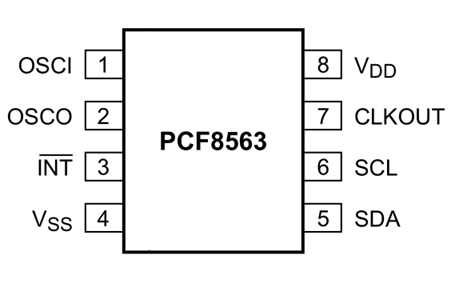
Pin Configuration Details of the PCF8563 Chip
|
Pin
Name |
SO8
/ TSSOP8 Pin No. |
HVSON10
Pin No. |
Function
/ Description |
|
OSCI |
1 |
1 |
Oscillator input |
|
OSCO |
2 |
2 |
Oscillator
output |
|
INT |
3 |
4 |
Interrupt output
(open-drain, active LOW) |
|
VSS |
4 |
5 |
Ground |
|
SDA |
5 |
6 |
Serial data
input/output |
|
SCL |
6 |
7 |
Serial clock
input |
|
CLKOUT |
7 |
8 |
Clock output
(open-drain) |
|
VDD |
8 |
9 |
Supply voltage |
|
N.C. |
– |
3, 10 |
Not connected;
do not connect or use as feed-through |
Key Features of PCF8563 RTC
|
Feature |
Description |
|
Timekeeping |
Tracks year, month, day, weekday, hours, minutes, and
seconds using a 32.768 kHz crystal |
|
Default I2C Address |
0xA2 (write), 0xA3 (read) |
|
Clock Operating Voltage |
1.0 V to 5.5 V at room temperature |
|
Backup Current |
Typically 0.25 µA at VDD = 3.0 V, Tamb = 25 °C |
|
I2C Interface |
400 kHz, two-wire (works from 1.8 V to 5.5 V) |
|
Clock Output Options |
32.768 kHz, 1.024 kHz, 32 Hz, and 1 Hz |
|
Alarm & Timer |
Built-in alarm and timer functions |
|
Oscillator |
Integrated oscillator capacitor |
|
Reset Function |
Internal Power-On Reset (POR) |
|
Interrupt Pin |
Open-drain output for interrupts |
Exploring Alternative RTC ICs
Real-time clock (RTC) integrated circuits (ICs) are reliable for systems that demand precise timekeeping across a wide array of applications. When choosing an RTC IC, delving into the unique features and capabilities of each option adds depth to the selection process. Options like the DS1307

DS1307
Analog Devices Inc./Maxim Integrated
IC RTC CLOCK/CALENDAR I2C 8DIP
In Stock: 3878 pcs
, DS3231

DS3231
N/A
DS3231 MAXIM
In Stock: 6621 pcs
, DS1302
DS1302
Analog Devices Inc./Maxim Integrated
IC RTC CLK/CALENDAR SER 8DIP
In Stock: 16147 pcs
, PCF8523, DS1820
DS1820
Analog Devices Inc./Maxim Integrated
SENSOR DIGITAL -55C-125C TO92-3
In Stock: 11990 pcs
, and DS1338 each present specific specifications and functionalities tailored for diverse projects.
DS1307
Known for its practicality, the DS1307 excels in basic timekeeping applications. It offers a straightforward solution with satisfactory battery backup capabilities, which align with systems where simplicity and reliability align with broader operational goals. Its use within embedded systems is frequent, especially when straightforward timekeeping is the focus.
DS3231
Celebrated for its accuracy and built-in temperature compensation, the DS3231 ensures consistent timekeeping in fluctuating environmental conditions. The integration of temperature sensing enhances its value in applications needing both precision in time and environmental monitoring. This becomes a notable advantage in applications involving wide temperature ranges, aiding in overall system resilience.
DS1302
The DS1302 presents a flexible solution with its bi-directional data transfer and dual data registers. Its balance of affordability and function is appealing in applications where budget considerations are apparent, yet performance cannot be compromised. Consider this IC when economic factors are important but reliability is non-negotiable.
PCF8523
Ideal for power-sensitive applications, the PCF8523 is distinguished by its low power consumption, making it well-suited for battery-operated devices needing prolonged operation. Its energy efficiency is a boon for portable devices, where conserving power is synonymous with extending lifespan. This complements the ongoing focus on sustainability, emphasizing reduced energy use across various technological fields.
DS1820 and DS1338
Offering additional functionalities, the DS1820 and DS1338 cater to advanced applications with temperature sensing and extended RAM, respectively. The DS1820's temperature sensing supports systems requiring comprehensive environmental data, while the DS1338’s extensive RAM capacity boosts performance in handling complex data processes.
Incorporating RTC ICs into systems is a matter of aligning application-specific demands with available features. Selection involves weighing elements like accuracy, power efficiency, environmental adaptability, and budget limitations. Aligning these factors allows smooth integration, improving both system performance and reliability.
Selecting appropriate RTC IC involves a consideration of deeper system needs and operational priorities. The process goes beyond mere functionality, reflecting a project’s broader ambitions and thoughtful design decisions, ensuring the selected RTC IC is both suitable and versatile.
PCF8563 Connection Schematic
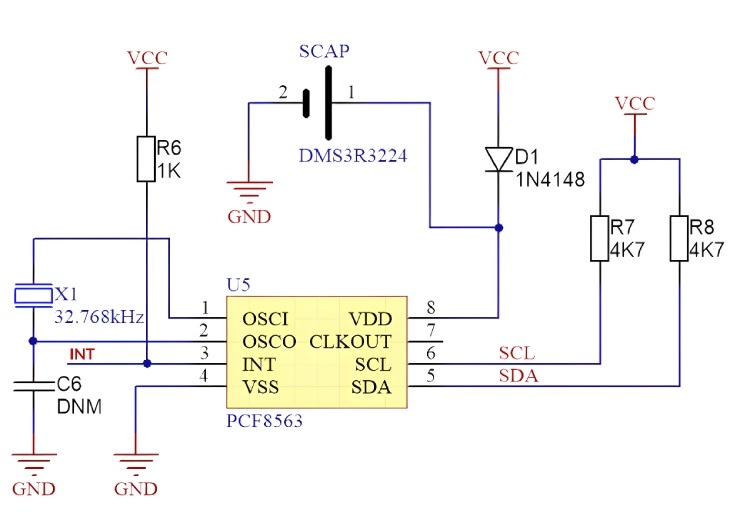
This circuit shows the basic connection of the PCF8563
PCF8563
NXP
PCF8563 NXP
In Stock: 45200 pcs
Real-Time Clock (RTC) IC. The crystal oscillator X1 (32.768 kHz), along with resistor R6 and capacitor C6, provides the accurate time base required for clock operation. The supercapacitor DMS3R3224 (SCAP), connected through diode D1 (1N4148), acts as a backup power source. When the main VCC is available, D1 allows the supercapacitor to charge. If power is lost, the supercapacitor maintains power to the RTC, ensuring time data is not lost.
The SCL and SDA pins of the PCF8563 connect to the I²C bus, allowing communication with a microcontroller. Pull-up resistors R7 and R8 (both 4.7kΩ) ensure proper logic levels on the I²C lines. The INT pin can provide an interrupt signal for alarms or timers. Overall, this circuit enables the PCF8563 to keep precise time and communicate it digitally, even during short power interruptions.
PCF8563 vs. DS3231
Real-Time clocks (RTC) are used components in electronic systems where accurate timekeeping serves as a foundation. When selecting between models such as the PCF8563
PCF8563
NXP
PCF8563 NXP
In Stock: 45200 pcs
and DS3231
DS3231
N/A
DS3231 MAXIM
In Stock: 6621 pcs
, it is helpful to consider aspects like accuracy, power consumption, and environmental adaptability. These factors can guide users in making informed decisions based on their specific context.
Accuracy and Precision
One distinctive feature of the DS3231 is its temperature-compensated crystal oscillator, which helps maintain stellar accuracy even amidst changing temperatures. This characteristic is relevant for applications that operate within variable climates. The PCF8563, which does not include temperature compensation, demonstrates dependable performance in stable conditions where extreme precision may be less of a concern. Find these observations useful when planning systems exposed to fluctuating temperatures.
A common deliberation for electronic projects is finding the harmony between display brightness and power efficiency. The DS3231 supports a voltage range of 2.3V to 5.5V, accommodating a diverse array of power sources and configurations. On the other hand, the PCF8563 is optimized for lower power environments, which can extend battery life in portable gadgets. This power-saving capability is an ijmportant asset for devices that operate remotely or on limited energy resources.
Designing with Economy and Practicability
For projects with budgetary constraints, the straightforward architecture of the PCF8563 can provide financial savings. Its lower cost, coupled with reliable performance in applications with relaxed precision requirements, makes it an appealing choice for consumer electronics. Therefore, it is well-suited for use in educational tools and introductory-level projects.
Varied Application
The DS3231’s superior accuracy and durability lend itself to industrial and commercial applications where precise timekeeping holds merit. Devices, such as automated systems, often rely on accuracy for optimal synchrony and successful operations.
The PCF8563 remains fitting for consumer electronics, where the balance between affordability and moderate precision is acceptable. It is ideal for use in devices like kitchen appliances and simple digital clocks, benefiting from its uncomplicated design while catering to environments where extreme accuracy is not a prerequisite.
Applications of the PCF8563 RTC
The PCF8563
PCF8563
NXP
PCF8563 NXP
In Stock: 45200 pcs
Real-Time Clock (RTC) finds its place in numerous electronic devices. These range from mobile phones and portable gadgets to electronic meters and battery-operated products. Its architecture, both efficient and adaptable, enables it to serve a wide array of uses, reflecting an understanding of varying human needs.
Mobile Devices
Incorporating the PCF8563 into mobile phones arises from its proficiency in maintaining time accuracy even when the device powers down. This guarantees that alarms and reminders ring true to their schedule. Users often find themselves reliant on this feature, especially during frequent restarts or battery swaps, where its seamless operation quietly reassures and complements their dynamic lifestyles.
Portable Devices and Energy Harmony
For gadgets like tablets and digital cameras, the PCF8563 supports not just timekeeping but also plays a part in energy conservation. In contexts where battery endurance influences the satisfaction, its minimal power draw is cherished for extending device usability, quietly reinforcing a smoother, more fulfilling experience.
Electronic Metering
Within electronic metering systems, accurate time stamps shape usage logging and billing cycle management. The PCF8563 delivers this precision, enhancing operational efficiency. Observations often convey how dependable timekeeping becomes a subtle yet powerful ally in streamlining utility management.
Battery-Powered Products and Resilience
In battery-powered applications, the PCF8563 sustains consistent time tracking, unaffected by power fluctuations. This enhances device reliability, as seen in GPS units or health monitoring wearables, where continuous tracking is needed. The RTC keeps accurate time even under changing conditions, providing reliable performance over time.
The PCF8563's design flexibility transcends mere technicality; it integrates smoothly across systems owing to its versatile interface and low power appetite. Its synergy with diverse device architectures offers an understanding: thoughtful design fosters extensive applicability, subtly crafting robust solutions across different landscapes.
Dimensions of the PCF8563
The PCF8563
PCF8563
NXP
PCF8563 NXP
In Stock: 45200 pcs
's design complexity is captured in a 2D CAD model, which provides details into its dimensions required for crafting custom modules and ensuring smooth PCB integration. The specific dimensional details cater to the SO8 package variant.
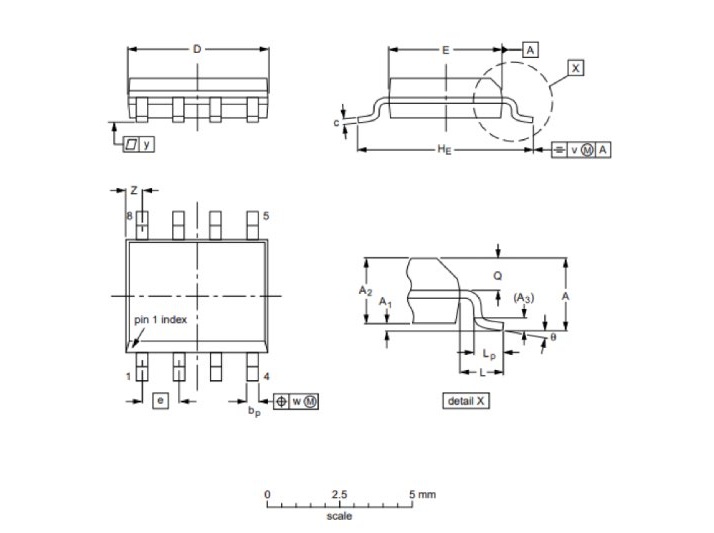
This drawing shows the 2D mechanical outline and dimensions of the PCF8563 package. It provides the physical layout used for PCB design and component placement. Each labeled measurement, such as D, E, and HE, represents the body length, width, and height of the chip, ensuring proper fitting on the board. The pin spacing (e) and lead length (L, Lp) define how the pins align with solder pads.
The pin 1 index mark helps identify the correct orientation of the IC during mounting. Detailed side views highlight the lead bend angle (θ) and standoff height (A1), which are critical for secure soldering and maintaining clearance from the PCB surface. Overall, this 2D model ensures accurate mechanical compatibility between the PCF8563 and the circuit board design.
Conclusion
Simple, efficient, and versatile, the PCF8563
PCF8563
NXP
PCF8563 NXP
In Stock: 45200 pcs
delivers dependable timekeeping for systems that don’t require extreme precision. It’s easy to integrate, energy-efficient, and works well in both consumer gadgets and embedded designs. While other RTCs like the DS3231
DS3231
N/A
DS3231 MAXIM
In Stock: 6621 pcs
offer higher accuracy, the PCF8563 remains a practical solution where cost, size, and low power draw matter most.
Datasheet PDF
PCF8563 Datasheets:
Related Blog
-
How Many Zeros in a Million, Billion, Trillion?
![How Many Zeros in a Million, Billion, Trillion?]()
July 29th, 2024
Million represents 106, an easily graspable figure when compared to everyday items or annual salaries. Billion, equivalent to 109, starts to stretch t... -
IRLZ44N MOSFET Datasheet, Circuit, Equivalent, Pinout
![IRLZ44N MOSFET Datasheet, Circuit, Equivalent, Pinout]()
August 28th, 2024
The IRLZ44N is a widely-used N-Channel Power MOSFET. Renowned for its excellent switching capabilities, it is highly suited for numerous applications,... -
Battery Temperature Too Low, Charging Stopped. How to Fix It?
![Battery Temperature Too Low, Charging Stopped. How to Fix It?]()
October 6th, 2024
Mobile phone battery charging issues are common but can be effectively managed. Temperature plays a big role in battery efficiency, as smartphone batt... -
BC547 Transistor Comprehensive Guide
![BC547 Transistor Comprehensive Guide]()
July 4th, 2024
The BC547 transistor is commonly used in a variety of electronic applications, ranging from basic signal amplifiers to complex oscillator circuits and... -
Comprehensive Guide to SCR (Silicon Controlled Rectifier)
![Comprehensive Guide to SCR (Silicon Controlled Rectifier)]()
April 22th, 2024
Silicon Controlled Rectifiers (SCR), or thyristors, play a pivotal role in power electronics technology because of their performance and reliability. ... -
LR621, SR621SW, 364, AG1 Battery Equivalents and Replacements
![LR621, SR621SW, 364, AG1 Battery Equivalents and Replacements]()
July 15th, 2024
LR621 and SR621SW button batteries are prevalent in compact electronic devices like watches, small toys, calculators, and remote keys. Multiple manufa... -
Fundamentals of Op-Amp Circuits
![Fundamentals of Op-Amp Circuits]()
December 28th, 2023
In the intricate world of electronics, a journey into its mysteries invariably leads us to a kaleidoscope of circuit components, both exquisite and co... -
Comparing NMOS and PMOS Differences and Applications
![Comparing NMOS and PMOS Differences and Applications]()
November 15th, 2024
Understanding the differences between NMOS and PMOS transistors is important in designing efficient circuits. NMOS (N-type Metal-Oxide-Semiconductor) ... -
A Complete Guide to Multiplexers and Their Role in Digital Systems
![A Complete Guide to Multiplexers and Their Role in Digital Systems]()
September 20th, 2025
Multiplexers are components in digital systems, designed to channel multiple input signals into a single output line using binary logic and control si... -
What Do STD, AGM, and Gel Mean On a Battery Charger
![What Do STD, AGM, and Gel Mean On a Battery Charger]()
July 10th, 2024
Traditional lead-acid battery chargers are known for their simplicity and reliability. They have been serving their purpose effectively for years, lar...



Hot Parts
- NLFV25T-100K-PF
- T494D685M035AT
- T495D476M020ATE100
- GQM1555C2D3R3WB01D
- T491C226M025AT4539
- SI5321-H-ZL4
- GRM1555C1E4R9CA01D
- TPSY227M010R0100
- TBJD106K035LRSB0023
- TPS2065QDGNRQ1
- OPA2137E/2K5
- CC0603JRNPO8BN821
- MAX3510AEEP
- NX-DA3603
- DRV604PWP
- AD8206YRZ-REEL7
- PE-65968T
- MC100LVELT22DTRG
- GRM0335C2A9R7CA01D
- OPA4192IDR
- MC34063ADR
- VE-JNY-CX
- DS14C238WM
- 04023A330KAT4A
- S9S08AW48CFGE
- 39-00-0077
- MC74LS04DR2
- 2MBI100NC120
- S-24C02CI-K8T3U
- NE32584C-T1
- 74HC2G04GV
- LT3970IMS-3.3#TRPBF
- P4601-11
- H8BCS0QG0ABR-46M
- UPD780076GK-632-9ET
- PALCE22V10-10JC/4
- RM5231A-400L
- SPCA702A
- KAP17SG00A-D4UD
- CL25354M
- UPD809900F1-S11-KNB
- WM8198CDS/R
- 74AC373DWM
- ADV476KP80
- GC80312SL9D4
- LC5512MV-75Q208-10I
- M36L0T7060T3ZAQE
- eetuq2g821e
- MLX90328LDC-CBA-000-RE
- CRCW040249R9FKTDBC