- English
-
EnglishDeutschItaliaFrançais한국의русскийSvenskaNederlandespañolPortuguêspolski繁体中文SuomiGaeilgeSlovenskáSlovenijaČeštinaMelayuMagyarországHrvatskaDanskromânescIndonesiaΕλλάδαБългарски езикGalegolietuviųMaoriRepublika e ShqipërisëالعربيةአማርኛAzərbaycanEesti VabariikEuskeraБеларусьLëtzebuergeschAyitiAfrikaansBosnaíslenskaCambodiaမြန်မာМонголулсМакедонскиmalaɡasʲພາສາລາວKurdîსაქართველოIsiXhosaفارسیisiZuluPilipinoසිංහලTürk diliTiếng ViệtहिंदीТоҷикӣاردوภาษาไทยO'zbekKongeriketবাংলা ভাষারChicheŵaSamoa日本語SesothoCрпскиKiswahiliУкраїнаनेपालीעִבְרִיתپښتوКыргыз тилиҚазақшаCatalàCorsaLatviešuHausaગુજરાતીಕನ್ನಡkannaḍaमराठी

The Ultimate Guide to 1.5-Volt Batteries: Chemistry, Types, and Sizes Compared
Catalog
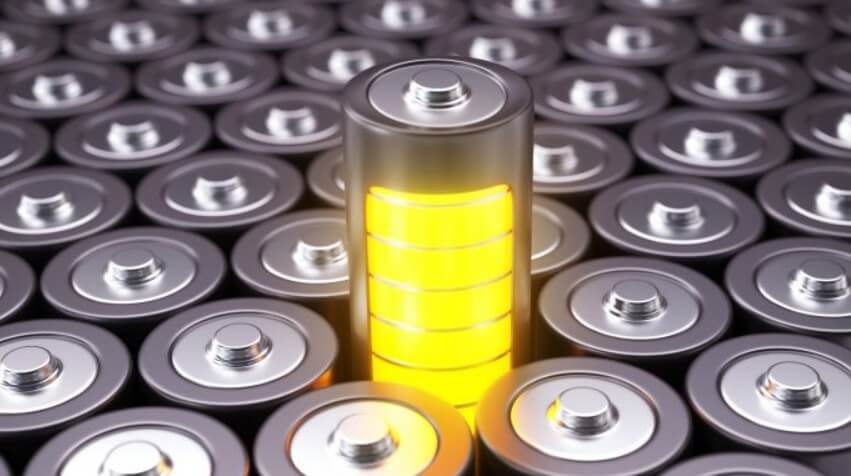
Why does the battery's chemical composition make such a difference? A more detailed analysis shows that this variation in performance is primarily due to the internal chemistry. Alkaline batteries use materials like manganese dioxide and zinc, offering a substantial energy density. On the other hand, zinc-carbon batteries are less efficient but more cost-effective. These differences cater to various use-case scenarios: high-drain devices like digital cameras benefit from alkaline batteries, while low-drain devices such as remote control units can operate efficiently with zinc-carbon batteries.
Additionally, the size and form factor of 1.5-volt batteries are designed to match the specific energy requirements of different gadgets. Button cells, for instance, are commonly used in small or portable devices where space is limited, like wristwatches and hearing aids. In contrast, larger cylindrical batteries are better suited for applications needing prolonged power delivery, such as flashlights and wireless microphones.
From a market perspective, the variety in 1.5-volt battery types not only offers consumers numerous options but also fosters innovation among manufacturers. Brands are constantly striving to enhance battery chemistry to improve life span and reduce leakage. These improvements have been pivotal in devices that are increasingly energy-efficient.
The widespread use of 1.5-volt batteries emphasizes their indispensable role in modern electronics. Their differences in chemical composition, size, and application cater to a broad spectrum of needs, highlighting their versatility in our daily lives. Continual advancements in battery technology ensure that these small, yet potent, sources of energy remain essential.
1.5V Battery Chemical Compositions
The chemical compositions of 1.5V batteries vary, each type crafted for unique applications with specific characteristics.
The table below shows the typical chemical compositions of AA 1.5V batteries:
|
Chemistry |
Common Name |
Rechargeable |
Typical Capacity (mAh) |
Voltage (V) |
|
Zinc Carbon |
R6, 15D |
No |
600 - 1600 |
1.5 |
|
Alkaline |
LR6, 15A |
No (Mostly No) |
1800 - 2700 |
1.5 |
|
Li-FeS2 |
FR6, 15LF |
No |
2700 - 3300 |
1.5 (1.8 max) |
|
Lithium |
- |
Yes |
1000-2000+ |
1.5 |
|
NiCd |
KR6, 1.2K2 |
Yes |
600 - 1200 |
1.2 |
|
NiMH |
HR6, 1.2H2 |
Yes |
700 - 2800 |
1.2 |
|
NiOOH |
- |
No |
2200 - 2700 |
1.5 (1.7 max) |
|
NiZn |
ZR6 |
Yes |
1500 - 1800 |
1.6 - 1.65 |
Zinc-carbon batteries
Zinc-carbon batteries, one of the oldest non-rechargeable types, have a nominal voltage of 1.5V and a cutoff voltage between 0.8-1.0V. They use ammonium chloride or zinc chloride as standard electrolytes.
- Inexpensive but prone to leakage
- Short shelf life and low capacity
- Early users often reported device damage due to leakage, which spurred the development of more advanced technologies
Alkaline batteries
Alkaline batteries use zinc dioxide and potassium hydroxide as electrolytes. They maintain a nominal voltage of 1.5V and have a cutoff voltage between 0.9-1.0V.
- Offer longer shelf life and higher capacity
- Devices powered by alkaline batteries last longer between replacements, making them more cost-effective over time
Silver oxide batteries
Silver oxide batteries feature a nominal voltage of 1.55V and provide a consistent discharge voltage, ideal for sensitive instruments.
- More expensive but stable in voltage output
- Valued in precision equipment like watches and medical devices
- Professionals appreciate their accuracy and reliability
Zinc-air batteries
Zinc-air batteries have a nominal voltage of 1.4-1.45V, known for their high capacity but tendency to dry out. Primarily used in hearing aids.
- High energy density is crucial
- Provide longer operational periods despite storage challenges to prevent drying
Mercury oxide batteries
Mercury oxide batteries once had a nominal voltage of 1.35V and were recognized for stable output voltage.
- Phased out due to high mercury content for environmental reasons
- Historically reliable in consumer electronics but now replaced with eco-friendly alternatives
Lithium iron disulfide batteries
Lithium iron disulfide batteries have a nominal voltage of 1.8V, offering high capacity and a shelf life of up to 20 years.
- Preferred for professional equipment requiring long-term reliability
- Used in sectors like emergency services for dependable performance in critical situations
Lithium-ion batteries
Typically, lithium-ion batteries have nominal voltages of 3.2-3.7V, but some brands offer a 1.5V version with a voltage converter.
- Versatile, adopted in a range of devices from smartphones to electric vehicles
- Highlight their high energy density and long cycle life
- Users appreciate the convenience and longevity despite higher initial cost
Nickel-cadmium (NiCd) batteries
NiCd batteries have a nominal voltage of 1.2V, supporting multiple charge-discharge cycles.
- Once popular for robustness and reliability in rugged conditions but now phased out due to the memory effect and high self-discharge rate
- Early adopters of rechargeable tech experienced frequent maintenance balancing reusability benefits
Nickel-metal hydride (NiMH) batteries
NiMH batteries also have a nominal voltage of 1.2V but offer longer cycle life and no memory effect.
- More environmentally friendly, favored in rechargeable applications
- Users note improved lifespan and fewer maintenance concerns, aligning with environmental awareness
Nickel oxyhydroxide (NiOOH) batteries
NiOOH batteries, with a maximum voltage of 1.7V, excel in high-drain devices.
- Performance under high power demands is robust
- Used in modern high-consumption gadgets, offering enhanced performance and longer service life
Nickel-zinc (NiZn) batteries
NiZn batteries have a nominal voltage of 1.6-1.65V, delivering high discharge current but requiring frequent charging due to a higher self-discharge rate.
- Considered when high power bursts are essential
- Users must tolerate frequent recharging
Examining these diverse battery chemistries reveals that each type offers distinct advantages, tailored to specific user needs and applications. This understanding can significantly influence selection processes and ensure optimal device performance.
Types and Sizes of 1.5V Batteries
1.5V batteries primarily come in two main types: button cells and cylindrical batteries.
The table below lists the features and specifications of 11.6 x 5.4 mm button/coin cell batteries (AG13, LR44, SR44, SR44W, 357):
|
Chemistry |
Alkaline |
Silver-Oxide |
Zinc Air |
Mercury-Oxide |
|
Nominal Voltage |
1.5V |
1.55V |
1.4-1.45V |
1.35V |
|
End-Point Voltage |
1.0V |
1.2V |
1.05-1.1V |
1.1V |
|
Notes |
Voltage drops over time |
Very constant voltage |
Slightly lower voltage, large capacity; mostly used as hearing aid batteries |
Slightly lower voltage, contains mercury; not in use anymore |
|
Typical Labels |
LR44, 76A, AG13, LR1154, A76, L1154 |
SR44W, SR44, SR44SW, 157, 357, 303, SG13,
AG13, S76, A76, SR1154 |
675, Blue Tab, ZA675, PR44, 7003ZD |
MR44, MR1154 |
|
Typical Capacity |
110-130 mAh |
150-200 mAh |
600-700 mAh |
180-200 mAh |
|
Amazon Link |
LR44 AG13
Battery |
SR44 357
Battery |
PR44
Battery |
No longer in use. |
Button cells, also known as coin cells, offer a compact power source for various small electronic devices, such as watches, hearing aids, and small digital devices. Have you considered why button cell sizes can vary so greatly? This diversity in size and capacity allows users to choose the most appropriate battery for their specific needs, catering to both longevity and spatial constraints.
The major size variants include:
- 6.8 x 2.1 mm (e.g., SR621, LR621)
- 6.8 x 2.6 mm (e.g., SR626, LR626)
- 7.9 x 3.6 mm (e.g., SR41, LR41, 312, ZA312)
- 11.6 x 3.1 mm (e.g., SR1130, LR1130)
- 11.6 x 5.4 mm (e.g., SR44, LR44, 675, ZA675)
Why does the performance and usability of such small batteries hold such significance? Their size and stability make them crucial for devices where space is limited but a stable voltage is crucial.
Cylindrical batteries, shaped like small cylinders, are commonly used in household gadgets like remote controls, flashlights, and toys. These batteries exemplify how standardization assists in device compatibility, providing both convenience and reliability.
The common sizes are:
- 8.3 x 42.5 mm (e.g., AAAA, LR8D425)
- 10.5 x 44.5 mm (e.g., AAA, LR03)
- 14.5 x 50.5 mm (e.g., AA, LR6)
- 26.2 x 50.0 mm (e.g., C, LR14)
- 34.2 x 61.5 mm (e.g., D, LR20)
Why are AA and AAA batteries so ubiquitous in household applications? Their balance of size and energy capacity provides a practical energy solution for devices requiring moderate energy output.
Exploring user experience reveals that the performance of 1.5V batteries also heavily depends on the chemical composition. Alkaline batteries are recognized for their cost-effectiveness and longer shelf life, making them suitable for medium to high-drain devices. In contrast, lithium 1.5V batteries, though more expensive, offer superior performance in extreme temperatures and are lighter, a significant advantage for portable devices.
Considering the practical applications and advancements in battery technology, it’s apparent that the evolution caters to increasing demands for efficiency, miniaturization, and environmental sustainability. This demands a careful choice in the type and size of a 1.5V battery to significantly enhance the performance and reliability of the powered devices. What drives the continuous need for innovation in battery technology? Ultimately, it’s the push towards improved efficiency and sustainability.
Common Questions and Answers
Are 1.5V batteries and AA the same?
An intricate question. The answer is no; 1.5V batteries come in various sizes and chemical compositions. AA batteries, with a steady voltage of 1.5V, can be manufactured using different chemistries such as zinc-carbon or alkaline. Strangely, the voltage range of AA batteries can vary from 1.2V to 3.7V depending on their type and usage. This variance poses an interesting dilemma for their practical application. AA batteries are standard for many household devices, providing reliable and consistent power that can be easily replaced. Think about remote controls and clocks—these heavily utilize AA batteries due to their balance between size and capacity. This usage highlights how human needs drive technological solutions.
What is a 1.5V battery called?
1.5V batteries are identified by various names and sizes, including AA, AAA, C, and D, all underscored by their specific chemical formulations and dimensions. Practical experience reveals the importance of identifying the correct battery type to ensure compatibility and optimal performance of electronic devices. Can you imagine using a battery with the wrong specification? It could degrade device performance or even lead to damage, underlining the significance of accuracy.
Is a 1.5V battery the same as a C battery?
C batteries generally exhibit a nominal voltage of 1.5V and are typically produced as alkaline or zinc-carbon types. But is that all? These batteries can also be manufactured with other chemical compositions resulting in different voltages. Their repeated use in larger devices like flashlights or toys is a testament to their substantial capacity and durability. Grasping a device's power requirements is crucial for selecting the appropriate battery, a choice that can maximize efficiency and extend the device's longevity, reflecting a nuanced understanding of energy management.
Is a 1.5V battery AA or AAA?
This query requires careful consideration. Both AA and AAA batteries possess a nominal voltage of 1.5V, though actual voltages may range from 1.2V to 3.7V based on their chemistry and load conditions. AA batteries, being larger, provide longer-lasting power suitable for devices with higher consumption rates like digital cameras. On the other hand, AAA batteries are ideal for compact, low-drain devices such as remote controls and wireless mice. This distinction emphasizes the different design philosophies behind these ubiquitous batteries.
Are all Triple A batteries 1.5 volts?
Curiously, not all AAA batteries have a nominal voltage of 1.5V. While it is the most common, AAA batteries are found in various chemistries offering differing voltages. Users should carefully consider their specific device requirements and the battery's labeled voltage to ensure proper functionality. Misusing batteries with incorrect voltage can compromise both safety and device performance. This scenario highlights the necessity of vigilance in even the simplest tasks.
How do you know if a battery is AA or AAA?
Differentiation between AA and AAA batteries can be achieved by inspecting the label on the battery or measuring its physical dimensions. AA batteries typically measure 14.5 x 50.5 millimeters, while AAA batteries measure 10.5 x 44.5 millimeters. This size distinction correlates with their capacity and application. Recognizing these differences allows users to choose the most appropriate battery, ensuring devices run efficiently and reducing the frequency of battery replacements. This knowledge is not merely practical; it reflects a deeper understanding of how we interact with the tools that power our daily lives.
Final Thoughts
Modern batteries are now more environmentally friendly and mercury-free. However, the process of proper disposal remains a significant aspect that requires attention. The ubiquitous application of 1.5V batteries across various devices highlights the necessity of using batteries that match both in size and composition. This ensures the equipment's proper functioning and avoids potential damage.
Why is proper disposal even more pressing despite the advancements in battery technology? Although mercury has been eliminated, modern batteries still contain metals and chemicals that pose environmental risks if not handled correctly. Recycling batteries serves dual purposes: it reduces environmental harm and recovers valuable materials for reuse. This represents a commendable move toward resource sustainability.
In numerous nations, battery recycling programs have been established, facilitating consumer involvement in protecting the environment. Educational campaigns have played a critical role in elevating public awareness and increasing participation rates in these programs.
1.5V batteries are commonly used in:
- Digital cameras
- Portable game consoles
Ensuring compatibility in terms of size and composition is vital for device functionality and longevity. For instance, mismatched batteries can lead to leakage, which might damage the device. This problem is particularly frequent in high-drain devices such as digital cameras and portable game consoles, where any discrepancy in battery performance can cause malfunctions.
Reflecting on these practical aspects fosters responsible battery use and disposal, promoting a sustainable interaction with technology. Adopting mindful practices in this area not only preserves the functionality of our devices but also aligns with broader environmental goals.
Related Blog
-
How Many Zeros in a Million, Billion, Trillion?
![How Many Zeros in a Million, Billion, Trillion?]()
July 29th, 2024
Million represents 106, an easily graspable figure when compared to everyday items or annual salaries. Billion, equivalent to 109, starts to stretch t... -
IRLZ44N MOSFET Datasheet, Circuit, Equivalent, Pinout
![IRLZ44N MOSFET Datasheet, Circuit, Equivalent, Pinout]()
August 28th, 2024
The IRLZ44N is a widely-used N-Channel Power MOSFET. Renowned for its excellent switching capabilities, it is highly suited for numerous applications,... -
Battery Temperature Too Low, Charging Stopped. How to Fix It?
![Battery Temperature Too Low, Charging Stopped. How to Fix It?]()
October 6th, 2024
Mobile phone battery charging issues are common but can be effectively managed. Temperature plays a big role in battery efficiency, as smartphone batt... -
BC547 Transistor Comprehensive Guide
![BC547 Transistor Comprehensive Guide]()
July 4th, 2024
The BC547 transistor is commonly used in a variety of electronic applications, ranging from basic signal amplifiers to complex oscillator circuits and... -
Comprehensive Guide to SCR (Silicon Controlled Rectifier)
![Comprehensive Guide to SCR (Silicon Controlled Rectifier)]()
April 22th, 2024
Silicon Controlled Rectifiers (SCR), or thyristors, play a pivotal role in power electronics technology because of their performance and reliability. ... -
LR621, SR621SW, 364, AG1 Battery Equivalents and Replacements
![LR621, SR621SW, 364, AG1 Battery Equivalents and Replacements]()
July 15th, 2024
LR621 and SR621SW button batteries are prevalent in compact electronic devices like watches, small toys, calculators, and remote keys. Multiple manufa... -
Fundamentals of Op-Amp Circuits
![Fundamentals of Op-Amp Circuits]()
December 28th, 2023
In the intricate world of electronics, a journey into its mysteries invariably leads us to a kaleidoscope of circuit components, both exquisite and co... -
Comparing NMOS and PMOS Differences and Applications
![Comparing NMOS and PMOS Differences and Applications]()
November 15th, 2024
Understanding the differences between NMOS and PMOS transistors is important in designing efficient circuits. NMOS (N-type Metal-Oxide-Semiconductor) ... -
A Complete Guide to Multiplexers and Their Role in Digital Systems
![A Complete Guide to Multiplexers and Their Role in Digital Systems]()
September 20th, 2025
Multiplexers are components in digital systems, designed to channel multiple input signals into a single output line using binary logic and control si... -
What Do STD, AGM, and Gel Mean On a Battery Charger
![What Do STD, AGM, and Gel Mean On a Battery Charger]()
July 10th, 2024
Traditional lead-acid battery chargers are known for their simplicity and reliability. They have been serving their purpose effectively for years, lar...



Hot Parts
- C3225X7R1H225M200AE
- SI1024-B-GM
- TPS25200QDRVRQ1
- QM2423N1
- AM188ER-40KC
- 91CU27UG-6KN6
- HDRFW-13
- TMS470PV349BBPZIRQ1
- ATMEGA169V-8AU
- BH6115FV-E2
- CC1210KKX7R0BB103
- L6385D013TR
- VJ0805D561KXBAJ
- 1MBI50U4F-120L-50
- IRU3038CS
- ADN8834ACBZ-R7
- FSA2367MTCX
- HD153060RF
- 08051U180JAT2A
- C1005JB1C155M050BC
- C0603C104K5RACAUTO
- IRS2181SPBF
- SE756M-LF
- MT29F8G08ABABAWP-AITX:B
- LT1244CS8
- OPA4322AIPW
- TAJA475K020H
- MAX8215MJD
- AD8602DRM-REEL
- 06031A1R2DAT2A
- AD9833BRM
- NJM3774FM2
- 12107C102KAT9A
- R1LV0408DSP-5SR#B0
- 1670326-1
- EP3SL340H1152I3N
- MT41K2G4RKB-107:N
- ROL-0515S
- TBJD226K025LBSB0024
- SC643AYB
- FDMS9409
- LE25FU206MA-TLM
- SC1541CM-1.8
- RTD2797-CG
- TMPR461XBG-300
- PMB9943.P10
- TMPM32EC1EFG
- 71V546S100PF
- ATMXTNOKIS-CCU-K
- VI-J60-CX/F4