- English
-
EnglishDeutschItaliaFrançais한국의русскийSvenskaNederlandespañolPortuguêspolski繁体中文SuomiGaeilgeSlovenskáSlovenijaČeštinaMelayuMagyarországHrvatskaDanskromânescIndonesiaΕλλάδαБългарски езикGalegolietuviųMaoriRepublika e ShqipërisëالعربيةአማርኛAzərbaycanEesti VabariikEuskeraБеларусьLëtzebuergeschAyitiAfrikaansBosnaíslenskaCambodiaမြန်မာМонголулсМакедонскиmalaɡasʲພາສາລາວKurdîსაქართველოIsiXhosaفارسیisiZuluPilipinoසිංහලTürk diliTiếng ViệtहिंदीТоҷикӣاردوภาษาไทยO'zbekKongeriketবাংলা ভাষারChicheŵaSamoa日本語SesothoCрпскиKiswahiliУкраїнаनेपालीעִבְרִיתپښتوКыргыз тилиҚазақшаCatalàCorsaLatviešuHausaગુજરાતીಕನ್ನಡkannaḍaमराठी

Peak Detectors Explained, Working Principles, Types, and Practical Design
Catalog
Overview of Peak Detectors
Peak detectors serve as essential circuits used to pinpoint the highest points in a waveform, skillfully detecting both the crest and trough of a signal. These circuits excel in capturing the peak level within a set time period, especially when operational amplifiers (op-amps) are at play. Their role becomes apparent in applications demanding precise measurements of peak signals, thereby aiding the interpretation and understanding of diverse electrical signals across a range of engineering disciplines.
At its core, a peak detector leverages op-amps to maintain the peak voltage achieved by an incoming signal. The accuracy with which these circuits secure and preserve the peak is vital since holding onto this peak value until it is exceeded forms a fundamental aspect of many detection tasks. In hands-on applications, adjust circuit settings to ensure the peak detector's responsiveness matches the traits of the signal, thereby boosting dependability and performance.
The use of peak detectors spans various sectors, including audio signal processing and communications. For example, in audio technology, peak detectors are integral to compressors, which moderate the dynamic range of audio signals, promoting a uniform signal output. This assists in preserving sound quality and safeguards speaker systems from damage. With thoughtfully constructed peak detectors, experts ensure that devices function both efficiently and dependably, showcasing the pivotal function these circuits fulfill in cutting-edge electronics.
While the fundamental purpose of a peak detector is uncomplicated, its deployment in the real world often involves complications. Fluctuations in temperature and frequency may impact the effectiveness of peak detection, prompting the need for innovations in circuit design to counter potential discrepancies. Ongoing research explores advanced materials and design approaches to improve peak detector durability, supporting accurate and stable operation under varying conditions. These efforts reflect the continued development required to meet the complex demands of modern electronic systems.
Operational of Peak Detector Circuits
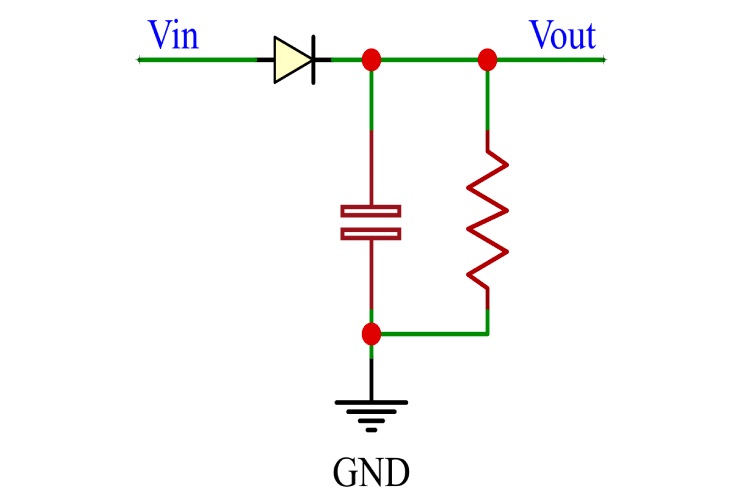
The essence of a peak detector circuit lies in its fundamental elements such as diodes, resistors, and capacitors. Initially, the circuit encounters an oscillating input signal. During the charging phase, a diode channels this signal to energize a capacitor through a resistor, enabling it to swiftly respond to changes in signal amplitude. When the signal attains its peak voltage, the capacitor preserves this peak, safeguarding it from subsequent fluctuations. This preserved voltage, representing the detected peak, forms the circuit’s output and serves as a foundation for further exploration or application.
Boosting the circuit's efficiency involves thoughtful selection and strategic arrangement of components. Choosing diodes with low forward voltage drop ensures precision in peak tracking. Similarly, fine-tuning the resistor's value governs the charging duration, impacting the response speed and accuracy of peak detection. The capacitor’s value determines how long the peak is sustained, necessitating selection aligned with the desired hold duration. In practice, adapting these elements to meet particular application demands can substantially improve performance, as seen in fields like audio processing systems or RF signal analysis where accuracy is pursued with vigor.
Understanding operating conditions is essential for reliable circuit behavior. Temperature changes can affect component performance, so the use of temperature-stable components supports consistent and dependable operation. Additionally, employing feedback techniques or auxiliary filters can mitigate noise and stabilize the voltage output. Reflecting on previous projects, one might recommend using simulation software to envision circuit performance across diverse scenarios, offering foresight into potential obstacles before actual hardware creation. Furthermore, iterative testing and progressive refinement of the prototype can uncover enhancements not immediately visible in early design stages.
Variants and Applications of Peak Detectors
In the field of signal processing, peak detectors quietly capture the essence of waveform extremities, drawing out the hidden peaks that reveal much about a system's behavior. Their categorization hinges on the specific peaks they are adept at isolating:
Positive Peak Detector
A positive peak detector is an intricate solution that identifies the pinnacle of positivity in a waveform. Depending on its sophisticated purpose, it may employ a straightforward diode-capacitor setup or more elaborate circuitry. In applications, these detectors find resonance in audio signal processing. Here, they unveil the amplitude of entering sound waves, crafting a foundation for rich acoustic experiences that echo emotional depths.
Negative Peak Detector
On the flip side, a negative peak detector dives into the depths, bringing to light the nadir of negativity in a waveform. This focus is valued in scenarios where detecting subzero anomalies or troughs safeguards against potential malfunctions, such as monitoring the ebb and flow of alternating currents to stave off systemic disruptions. This nuanced function fortifies the endurance of systems exposed to variable electrical demands.
Peak-to-Peak Detector
Embodying a holistic approach, peak-to-peak detectors embrace both the zenith and the abyss of a signal's range. They are cherished in telecommunications, where they ensure signal authenticity and facilitate evaluative processes. These detectors reveal signal amplitude clearly, allowing accurate interpretation of signal behavior and variation.
The practical utility of these detectors weaves through diverse sectors such as audio engineering, power regulation, and communication technologies. Their silent vigilance over signal extremes subtly influences the coherence and robustness of entire systems. Take audio engineering, for instance, where harmonizing peaks shapes sonorous fidelity and staves off dissonance. These detectors, although born of technology, uphold vital roles across the tapestry of modern innovation.
Contemplating the essence of peak detectors, it becomes apparent that their trajectory is intertwined with the evolution of technology. The infusion of adaptive algorithms and artificial intelligence into peak detection circuits unveils a captivating horizon. Such progress suggests a future where detectors grow in precision and self-sufficiency, seamlessly adapting to the pulse of dynamic conditions. This glimpse into the unknown, though speculative, highlights the ever-unfolding path of peak detection technology as it entangles with the intricacies of contemporary systems.
Operational Modes of Peak Detectors
Real-Time Mode
In real-time mode, peak detectors provide a swift reaction to shifting signal levels, an asset for contexts requiring quick and precise data management. This mode functions by perpetually watching input signals, capturing changes with no postponement. The immediacy inherent in real-time systems finds favor in dynamic settings where delays might undermine system performance, including audio processing or rapid data capture. Insights from experience underscore the importance of finely tuning the balance between speed and resource use, occasionally mandating sophisticated signal processing hardware to handle the intense information stream effectively. For example, meticulously crafting robust hardware design can alleviate the risk of system overload, thus boosting efficacy.
Sampled Mode
In contrast, sampled mode captures input signals at distinct intervals, cutting down power consumption and allowing for structured data examination. This periodic sampling shines in scenarios where instantaneous processing is secondary to resource preservation. Thanks to its reduced power demand, sampled mode finds application in domains like environmental monitoring or remote data collection, where durability and power economy take precedence over swift response. While sampled mode may introduce slight response delays, it makes room for more advanced computation and data management methodologies during analysis phases. This proves beneficial when meticulous data post-processing is necessary. Weighing task frequency against power thresholds is essential to maximize the advantages of sampled mode systems without sacrificing the accuracy of peak detection.
Constructing Peak Detector Circuit
At the heart of a basic peak detector circuit lie diodes, resistors, and capacitors. Working in unison, these components form the backbone of the initial design. When a positive phase of an input signal appears, the diode conducts, permitting the capacitor to charge up to the peak voltage. This traditional configuration, although practical, presents challenges in response speed and precision that may affect performance.
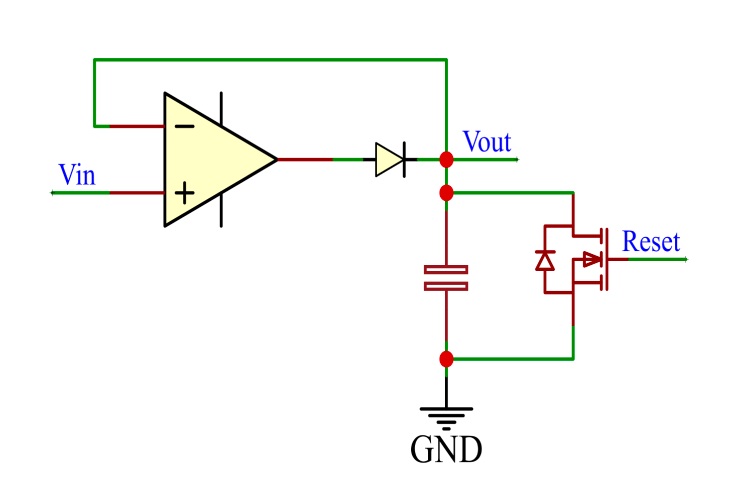
Improving upon this foundational setup involves the introduction of an operational amplifier (op-amp). The inclusion of an op-amp brings substantial gains in both detection accuracy and speed, effectively overcoming the drawbacks of simpler designs. Acting as a buffer, the op-amp prevents output voltage from impacting the rest of the circuit, ensuring stability during operation. Additionally, it plays a vital role in preserving the voltage level until a higher peak necessitates adjustment.
An op-amp's incorporation into the circuit ensures that the capacitor remains unaffected by external load impacts, thus more reliably holding the peak voltage. This feature is especially useful in applications that require long-term accuracy in peak voltage retention. Stable behavior is important in audio and signal processing systems, where maintaining signal integrity helps preserve sound quality and measurement accuracy.
In applications, a harmonious combination of diodes, capacitors, and op-amps in a peak detector circuit finds utility across various electronics sectors. During the design phase, focus on factors like the diode’s forward voltage drop and the op-amp’s slew rate and bandwidth to fine-tune performance. Thoughtful component selection, tailored to real environmental conditions, facilitates reliable and precise peak detection, even amid varying external influences.
In advancing peak detector circuit design, it is crucial to align component choices with specific application demands. Selecting a diode with minimal forward voltage ensures the circuit accurately captures smaller peaks. The capacitor must exhibit low leakage current to effectively maintain voltage levels. Furthermore, selecting an op-amp with a high slew rate and ample bandwidth prepares the circuit to adeptly handle rapid signal fluctuations typical in fast electronic environments.
Resetting Mechanisms for Peak Detectors
For peak detectors to perform over long durations without a hitch, resetting mechanisms play an integral role. Typically, this involves a process where the capacitor is discharged, often with the help of a switch or a MOSFET. This step isn't just a mere routine; it renews the capacitor, paving the way for the circuit to embark on a new detection phase. Implementing a reset command is usually achieved through electronic control systems, emphasizing precision's role in automated settings.
Resetting the capacitor transcends the simplicity of beginning anew; it upholds the detection system's precision and trustworthiness. Correctly identifying peaks is critical to averting misinterpretations of data, especially in sectors like telecommunications and audio engineering that are heavily dependent on signal processing. These systems are methodically designed to reset at intervals, counteracting any drift or noise that builds up over time, thus preserving the fidelity of measurements.
The decision to employ a MOSFET or a straightforward manual switch for resetting hinges on the particular application's characteristics and the user's preferences. Automated MOSFET resets offer significant benefits to electronic systems, especially in contexts where swift and frequent calibrations are necessary. Conversely, manual switches provide uncomplicated and economical options in settings where sophisticated controls aren't mandatory, showcasing the flexibility of resetting mechanisms in accommodating diverse technological and economic landscapes.
Several factors shape the choice of resetting method, including usage frequency, the nature of the operational environment, and the complexity of the system. High-frequency applications that demand minimal human involvement might benefit from an automated MOSFET reset, thereby boosting operational efficacy. On the other hand, manual switches find their place in systems subjected to financial limitations or where human supervision is an essential component of the operation.
Peak Detector Waveforms
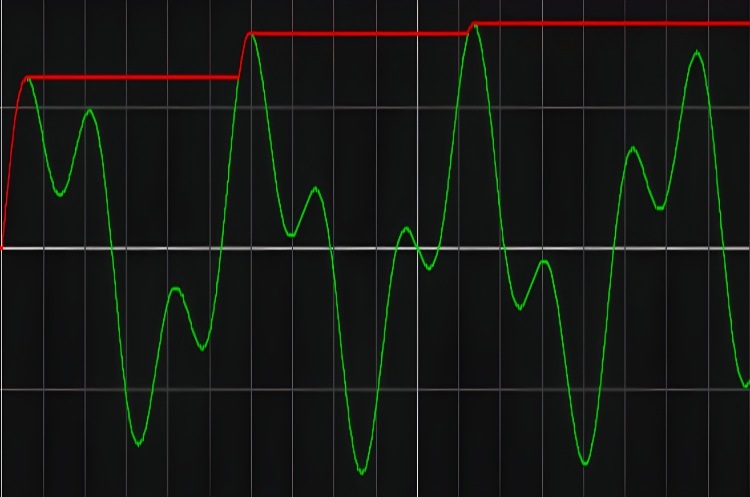
The interplay between input and output waveforms in a peak detector unveils key characteristics that aid in grasping its functionality. During periods when the signal reaches high points, the output waveform remains stable, ascending only when a fresh, higher peak is observed. Such a feature ensures dependable performance and seamless operation of peak detectors in environments where signals constantly shift.
The main role of a peak detector is to hold onto the peak value of an input signal, faithfully responding to dynamic changes. Applications benefiting from this include audio manipulation, telemetry solutions, and radio signal modulation. By retaining peak values, these detectors accurately reflect the signal's strength and variability, offering valuable data for subsequent processes and assessments.
When crafting peak detectors, consideration of elements like response speed, recovery ability, and noise handling becomes essential. Rapid response speeds facilitate swift adaptation to evolving input signals, while effective recovery enhances system readiness for new peaks. Noise management is instrumental in sustaining peak detection accuracy, necessitating strategic component choices and thoughtful circuit planning.
Insights gained from experience significantly influence the refinement of peak detector systems. An example would be tweaking the hold capacitor's time constant to strike a balance between rapid responsiveness and resistance to noise. Additionally, empirical adjustments of component values frequently lead to enhanced system stability. These design adjustments, informed by human insight, contribute to reinforcing the system's reliability.
Integrated Circuit (IC) Solutions for Peak Detection
Within the expansive landscape of electronic signal processing, specialized peak detector integrated circuits (ICs) have emerged as formidable tools across a multitude of applications. Devices like Analog Devices' PKD01 epitomize streamlined solutions designed for capturing the pinnacle of incoming signals. When these ICs are embedded within systems, engineers experience a notable increase in system efficiency and reliability, used to ensure consistent performance in a wide range of sectors.
Specialized peak detector ICs excel in delivering accurate measurements of peak values while requiring minimal external components, simplifying circuit design. This reduction in complexity also decreases the system's overall footprint and the likelihood of errors. The consistent performance offered by these ICs is sought after in scenarios demanding precision, such as communication systems and instrumentation devices.
Integration of peak detector ICs requires careful attention to bandwidth, response time, and power use. Selection is guided by how closely device characteristics match application requirements. The PKD01 supports a wide operating range, making it suitable for conditions with large signal variation. Effective performance optimization depends on balancing response speed with measurement accuracy.
The adaptable nature of peak detector ICs propels their application into domains beyond traditional electronics. In the medical diagnostics arena, these ICs are used in the monitoring of physiological signals. Similarly, within industrial automation, they enable real-time analysis of machinery vibrations, supporting predictive maintenance technologies. As peak detector ICs stand at the cutting edge of technological progress, they continue to adapt and offer new functionalities, catering to the dynamically evolving demands of contemporary technology.
Applications of Peak Detectors
Peak detectors find their place across a broad range of applications, each adding its own layer of complexity and richness to their use cases:
Audio Processing
In the field of audio engineering, peak detectors are harnessed to preserve the purity of sound by accurately capturing audio peaks. This action protects against distortion and maintains the authenticity of music and audio recordings. These tools support precise control over volume balance and sound clarity in both live performance and studio recording environments, helping achieve clean and accurate audio output.
RF Communication
In RF communication systems, peak detectors track the peaks of signal envelopes, aiding in the smooth transmission of signals. By keeping a vigilant eye on signal amplitude variations, they help in minimizing transmission errors and bolstering the reliability of communications. This function proves advantageous in intricate network systems where signal clarity stands as a primary concern.
Radar Systems
In cutting-edge radar technologies, peak detectors enhance data extraction and fine-tune the precision of target detection. They extract meaningful information from background noise, boosting the system's response time and precision. This level of refinement stems from exhaustive field testing and ongoing adjustments, forming a cornerstone in the development of radar systems capable of operating in challenging settings.
Medical Instruments
Within the context of medical diagnostics, peak detectors play a role in unraveling physiological signals, detecting unusual patterns in data including ECG and EEG readings. These detectors assist in identifying anomalies, which facilitates early diagnosis and timely intervention. These devices provide clear and accurate information that supports clinical decision-making, improving treatment results and maintaining patient safety.
Conclusion
Peak detector performance depends on how well the circuit tracks fast changes, holds the peak without drifting, and resets cleanly for the next measurement cycle. By choosing the right parts, diode, capacitor, and op-amp specs, and tuning the charge and hold behavior, you can build a detector that stays accurate under real conditions like temperature shifts and noisy signals. When space or repeatable accuracy matters, dedicated peak detector ICs can simplify design while keeping response time and bandwidth under control. Across audio systems, RF links, radar, and medical instruments, peak detectors remain a practical way to turn waveform extremes into stable values you can measure, process, and trust.
Related Blog
-
How Many Zeros in a Million, Billion, Trillion?
![How Many Zeros in a Million, Billion, Trillion?]()
July 29th, 2024
Million represents 106, an easily graspable figure when compared to everyday items or annual salaries. Billion, equivalent to 109, starts to stretch t... -
IRLZ44N MOSFET Datasheet, Circuit, Equivalent, Pinout
![IRLZ44N MOSFET Datasheet, Circuit, Equivalent, Pinout]()
August 28th, 2024
The IRLZ44N is a widely-used N-Channel Power MOSFET. Renowned for its excellent switching capabilities, it is highly suited for numerous applications,... -
Battery Temperature Too Low, Charging Stopped. How to Fix It?
![Battery Temperature Too Low, Charging Stopped. How to Fix It?]()
October 6th, 2024
Mobile phone battery charging issues are common but can be effectively managed. Temperature plays a big role in battery efficiency, as smartphone batt... -
BC547 Transistor Comprehensive Guide
![BC547 Transistor Comprehensive Guide]()
July 4th, 2024
The BC547 transistor is commonly used in a variety of electronic applications, ranging from basic signal amplifiers to complex oscillator circuits and... -
Comprehensive Guide to SCR (Silicon Controlled Rectifier)
![Comprehensive Guide to SCR (Silicon Controlled Rectifier)]()
April 22th, 2024
Silicon Controlled Rectifiers (SCR), or thyristors, play a pivotal role in power electronics technology because of their performance and reliability. ... -
LR621, SR621SW, 364, AG1 Battery Equivalents and Replacements
![LR621, SR621SW, 364, AG1 Battery Equivalents and Replacements]()
July 15th, 2024
LR621 and SR621SW button batteries are prevalent in compact electronic devices like watches, small toys, calculators, and remote keys. Multiple manufa... -
Fundamentals of Op-Amp Circuits
![Fundamentals of Op-Amp Circuits]()
December 28th, 2023
In the intricate world of electronics, a journey into its mysteries invariably leads us to a kaleidoscope of circuit components, both exquisite and co... -
Comparing NMOS and PMOS Differences and Applications
![Comparing NMOS and PMOS Differences and Applications]()
November 15th, 2024
Understanding the differences between NMOS and PMOS transistors is important in designing efficient circuits. NMOS (N-type Metal-Oxide-Semiconductor) ... -
A Complete Guide to Multiplexers and Their Role in Digital Systems
![A Complete Guide to Multiplexers and Their Role in Digital Systems]()
September 20th, 2025
Multiplexers are components in digital systems, designed to channel multiple input signals into a single output line using binary logic and control si... -
What Do STD, AGM, and Gel Mean On a Battery Charger
![What Do STD, AGM, and Gel Mean On a Battery Charger]()
July 10th, 2024
Traditional lead-acid battery chargers are known for their simplicity and reliability. They have been serving their purpose effectively for years, lar...



Hot Parts
- GCM033R71E221KA03D
- EPM7512BFC256-7
- S29AL008D90BFI02
- XCS20-3TQG144C
- 04025A8R2JAT2A
- LM2592HVT-ADJ/NOPB
- S524AD0XF1-RC70
- T495X477K006ATE030
- AL8807AMP-13
- ADG5234BRUZ-RL7
- HYB18TC512160B2F-3S
- TC4021BFN
- TPS259241DRCT
- ADM1031ARQ
- IXYN100N65A3
- MT48LC4M32B2P-7
- EPF6016AFC256-3
- XC95216-10PQ160I
- SiL154CT64
- UHE1H121MPD
- HD64F3068F25V
- ADM3491ARZ-REEL
- TPS9125PWR
- GCM1555C1H5R7DA16D
- TC74VHC161FS
- C4520JB3D102K130KA
- K7B403625B-QC75
- VSC7127TQM
- K4S561632E-UC75
- FFA60UA60DN
- STF33N60M2
- ISL32435EIBZ
- TLE7238GS
- CMF2012F-181M-2P-T
- EP20K400EFC672-2X
- HA17324AFEL-E
- EHD013111MA-60
- 1MBI300U4-120-03
- RT9715AGF
- K4B2G1646B-HCK0
- GRM1555C1H5R0BZ01D
- STD140N6F7
- PCM1793DBR
- SP6648EU
- SML-D12V8WT86C
- T491A104M035AT4380
- SDIN8DE1-8G
- 6MBP150RTM060
- LT1249CS8
- EEEFK1A102P