- English
-
EnglishDeutschItaliaFrançais한국의русскийSvenskaNederlandespañolPortuguêspolski繁体中文SuomiGaeilgeSlovenskáSlovenijaČeštinaMelayuMagyarországHrvatskaDanskromânescIndonesiaΕλλάδαБългарски езикGalegolietuviųMaoriRepublika e ShqipërisëالعربيةአማርኛAzərbaycanEesti VabariikEuskeraБеларусьLëtzebuergeschAyitiAfrikaansBosnaíslenskaCambodiaမြန်မာМонголулсМакедонскиmalaɡasʲພາສາລາວKurdîსაქართველოIsiXhosaفارسیisiZuluPilipinoසිංහලTürk diliTiếng ViệtहिंदीТоҷикӣاردوภาษาไทยO'zbekKongeriketবাংলা ভাষারChicheŵaSamoa日本語SesothoCрпскиKiswahiliУкраїнаनेपालीעִבְרִיתپښتوКыргыз тилиҚазақшаCatalàCorsaLatviešuHausaગુજરાતીಕನ್ನಡkannaḍaमराठी

Exploring the Difference of Fuse Resistor and a Fuse
Catalog

Fuse Resistors Overview
Fuse resistors work like ordinary resistors under normal conditions, guiding current flow in circuits, but they are designed to act as a fail-safe during overloads or faults. When power exceeds safe limits, they quickly open the circuit to protect sensitive components from damage. Some types are non-repairable, permanently breaking the circuit after a fault, while others are repairable and can restore function once the issue is resolved. Their use improves durability, safety, and reliability in electronic systems, making them valuable in both everyday and industrial applications. Careful selection based on circuit requirements and possible fault conditions ensures effective protection. By combining simplicity with protection, fuse resistors remain a key component in modern electronic designs.Functional Behavior of Fuse Resistors
Fuse resistors fulfill reliable roles in power circuits, acting as dual agents, both as guardians and standard resistors. Their presence is frequent in power outputs and secondary power supply outlets. These components stand out due to their minimal resistance values and moderate power ratings, often ranging from a few ohms up to 1W. This particular design enables them to effectively disrupt a circuit during overcurrent occurrences, thus shielding delicate components. During overcurrent events, the swift climb in temperature triggers the melting and breaking of the resistor's resistance layer, interrupting the current flow and averting additional damage.
Fuse resistors extend a dependable form of protection, ideal in safeguarding electronic devices. Their swift response to heightened currents reduces potential hazards in power circuits. Commonplace scenarios reveal that these resistors endure normal fluctuations in current, yet spring into action once predefined thresholds are exceeded. This dual-functionality shows their role in circuit design, where the assurance of operational stability takes precedence.
Professionals in electronic equipment design and maintenance frequently consider fuse resistors' adaptability and effectiveness in bolstering device reliability. Practical applications highlight their capability to minimize downtime and shield vital components from temporary overcurrents. Seasoned engineers acknowledge that selecting fuse resistors with care amplifies circuit durability, with industry standards backing the emphasis on both functionality and protective measures.
Fuse resistors are vital to contemporary electronic systems, symbolizing the blend of performance with protective features. Their tactical placement in circuits exemplifies a forward-thinking approach to defending devices from unexpected electrical disturbances. Specialists in the field regard these resistors not just as straightforward protective measures but as key elements in advanced circuit frameworks.
Identifying Fuse Resistors
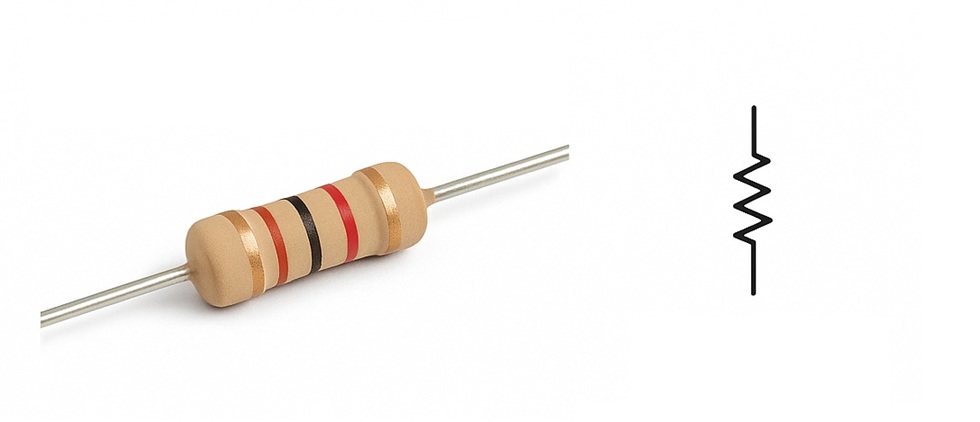
Fuse resistors serve as protectors within electronic circuits, ensuring stability and safety. In circuit diagrams, they are depicted through distinct symbols and notations, which may vary depending on regional conventions or manufacturer guidelines. Recognizing fuse resistors involves familiarizing oneself with their distinct features, such as unique markings that set them apart from other components. These resistors are predominantly situated in circuits that experience high current levels or, less commonly, variable voltages, functioning both as current protectors and standard resistors.
Common Characteristics
The identity of fuse resistors is often marked by specific color rings, indicating their resistance values. This simple visual method is widely adopted, mitigating potential identification errors during practical use. Their deliberate positioning away from Printed Circuit Board (PCB) surfaces enhances efficient heat dispersion, thus safeguarding nearby components and the board from thermal harm. These design strategies emphasize the significance of effective thermal management and strategic placement in ensuring circuit dependability under operational stress.
Identification Techniques
Identifying fuse resistors involves more than reading color codes or labels. It includes understanding their role in the circuit and how they affect performance. With experience and repeated analysis of similar designs, identification becomes more accurate, showing the value of practical knowledge in working with circuit layouts.
Successful integration and upkeep of fuse resistors depend on their effective placement in circuit areas prone to fluctuations or surges. This foresighted approach aligns with planning and is reflected in practical implementations, where proactive steps maintain circuit integrity. Interestingly, the placement of fuse resistors involves strategic considerations beyond mere convenience, aiming to enhance longevity while preserving essential functionalities.
Varieties of Fuse Resistors Explored
Fuse resistors take on significance within the intricate landscapes of modern electronics, intertwining protective traits with functional finesse. These resistors diverge into unique streams: non-repeatable and repeatable, each distinguished by their operational essence and application subtleties.
Non-Repeatable Fuse Resistors
Non-repeatable fuse resistors, similar to conventional metal film resistors, possess a latent capacity to experience permanent disruption when encountering thermal stress that exceeds defined limits. This irreversible rupture helps protect sensitive components from severe overloads. The strategy for mounting these resistors typically involves elevating them slightly above circuit boards, easing their prompt replacement post-failure, a tangible benefit fostered by common engineering standards. Manufacturing variations include wire-wound setups, film-based designs, and more, each variant exhibiting individual thermal characteristics suited for diverse environments where strong safeguarding is important.
Fuse resistors are used in modern electronics to handle tough conditions. They are designed to break the circuit when power goes far beyond the rated level for a set time. This helps protect components while keeping maintenance simple, supporting long-term circuit reliability.
Repeatable Fuse Resistors
Conversely, repeatable resistors provide an alternative, resettable solution to fault occurrences. These consist of standard resistors enveloped in low-melting-point solder. Such innovative construction facilitates temporary disconnection during fault scenarios, allowing circuits to endure transient overloads. Once melted, functionality is revived effortlessly, portraying dynamic resilience akin to adaptive strategies seen in technical circuits.
These resistors become useful in circumstances favoring non-permanent interruptions. Their ability to resume operational status post minor shifts in physical properties offers a refined methodology for circuit upkeep. This evolving trend quietly reflects the preferences for systems embodying flexible dismantling and reassembly, aligning with growing demands for sustainable, efficient circuit solutions.
Uses of Fuse Resistors
Fuse resistors serve diverse roles within a variety of electronic devices, such as televisions, audio systems, video recorders, and computer monitors. These devices often operate within circuits that manage lower to medium voltage power demands.
The primary function of fuse resistors lies in offering protection to certain delicate components. For instance, they serve as guardians of CRT filaments in television sets, ensuring that sudden power surges or fluctuations do not lead to damage. In larger television models, fuse resistors ensure the safety of integrated circuits, power transistors, and related output devices. This points to the nuanced management required to prevent electrical mishaps in such electronics.
The strategic use of fuse resistors contributes to the durability of components, preserving the overall performance and reliability of devices. Thermal and electrical properties of fuse resistors and nearby components are carefully evaluated to ensure smooth operation and reduce maintenance. This balance between design and function supports strong, cost-effective performance in consumer electronics.
Understanding the role of fuse resistors reveals key challenges in modern electronics. Balancing durability, cost, and efficiency is central to creating reliable devices and pushing technology forward.
Components of Fuse Design
Fusible Element
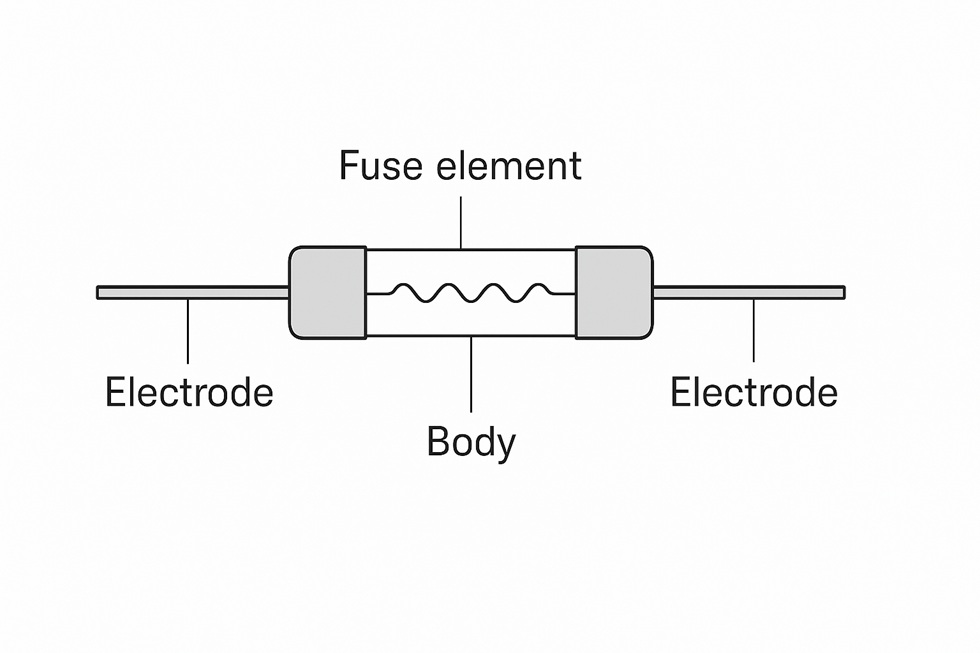
At the core of a fuse lies the fusible element, a crucial component designed to halt electrical current flow when disruptions occur. The choice of material and the specific resistance level must be precisely tailored to ensure consistent and reliable performance. Commonly crafted from low melting point metals like zinc or copper alloys, the element is engineered to react predictably under fault conditions, thereby protecting linked circuits. Material selection entails careful consideration of thermal and electrical properties to align with particular application requirements.
Choosing the right fusible material is key to reaching desired performance. Practical testing and long-term use help show how well a fuse holds up. Past data and results often guide the choice of materials, showing the value of hands-on experience alongside theory.
Electrodes
Electrodes serve as the pathways for electrical contact, tasked with forming effective connections without unnecessarily elevating system resistance. Due to its superior conductivity, copper is commonly chosen to enhance efficient current transfer between components. The seamless embedding of electrodes into circuit designs in daily settings is ideal in reducing energy losses and optimizing current pathways.
Achieving optimal electrode connections transcends mere material selection; strategic positioning and careful assembly are equally important. Insights from actual deployments shows how important mechanically robust connections are, where the alignment and applied pressure between electrodes markedly influence efficiency. Precision tools are often used to keep contact pressure steady, showing the role of careful and detailed work in reliable performance.
Protective Bracket Structure
The bracket structure is fundamental in ensuring the physical stability of fuse components while aligning with stringent insulation and safety norms. Made from resilient yet insulating substances, this component upholds the assembly's reliability even during adverse conditions. Bracket designs and the materials employed often derive from proven field practices rather than solely frameworks.
While accidental short circuits or overcurrents present notable hazards, adherence to safety protocols significantly mitigates these risks. Practical installations consistently show that following electrical standards is required. Detailed inspections and certifications are central to affirming structural integrity. Professionals commonly utilize comprehensive checklists and reference industry standards to ensure all fuses surpass basic safety requirements, showcasing a direct application of guidelines in contexts.
Fuse Resistors and Conventional Fuse Differences
|
Feature |
Fuse
Resistor |
Fuse |
|
Function |
Acts as both a
resistor (limits current) and a fuse (opens circuit when
overheated/overcurrent) |
Protects
circuits by breaking (melting) under excessive current |
|
Primary Role |
Provides
resistance in normal operation + circuit protection in fault conditions |
Purely for
overcurrent protection |
|
Construction |
Resistor body
designed with fusible element or coating that burns/melts when overloaded |
Thin metal wire
or strip enclosed in glass, ceramic, or plastic casing |
|
Operation |
Works as a
standard resistor until current exceeds rating; then it burns open like a
fuse |
Melts instantly
(or within a time delay, depending on type) when current exceeds rated value |
|
Reset/Replacement |
Must be replaced
like a fuse once blown (not self-resetting) |
Must be replaced
(unless resettable fuse type like PTC is used) |
|
Applications |
TVs, monitors,
power supplies, audio equipment, sensitive electronics needing both current
limiting and protection |
Power
distribution, appliances, automotive, industrial systems |
|
Advantages |
Combines
resistor and fuse in one, saves space, adds extra resistance for current
limiting |
Simple, cheap,
highly reliable, many ratings and types available |
|
Limitations |
Limited use
where resistance is acceptable in circuit; power rating usually low |
No resistance
function-only circuit protection |
Conclusion
Fuse resistors combine the steady function of a resistor with the protection of a fuse, making them key to durable and efficient circuit design. By choosing the right type; non-repeatable or repeatable and placing it strategically, which improve safety, reduce downtime, and extend device lifespan. Understanding their roles and differences from conventional fuses helps build stronger, longer-lasting electronic systems.
Related Blog
-
How Many Zeros in a Million, Billion, Trillion?
![How Many Zeros in a Million, Billion, Trillion?]()
July 29th, 2024
Million represents 106, an easily graspable figure when compared to everyday items or annual salaries. Billion, equivalent to 109, starts to stretch t... -
IRLZ44N MOSFET Datasheet, Circuit, Equivalent, Pinout
![IRLZ44N MOSFET Datasheet, Circuit, Equivalent, Pinout]()
August 28th, 2024
The IRLZ44N is a widely-used N-Channel Power MOSFET. Renowned for its excellent switching capabilities, it is highly suited for numerous applications,... -
Battery Temperature Too Low, Charging Stopped. How to Fix It?
![Battery Temperature Too Low, Charging Stopped. How to Fix It?]()
October 6th, 2024
Mobile phone battery charging issues are common but can be effectively managed. Temperature plays a big role in battery efficiency, as smartphone batt... -
BC547 Transistor Comprehensive Guide
![BC547 Transistor Comprehensive Guide]()
July 4th, 2024
The BC547 transistor is commonly used in a variety of electronic applications, ranging from basic signal amplifiers to complex oscillator circuits and... -
Comprehensive Guide to SCR (Silicon Controlled Rectifier)
![Comprehensive Guide to SCR (Silicon Controlled Rectifier)]()
April 22th, 2024
Silicon Controlled Rectifiers (SCR), or thyristors, play a pivotal role in power electronics technology because of their performance and reliability. ... -
LR621, SR621SW, 364, AG1 Battery Equivalents and Replacements
![LR621, SR621SW, 364, AG1 Battery Equivalents and Replacements]()
July 15th, 2024
LR621 and SR621SW button batteries are prevalent in compact electronic devices like watches, small toys, calculators, and remote keys. Multiple manufa... -
Fundamentals of Op-Amp Circuits
![Fundamentals of Op-Amp Circuits]()
December 28th, 2023
In the intricate world of electronics, a journey into its mysteries invariably leads us to a kaleidoscope of circuit components, both exquisite and co... -
Comparing NMOS and PMOS Differences and Applications
![Comparing NMOS and PMOS Differences and Applications]()
November 15th, 2024
Understanding the differences between NMOS and PMOS transistors is important in designing efficient circuits. NMOS (N-type Metal-Oxide-Semiconductor) ... -
A Complete Guide to Multiplexers and Their Role in Digital Systems
![A Complete Guide to Multiplexers and Their Role in Digital Systems]()
September 20th, 2025
Multiplexers are components in digital systems, designed to channel multiple input signals into a single output line using binary logic and control si... -
What Do STD, AGM, and Gel Mean On a Battery Charger
![What Do STD, AGM, and Gel Mean On a Battery Charger]()
July 10th, 2024
Traditional lead-acid battery chargers are known for their simplicity and reliability. They have been serving their purpose effectively for years, lar...



Hot Parts
- 06033A100M4T2A
- M4A3-128/64-10VC-12VI
- 06031A120JAT2A
- CGA3E2NP02A821J080AA
- IRFP260NPBF
- XC2S100-5TQ144I
- LTC6811IG-1#PBF
- SN761678BDBTR
- HDMP-0421
- TPA0213DGQR
- VOM618A-4X001T
- VL82C310-25FC4
- GJM0335C1E8R2CB01J
- IRF9333PBF
- XC6SLX4-2CSG225C
- AD9752ARU
- TMK316BJ225MD-T
- HD155148RTFEB
- BAT60A E6327
- GJM0225C1E9R1CB01L
- TPS73601DCQ
- MAX807NEWE
- PS2143H-S1-HCE
- MB84VD22183EB-90
- UPD75P0016GB-3B4
- C5750X7R1C476M230KB
- T494D106M035AT
- LT3081EDF#PBF
- 74HC299D
- RT1206BRD07430KL
- MC74LS14
- TMK107BJ154MA-T
- TSB12LV01BPZTG4
- K4T51163QI-HCF7
- TPS84620RUQR
- T491B475K020AT4539
- BD18351EFV-ME2
- VI-JNM-CY
- 78P2352-IGT
- BS62LV1027STCG70
- K4A4G085WE-BCRC
- LTC2497IUHF
- MA4P4335
- MB86K23BGF-GE1
- VSC8123RB
- RAA270005KFP
- RTS5309-GR
- RN73H2ATTD1004B25
- VLS-02V
- SG-615P3.6864MC0