- English
-
EnglishDeutschItaliaFrançais한국의русскийSvenskaNederlandespañolPortuguêspolski繁体中文SuomiGaeilgeSlovenskáSlovenijaČeštinaMelayuMagyarországHrvatskaDanskromânescIndonesiaΕλλάδαБългарски езикGalegolietuviųMaoriRepublika e ShqipërisëالعربيةአማርኛAzərbaycanEesti VabariikEuskeraБеларусьLëtzebuergeschAyitiAfrikaansBosnaíslenskaCambodiaမြန်မာМонголулсМакедонскиmalaɡasʲພາສາລາວKurdîსაქართველოIsiXhosaفارسیisiZuluPilipinoසිංහලTürk diliTiếng ViệtहिंदीТоҷикӣاردوภาษาไทยO'zbekKongeriketবাংলা ভাষারChicheŵaSamoa日本語SesothoCрпскиKiswahiliУкраїнаनेपालीעִבְרִיתپښتوКыргыз тилиҚазақшаCatalàCorsaLatviešuHausaગુજરાતીಕನ್ನಡkannaḍaमराठी

Exploring The Features and Applications of High Pass Filter
Catalog
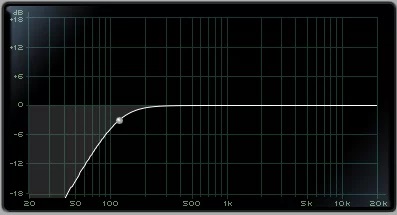
High Pass Filter Principles
A high-pass filter is an electronic circuit that allows high-frequency signals to pass through while attenuating or blocking lower-frequency signals. This type of filter is widely used in audio systems, communication devices, and electronic signal processing to improve clarity and performance by eliminating unwanted low-frequency components.
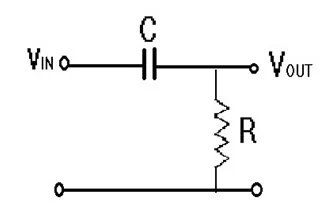
The most common and straightforward design is the first-order high-pass filter, which consists of a resistor and a capacitor arranged in series. This simple RC configuration serves as the basis for many filtering applications in electronics.
High-pass filters work by taking advantage of a capacitor’s frequency-dependent behavior. At low frequencies, the capacitor resists changes in voltage, presenting a high impedance. This limits the amount of signal that reaches the output. In contrast, at high frequencies, the capacitor’s reactance drops significantly. It begins to act like a short circuit, allowing the signal to pass through the resistor with minimal resistance. This makes the filter effective at blocking low-frequency noise while transmitting higher-frequency signals with minimal loss.
The point at which the filter begins to reduce the amplitude of the input signal is called the cutoff frequency, also known as the corner frequency. At this frequency, the output signal is reduced to approximately 70.7 percent of the input amplitude, or a -3 decibel drop in signal power. For a first-order high-pass filter, the cutoff frequency is determined using the formula:
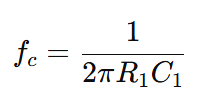
In this equation, 𝑓𝑐 represents the cutoff frequency in hertz, R1 is the resistance in ohms, and C1 is the capacitance in farads. This formula helps designers predict and control the frequency response of their circuits. High-pass filters are commonly used to improve signal quality across various fields. In audio applications, they help eliminate low-frequency hums and rumbles. In radio and communication systems, they remove unwanted DC offsets and suppress low-frequency noise that can interfere with transmission. In sensor circuits, high-pass filters help isolate meaningful changes in data by ignoring slow or irrelevant fluctuations.
While RC circuits are effective for basic filtering needs, high-pass filters can also be constructed using inductors and capacitors for more advanced or high-frequency applications. These LC filters are particularly useful in high-power systems or where precision frequency control is necessary. Understanding how high-pass filters work and how to apply them allows engineers and technicians to design more efficient, reliable, and clean signal pathways. Whether you are working with sound, data, or electrical signals, mastering high-pass filters is a key part of any electronics toolkit.
Aspects of High-Pass Filters
High-pass filters possess the unique ability to accommodate signals with frequencies that exceed a designated cutoff threshold. In contrast, they reduce the strength of signals falling below it.
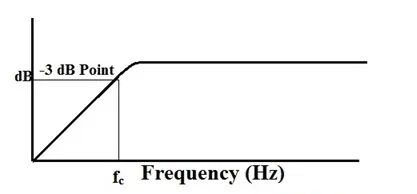
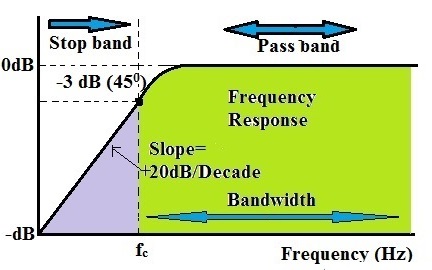
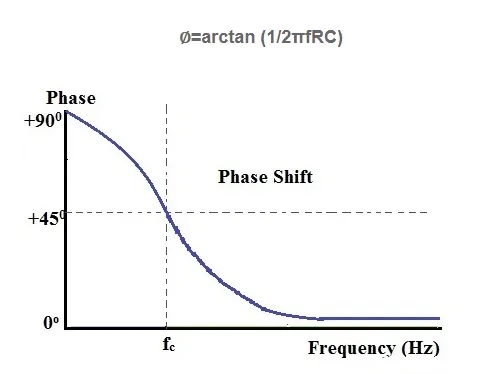
Central to this mechanism is the gain formula, illuminating the relationship between capacitive reactance and frequency, where capacitive reactance diminishes as frequency escalates, thereby enhancing signal transmission. Moreover, the filter's frequency response shows stop bands, regions where signals lesser than the cutoff are confined and passbands zones where elevated frequencies traverse with minimal resistance.
Operational Amplifiers and Precision
Integration of components like operational amplifiers transforms these filters from passive to active configurations. This transition offers enhanced precision and more refined control. Through real-world applications, it is revealed that active filters enable a sophisticated level of control over frequency ranges, presenting a noteworthy advantage when precise tuning is of essence.
Building Higher-Order Filters for Enhanced Frequency Response
By cascading multiple first- or second-order filters, one can construct higher-order filters that substantially refine cutoff points, extending attenuation bands, and delivering a more sophisticated frequency response. This method offers tremendous benefits when aiming for distinctly sharp roll-offs or defining exact bandwidth characteristics.
High-Pass Filter Transfer Function
The transfer function of a high-pass filter offers insights into the nuanced behavior of circuits, esspecially in relation to frequency response influenced by capacitors and other circuit elements. This mathematical framework arises from established analysis techniques, illuminating the complex interaction between circuit components and the observed effects of filtering. Various configurations allow the filter to adapt effectively to changes in signal frequencies.
Mathematical Representation and Circuit Dynamics
Understanding high-pass filters involves deriving their transfer function, which requires examining how components such as capacitors change circuit responses. Analytical methods, including the use of Laplace transforms and impedance calculations, provide a window into how reactance varies with frequency. This understanding aids in refining circuit design for diverse applications, facilitating optimal performance.
Stephens Butterworth's Model and Practical Implications
Stephens Butterworth introduced a model for high-pass filters marked by consistent sensitivity over chosen frequency bands, eliminating frequencies deemed extraneous. However, practical usage demands a combination of theoretical goals and practical considerations like component tolerances and environmental impacts. Achieving a desirable filter response involves blending theoretical knowledge with empirical adaptations.
Applications and Observations in Practice
High-pass filters are applied in numerous fields, such as audio engineering and telecommunications, reflecting their adaptability and significance. Modify these filters to address particular signal processing needs with adjustments to circuit parameters ensuring precise operation. Through repeated testing and refinement, the interaction between design choices and conditions is balanced, delivering solutions tailored to the specific response sought.
Versatile Uses of High-Pass Filters
High-pass filters find their applications across various fields, tapping into their skillful ability to channel high-frequency signals. This aspect is notably useful in audio systems, where they ensure that tweeters engage only with relevant frequencies. For instance, their adept use is observed in coupling capacitors that block bass signals and suppress unwanted low-frequency noise, ultimately elevating sound quality to exceptional levels.
Improving Audio System Performance
In intricate audio setups, high-pass filters are reliable in upholding signal purity. By isolating specific frequency ranges, they avert distortion often caused by overlapping frequencies, delivering a pristine listening environment. These filters employed to shape soundscapes, ensuring that every element contributes to a harmonious blend rather than obscured noise.
Harmonics Management in Power Systems
Within the realm of power systems, high-pass filters serve as proficient tools for harmonics management. They bolster signal clarity by diminishing the adverse impacts of harmonic distortion, thus boosting system efficacy and dependability. Their application consistently results in substantial improvements in operational performance across various industrial contexts, showing their notable role in this field.
Advanced Techniques in Digital Imaging
High-pass filters are ideal in digital imaging, enabling frequency transformation. This capability allows for precise extraction and enhancement of intricate details, augmenting both analog and digital imaging experiences.
Enhancing Signal Integrity in Complex Systems
In both audio and visual systems, strategic application of high-pass filters eases input frequency conflicts, considerably enhancing signal integrity. Their proficiency in handling complex signal interactions makes them highly valuable in high-tech environments where precision and clarity are required. Integrated into sophisticated system designs, they effectively contribute to overall performance and quality.
Conclusion
High-pass filters are essential tools for controlling signal frequencies across many fields. Whether used to clean audio signals, manage harmonics in power systems, or enhance image clarity, they provide reliable performance through simple or advanced designs. Understanding their structure and behavior helps improve system efficiency and signal quality.
Related Blog
-
How Many Zeros in a Million, Billion, Trillion?
![How Many Zeros in a Million, Billion, Trillion?]()
July 29th, 2024
Million represents 106, an easily graspable figure when compared to everyday items or annual salaries. Billion, equivalent to 109, starts to stretch t... -
IRLZ44N MOSFET Datasheet, Circuit, Equivalent, Pinout
![IRLZ44N MOSFET Datasheet, Circuit, Equivalent, Pinout]()
August 28th, 2024
The IRLZ44N is a widely-used N-Channel Power MOSFET. Renowned for its excellent switching capabilities, it is highly suited for numerous applications,... -
Battery Temperature Too Low, Charging Stopped. How to Fix It?
![Battery Temperature Too Low, Charging Stopped. How to Fix It?]()
October 6th, 2024
Mobile phone battery charging issues are common but can be effectively managed. Temperature plays a big role in battery efficiency, as smartphone batt... -
BC547 Transistor Comprehensive Guide
![BC547 Transistor Comprehensive Guide]()
July 4th, 2024
The BC547 transistor is commonly used in a variety of electronic applications, ranging from basic signal amplifiers to complex oscillator circuits and... -
Comprehensive Guide to SCR (Silicon Controlled Rectifier)
![Comprehensive Guide to SCR (Silicon Controlled Rectifier)]()
April 22th, 2024
Silicon Controlled Rectifiers (SCR), or thyristors, play a pivotal role in power electronics technology because of their performance and reliability. ... -
LR621, SR621SW, 364, AG1 Battery Equivalents and Replacements
![LR621, SR621SW, 364, AG1 Battery Equivalents and Replacements]()
July 15th, 2024
LR621 and SR621SW button batteries are prevalent in compact electronic devices like watches, small toys, calculators, and remote keys. Multiple manufa... -
Fundamentals of Op-Amp Circuits
![Fundamentals of Op-Amp Circuits]()
December 28th, 2023
In the intricate world of electronics, a journey into its mysteries invariably leads us to a kaleidoscope of circuit components, both exquisite and co... -
Comparing NMOS and PMOS Differences and Applications
![Comparing NMOS and PMOS Differences and Applications]()
November 15th, 2024
Understanding the differences between NMOS and PMOS transistors is important in designing efficient circuits. NMOS (N-type Metal-Oxide-Semiconductor) ... -
A Complete Guide to Multiplexers and Their Role in Digital Systems
![A Complete Guide to Multiplexers and Their Role in Digital Systems]()
September 20th, 2025
Multiplexers are components in digital systems, designed to channel multiple input signals into a single output line using binary logic and control si... -
What Do STD, AGM, and Gel Mean On a Battery Charger
![What Do STD, AGM, and Gel Mean On a Battery Charger]()
July 10th, 2024
Traditional lead-acid battery chargers are known for their simplicity and reliability. They have been serving their purpose effectively for years, lar...



Hot Parts
- RTL8201CL-VDLF
- DM74ALS02M
- LTC3240EDC-3.3
- TPSA685K010R1800
- SC3610
- CY7C1399BN-12VXIT
- BZG05C6V2TR
- TL084CDR
- TLE4250G
- SY100EP14UK4I
- MC908EY16CFAER
- DE56SH107LJ48LC
- BU7242NUX-TR
- XCR3512XL-10FT256I
- SB80C196KC20
- TN80C188EB16
- DTC30LM35
- GCM1555C1H6R3DA16D
- RP150K008B-TR
- 06031C622JAT2A
- MT41K128M8DA-107:J
- ISL8117FVEZ
- M5M5278DVP-20L
- FG4000GX-90DA
- EZR32HG320F64R63G-B0
- CGB3B3X5R1A225K055AB
- CY8C4146AZI-S433
- MIC2506YM-TR
- UA79M08CKTPR
- TUA2019-5X
- AT29BV512-90JC
- 1SMA5929BT3G
- p083A2006
- RTD2692D
- BD8113EFV-E2
- TRMU158K002R0023
- VI-2N3-MY
- AT43301/55591B
- DAC7760IPW
- LTC1164CS
- MC100EL14D
- OPA4704UA/2K5
- PALC22V10-25DMB
- SC552559DWR2G
- XC9572XLTQ100AEN
- GT34C04-2ZLI-TR
- STLC60845A
- 215nsa4ala12FG
- SC571722MMG168
- B8B-EH(LF)(SN)