- English
-
EnglishDeutschItaliaFrançais한국의русскийSvenskaNederlandespañolPortuguêspolski繁体中文SuomiGaeilgeSlovenskáSlovenijaČeštinaMelayuMagyarországHrvatskaDanskromânescIndonesiaΕλλάδαБългарски езикGalegolietuviųMaoriRepublika e ShqipërisëالعربيةአማርኛAzərbaycanEesti VabariikEuskeraБеларусьLëtzebuergeschAyitiAfrikaansBosnaíslenskaCambodiaမြန်မာМонголулсМакедонскиmalaɡasʲພາສາລາວKurdîსაქართველოIsiXhosaفارسیisiZuluPilipinoසිංහලTürk diliTiếng ViệtहिंदीТоҷикӣاردوภาษาไทยO'zbekKongeriketবাংলা ভাষারChicheŵaSamoa日本語SesothoCрпскиKiswahiliУкраїнаनेपालीעִבְרִיתپښتوКыргыз тилиҚазақшаCatalàCorsaLatviešuHausaગુજરાતીಕನ್ನಡkannaḍaमराठी

A Technical Overview of Motor Driver ICs in Motor Control Systems
Catalog
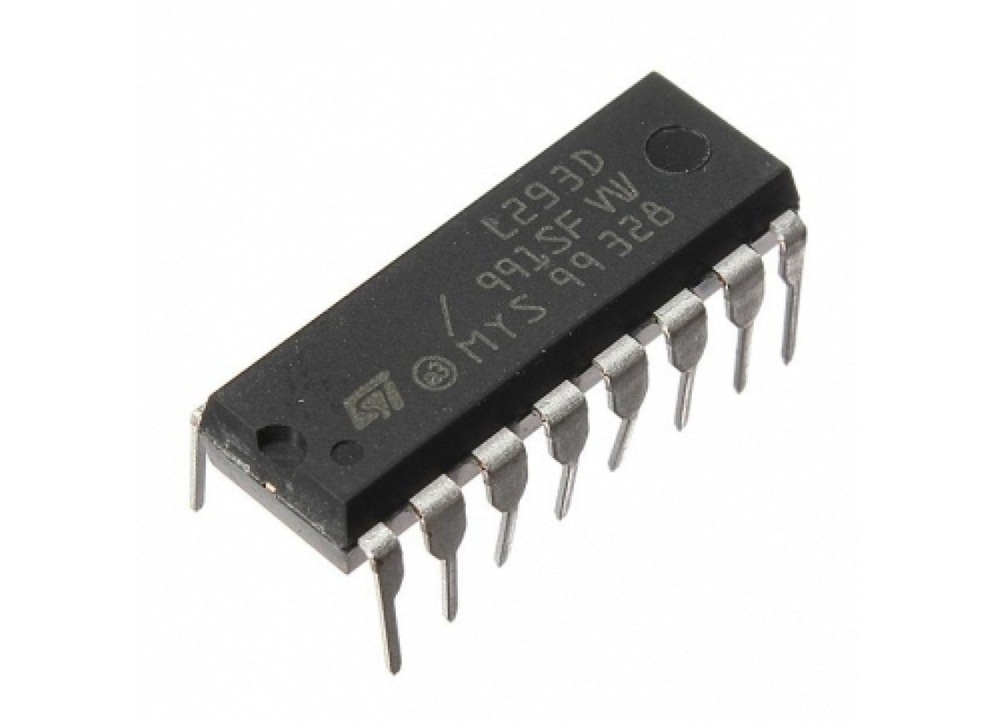
Introduction to Motor Driver ICs
Motor driver ICs have emerged as primary elements in the vast domain of electronics. They are relevant in robotics and embedded systems, where precise motor control is essential for desired outcomes. These integrated circuits (ICs) are adept at transforming low voltage signals into higher power outputs. Such transformation enables the regulation of motor dynamics like direction, speed, and torque, which collectively enhance system capabilities. Models such as the L293D and ULN2003 are frequently utilized in basic robotics ventures, including educational tools and applications. Their reliability and straightforward integration make them a favored choice.
A fundamental principle in motor driver ICs is the H-bridge topology. This structure enhances control by allowing motors to rotate in multiple directions. The H-bridge setup involves four strategically positioned switches, facilitating the reversal of direction and the modulation of speed by directing electricity flow accurately.
When leveraging the H-bridge topology, motor driver ICs offer flexible control options, perfectly suited for applications requiring motors to function in two directions. This technology's incorporation is prominent in models like the L293D, which melds compactness and affordability with performance criteria. In practical applications, observe a marked distinction in robotic movements, showcasing the topology's effective utilization.
In the sphere of beginner robotics, the ULN2003 motor driver IC finds its niche due to its simplicity and effectiveness in managing small motors often found in robotic limbs and basic autonomous vehicles. The integration involves linking the motor driver with controllers, such as microcontrollers, streamlining signal processing with ease and efficiency.
Motor Driver ICs in Today's Robotics
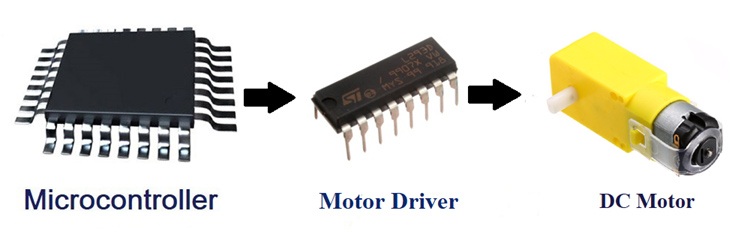
Autonomous robots symbolize a remarkable leap in technological evolution, demanding careful orchestration of motor functionalities. Typically, microcontrollers such as Arduino or PIC operate with low voltage levels, commonly 3.3V or 5V. However, motors often yearn for higher voltages, such as 5V, 12V, or beyond. Motor driver integrated circuits (ICs) are used in bridging these voltage divides, enabling microcontrollers to achieve precise control over motor actions by scaling up the voltage.
For autonomous systems to independently tackle complex tasks, flawless interaction amongst electronic components is vital. Motor driver ICs act as a significant interfacing component, ensuring that low-voltage microcontrollers harmonize with high-voltage motors. These ICs translate microcontroller directives into motor movements by carefully regulating voltage levels.
The deployment of motor driver ICs in robotics extends across various aplications. In manufacturing, high-precision robotic arms depend on these ICs for seamless motor operation, enhancing production output. Likewise, motor drivers are integral in autonomous drones, managing propulsion to maintain steady and efficient flight.
From one viewpoint, integrating motor driver ICs with budding technologies like artificial intelligence and machine learning enriches robotics. This fusion can boost adaptability and decision-making, empowering robots to execute tasks with outstanding precision. Marrying high-level processing with adept motor control fosters resilient systems, adeptly navigating intricate environments.
Motor Drivers Operations
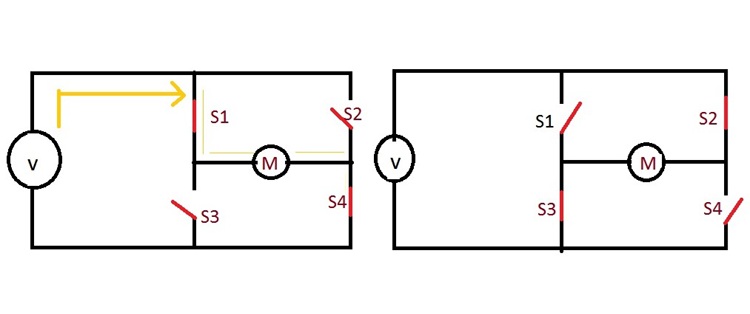
Motor driver integrated circuits (ICs) act as interfaces connecting microprocessor signals with motor commands. They inject life into motors through distinct voltage pins, VCC1 and VCC2. VCC1 supplies energy to the IC, whereas VCC2 transfers voltage directly to the motor. At the core of the IC is the H-bridge circuit, a primary component that adapts signal routes according to microprocessor directives to achieve seamless motor control without altering input values. The arrangement of switches within this circuit profoundly influences not just the motor's direction of rotation but also its broader capabilities and responsiveness.
Clockwise Motor Rotation
The motor attains clockwise rotation by closing switches S1 and S4 while keeping S2 and S3 open. This configuration creates a conductive channel for current, making the motor turn clockwise. Such an arrangement fosters a circuit environment conducive to unhindered motor function. Practical applications capitalize on this concept for processes demanding consistent forward movement, like conveyor systems and automated production lines. These scenarios shed light on the circuit's role in achieving operational dependability through efficient design.
Counter-clockwise Motor Rotation
Switching gears, enabling switches S2 and S3 and maintaining S1 and S4 in a closed position redirects the current, compelling the motor to spin counter-clockwise. The adaptability of the H-bridge topology in tweaking motor direction suits environments demanding reverse movement, such as robotics and lifting machinery. Precision in directional control can substantially uplift machine performance and capabilities. The favorable reception of the H-bridge setup in applications reveals its practicality and simplicity, valued highly in industrial contexts where dynamic motor control is a vital feature.
Advanced Braking Techniques
To bring motor activity to a standstill, one technique involves cutting off the power supply. This can be achieved by disabling voltage input or opening all operational switches. A specific setup, such as closing S1 and S3, causes the motor to stall when it receives only positive signals. This shows the important role of switch positioning and signal input in motor control and illustrates a well-coordinated approach to halting directional movement.
In applications based on this principle, switch states are carefully controlled to reduce mechanical wear and support longer motor operating life. It's been observed that a gradual braking method tends to preserve equipment integrity better than an abrupt stop. Furthermore, tailored control configurations emerge, providing optimized stopping solutions catered to particular operational requirements.
Grasping the complex dynamics of motor functions opens doors to precision practices. Integrating feedback systems capable of monitoring performance is one effective strategy, which enhances accuracy in deploying brake mechanisms. These systems can make timely adjustments, boosting efficiency. It's fascinating to see these technologies evolve, especially as they align with broader trends in automation and smart technologies.
As motors and their uses develop, upcoming innovations must take into account both existing hurdles and new technologies. The enhancement of smart controllers and adaptive algorithms in braking systems can enable a proactive approach to meet operational demands. These advancements promise enhanced reliability and performance, positioning motors as a component across various industries.
Advantages of Motor Driver ICs
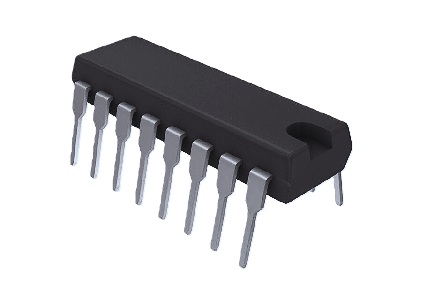
Motor driver ICs are crafted to offer exceptional performance, seamlessly integrating into both autonomous and commercial robotic systems. They are adept at managing substantial current loads, which prompts the implementation of effective thermal management solutions like heatsinks to ensure they function optimally over long durations. The inclusion of capacitors helps in mitigating voltage fluctuations during directional changes, ensuring smooth transitions and minimizing energy wastage.
Operational Efficiency
Designed with precision, motor driver ICs elevate efficiency, a main aspect for robotic systems focusing on power control. They enable meticulous regulation of motor functions, boosting performance for diverse applications, from simple tasks to intricate maneuvers. Field experiences indicate the sustained reliability of motor driver ICs in meeting prolonged operational needs, emphasizing their transformative impact on advanced robotics.
Cooling Mechanisms in Current Management
Handling currents entails notable heat production, necessitating effective heat dissipation in motor driver ICs. Employing cooling mechanisms like heatsinks bolsters thermal management. By stabilizing operational temperatures, these solutions avert overheating, thereby enhancing both performance and the longevity of the ICs. Insights from optimized cooling strategies are important, aiding in the refined design and deployment of robotic systems subjected to demanding environments.
Voltage Stability and Transition Smoothing
Capacitors are integral in ensuring voltage stability in motor driver ICs, especially during directional shifts. Their capacity to absorb and release charge fortifies voltage consistency, enabling smooth directional transitions without substantial power depletion. Practical implementations reveal that well-calibrated capacitor systems are instrumental in assuring the seamless operation of robotic systems, proving their role during the design stage.
Conclusion
Motor driver ICs provide precise direction control, smooth braking, and stable operation under varying electrical conditions. Their ability to bridge low-power control logic with high-power motor demands makes them indispensable in robotics, automation, and embedded applications. Through features such as H-bridge control, efficient current handling, thermal management, and voltage stabilization, motor driver ICs support reliable and efficient system performance.
Related Blog
-
How Many Zeros in a Million, Billion, Trillion?
![How Many Zeros in a Million, Billion, Trillion?]()
July 29th, 2024
Million represents 106, an easily graspable figure when compared to everyday items or annual salaries. Billion, equivalent to 109, starts to stretch t... -
IRLZ44N MOSFET Datasheet, Circuit, Equivalent, Pinout
![IRLZ44N MOSFET Datasheet, Circuit, Equivalent, Pinout]()
August 28th, 2024
The IRLZ44N is a widely-used N-Channel Power MOSFET. Renowned for its excellent switching capabilities, it is highly suited for numerous applications,... -
Battery Temperature Too Low, Charging Stopped. How to Fix It?
![Battery Temperature Too Low, Charging Stopped. How to Fix It?]()
October 6th, 2024
Mobile phone battery charging issues are common but can be effectively managed. Temperature plays a big role in battery efficiency, as smartphone batt... -
BC547 Transistor Comprehensive Guide
![BC547 Transistor Comprehensive Guide]()
July 4th, 2024
The BC547 transistor is commonly used in a variety of electronic applications, ranging from basic signal amplifiers to complex oscillator circuits and... -
Comprehensive Guide to SCR (Silicon Controlled Rectifier)
![Comprehensive Guide to SCR (Silicon Controlled Rectifier)]()
April 22th, 2024
Silicon Controlled Rectifiers (SCR), or thyristors, play a pivotal role in power electronics technology because of their performance and reliability. ... -
LR621, SR621SW, 364, AG1 Battery Equivalents and Replacements
![LR621, SR621SW, 364, AG1 Battery Equivalents and Replacements]()
July 15th, 2024
LR621 and SR621SW button batteries are prevalent in compact electronic devices like watches, small toys, calculators, and remote keys. Multiple manufa... -
Fundamentals of Op-Amp Circuits
![Fundamentals of Op-Amp Circuits]()
December 28th, 2023
In the intricate world of electronics, a journey into its mysteries invariably leads us to a kaleidoscope of circuit components, both exquisite and co... -
Comparing NMOS and PMOS Differences and Applications
![Comparing NMOS and PMOS Differences and Applications]()
November 15th, 2024
Understanding the differences between NMOS and PMOS transistors is important in designing efficient circuits. NMOS (N-type Metal-Oxide-Semiconductor) ... -
A Complete Guide to Multiplexers and Their Role in Digital Systems
![A Complete Guide to Multiplexers and Their Role in Digital Systems]()
September 20th, 2025
Multiplexers are components in digital systems, designed to channel multiple input signals into a single output line using binary logic and control si... -
What Do STD, AGM, and Gel Mean On a Battery Charger
![What Do STD, AGM, and Gel Mean On a Battery Charger]()
July 10th, 2024
Traditional lead-acid battery chargers are known for their simplicity and reliability. They have been serving their purpose effectively for years, lar...



Hot Parts
- TNETE2201BPJW
- THS4503IDGNRG4
- MMA6813BKCWR2
- ACPM-2005-TR1G
- FAN1654M
- CEM4435A
- PXA250B1C400
- QT60240-ISG
- CGA2B2C0G1H010C050BA
- UPD448012BGY-C70X-MJH
- NJM2584M
- MAX9152EUE+T
- PAS6001-B
- ADG821BRMZ
- AK4393VF
- ADUM231D1BRIZ
- M34513M4-199FP
- MAX4126EUA
- LM3708XQBPX-308
- VL82C331-25FC
- XC9572XL-10F48I
- RC0805FR-07200RL
- VSP5010PMR
- OR2C10A-3S208
- FAN21SV04MPX
- TAS5001IPFB
- XC5VLX85-2FF676I
- A29L040L-70
- IS42S16160J-7TL
- MAX418ESD
- UC3845BD1013TR
- MAX3665EUA+T
- BUK7K89-100EX
- IFX1050G
- MCC95-08I01B
- GRM1887U1HR80CD01D
- TWAD108M050CBEZ0700
- TL034ACDR
- P15C3253Q
- LM22675QMR-5.0/NOPB
- MAX6067AEUR+T
- T491C336M016AH
- GLPH16912
- R3111H281A-T1
- TC55RP3302ECB
- BCM53426A0IFSBG
- SD73C168-28
- 104224-0820
- MT48LC8M16A2P-6AL
- DF3694FXV