- English
-
EnglishDeutschItaliaFrançais한국의русскийSvenskaNederlandespañolPortuguêspolski繁体中文SuomiGaeilgeSlovenskáSlovenijaČeštinaMelayuMagyarországHrvatskaDanskromânescIndonesiaΕλλάδαБългарски езикGalegolietuviųMaoriRepublika e ShqipërisëالعربيةአማርኛAzərbaycanEesti VabariikEuskeraБеларусьLëtzebuergeschAyitiAfrikaansBosnaíslenskaCambodiaမြန်မာМонголулсМакедонскиmalaɡasʲພາສາລາວKurdîსაქართველოIsiXhosaفارسیisiZuluPilipinoසිංහලTürk diliTiếng ViệtहिंदीТоҷикӣاردوภาษาไทยO'zbekKongeriketবাংলা ভাষারChicheŵaSamoa日本語SesothoCрпскиKiswahiliУкраїнаनेपालीעִבְרִיתپښتوКыргыз тилиҚазақшаCatalàCorsaLatviešuHausaગુજરાતીಕನ್ನಡkannaḍaमराठी

A Beginners Guide to SIM800L and SIM900A GSM Modules
The SIM800L

SIM800L
SIMCOM
SIMCOM LGA
In Stock: 22200 pcs
and SIM900A
SIM900A
Simcom
Simcom GPS
In Stock: 16664 pcs
are GSM modules designed to add mobile communication features, such as SMS, voice calls, and GPRS data, to microcontroller-based projects. Both modules are popular for IoT and embedded systems, but they differ in capability and range. The SIM800L supports quad-band operation and even includes Bluetooth and FM functionality, making it ideal for global and modern applications. The SIM900A, on the other hand, focuses on core GSM services at a lower cost and operates mainly in select regional networks. Together, these features provide flexible options for creating connected and communication-ready devices.
Catalog

SIM800L GSM Module
The SIM800L
SIM800L
SIMCOM
SIMCOM LGA
In Stock: 22200 pcs
GSM module offers a versatile pathway for integrating cellular functionalities into microcontroller-driven projects. This module supports SMS messaging, voice communication, and fundamental GPRS data transfer, enhancing its range of potential applications. Designed to function across quad-band frequencies, the module connects easily with worldwide GSM networks, making it suitable for diverse global implementations. Its small and effective design is useful for portable devices and IoT solutions, especially when space is a constraint.
By operating on quad-band frequencies, the SIM800L enables fluid interaction with GSM networks on an international scale, removing geographical limitations in design and application. This characteristic aligns with the creation of standardized products for deployment in various countries without needing regional modifications.

Due to its compact structure and minimal energy usage, the module is ideal for small IoT devices and applications where power resources are scarce. This proves to be especially beneficial in isolated or battery-powered environments, where prolonging operational lifetime is crucial. Designing energy-efficient systems involves focusing on key factors that ensure reliable communication. Using the module’s sleep mode and low-power control methods helps extend battery life and improve overall efficiency.
The SIM800L uses standard AT commands through a simple serial interface, allowing ease of integration and control, thus cutting down on development time and complexity. This method is well known in electronic design and helps streamline the programming process. Using AT commands speeds up development and lowers the chance of setup problems, which is valuable in fast-changing technology fields.
SIM900A GSM Module
Designed with regions like Asia and Africa in mind, the SIM900A
SIM900A
Simcom
Simcom GPS
In Stock: 16664 pcs
GSM module provides dual-band frequency support, offering reliable connectivity. It enables essential GSM services such as SMS, voice calls, and GPRS data, which are foundational to many communication applications. Slightly larger than the SIM800L
SIM800L
SIMCOM
SIMCOM LGA
In Stock: 22200 pcs
, the SIM900A is distinguished by its robust performance and seamless integration into varied embedded systems. Its efficiency makes it a favored choice for GSM projects that need a practical balance of cost and performance.
Operating on dual-band frequencies, the SIM900A enhances connectivity in its targeted regions. These frequencies sustain stable communication channels, an attractive feature for telecommunication operators and businesses aiming to expand their reach. Support for essential GSM functionalities like SMS and voice calls marks the module’s versatility. SMS, frequently employed for alerts and notifications, serves as a backbone in automated systems, while voice calls offer a personal touch necessary for complex interactions. With GPRS data capabilities, the SIM900A suits lightweight internet tasks such as data logging and simple web transactions, which is beneficial where full broadband isn't feasible or is too costly.
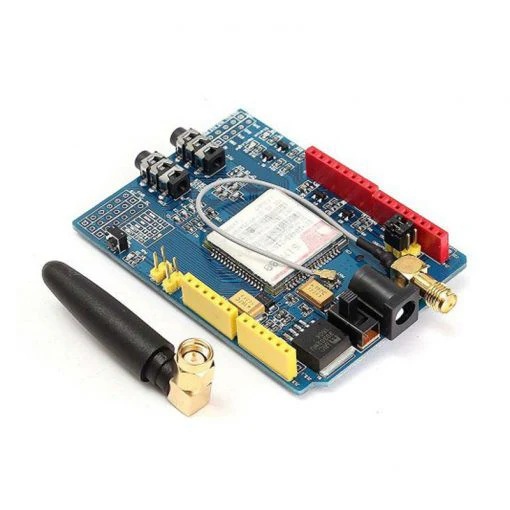
The module's modestly larger size than the SIM800L doesn't compromise its capability for easy integration. The simple design makes it easy to include in many electronic systems with little modification, from industrial setups to consumer products. AT command-based control contributes to the module’s versatility. This control method eases the learning curve while ensuring compatibility with numerous microcontrollers and development environments, supporting rapid prototyping and timely GSM solution deployment. Thanks to its economic appeal, the SIM900A is an ideal choice for budget-sensitive projects. It offers a way to integrate GSM functionality without splurging, providing startups and small enterprises a feasible path to technology adoption.
Introducing GSM modules like the SIM900A into devices might alter communication strategies, especially in constrained environments. These modules provide a reliable connective medium, allowing local businesses and communities to expand their global communication capabilities. Amidst the evolving IoT and telecommunications landscape, modules such as the SIM900A potentially ignite innovation. They help build self-sufficient digital ecosystems in resource-limited areas, reflecting their potential to enhance technological uptake significantly.
Features of SIM800L vs SIM900A Modules
|
Specification |
SIM800L
|
SIM900A
|
|
Supply voltage |
3.4V to 4.4V |
3.4V to 4.4V |
|
Bands supported |
GSM850, EGSM900, DCS1800, PCS1900 |
GSM850, EGSM900, DCS1800, PCS1900 |
|
Cellular network |
2G |
2G |
|
Audio I/O |
8Ω speaker, electret mic |
Earphone, electret mic |
|
Data |
SMS, GPRS, FM |
SMS, GPRS, FM |
|
Transmit power |
Class 4 (2W) GSM850 |
Class 4 (2W) GSM850 |
|
Class 1 (1W) DCS1800 |
Class 1 (1W) DCS1800 |
|
|
Communication with microcontroller |
Serial based AT |
Serial based AT |
|
Antenna |
FL connector |
UFL, SMA connectors |
|
SIM Card |
Micro SIM |
Full-size SIM |
SIM800L vs SIM900A: Major Differences
|
Category |
SIM800L
|
SIM900A
|
|
Network Bands |
Quad-band: 850 /
900 / 1800 / 1900 MHz |
Dual-band: 900 /
1800 MHz |
|
Technology |
GSM / GPRS |
GSM / GPRS |
|
Generation |
Newer module
(successor of SIM900 series) |
Older generation
module |
|
Power Supply
Voltage |
3.4 V – 4.4 V |
3.2 V – 4.8 V |
|
Operating
Current (avg) |
~70 mA (idle),
up to 2 A (transmit peaks) |
~70 mA (idle),
up to 2 A (transmit peaks) |
|
Communication
Interface |
UART (TX, RX),
AT commands |
UART (TX, RX),
AT commands |
|
Extra Features |
Supports
Bluetooth and FM (on some variants) |
No Bluetooth or
FM support |
|
Data Rate (GPRS) |
Class 12, up to
85.6 kbps |
Class 10, up to
85.6 kbps |
|
Form Factor /
Size |
Smaller,
compact, suitable for space-limited designs |
Larger board
size |
|
Antenna
Connector |
Often uses
external wire antenna (IPX / spring type) |
Typically SMA
connector or onboard antenna |
|
Temperature
Range |
–40 °C to +85 °C |
–40 °C to +85 °C |
|
Network
Compatibility |
Global coverage
due to quad-band support |
Limited to
regions using 900 / 1800 MHz |
|
Firmware Support |
Actively
supported, newer AT command set |
Older firmware,
limited updates |
|
Cost |
Slightly higher
but more feature-rich |
Usually cheaper
and older |
|
Use Cases |
IoT devices, GPS
trackers, POS terminals, smart meters |
Local GSM
applications, older embedded projects |
Conclusion
When choosing between the SIM800L
SIM800L
SIMCOM
SIMCOM LGA
In Stock: 22200 pcs
and SIM900A
SIM900A
Simcom
Simcom GPS
In Stock: 16664 pcs
, the decision depends on project scope and connectivity needs. The SIM800L stands out for its broader network coverage, energy efficiency, and added Bluetooth and FM features, making it suitable for global and multimedia IoT designs. The SIM900A remains a dependable and affordable solution for basic GSM-based communication in regional projects. Both modules demonstrate how accessible and adaptable GSM technology continues to power innovation in modern electronics.
Datasheet PDF
SIM800L Datasheet:
SIM800L PDF - DE.pdfSIM900A Datasheet:
SIM900A PDF - DE.pdfFrequently Asked Questions [FAQ]
1. Can I power the SIM800L directly from a 5V Arduino board?
No, the SIM800L typically requires 3.7V to 4.2V. Supplying 5V directly can damage the module. Use a regulated power source or step-down converter.
2. Do I need a level shifter when connecting SIM800L or SIM900A to a 5V microcontroller?
Yes, it's recommended to use a logic level shifter or resistor divider on the TX pin from the microcontroller to prevent damaging the GSM module’s RX input.
3. Is an external antenna required for these modules?
Yes, both SIM800L and SIM900A need an external GSM antenna to establish a stable network connection.
4. Can I use these modules for GPS tracking?
Not directly. Neither SIM800L nor SIM900A has built-in GPS. However, they can transmit location data if paired with an external GPS module.
5. Are these modules compatible with 4G or LTE networks?
No, both SIM800L and SIM900A are GSM-based and support only 2G networks (2G/EDGE/GPRS). They will not work in regions where 2G has been phased out.
Related Blog
-
How Many Zeros in a Million, Billion, Trillion?
![How Many Zeros in a Million, Billion, Trillion?]()
July 29th, 2024
Million represents 106, an easily graspable figure when compared to everyday items or annual salaries. Billion, equivalent to 109, starts to stretch t... -
IRLZ44N MOSFET Datasheet, Circuit, Equivalent, Pinout
![IRLZ44N MOSFET Datasheet, Circuit, Equivalent, Pinout]()
August 28th, 2024
The IRLZ44N is a widely-used N-Channel Power MOSFET. Renowned for its excellent switching capabilities, it is highly suited for numerous applications,... -
Battery Temperature Too Low, Charging Stopped. How to Fix It?
![Battery Temperature Too Low, Charging Stopped. How to Fix It?]()
October 6th, 2024
Mobile phone battery charging issues are common but can be effectively managed. Temperature plays a big role in battery efficiency, as smartphone batt... -
BC547 Transistor Comprehensive Guide
![BC547 Transistor Comprehensive Guide]()
July 4th, 2024
The BC547 transistor is commonly used in a variety of electronic applications, ranging from basic signal amplifiers to complex oscillator circuits and... -
Comprehensive Guide to SCR (Silicon Controlled Rectifier)
![Comprehensive Guide to SCR (Silicon Controlled Rectifier)]()
April 22th, 2024
Silicon Controlled Rectifiers (SCR), or thyristors, play a pivotal role in power electronics technology because of their performance and reliability. ... -
LR621, SR621SW, 364, AG1 Battery Equivalents and Replacements
![LR621, SR621SW, 364, AG1 Battery Equivalents and Replacements]()
July 15th, 2024
LR621 and SR621SW button batteries are prevalent in compact electronic devices like watches, small toys, calculators, and remote keys. Multiple manufa... -
Fundamentals of Op-Amp Circuits
![Fundamentals of Op-Amp Circuits]()
December 28th, 2023
In the intricate world of electronics, a journey into its mysteries invariably leads us to a kaleidoscope of circuit components, both exquisite and co... -
Comparing NMOS and PMOS Differences and Applications
![Comparing NMOS and PMOS Differences and Applications]()
November 15th, 2024
Understanding the differences between NMOS and PMOS transistors is important in designing efficient circuits. NMOS (N-type Metal-Oxide-Semiconductor) ... -
A Complete Guide to Multiplexers and Their Role in Digital Systems
![A Complete Guide to Multiplexers and Their Role in Digital Systems]()
September 20th, 2025
Multiplexers are components in digital systems, designed to channel multiple input signals into a single output line using binary logic and control si... -
What Do STD, AGM, and Gel Mean On a Battery Charger
![What Do STD, AGM, and Gel Mean On a Battery Charger]()
July 10th, 2024
Traditional lead-acid battery chargers are known for their simplicity and reliability. They have been serving their purpose effectively for years, lar...



Hot Parts
- GRM0335C1E1R7CD01D
- VLS3010CX-4R7M-1
- AT27C256R-45JI
- CC0805CRNPO9BN2R4
- AC1206JKNPOZBN471
- TC164-JR-07100KL
- SI4826-A10-CUR
- CL10B154KP8NNNC
- CAT9534WI-GT2
- VE-2T1-MX
- RM42L432BPZT
- MC34PF3000A2EP
- FDV304P
- C1005C0G1H050B050BA
- TPSB157M002R0150
- IXDN604SIA
- PIC18F4480-I/PT
- MC7824CTG
- PIC18LF14K22-I/SS
- CL31B221KBCNNNC
- 1808CC153KAT9A
- GRM155R71H222KA01D
- TUSB9260PVP
- VI-912157B
- STM32G431RBT3
- TAS5186ADDVG4
- TB31213FNG
- ADP40002W
- PW465-10VL
- SBT2222A
- SG211V
- TC74VHC157FT
- S553104DWE
- MBCG24243-4273PF-G
- TC7W240FU
- SKKD150F12
- LTC3633AEUFD-3#TRPBF
- S908GR48ACFAE
- CMS4A16LAH-75AE
- TKD41001-E2
- M34554M8-069FP
- LM6405A-074
- LMH1251MH
- M4-128N/64-10JC-12JI
- IS61LU256AL-10TLI
- WPCSC4342C
- XC3020A-7-PC84C
- SAF4000EL/101
- TPS65994ADYBGR
- M12L128168A-6BG2L