Hello Guest

Sign in / Register

Welcome,{$name}!

/ Logout
English
EnglishDeutschItaliaFrançais한국의русскийSvenskaNederlandespañolPortuguêspolski繁体中文SuomiGaeilgeSlovenskáSlovenijaČeštinaMelayuMagyarországHrvatskaDanskromânescIndonesiaΕλλάδαБългарски езикGalegolietuviųMaoriRepublika e ShqipërisëالعربيةአማርኛAzərbaycanEesti VabariikEuskeraБеларусьLëtzebuergeschAyitiAfrikaansBosnaíslenskaCambodiaမြန်မာМонголулсМакедонскиmalaɡasʲພາສາລາວKurdîსაქართველოIsiXhosaفارسیisiZuluPilipinoසිංහලTürk diliTiếng ViệtहिंदीТоҷикӣاردوภาษาไทยO'zbekKongeriketবাংলা ভাষারChicheŵaSamoaSesothoCрпскиKiswahiliУкраїнаनेपालीעִבְרִיתپښتوКыргыз тилиҚазақшаCatalàCorsaLatviešuHausaગુજરાતીಕನ್ನಡkannaḍaमराठी
Vicor Corporation
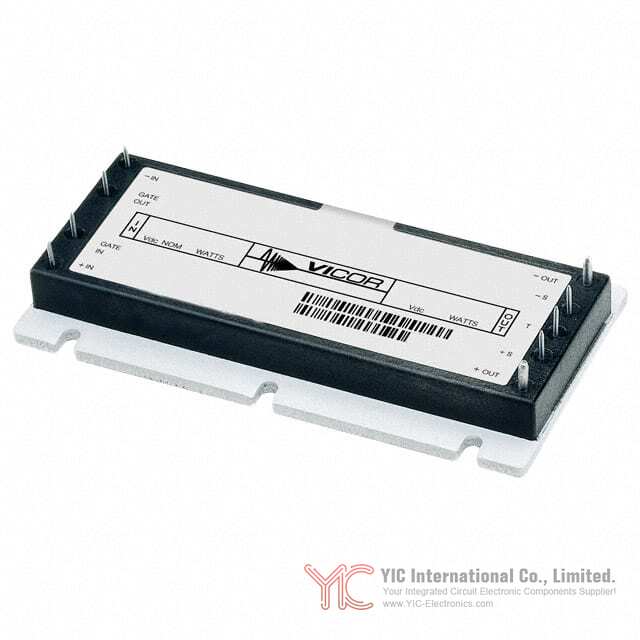
VI-2TZ-EY-F2 Image

View larger Image

Image may be representation.
See specs for product details.

VI-2TZ-EY-F2

Manufacturer Part Number: VI-2TZ-EY-F2
Manufacturer/Brand: Vicor Corporation
Part of Description: DC DC CONVERTER 2V 10W
Datasheets: 1.VI-2TZ-EY-F2.pdf 2.VI-2TZ-EY-F2.pdf 3.VI-2TZ-EY-F2.pdf
RoHs Status: Lead free / RoHS Compliant
Stock Condition: 28765 pcs Stock
Ship From: Hong Kong
Shipment Way: DHL/Fedex/TNT/UPS/EMS

Request Quote

Please complete all required fields with your contact information.Click "SUBMIT REQUEST" we will contact you shortly by email. Or Email us: Info@Y-IC.com.

Part No.
Quantity
Target Price(USD)

Inquiry Online

  • Contact Name
  • Company
  • E-mail
  • Phone
  • Message
  • Verify
  • Specifications
  • QC & Packaging
  • Shipping
  • Payment
  • Part NumberVI-2TZ-EY-F2
  • ManufacturerVicor
  • DescriptionDC DC CONVERTER 2V 10W
  • CategoryPower Supplies - Board Mount > DC DC Converters
  • Part Status28765 pcs Stock
  • Voltage - Output 3-
  • Voltage - Output 2-
  • Voltage - Output 12V
  • Voltage - Isolation3 kV
  • Voltage - Input (Min)66V
  • Voltage - Input (Max)160V
  • TypeIsolated Module
  • Size / Dimension4.60" L x 1.86" W x 1.05" H (116.8mm x 47.2mm x 26.7mm)
  • SeriesVI-200™ (50W)
  • Power (Watts)10 W
  • Package / CaseFull Brick
  • PackageBulk
  • Operating Temperature-10°C ~ 85°C
  • Number of Outputs1
  • Mounting TypeThrough Hole
  • FeaturesOCP, OTP, OVP, SCP
  • Efficiency88%
  • Current - Output (Max)10A
  • Base Product NumberVI-2TZ
  • ApplicationsITE (Commercial)

QC (Quality Warranty)

All products are carefully inspected before shipment according to our Quality Management practices. We ensure each part is genuine, meets specification requirements, and is functionally checked against original datasheets.
Our quality process supports reliable part performance and minimized risk of defects in customer applications.

Visual Inspection X-Ray Analysis Decapsulation Analysis Spectrometer Dimension Verification Dimension Verification Dimension Verification

Packaging

ESD Protection & Handling

All ESD-sensitive components are handled under anti-static control procedures.
Products are sealed in ESD-safe packaging to prevent electrostatic damage.
Proper labeling is applied for identification and traceability.
This ensures product integrity during storage, handling, and shipment.

Global Shipment by DHL/FedEx/TNT/UPS

Delivery time
Deliverytime will need 2-4days to most of country all over the world for DHL/UPS/FEDEX/TNT.
Shipping fees reference DHL.
1). You can offer your express delivery account for shipment, ifyou haven’t any express account for shipment, we can offer our account inadvance.
2). Use our account for shipment, Shipment charges(ReferenceDHL, Different Countries has different price.)

Shipment charges: (Reference DHL)
Weight(KG) Price(USD$)
0.00kg-1.00kg USD$60.00
1.00kg-2.00kg USD$70.00
2.00kg-3.00kg USD$80.00

More details: https://www.yic-electronics.com/shipment-way.htm
Please feel free contact us. Send any inquires or question toour Email Info@YIC-Electronics.com
We can do the best to you. Thank you very much your support.

Payment Way: Wire Transfer = Telegraphic Transfer(T/T) or PayPal or Western Union

Wire Transfer (T/T)

Our HSBC bank name: The Hongkong and Shanghai Banking Corporation Limited (HSBC Hong Kong)

Benefit Company Name: YIC International Co., Limited
Bank charges and payment account details, please click "Payment Way".

Western Union


Complete payment by Western Union.
Step 1. Go to your local Western Union branch, or go to their website (www.westernunion.com)
Step 2. Follow their instructions.


Bank charges and payment account details, please click "Payment Way".

PayPal Account:

PayPal Golden Key Supplier

PayPal Account:
PayPal Account ID: Info@YIC-Electronics.com
Company: YIC International Co., Limited

If you want to pay via Credit Card, please choose "Pay with my PayPal account" to continue by paypal.(www.paypal.com)
Bank charges details, please click "Payment Way".

User Review

  • Driv***stemsDE

    This was purchased for servicing a large motor drive. After installation, switching waveforms looked normal and the unit completed our load test successfully. Packaging also protected the terminals well.

    September 21th, 2026

  • Bits***amBen

    Used the XC6SLX45 on a custom acquisition board with several parallel interfaces. Configuration was successful and the design has been running through overnight tests without errors.

    September 18th, 2026

  • Auto***rdRepair

    Exactly the MCU we needed for an automotive electronics repair. Programming and verification completed successfully, and the repaired controller has been stable on our test bench.

    September 10th, 2026

  • Powe***nch_NL

    This module went into a high-power inverter repair. Mounting and connections matched the original unit, and it handled our initial load tests without abnormal temperature rise. So far, very satisfied.

    September 1th, 2026

  • DCPo***Guru

    Designed a synchronous buck converter around this controller. Efficiency was impressive and voltage regulation remained very stable under changing loads.

    August 24th, 2026

  • Broa***stLab

    Used this crosspoint switch in a video distribution project. Signal integrity stayed excellent across every channel we tested.

    August 20th, 2026

  • Mich***Rowe

    Everything functions correctly and configuration was straightforward. I would have liked better protective packaging, but the device itself works perfectly.

    August 11th, 2026

  • Kevi***rshall

    Still a dependable MCU for maintaining older equipment. Programmed without problems and everything worked exactly like the original device.

    August 5th, 2026

  • Anal***uilder

    The DAC provides clean output and repeatable accuracy. Used it in a precision signal generation project with excellent results.

    July 28th, 2026

  • Etha***le

    I used this precision reference in a laboratory measurement board. Voltage stability was excellent, and drift stayed very low during several days of continuous testing. Definitely a quality analog component.

    July 22th, 2026

  • Sign***lockGuy

    Accurate crystal with stable frequency output. Worked perfectly as the timing source in a low-power embedded design.

    July 14th, 2026

  • Powe***idBuilder

    This hot-swap controller performed exactly as expected. Startup behavior was smooth and protection functions worked correctly during testing.

    July 6th, 2026

  • Yosh***_Engineer

    Used this instrumentation amplifier in a precision signal conditioning circuit. Low noise and stable gain characteristics made integration easy.

    July 2th, 2026

  • Taku***Ishikawa

    Used this IGBT module in a motor drive system. Power handling capability is impressive and the module remained reliable during repeated load testing.

    June 22th, 2026

  • Netw***Builder_UK

    Installed this Ethernet controller in a custom networking platform. Driver support was good and network communication remained stable during long-term testing.

    June 18th, 2026

  • Kent***orimoto

    Used this processor in a wireless networking project. Stable operation and good integration with existing software tools. Performance is sufficient for embedded communication applications.

    June 9th, 2026

  • Oliv***ughes

    Good capacitor quality. Used in a power supply rebuild and measured values were close to spec. No issues after several days of continuous operation.

    June 5th, 2026

  • Kevi***rner

    Very good MCU for legacy embedded projects. I used the LPC2387FBD100 in an industrial control board replacement and it integrated more smoothly than expected. Ethernet and peripheral support were enough for our needs. Been running continuously for over a week without instability.

    May 25th, 2026

  • Nath***ill

    Good supervisor IC for automotive power systems. Reliable reset behavior.

    May 19th, 2026

  • Jack***III

    Good price

    May 15th, 2026

  • Davi***ung

    Good SoC for networking applications. Stable signal processing and low power consumption.

    May 6th, 2026

  • Andr***ee

    Overall is good

    April 28th, 2026

  • Emil***ark

    Accurate frequency output for timing circuits. Works well in low-power signal designs.

    April 23th, 2026

  • Jose***Dong

    Quick response and clear answers.

    April 16th, 2026

  • Marc***echLab

    Excellent quality. All chips passed testing and showed consistent electrical characteristics.

    April 7th, 2026

  • Circ***MasterX

    Good packaging and fast shipping. Performance is stable, but I wish there was clearer labeling on each component.

    April 2th, 2026

  • SamT***Reviews

    Excellent ICs. Used them in a communication module and performance was stable.

    March 27th, 2026

  • Kevi***.

    Good quality parts. No failures during testing.

    March 17th, 2026

  • Bria***.

    Good

    March 13th, 2026

  • Mari***.

    Superb performance.

    March 2th, 2026

  • Emma***

    Excellent ICs for DIY projects. Came well-packaged, genuine parts, and all tested good on my bench. No fails on 50 pieces.

    February 26th, 2026

  • Gadg***an123

    Good

    February 10th, 2026

  • Quan***PartsLab

    Great service

    February 6th, 2026

  • Vect***upplyChain

    The sales rep was professional and responsive.

    January 27th, 2026

  • Puls***vePurchasing

    Components were packed carefully with anti-static protection and cushioning. Everything arrived in good condition.

    January 23th, 2026

  • Pixe***ocure

    Components were packed well. Appreciated the attention to detail.

    January 13th, 2026

  • Byte***dgeBuyer

    Good Quality & Fast Response

    January 5th, 2026

  • Circ***AtlasGlobal

    JUST WHAT I WANT

    December 30th, 2025

  • Allo***taImports

    Very professional

    December 26th, 2025

  • Apex***i

    Quick response and prompt shipping

    December 19th, 2025

  • Hexa***e Circuits

    We were surprised by how quickly our order was processed. From inquiry to delivery, everything was smooth. A trustworthy IC distributor with good stock levels.

    December 11th, 2025

  • Core***se Inc.

    Good customer service

    December 2th, 2025

  • Skyl***Drew

    Delivered ahead of schedule.

    November 28th, 2025

  • Byte***ad

    We purchased a batch of XC6SLX25T-2CSG324C from yic-electronics. Clean markings, fresh 2024 date codes, and antistatic packaging—service was efficient and polite.

    November 17th, 2025

  • avl_***rcing_julia

    Smooth checkout and same-day ship via FedEx. Parts arrived dry-packed, correct MSL labels, and fresh date codes.

    November 13th, 2025

  • Liam***hnson

    Price is good. Order processed quickly, and tracking provided the same night.

    November 3th, 2025

  • Yuko***kamura

    Prices were reasonable compared to other brokers. One reel had minor box damage, but the inner pack was intact.

    October 31th, 2025

  • Opti***

    Excellent prices and top-notch customer service. Even the standard shipping was surprisingly fast. Components were well-packed and genuine. Totally satisfied with the purchase.

    October 21th, 2025

  • Thom***Gray

    Clear communication and on-time delivery.

    October 15th, 2025

  • Aaro***ughes

    Excellent supplier. Great communication and reliable service throughout the process.

    October 9th, 2025

  • Auro***hip

    Good experience overall. The order was processed smoothly, packaging was secure, and the delivery time was acceptable.

    September 29th, 2025

  • Jimm***

    I had a great experience with this company. They were very professional and efficient, and they had the obsolete parts I needed in stock. Once payment was processed, the delivery was quick—my goods arrived within two weeks. The customer service was friendly professional, with seamless communication throughout. Overall, everything went smoothly, and I would definitely recommend them.

    September 19th, 2025

  • Jaso***in

    The purchase was easy and fast. Polite and helpful seller, great price.

    September 8th, 2025

  • NeoB***

    Schnelle Lieferung, Produkt entspricht der Beschreibung, hochwertige Verarbeitung, stabile Funktion, alles passt perfekt, sehr zufrieden mit dem Kauf.

    September 2th, 2025

  • Tobi***

    Quick response, good price and clear communication. Very satisfied with the service

    August 28th, 2025

  • Zóc***Nights

    Not bad

    August 19th, 2025

  • 3174***41@gmail.com

    Bought once to know that YIC electronic components quality is good, and the price is not expensive, very affordable, fast delivery!
    Really recommend buying electronic components here!

    April 14th, 2025

  • Yush***nagahata

    YIC is an excellent company.
    The deliverry time is fast, and we find it very usueful for procuring electronic components.
    We look forward to continuing our relationship in the future.
    Go YIC! Keep up the great work!

    February 20th, 2025

  • SAMI*** INSTALLATION

    Fantastic! Shure I would buy again with YIC

    January 23th, 2025

  • Aadh***x

    The experience with YIC International was great. They not only provided support for the proposed parts but also proactively suggested additional parts that could be useful for us. They have reviewed all the parts properly and corrected our requirements. The delivery and other logistical support were excellent.

    January 22th, 2025

  • Ke*

    A Reliable and Trustworthy Partner
    Received original, high-quality components with fast shipping from YIC electronics.

    November 25th, 2024

  • Nana***risnawan

    Great component supplier, a place that easy to find electronics parts at a good price and delivery.

    August 6th, 2024

  • Alge***n Gholson

    Great products, fast delivery.
    The quality and service of YIC Electronics' components are at the top of the industry. Highly recommended.

    February 20th, 2024

  • Frey***.

    Our partnership with YIC Electronics has been exceptionally satisfying. Their unwavering commitment to outstanding customer service, coupled with their highly competitive pricing and unwavering dedication to top-notch, high-performance product quality, has consistently impressed us. YIC Electronics stands out as a true industry leader in every aspect of their service. Their swift and efficient logistics feedback further underscores their professionalism and reliability.

    August 25th, 2023

  • Jo C***n

    High Quality Products!
    I received genuine, high-quality electronic parts. Thank you YIC electronics.

    August 12th, 2023

  • Edwa***W.

    Yic-electronics suppliers are top notch quality and consistent reliability, I have generated several orders from their website and their service has exceeded expectations in providing electronic components for our business needs.

    August 6th, 2023

  • Anna***

    Yic-electronics is a good partner for our company, we have been cooperating with each other for 4 years, and the cooperation is all smooth and there is no dispute about the goods. Our latest transaction with Yic-electronics happened a month ago, and the process was very smooth, thanks to Yic-electronics's help!

    June 17th, 2023

0 Articles

Post a Review

Hello , welcome to comment on this product
Rating *
5.0

Please limit the remark to 500 words

Your personal information will be hidden

FAQFrequently Asked Questions

  • What are the key design constraints when integrating the VI-2TZ-EY-F2 into a 48V telecom or datacenter power distribution system? The VI-2TZ-EY-F2 accepts input voltage from 66V to 160V, which places it outside typical 48V bus applications but within industrial and telecom systems using higher intermediate bus architectures (such as 72V or 96V rails). If your system operates at standard 48V, the VI-2TZ-EY-F2 will not function; you would need to evaluate intermediate bus converters that step 48V to a compatible range, or select an alternative Vicor module rated for 48V input. The 10W output at 2V with 10A maximum current suits point-of-load applications requiring low-voltage, high-current delivery (such as ASIC or FPGA power rails), but the input voltage window must be verified against your bus architecture before design-in.
  • Can the VI-2TZ-EY-F2 replace the Vicor VI-200 series modules with different output voltages, and what trade-offs should be considered? The VI-2TZ-EY-F2 is part of the Vicor VI-200™ series (50W rating) and produces a fixed 2V output. Other modules in this series offer different output voltages (such as 3.3V, 5V, or 12V variants) with the same input range and similar thermal and isolation specifications. Replacement feasibility depends on whether your load circuit is designed for 2V; if your application requires a higher output voltage, swapping to a 3.3V or 5V variant would require recalculating downstream current delivery and potentially modifying PCB traces and filtering. The VI-2TZ-EY-F2's 10A output capability at 2V delivers 20W of power; moving to a higher voltage output in the same series may reduce maximum current (for example, a 5V variant might deliver 4A for similar power dissipation), affecting whether the module can supply peak transient currents in your design.
  • How does the 3 kV isolation rating of the VI-2TZ-EY-F2 affect safety certification and EMC design in industrial control applications? The VI-2TZ-EY-F2 provides 3 kV galvanic isolation between input and output, which contributes to functional safety isolation and helps meet EMC requirements by breaking ground loops between high-voltage bus domains and low-voltage signal electronics. In industrial control, this isolation can reduce conducted emissions by decoupling noise from the 66V–160V input rail from sensitive analog or digital circuits powered at 2V. However, isolation rating alone does not guarantee compliance with safety standards (such as IEC 60950 or UL standards); the 3 kV specification meets basic creepage and clearance requirements, but system-level isolation must account for the voltage withstand rating of all interconnected components and PCB layout. If your design requires isolation exceeding 3 kV or certified reinforced isolation for safety-critical circuits, the VI-2TZ-EY-F2 isolation alone may be insufficient and additional isolation barriers or alternative components may be required.
  • What is the thermal and reliability impact of running the VI-2TZ-EY-F2 at continuous full load (10A output, 20W dissipation) across its full operating temperature range of -10°C to 85°C? The VI-2TZ-EY-F2 is rated for -10°C to 85°C ambient operation and achieves 88% efficiency at full load, dissipating approximately 2.4W internally (20W output ÷ 0.88 efficiency ≈ 22.7W input; 22.7W − 20W = 2.7W loss). At 85°C ambient with sustained 10A output, the junction temperature inside the module will rise above ambient; the Full Brick package (116.8mm × 47.2mm × 26.7mm) has a surface area allowing convective cooling, but continuous operation at maximum load in a thermally constrained enclosure (such as a sealed cabinet without forced air) will elevate internal temperatures and accelerate component aging. The module includes OTP (Over-Temperature Protection), which disables output if junction temperature exceeds a threshold, typically around 100–120°C; reaching this threshold during normal operation indicates thermal design margin is exhausted. For reliable long-term operation in industrial environments, design thermal models assuming derate of 20–30% from rated output at 85°C, ensure adequate airflow or heatsinking, and verify that peak transient currents do not coincide with ambient temperature extremes.
  • The VI-2TZ-EY-F2 is RoHS non-compliant—what are the implications for procurement, supply chain, and end-of-life handling in regulated markets? RoHS (Restriction of Hazardous Substances) non-compliance indicates the VI-2TZ-EY-F2 contains one or more restricted substances (lead, cadmium, mercury, hexavalent chromium, or certain brominated flame retardants) above exemption thresholds. In the European Union and many other regulated markets, RoHS-compliant alternatives are often required for new product designs or procurement; using a non-compliant component may restrict sale or deployment of your end product in these regions. However, RoHS non-compliant components are permissible under certain exemptions (such as for military, aerospace, or medical applications), and Vicor may provide exemption documentation if your application qualifies. Before committing the VI-2TZ-EY-F2 to production, verify that your system integrator or end customer permits non-RoHS components; if not, contact Vicor to confirm whether RoHS-compliant alternatives exist in the VI-200 series with equivalent specifications. Supply chain and end-of-life disposal must account for hazardous material handling protocols, adding cost and complexity.
  • When migrating from the VI-2TZ-EY-F2 to newer isolated converter topologies (such as Vicor BCM or other vendors' modules), what design considerations ensure compatibility and prevent power delivery failures? The VI-2TZ-EY-F2 is a legacy Full Brick isolated converter with fixed input range (66V–160V) and fixed 2V output. Newer alternatives (such as Vicor BCM series, which uses a smaller form factor and often higher power density) may offer improved efficiency, faster transient response, or tighter regulation, but compatibility requires verification in several areas: (1) input voltage range—newer modules may support wider ranges (such as 36V–72V or 48V–160V) but may not overlap with 66V–160V; (2) output voltage regulation accuracy and ripple specifications, which affect downstream circuit stability; (3) current handling—newer modules may have different current-sharing or sequencing behavior if multiple converters are used; (4) isolation characteristics—newer topologies may offer higher isolation ratings or different leakage current profiles affecting EMC design. PCB footprint and thermal characteristics will differ, requiring layout changes and thermal re-analysis. A drop-in replacement rarely exists; instead, conduct a design review comparing input/output specifications, transient response, and thermal performance, then re-qualify the modified circuit before production release.
  • What precautions must be taken when designing the input filtering and output filtering networks for the VI-2TZ-EY-F2 to meet EMC and stability requirements? The VI-2TZ-EY-F2 accepts wide input range (66V–160V) and converts to 2V at up to 10A, making input and output filtering critical for EMC and stability. On the input side (66V–160V), the wide range implies variable input impedance across this voltage span; input filters must attenuate high-frequency switching noise (typically in the 500 kHz–2 MHz range for isolated converters) to meet conducted emissions limits, typically requiring a combination of bulk capacitance (electrolytic) and high-frequency ceramic capacitors. The output (2V, 10A) has high capacitive current requirements (dI/dt) due to low voltage and high current density; inadequate output filtering (low ESR capacitors in sufficient quantity) results in voltage overshoot, ringing, or sag that can violate downstream supply tolerances for ASICs or FPGAs. The VI-2TZ-EY-F2 datasheet must specify recommended capacitor values and types; deviation from these recommendations—particularly substituting lower capacitance or higher ESR components to reduce BOM cost—can degrade stability and trigger output regulation loops to oscillate or the module's OVP/SCP protections to nuisance-trip. Use transient load testing (e.g., step load from 0 to 10A) to verify settling time and peak voltage are within acceptable margins.
  • How does the VI-2TZ-EY-F2's OCP, OTP, and OVP protection interact with system-level circuit protection, and what redundancy or fault isolation is needed? The VI-2TZ-EY-F2 integrates Over-Current Protection (OCP), Over-Temperature Protection (OTP), and Over-Voltage Protection (OVP) to prevent component damage under fault conditions. OCP limits output current (typically at 110–130% of rated 10A) and latches or cycles; OTP disables output if junction temperature exceeds threshold; OVP clamps or disables output if 2V output exceeds a set threshold (typically 2.2–2.4V). These protections are reactive and prevent catastrophic converter failure, but they do not protect downstream circuitry (ASIC, FPGA, or other 2V-supplied components) if a short circuit occurs; OCP response time (typically 10–100 µs) allows transient overvoltage that may damage sensitive devices. System-level protection (such as external MOSFETs acting as an electronic fuse, or current-limiting resistors in series with critical loads) provides additional isolation and faster fault response. If your design includes high-value loads sensitive to supply transients, supplement the VI-2TZ-EY-F2 protection with downstream circuit protection; coordinate protection thresholds to ensure the external protection operates before the VI-2TZ-EY-F2 protections latch, preventing cascading failures.
  • In a multi-converter power architecture, can multiple VI-2TZ-EY-F2 modules be paralleled for increased current, and what are the practical limitations? Paralleling multiple VI-2TZ-EY-F2 modules (e.g., two modules, each delivering 10A at 2V, nominally providing 20A) is possible in principle but introduces several practical challenges. The VI-2TZ-EY-F2 has fixed voltage regulation (2V nominal, with regulation accuracy typically ±2–3%) and no active current-sharing control; if modules have slight regulation differences (e.g., one at 1.98V, another at 2.02V), current will redistribute unevenly—the lower-voltage module sinks most of the load current while the higher-voltage module supplies less, causing thermal imbalance and potential hotspot failure. Active current-sharing (using external circuitry to sense and equalize output currents) requires additional components and control logic, adding cost and complexity. Output-side paralleling requires careful PCB layout to minimize voltage drop differences; long trace resistance between modules or unequal output cable lengths creates voltage gradients that amplify current imbalance. For reliable scaled current delivery, most system designers prefer either using a higher-power converter (such as a Vicor 50W module rated for higher output current at 2V, if available) or cascading converters through an intermediate bus that provides regulated current sourcing, rather than direct DC-DC paralleling.
  • What are the lead-time and availability considerations for the VI-2TZ-EY-F2, and what qualified alternatives or cross-references should be evaluated for supply chain risk mitigation? The VI-2TZ-EY-F2, as a legacy Vicor VI-200 series module, may have extended lead times or limited stock at distributors, particularly if production volumes are low or the module is being phased out in favor of newer Vicor topologies. Before finalizing a design using the VI-2TZ-EY-F2, verify current lead times with Vicor and authorized distributors; if lead times exceed project schedules (typically >12–16 weeks for legacy modules), evaluate qualified alternatives: (1) other Vicor VI-200 variants with the same input range and 2V output, if the base part number differs; (2) Vicor BCM (Bus Converter Module) series offering 2V output with potentially different input ranges and form factors; (3) alternative vendors' isolated 2V converters (e.g., from Murata, TDK, or Meanwell) with 66V–160V input capability, verifying that isolation, efficiency, and protection features are equivalent. Each alternative requires design re-validation; however, identifying qualified backups during the design phase reduces risk of supply chain delays impacting production schedules.
  • How does the 88% efficiency rating of the VI-2TZ-EY-F2 translate to power loss in thermal and cost terms, and should efficiency drive the choice toward higher-performance modules? At 88% efficiency and 20W input power (10A output at 2V), the VI-2TZ-EY-F2 dissipates approximately 2.4W as heat. In a typical datacenter or industrial cabinet with dozens of converters, cumulative heat dissipation can be significant; 2.4W per module may require additional forced-air cooling or larger heatsinks. Newer isolated converters (Vicor BCM or competing modules) often achieve 90–94% efficiency, reducing loss to 1.2–2.0W per module and lowering total thermal management cost and system power consumption. However, efficiency improvement alone should not drive module selection; factors such as form factor, input/output voltage matching, transient performance, and cost must align with system requirements. If your design has tight thermal constraints (sealed enclosure, no forced air, or already near temperature limits), higher efficiency justifies the potentially higher module cost. If thermal margin is adequate, the 88% efficiency of the VI-2TZ-EY-F2 may be acceptable and lower-cost alternatives with similar efficiency could be evaluated without performance penalty.
  • The VI-2TZ-EY-F2 operates from 66V to 160V input—is this range suitable for industrial 72V, 96V, or 110V bus architectures, and what voltage margin planning is required? The VI-2TZ-EY-F2 input range (66V–160V) overlaps with common industrial bus voltages but with limited margin at the lower end. A nominal 72V bus with ±10% tolerance spans 64.8V–79.2V; the VI-2TZ-EY-F2 minimum 66V is above the lower tolerance extreme but only ~1.2V above the worst-case low voltage, leaving minimal margin for transient voltage sag (cable drops, inrush currents, or load-dump events). A 96V bus (typically 86.4V–105.6V with ±10% tolerance) sits comfortably in the VI-2TZ-EY-F2 range with 10V margin at both extremes. A 110V bus (99V–121V with ±10% tolerance) also fits well. For 72V systems, verify bus transient performance and confirm that under fault conditions (such as a load-dump event or bulk capacitor discharge), the input voltage does not dip below 66V for sustained periods, which would disable the VI-2TZ-EY-F2. If margin is inadequate, consider pre-regulating the bus voltage using a secondary converter or adding input bulk capacitance to stabilize transients; alternatively, evaluate higher input voltage-rated modules if your system can support intermediate voltage levels above 72V.
  • What is the expected Mean Time Between Failures (MTBF) or lifetime warranty for the VI-2TZ-EY-F2, and how does this affect system-level reliability planning? The VI-2TZ-EY-F2 datasheet must specify MTBF (Mean Time Between Failures) or a lifecycle rating; if not explicitly provided, contact Vicor for this specification. Isolated DC-DC converters typically achieve MTBF in the range of 100,000–300,000 hours (roughly 11–34 years at continuous operation) depending on design margin and thermal stress. The operating temperature range (-10°C to 85°C) and actual junction temperature during service affect MTBF; elevated temperatures exponentially reduce component life (following Arrhenius degradation models). If the VI-2TZ-EY-F2 operates continuously at 85°C ambient with sustained full load, junction temperature may exceed 100°C, reducing MTBF significantly—potentially halving or quartering the nominal MTBF for every 10°C temperature increase. For mission-critical systems (such as telecom or datacenter infrastructure requiring 99.99% availability), specify thermal design to keep the VI-2TZ-EY-F2 well below its maximum rating, use redundant converter stages with failover logic, and plan preventive maintenance or replacement schedules based on calculated mission hours. If lifetime warranty is required by your customer, negotiate terms directly with Vicor; most module suppliers do not offer long-term warranties without premium pricing or custom agreements.
  • When designing PCB layout for the VI-2TZ-EY-F2, what critical guidelines must be followed to avoid noise coupling, output voltage instability, or isolation barrier degradation? The VI-2TZ-EY-F2 is a Full Brick module with integrated isolation and switching noise; PCB layout directly impacts system performance and EMC compliance. Critical guidelines: (1) Input and output grounds must be isolated; the 3 kV isolation barrier separates input from output, and connecting grounds together negates isolation and increases common-mode noise; use a single-point ground connection through a high-frequency capacitor if return current must flow across the isolation boundary; (2) Input and output power traces must be routed on separate PCB layers or areas to prevent coupling; use separate planes or controlled routing to minimize loop area; (3) High-current 2V output traces (carrying 10A) must be short and wide to minimize voltage drop (target <50 mV loss, or 0.04V / 0.88 Ω equivalent series resistance); long output traces or small trace widths introduce impedance that couples switching noise into the 2V rail; (4) Output filter capacitors (required for stability and ripple control) must be placed within a few millimeters of the module output pins to minimize lead inductance; (5) input filter capacitors similarly must be placed close to the module input to suppress input-side switching noise. Failure to follow these guidelines can result in marginal regulation, excessive output ripple (causing ASIC or FPGA malfunction), or radiated EMI exceeding limits.
  • If the VI-2TZ-EY-F2 reaches end-of-life or is discontinued, what is the recommended migration path, and how should design documentation be updated to facilitate future replacements? If Vicor discontinues the VI-2TZ-EY-F2, historically the company offers a transition period (often 1–2 years) with inventory available but no new production. Before discontinuation, contact Vicor to obtain a recommended successor part; candidates include newer Vicor VI-200 variants, BCM series modules, or custom solutions. To facilitate migration, document design constraints explicitly: (1) required input voltage range and transient tolerance (e.g., 66V–160V minimum input, must tolerate 80V to 120V nominal bus with 10V transient sag); (2) output voltage and current specifications (2V, 10A, with regulation accuracy and ripple limits); (3) thermal budget (allowable dissipation and maximum junction temperature); (4) isolation and protection requirements (3 kV, OCP/OTP/OVP). With these documented, comparing alternative converters becomes systematic; engineers evaluating replacements can verify whether new modules meet the documented performance envelope without repeating the original design analysis. Maintain spare inventory (e.g., 10–20 units) of the VI-2TZ-EY-F2 if its lifecycle is uncertain; this provides a buffer for supply interruptions and allows existing systems to be serviced with compatible components during end-of-life transition.
  • How should the VI-2TZ-EY-F2 be tested and validated in production to verify that specifications meet design requirements and to detect latent defects? Production validation for the VI-2TZ-EY-F2 should include: (1) Initial electrical verification—apply rated input voltage and measure output voltage (target 2V ±2–3%), output ripple (typically <50–100 mV peak-to-peak at full load), and no-load quiescent current; (2) Protection testing—verify OCP by gradually increasing load current and confirming output current limits at ~110–130% of 10A rating; verify OVP by monitoring output voltage under open-circuit or light-load conditions and confirming clamp or shutdown occurs at ~2.2–2.4V; verify OTP by heating the module and confirming shutdown threshold; (3) Isolation and safety—perform hi-pot (high-potential) testing per IEC standards to verify 3 kV isolation withstand at input-to-output; (4) Thermal cycling—subject units to 3–5 cycles from -10°C to 85°C to detect solder joint failures or component degradation; (5) Burn-in—run a sample population at full load and elevated temperature (e.g., 55–60°C ambient, 85°C junction) for 24–48 hours to screen early failures. Automated test equipment (ATE) can be programmed to execute these tests; pass/fail criteria should align with datasheet limits and design margins. Non-destructive tests (electrical, hi-pot, thermal cycling) can be performed on 100% of units; burn-in and destructive testing (such as stress testing to failure) is typically reserved for quality audits on sample lots.