Hello Guest

Sign in / Register

Welcome,{$name}!

/ Logout
English
EnglishDeutschItaliaFrançais한국의русскийSvenskaNederlandespañolPortuguêspolski繁体中文SuomiGaeilgeSlovenskáSlovenijaČeštinaMelayuMagyarországHrvatskaDanskromânescIndonesiaΕλλάδαБългарски езикGalegolietuviųMaoriRepublika e ShqipërisëالعربيةአማርኛAzərbaycanEesti VabariikEuskeraБеларусьLëtzebuergeschAyitiAfrikaansBosnaíslenskaCambodiaမြန်မာМонголулсМакедонскиmalaɡasʲພາສາລາວKurdîსაქართველოIsiXhosaفارسیisiZuluPilipinoසිංහලTürk diliTiếng ViệtहिंदीТоҷикӣاردوภาษาไทยO'zbekKongeriketবাংলা ভাষারChicheŵaSamoaSesothoCрпскиKiswahiliУкраїнаनेपालीעִבְרִיתپښتوКыргыз тилиҚазақшаCatalàCorsaLatviešuHausaગુજરાતીಕನ್ನಡkannaḍaमराठी
Abracon LLC
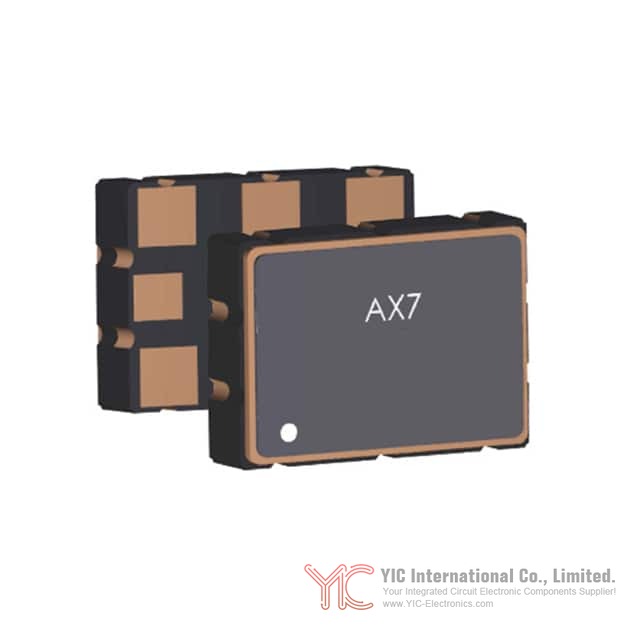
AX7DCF1-352.1959C Image

View larger Image

Image may be representation.
See specs for product details.

AX7DCF1-352.1959C

Manufacturer Part Number: AX7DCF1-352.1959C
Manufacturer/Brand: Abracon LLC
Part of Description: XTAL OSC XO 352.1959MHZ LVDS SMD
Datasheets: 1.AX7DCF1-352.1959C.pdf 2.AX7DCF1-352.1959C.pdf
RoHs Status: Lead free / RoHS Compliant
Stock Condition: 731538 pcs Stock
Ship From: Hong Kong
Shipment Way: DHL/Fedex/TNT/UPS/EMS

Request Quote

Please complete all required fields with your contact information.Click "SUBMIT REQUEST" we will contact you shortly by email. Or Email us: Info@Y-IC.com.

Part No.
Quantity
Target Price(USD)

Inquiry Online

  • Contact Name
  • Company
  • E-mail
  • Phone
  • Message
  • Verify
  • Specifications
  • QC & Packaging
  • Shipping
  • Payment
  • Part NumberAX7DCF1-352.1959C
  • ManufacturerAbracon
  • DescriptionXTAL OSC XO 352.1959MHZ LVDS SMD
  • CategoryCrystals, Oscillators, Resonators > Oscillators
  • Part Status731538 pcs Stock
  • Voltage - Supply1.8V
  • TypeXO (Standard)
  • Size / Dimension0.276" L x 0.197" W (7.00mm x 5.00mm)
  • SeriesClearClock™ AX7
  • Ratings-
  • Package / Case8-SMD, No Lead
  • PackageStrip
  • OutputLVDS
  • Operating Temperature-40°C ~ 85°C
  • Mounting TypeSurface Mount
  • Height - Seated (Max)0.075" (1.90mm)
  • FunctionEnable/Disable
  • Frequency Stability±25ppm
  • Frequency352.1959 MHz
  • Current - Supply (Max)70mA
  • Current - Supply (Disable) (Max)65mA
  • Base ResonatorCrystal
  • Absolute Pull Range (APR)-

QC (Quality Warranty)

All products are carefully inspected before shipment according to our Quality Management practices. We ensure each part is genuine, meets specification requirements, and is functionally checked against original datasheets.
Our quality process supports reliable part performance and minimized risk of defects in customer applications.

Visual Inspection X-Ray Analysis Decapsulation Analysis Spectrometer Dimension Verification Dimension Verification Dimension Verification

Packaging

ESD Protection & Handling

All ESD-sensitive components are handled under anti-static control procedures.
Products are sealed in ESD-safe packaging to prevent electrostatic damage.
Proper labeling is applied for identification and traceability.
This ensures product integrity during storage, handling, and shipment.

Global Shipment by DHL/FedEx/TNT/UPS

Delivery time
Deliverytime will need 2-4days to most of country all over the world for DHL/UPS/FEDEX/TNT.
Shipping fees reference DHL.
1). You can offer your express delivery account for shipment, ifyou haven’t any express account for shipment, we can offer our account inadvance.
2). Use our account for shipment, Shipment charges(ReferenceDHL, Different Countries has different price.)

Shipment charges: (Reference DHL)
Weight(KG) Price(USD$)
0.00kg-1.00kg USD$60.00
1.00kg-2.00kg USD$70.00
2.00kg-3.00kg USD$80.00

More details: https://www.yic-electronics.com/shipment-way.htm
Please feel free contact us. Send any inquires or question toour Email Info@YIC-Electronics.com
We can do the best to you. Thank you very much your support.

Payment Way: Wire Transfer = Telegraphic Transfer(T/T) or PayPal or Western Union

Wire Transfer (T/T)

Our HSBC bank name: The Hongkong and Shanghai Banking Corporation Limited (HSBC Hong Kong)

Benefit Company Name: YIC International Co., Limited
Bank charges and payment account details, please click "Payment Way".

Western Union


Complete payment by Western Union.
Step 1. Go to your local Western Union branch, or go to their website (www.westernunion.com)
Step 2. Follow their instructions.


Bank charges and payment account details, please click "Payment Way".

PayPal Account:

PayPal Golden Key Supplier

PayPal Account:
PayPal Account ID: Info@YIC-Electronics.com
Company: YIC International Co., Limited

If you want to pay via Credit Card, please choose "Pay with my PayPal account" to continue by paypal.(www.paypal.com)
Bank charges details, please click "Payment Way".

User Review

  • Driv***stemsDE

    This was purchased for servicing a large motor drive. After installation, switching waveforms looked normal and the unit completed our load test successfully. Packaging also protected the terminals well.

    September 21th, 2026

  • Bits***amBen

    Used the XC6SLX45 on a custom acquisition board with several parallel interfaces. Configuration was successful and the design has been running through overnight tests without errors.

    September 18th, 2026

  • Auto***rdRepair

    Exactly the MCU we needed for an automotive electronics repair. Programming and verification completed successfully, and the repaired controller has been stable on our test bench.

    September 10th, 2026

  • Powe***nch_NL

    This module went into a high-power inverter repair. Mounting and connections matched the original unit, and it handled our initial load tests without abnormal temperature rise. So far, very satisfied.

    September 1th, 2026

  • DCPo***Guru

    Designed a synchronous buck converter around this controller. Efficiency was impressive and voltage regulation remained very stable under changing loads.

    August 24th, 2026

  • Broa***stLab

    Used this crosspoint switch in a video distribution project. Signal integrity stayed excellent across every channel we tested.

    August 20th, 2026

  • Mich***Rowe

    Everything functions correctly and configuration was straightforward. I would have liked better protective packaging, but the device itself works perfectly.

    August 11th, 2026

  • Kevi***rshall

    Still a dependable MCU for maintaining older equipment. Programmed without problems and everything worked exactly like the original device.

    August 5th, 2026

  • Anal***uilder

    The DAC provides clean output and repeatable accuracy. Used it in a precision signal generation project with excellent results.

    July 28th, 2026

  • Etha***le

    I used this precision reference in a laboratory measurement board. Voltage stability was excellent, and drift stayed very low during several days of continuous testing. Definitely a quality analog component.

    July 22th, 2026

  • Sign***lockGuy

    Accurate crystal with stable frequency output. Worked perfectly as the timing source in a low-power embedded design.

    July 14th, 2026

  • Powe***idBuilder

    This hot-swap controller performed exactly as expected. Startup behavior was smooth and protection functions worked correctly during testing.

    July 6th, 2026

  • Yosh***_Engineer

    Used this instrumentation amplifier in a precision signal conditioning circuit. Low noise and stable gain characteristics made integration easy.

    July 2th, 2026

  • Taku***Ishikawa

    Used this IGBT module in a motor drive system. Power handling capability is impressive and the module remained reliable during repeated load testing.

    June 22th, 2026

  • Netw***Builder_UK

    Installed this Ethernet controller in a custom networking platform. Driver support was good and network communication remained stable during long-term testing.

    June 18th, 2026

  • Kent***orimoto

    Used this processor in a wireless networking project. Stable operation and good integration with existing software tools. Performance is sufficient for embedded communication applications.

    June 9th, 2026

  • Oliv***ughes

    Good capacitor quality. Used in a power supply rebuild and measured values were close to spec. No issues after several days of continuous operation.

    June 5th, 2026

  • Kevi***rner

    Very good MCU for legacy embedded projects. I used the LPC2387FBD100 in an industrial control board replacement and it integrated more smoothly than expected. Ethernet and peripheral support were enough for our needs. Been running continuously for over a week without instability.

    May 25th, 2026

  • Nath***ill

    Good supervisor IC for automotive power systems. Reliable reset behavior.

    May 19th, 2026

  • Jack***III

    Good price

    May 15th, 2026

  • Davi***ung

    Good SoC for networking applications. Stable signal processing and low power consumption.

    May 6th, 2026

  • Andr***ee

    Overall is good

    April 28th, 2026

  • Emil***ark

    Accurate frequency output for timing circuits. Works well in low-power signal designs.

    April 23th, 2026

  • Jose***Dong

    Quick response and clear answers.

    April 16th, 2026

  • Marc***echLab

    Excellent quality. All chips passed testing and showed consistent electrical characteristics.

    April 7th, 2026

  • Circ***MasterX

    Good packaging and fast shipping. Performance is stable, but I wish there was clearer labeling on each component.

    April 2th, 2026

  • SamT***Reviews

    Excellent ICs. Used them in a communication module and performance was stable.

    March 27th, 2026

  • Kevi***.

    Good quality parts. No failures during testing.

    March 17th, 2026

  • Bria***.

    Good

    March 13th, 2026

  • Mari***.

    Superb performance.

    March 2th, 2026

  • Emma***

    Excellent ICs for DIY projects. Came well-packaged, genuine parts, and all tested good on my bench. No fails on 50 pieces.

    February 26th, 2026

  • Gadg***an123

    Good

    February 10th, 2026

  • Quan***PartsLab

    Great service

    February 6th, 2026

  • Vect***upplyChain

    The sales rep was professional and responsive.

    January 27th, 2026

  • Puls***vePurchasing

    Components were packed carefully with anti-static protection and cushioning. Everything arrived in good condition.

    January 23th, 2026

  • Pixe***ocure

    Components were packed well. Appreciated the attention to detail.

    January 13th, 2026

  • Byte***dgeBuyer

    Good Quality & Fast Response

    January 5th, 2026

  • Circ***AtlasGlobal

    JUST WHAT I WANT

    December 30th, 2025

  • Allo***taImports

    Very professional

    December 26th, 2025

  • Apex***i

    Quick response and prompt shipping

    December 19th, 2025

  • Hexa***e Circuits

    We were surprised by how quickly our order was processed. From inquiry to delivery, everything was smooth. A trustworthy IC distributor with good stock levels.

    December 11th, 2025

  • Core***se Inc.

    Good customer service

    December 2th, 2025

  • Skyl***Drew

    Delivered ahead of schedule.

    November 28th, 2025

  • Byte***ad

    We purchased a batch of XC6SLX25T-2CSG324C from yic-electronics. Clean markings, fresh 2024 date codes, and antistatic packaging—service was efficient and polite.

    November 17th, 2025

  • avl_***rcing_julia

    Smooth checkout and same-day ship via FedEx. Parts arrived dry-packed, correct MSL labels, and fresh date codes.

    November 13th, 2025

  • Liam***hnson

    Price is good. Order processed quickly, and tracking provided the same night.

    November 3th, 2025

  • Yuko***kamura

    Prices were reasonable compared to other brokers. One reel had minor box damage, but the inner pack was intact.

    October 31th, 2025

  • Opti***

    Excellent prices and top-notch customer service. Even the standard shipping was surprisingly fast. Components were well-packed and genuine. Totally satisfied with the purchase.

    October 21th, 2025

  • Thom***Gray

    Clear communication and on-time delivery.

    October 15th, 2025

  • Aaro***ughes

    Excellent supplier. Great communication and reliable service throughout the process.

    October 9th, 2025

  • Auro***hip

    Good experience overall. The order was processed smoothly, packaging was secure, and the delivery time was acceptable.

    September 29th, 2025

  • Jimm***

    I had a great experience with this company. They were very professional and efficient, and they had the obsolete parts I needed in stock. Once payment was processed, the delivery was quick—my goods arrived within two weeks. The customer service was friendly professional, with seamless communication throughout. Overall, everything went smoothly, and I would definitely recommend them.

    September 19th, 2025

  • Jaso***in

    The purchase was easy and fast. Polite and helpful seller, great price.

    September 8th, 2025

  • NeoB***

    Schnelle Lieferung, Produkt entspricht der Beschreibung, hochwertige Verarbeitung, stabile Funktion, alles passt perfekt, sehr zufrieden mit dem Kauf.

    September 2th, 2025

  • Tobi***

    Quick response, good price and clear communication. Very satisfied with the service

    August 28th, 2025

  • Zóc***Nights

    Not bad

    August 19th, 2025

  • 3174***41@gmail.com

    Bought once to know that YIC electronic components quality is good, and the price is not expensive, very affordable, fast delivery!
    Really recommend buying electronic components here!

    April 14th, 2025

  • Yush***nagahata

    YIC is an excellent company.
    The deliverry time is fast, and we find it very usueful for procuring electronic components.
    We look forward to continuing our relationship in the future.
    Go YIC! Keep up the great work!

    February 20th, 2025

  • SAMI*** INSTALLATION

    Fantastic! Shure I would buy again with YIC

    January 23th, 2025

  • Aadh***x

    The experience with YIC International was great. They not only provided support for the proposed parts but also proactively suggested additional parts that could be useful for us. They have reviewed all the parts properly and corrected our requirements. The delivery and other logistical support were excellent.

    January 22th, 2025

  • Ke*

    A Reliable and Trustworthy Partner
    Received original, high-quality components with fast shipping from YIC electronics.

    November 25th, 2024

  • Nana***risnawan

    Great component supplier, a place that easy to find electronics parts at a good price and delivery.

    August 6th, 2024

  • Alge***n Gholson

    Great products, fast delivery.
    The quality and service of YIC Electronics' components are at the top of the industry. Highly recommended.

    February 20th, 2024

  • Frey***.

    Our partnership with YIC Electronics has been exceptionally satisfying. Their unwavering commitment to outstanding customer service, coupled with their highly competitive pricing and unwavering dedication to top-notch, high-performance product quality, has consistently impressed us. YIC Electronics stands out as a true industry leader in every aspect of their service. Their swift and efficient logistics feedback further underscores their professionalism and reliability.

    August 25th, 2023

  • Jo C***n

    High Quality Products!
    I received genuine, high-quality electronic parts. Thank you YIC electronics.

    August 12th, 2023

  • Edwa***W.

    Yic-electronics suppliers are top notch quality and consistent reliability, I have generated several orders from their website and their service has exceeded expectations in providing electronic components for our business needs.

    August 6th, 2023

  • Anna***

    Yic-electronics is a good partner for our company, we have been cooperating with each other for 4 years, and the cooperation is all smooth and there is no dispute about the goods. Our latest transaction with Yic-electronics happened a month ago, and the process was very smooth, thanks to Yic-electronics's help!

    June 17th, 2023

0 Articles

Post a Review

Hello , welcome to comment on this product
Rating *
5.0

Please limit the remark to 500 words

Your personal information will be hidden

FAQFrequently Asked Questions

  • What are the key design considerations when integrating the Abracon AX7DCF1-352.1959C into a high-speed digital signal processing application? The AX7DCF1-352.1959C outputs LVDS (Low-Voltage Differential Signaling) at 352.1959 MHz, which requires careful PCB layout to maintain signal integrity. Design considerations include: matching trace lengths between differential pairs to within 5-10 mils, using ground planes beneath signal routing, maintaining 90-100 ohm differential impedance, and keeping LVDS traces away from noisy power and I/O lines. The 1.8V supply voltage means the oscillator operates at reduced swing compared to 3.3V LVDS oscillators, so verify that downstream receiver threshold specifications are compatible. Additionally, termination resistors (typically 100 ohms between the differential pair at the load end) are necessary for proper LVDS operation and must be accounted for in your bill of materials and PCB layout.
  • Can the Abracon AX7DCF1-352.1959C replace an older oscillator with a different frequency or voltage specification in a legacy system redesign? Direct replacement depends on exact frequency and voltage matching. The AX7DCF1-352.1959C is fixed at 352.1959 MHz and 1.8V supply—if your legacy system requires a different frequency (even slightly different), this part will not function as a pin-compatible substitute without redesigning the downstream digital logic or clock distribution network. Similarly, if the legacy oscillator operated at 3.3V or 5V, substituting the 1.8V AX7DCF1-352.1959C will require level-shifting circuitry or redesign of the power domain. If you are migrating from a single-ended oscillator (CMOS or TTL output) to the LVDS output of the AX7DCF1-352.1959C, you must verify that all clock consumers support LVDS input or provide differential-to-single-ended conversion. Frequency stability (±25ppm for this part) should also match system timing budgets; legacy parts may have different stability specs.
  • What is the practical impact of the AX7DCF1-352.1959C's enable/disable function on power consumption in battery-powered or energy-constrained systems? The AX7DCF1-352.1959C draws up to 70 mA when enabled and 65 mA when disabled. The 5 mA difference is modest, so the disable function alone does not provide substantial power savings for this oscillator. However, the enable/disable pin allows you to gate the clock to downstream circuits when they are idle, which can save power at the system level. In battery-powered designs operating for extended periods, consider that 70 mA from a single oscillator is a significant draw; if total system power budget is tight (e.g., IoT devices with 100–500 mA budgets), multiple high-frequency oscillators or this oscillator running continuously may not be feasible. You should model power consumption across sleep, active, and standby states to confirm the enable/disable function provides net benefit for your duty cycle.
  • How does the ±25 ppm frequency stability of the AX7DCF1-352.1959C affect timing alignment in networked or multi-device synchronization scenarios? At 352.1959 MHz, ±25 ppm translates to a frequency drift of approximately ±8.8 kHz over the full operating range. In networked systems requiring tight timing synchronization (such as audio/video distribution, test and measurement, or radio frequency applications), this drift can accumulate phase error over time. For example, in a 1-second window, a ±25 ppm error represents up to ±25 nanoseconds of timing uncertainty per device. In applications requiring sub-microsecond precision across multiple nodes, you may need to implement a phase-locked loop (PLL) or disciplined oscillator circuit that locks to a master clock reference. Conversely, applications with relaxed timing requirements (e.g., general-purpose digital logic clocking) typically tolerate ±25 ppm without issue. Review your system's timing budget and jitter specifications to confirm whether the AX7DCF1-352.1959C's stability margin is adequate, or if a temperature-compensated or oven-controlled oscillator variant is necessary.
  • What supply voltage filtering and decoupling is recommended for the AX7DCF1-352.1959C to minimize phase noise and maintain output signal quality? The AX7DCF1-352.1959C operates at 1.8V and can draw up to 70 mA, making clean power delivery essential for low phase noise and jitter performance. Best practices include: (1) a 100 nF ceramic capacitor placed within 5-10 mm of the oscillator's VDD pin, (2) a 10 µF bulk capacitor (ceramic or tantalum) on the 1.8V rail upstream of the oscillator to handle transient load changes, and (3) a dedicated 1.8V regulator or low-dropout (LDO) linear regulator with at least 50-100 mV headroom and low output impedance to supply the oscillator. Avoid sharing the 1.8V rail with high-noise digital circuits; if necessary, filter the oscillator supply with a ferrite bead (10–100 mΩ impedance at the oscillator frequency) between the main rail and the oscillator capacitors. LVDS outputs are inherently lower noise than single-ended signals, but supply noise couples into the differential pair; poor decoupling can introduce frequency modulation sidebands and increase jitter in sensitive applications.
  • Is the Abracon AX7DCF1-352.1959C suitable for continuously operating in an industrial environment at the maximum temperature of 85°C, and what lifetime considerations apply? The AX7DCF1-352.1959C is rated for -40°C to 85°C operating range and carries MSL (Moisture Sensitivity Level) rating of 1, meaning it can be stored and handled without special moisture precautions. For continuous industrial operation at 85°C, the oscillator is designed to function, but several factors should be verified: (1) crystal aging—oscillators typically exhibit small frequency shifts over years of use, accelerated at higher temperatures; manufacturers typically specify aging as a percentage per decade (e.g., ±3 ppm per year), so budget for frequency drift in long-term applications, (2) component solder joint reliability—thermal cycling from 85°C ambient to lower storage temperatures can stress solder joints; validate wave/reflow profiles and PCB design for thermomechanical fatigue, and (3) supply voltage regulation at 85°C—verify that your 1.8V regulator maintains output voltage and has adequate thermal margin to prevent dropout. For mission-critical or long-life industrial applications (>10 years), consider a burn-in test of sample units and periodic recalibration procedures.
  • What are the LVDS output impedance and slew rate specifications of the AX7DCF1-352.1959C, and how do they affect receiver design? The product datasheet for the Abracon AX7DCF1-352.1959C does not explicitly list differential output impedance or slew rate in the parameters provided. However, LVDS oscillators typically drive differential impedance in the 90–110 ohm range with rise/fall times of 200–400 ps. To ensure proper receiver operation: (1) consult the detailed datasheet from Abracon for the AX7DCF1-352.1959C's exact output impedance and slew rate, (2) verify that your receiving IC (such as a clock buffer, FPGA input, or deserializer) has LVDS input standards (LVDS, mini-LVDS, or LVPECL) that match the oscillator's output swing and impedance, and (3) design the transmission line (PCB traces) to match the oscillator impedance and maintain controlled impedance throughout the path to the receiver. Undersized traces or impedance mismatches will cause reflections, overshoot, and potential bit errors in digital systems.
  • How does the small form factor (7.00 mm x 5.00 mm x 1.90 mm) of the AX7DCF1-352.1959C affect thermal management and component spacing on a dense PCB? The AX7DCF1-352.1959C is an 8-SMD, no-lead package measuring 7.00 mm x 5.00 mm with 1.90 mm maximum height, making it compact but thermally coupled to the PCB. In dense designs, thermal considerations include: (1) ensure at least 2-3 mm of clearance around the oscillator to allow airflow and prevent thermal coupling from adjacent high-power components such as voltage regulators or processors, (2) use a copper pad beneath the oscillator (connected to ground plane) to dissipate the ~126 mW of power (70 mA × 1.8V) generated during operation; this reduces on-chip temperature rise and improves frequency stability, (3) in environments with natural or forced convection (e.g., fan-cooled enclosures), position the oscillator in a moderate-temperature zone rather than directly downstream of heat-generating components, and (4) for thermal simulation or reliability modeling, assume the oscillator junction temperature will be 10–20°C above ambient due to local power dissipation. In high-density boards, thermal stratification can create localized hot spots; verify ambient and junction temperatures during prototype testing.
  • Can the Abracon AX7DCF1-352.1959C be used in applications requiring external frequency trimming or voltage-tuning capability? The AX7DCF1-352.1959C is a fixed-frequency XO (crystal oscillator) with enable/disable control only; it does not include voltage-controlled tuning inputs (VCO functionality) or trimmer capacitors for frequency adjustment. If your application requires post-manufacturing frequency tuning or dynamic frequency adjustment, the AX7DCF1-352.1959C is not suitable. Instead, you would need: (1) a voltage-controlled crystal oscillator (VCXO) variant from Abracon or another vendor, which allows frequency pulling via a control voltage, (2) an external PLL circuit that locks to a reference frequency and outputs a multiplied or divided clock, or (3) a digitally tunable oscillator (DTO) with serial programming capability. If frequency trimming is a hard requirement for your design, confirm whether Abracon offers a VCXO variant at 352.1959 MHz with 1.8V output, or select a different oscillator architecture early in the design phase.
  • What precautions must be taken when soldering and handling the Abracon AX7DCF1-352.1959C to avoid electrostatic discharge (ESD) or mechanical damage? The AX7DCF1-352.1959C carries MSL 1 rating, indicating minimal moisture sensitivity; however, standard ESD and handling precautions remain important: (1) use ESD-safe work surfaces, wrist straps, and personnel grounding when handling the component, (2) store components in their original packaging or ESD bags until assembly, (3) during reflow soldering, use standard profiles for 8-SMD packages—typically 200–240°C peak temperature for 10–30 seconds—verify the Abracon datasheet for exact thermal limits, as excessive temperatures can affect crystal resonance or cause delamination, (4) avoid mechanical shock or vibration during and immediately after reflow, as the crystal is a mechanical resonator and can be damaged by impact, and (5) perform electrical continuity and frequency verification on a sample of units from each production batch to detect any process-induced defects. For critical applications, consider X-ray inspection of solder joints to confirm proper wetting, especially if the oscillator is reworked or repaired after initial assembly.
  • What is the expected lifespan and end-of-life status of the Abracon AX7DCF1-352.1959C, and are there qualified alternatives if this part becomes obsolete? Abracon's ClearClock AX7 series is an established product line; however, semiconductor component lifecycles are unpredictable. The AX7DCF1-352.1959C is RoHS3 compliant and REACH unaffected, suggesting it meets current environmental regulations and is not in immediate end-of-life status. To mitigate obsolescence risk: (1) contact Abracon directly or your distributor to confirm the part's current status and expected lifecycle, (2) stock 2–3 years of supply if this is a high-volume product or long-life application, (3) identify potential alternatives now by searching for other LVDS oscillators at 352.1959 MHz, 1.8V supply from vendors such as Crystek, SiTime, or Rakon—note that pinouts may differ, requiring PCB layout changes, and (4) maintain design documentation that clearly specifies the frequency, output type (LVDS), supply voltage, and performance requirements; this simplifies qualification of substitute parts if the AX7DCF1-352.1959C is eventually discontinued. Early engagement with your supply chain reduces the risk of redesign pressure when parts reach end-of-life.
  • How does the 352.1959 MHz frequency of the Abracon AX7DCF1-352.1959C relate to common clock frequencies used in digital systems, and what clock distribution or divider circuits are needed? 352.1959 MHz is not a standard clock frequency (such as 1 MHz, 10 MHz, 27 MHz, or 148.5 MHz used in consumer electronics). This frequency suggests application in specialized domains such as test and measurement, scientific instrumentation, aerospace/defense systems, or proprietary digital signal processing. If your downstream circuits require different clock frequencies, you must implement clock divider or PLL circuits: (1) a simple binary divider can produce half-frequencies (176.09 MHz, 88.05 MHz, etc.) but introduces jitter proportional to the division ratio, (2) a PLL-based clock multiplier/divider (e.g., using an FPGA PLL or dedicated clock management IC) can generate arbitrary frequencies and reduce jitter, and (3) verify that the oscillator frequency and any derived frequencies meet the timing requirements of your digital logic, memory, and communication interfaces. If you are designing a new system, confirm with the engineering team that 352.1959 MHz is truly the required frequency or whether a more standard frequency (such as 200 MHz, 250 MHz, or 350 MHz) would simplify component selection and reduce BOM cost.
  • What are the electromagnetic compatibility (EMC) and conducted emissions characteristics of the Abracon AX7DCF1-352.1959C, and what filtering is required for regulatory compliance? The Abracon AX7DCF1-352.1959C operates at 352.1959 MHz with LVDS output, which inherently produces lower emissions than single-ended CMOS oscillators due to differential signaling and reduced coupling to PCB traces and cables. However, emissions compliance depends on the complete system design: (1) the 1.8V supply rail must be filtered to prevent power-supply noise from radiating; use ferrite beads and capacitors on the oscillator's VDD input, (2) LVDS traces must be routed as tightly coupled differential pairs in controlled-impedance transmission lines to minimize radiation from unbalanced currents, (3) the enable/disable signal line should include series resistance (10–47 ohms) to limit fast transitions and reduce EMI coupling, and (4) board-level grounding and return path design are critical—ensure that the oscillator return path is direct to a solid ground plane, not through shared traces with other circuits. For FCC (US), CE (EU), or other regulatory bodies, conduct EMC testing on a prototype with the AX7DCF1-352.1959C integrated; filtering and layout adjustments are often required to meet limits for radiated and conducted emissions.
  • What is the typical propagation delay and output-to-output skew of the Abracon AX7DCF1-352.1959C's LVDS outputs, and does it matter for synchronous system design? The product specifications provided do not explicitly state propagation delay or skew for the AX7DCF1-352.1959C. LVDS oscillators typically exhibit propagation delays of 2–5 nanoseconds from clock edge to output, and differential skew (P-side to N-side) of less than 100 picoseconds. In synchronous digital systems (e.g., parallel data interfaces, DDR memory controllers), this skew is often negligible compared to clock distribution skew across the PCB or within an FPGA. However, in applications requiring precise phase alignment (such as phased-array antennas, precision converters, or high-speed serial links), even sub-nanosecond skew can accumulate. To obtain exact skew specifications, consult the Abracon AX7DCF1-352.1959C datasheet or contact the manufacturer. If skew specifications are not published, assume nominal skew of <200 ps and validate in prototype testing. For critical timing-sensitive applications, measure the oscillator output delay using a high-bandwidth oscilloscope or phase detector to confirm it meets your system's timing budget.
  • Are there any known application-specific reliability or failure modes associated with LVDS oscillators at 352.1959 MHz, particularly in aerospace, military, or long-life industrial deployments? LVDS oscillators are generally robust, but known issues in specialized environments include: (1) crystal frequency shifts due to mechanical stress or vibration, particularly in aerospace or automotive applications subject to shock and vibration; validate the AX7DCF1-352.1959C's vibration immunity using the MILPRF-13800 or similar standards if deployed in high-vibration environments, (2) thermal cycling stress on solder joints and the crystal package—repeated temperature swings (e.g., -40°C to 85°C) can fatigue connections; accelerated life testing or thermal shock cycling can identify latent defects, (3) long-term frequency drift (aging)—crystals typically drift 2–5 ppm per year at room temperature; at 352.1959 MHz, this represents frequency shifts of ~700–1750 Hz per year; for long-life applications, budget for re-calibration or select a temperature-compensated variant, and (4) supply voltage transients or noise coupling into the 1.8V rail can cause phase modulation or jitter; robust bypass capacitor design is essential. For military/aerospace applications, verify that Abracon offers a qualified/screened version of the AX7DCF1-352.1959C (e.g., with burn-in test, 100% screening, or space-qualified variants) and follow relevant MIL-STD procurement and acceptance procedures.