Hello Guest

Sign in / Register

Welcome,{$name}!

/ Logout
English
EnglishDeutschItaliaFrançais한국의русскийSvenskaNederlandespañolPortuguêspolski繁体中文SuomiGaeilgeSlovenskáSlovenijaČeštinaMelayuMagyarországHrvatskaDanskromânescIndonesiaΕλλάδαБългарски езикGalegolietuviųMaoriRepublika e ShqipërisëالعربيةአማርኛAzərbaycanEesti VabariikEuskeraБеларусьLëtzebuergeschAyitiAfrikaansBosnaíslenskaCambodiaမြန်မာМонголулсМакедонскиmalaɡasʲພາສາລາວKurdîსაქართველოIsiXhosaفارسیisiZuluPilipinoසිංහලTürk diliTiếng ViệtहिंदीТоҷикӣاردوภาษาไทยO'zbekKongeriketবাংলা ভাষারChicheŵaSamoaSesothoCрпскиKiswahiliУкраїнаनेपालीעִבְרִיתپښتوКыргыз тилиҚазақшаCatalàCorsaLatviešuHausaગુજરાતીಕನ್ನಡkannaḍaमराठी
Abracon LLC
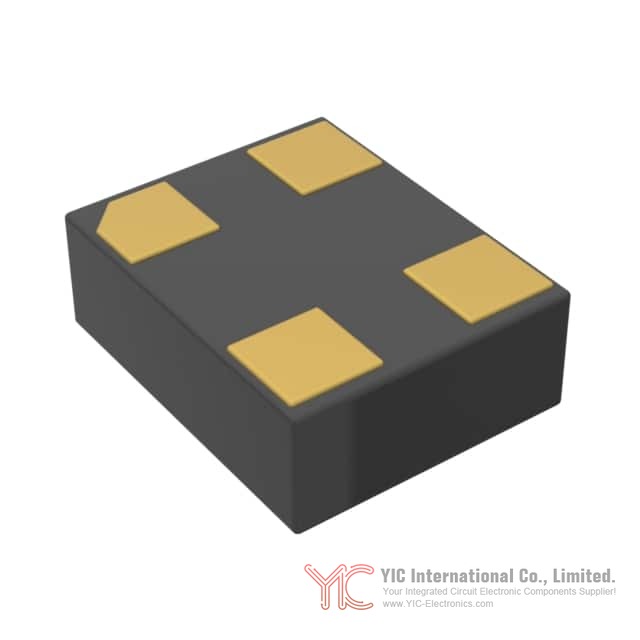
AMPMDDB-45.0000T3 Image

View larger Image

Image may be representation.
See specs for product details.

AMPMDDB-45.0000T3

Manufacturer Part Number: AMPMDDB-45.0000T3
Manufacturer/Brand: Abracon LLC
Part of Description: MEMS OSC XO 45.0000MHZ CMOS SMD
Datasheets: 1.AMPMDDB-45.0000T3.pdf 2.AMPMDDB-45.0000T3.pdf
RoHs Status: Lead free / RoHS Compliant
Stock Condition: 31130 pcs Stock
Ship From: Hong Kong
Shipment Way: DHL/Fedex/TNT/UPS/EMS

Request Quote

Please complete all required fields with your contact information.Click "SUBMIT REQUEST" we will contact you shortly by email. Or Email us: Info@Y-IC.com.

Part No.
Quantity
Target Price(USD)

Inquiry Online

  • Contact Name
  • Company
  • E-mail
  • Phone
  • Message
  • Verify
  • Specifications
  • QC & Packaging
  • Shipping
  • Payment
  • Part NumberAMPMDDB-45.0000T3
  • ManufacturerAbracon
  • DescriptionMEMS OSC XO 45.0000MHZ CMOS SMD
  • CategoryCrystals, Oscillators, Resonators > Oscillators
  • Part Status31130 pcs Stock
  • Voltage - Supply1.71V ~ 3.63V
  • TypeXO (Standard)
  • Size / Dimension0.098" L x 0.079" W (2.50mm x 2.00mm)
  • SeriesAMPM
  • Ratings-
  • Package / Case4-SMD, No Lead
  • PackageTape & Reel (TR)
  • OutputCMOS
  • Operating Temperature-20°C ~ 70°C
  • Mounting TypeSurface Mount
  • Height - Seated (Max)0.035" (0.89mm)
  • FunctionStandby (Power Down)
  • Frequency Stability±25ppm
  • Frequency45 MHz
  • Current - Supply (Max)1.3mA (Typ)
  • Current - Supply (Disable) (Max)160µA
  • Base ResonatorMEMS
  • Absolute Pull Range (APR)-

QC (Quality Warranty)

All products are carefully inspected before shipment according to our Quality Management practices. We ensure each part is genuine, meets specification requirements, and is functionally checked against original datasheets.
Our quality process supports reliable part performance and minimized risk of defects in customer applications.

Visual Inspection X-Ray Analysis Decapsulation Analysis Spectrometer Dimension Verification Dimension Verification Dimension Verification

Packaging

ESD Protection & Handling

All ESD-sensitive components are handled under anti-static control procedures.
Products are sealed in ESD-safe packaging to prevent electrostatic damage.
Proper labeling is applied for identification and traceability.
This ensures product integrity during storage, handling, and shipment.

Global Shipment by DHL/FedEx/TNT/UPS

Delivery time
Deliverytime will need 2-4days to most of country all over the world for DHL/UPS/FEDEX/TNT.
Shipping fees reference DHL.
1). You can offer your express delivery account for shipment, ifyou haven’t any express account for shipment, we can offer our account inadvance.
2). Use our account for shipment, Shipment charges(ReferenceDHL, Different Countries has different price.)

Shipment charges: (Reference DHL)
Weight(KG) Price(USD$)
0.00kg-1.00kg USD$60.00
1.00kg-2.00kg USD$70.00
2.00kg-3.00kg USD$80.00

More details: https://www.yic-electronics.com/shipment-way.htm
Please feel free contact us. Send any inquires or question toour Email Info@YIC-Electronics.com
We can do the best to you. Thank you very much your support.

Payment Way: Wire Transfer = Telegraphic Transfer(T/T) or PayPal or Western Union

Wire Transfer (T/T)

Our HSBC bank name: The Hongkong and Shanghai Banking Corporation Limited (HSBC Hong Kong)

Benefit Company Name: YIC International Co., Limited
Bank charges and payment account details, please click "Payment Way".

Western Union


Complete payment by Western Union.
Step 1. Go to your local Western Union branch, or go to their website (www.westernunion.com)
Step 2. Follow their instructions.


Bank charges and payment account details, please click "Payment Way".

PayPal Account:

PayPal Golden Key Supplier

PayPal Account:
PayPal Account ID: Info@YIC-Electronics.com
Company: YIC International Co., Limited

If you want to pay via Credit Card, please choose "Pay with my PayPal account" to continue by paypal.(www.paypal.com)
Bank charges details, please click "Payment Way".

User Review

  • Trac***

    I needed this Cyclone III FPGA for an older industrial interface board. The device accepted our existing configuration and the board passed its startup checks. Finding a compatible part saved us from redesigning the entire control section.

    October 12th, 2026

  • Driv***stemsDE

    This was purchased for servicing a large motor drive. After installation, switching waveforms looked normal and the unit completed our load test successfully. Packaging also protected the terminals well.

    September 21th, 2026

  • Bits***amBen

    Used the XC6SLX45 on a custom acquisition board with several parallel interfaces. Configuration was successful and the design has been running through overnight tests without errors.

    September 18th, 2026

  • Auto***rdRepair

    Exactly the MCU we needed for an automotive electronics repair. Programming and verification completed successfully, and the repaired controller has been stable on our test bench.

    September 10th, 2026

  • Powe***nch_NL

    This module went into a high-power inverter repair. Mounting and connections matched the original unit, and it handled our initial load tests without abnormal temperature rise. So far, very satisfied.

    September 1th, 2026

  • DCPo***Guru

    Designed a synchronous buck converter around this controller. Efficiency was impressive and voltage regulation remained very stable under changing loads.

    August 24th, 2026

  • Broa***stLab

    Used this crosspoint switch in a video distribution project. Signal integrity stayed excellent across every channel we tested.

    August 20th, 2026

  • Mich***Rowe

    Everything functions correctly and configuration was straightforward. I would have liked better protective packaging, but the device itself works perfectly.

    August 11th, 2026

  • Kevi***rshall

    Still a dependable MCU for maintaining older equipment. Programmed without problems and everything worked exactly like the original device.

    August 5th, 2026

  • Anal***uilder

    The DAC provides clean output and repeatable accuracy. Used it in a precision signal generation project with excellent results.

    July 28th, 2026

  • Etha***le

    I used this precision reference in a laboratory measurement board. Voltage stability was excellent, and drift stayed very low during several days of continuous testing. Definitely a quality analog component.

    July 22th, 2026

  • Sign***lockGuy

    Accurate crystal with stable frequency output. Worked perfectly as the timing source in a low-power embedded design.

    July 14th, 2026

  • Powe***idBuilder

    This hot-swap controller performed exactly as expected. Startup behavior was smooth and protection functions worked correctly during testing.

    July 6th, 2026

  • Yosh***_Engineer

    Used this instrumentation amplifier in a precision signal conditioning circuit. Low noise and stable gain characteristics made integration easy.

    July 2th, 2026

  • Taku***Ishikawa

    Used this IGBT module in a motor drive system. Power handling capability is impressive and the module remained reliable during repeated load testing.

    June 22th, 2026

  • Netw***Builder_UK

    Installed this Ethernet controller in a custom networking platform. Driver support was good and network communication remained stable during long-term testing.

    June 18th, 2026

  • Kent***orimoto

    Used this processor in a wireless networking project. Stable operation and good integration with existing software tools. Performance is sufficient for embedded communication applications.

    June 9th, 2026

  • Oliv***ughes

    Good capacitor quality. Used in a power supply rebuild and measured values were close to spec. No issues after several days of continuous operation.

    June 5th, 2026

  • Kevi***rner

    Very good MCU for legacy embedded projects. I used the LPC2387FBD100 in an industrial control board replacement and it integrated more smoothly than expected. Ethernet and peripheral support were enough for our needs. Been running continuously for over a week without instability.

    May 25th, 2026

  • Nath***ill

    Good supervisor IC for automotive power systems. Reliable reset behavior.

    May 19th, 2026

  • Jack***III

    Good price

    May 15th, 2026

  • Davi***ung

    Good SoC for networking applications. Stable signal processing and low power consumption.

    May 6th, 2026

  • Andr***ee

    Overall is good

    April 28th, 2026

  • Emil***ark

    Accurate frequency output for timing circuits. Works well in low-power signal designs.

    April 23th, 2026

  • Jose***Dong

    Quick response and clear answers.

    April 16th, 2026

  • Marc***echLab

    Excellent quality. All chips passed testing and showed consistent electrical characteristics.

    April 7th, 2026

  • Circ***MasterX

    Good packaging and fast shipping. Performance is stable, but I wish there was clearer labeling on each component.

    April 2th, 2026

  • SamT***Reviews

    Excellent ICs. Used them in a communication module and performance was stable.

    March 27th, 2026

  • Kevi***.

    Good quality parts. No failures during testing.

    March 17th, 2026

  • Bria***.

    Good

    March 13th, 2026

  • Mari***.

    Superb performance.

    March 2th, 2026

  • Emma***

    Excellent ICs for DIY projects. Came well-packaged, genuine parts, and all tested good on my bench. No fails on 50 pieces.

    February 26th, 2026

  • Gadg***an123

    Good

    February 10th, 2026

  • Quan***PartsLab

    Great service

    February 6th, 2026

  • Vect***upplyChain

    The sales rep was professional and responsive.

    January 27th, 2026

  • Puls***vePurchasing

    Components were packed carefully with anti-static protection and cushioning. Everything arrived in good condition.

    January 23th, 2026

  • Pixe***ocure

    Components were packed well. Appreciated the attention to detail.

    January 13th, 2026

  • Byte***dgeBuyer

    Good Quality & Fast Response

    January 5th, 2026

  • Circ***AtlasGlobal

    JUST WHAT I WANT

    December 30th, 2025

  • Allo***taImports

    Very professional

    December 26th, 2025

  • Apex***i

    Quick response and prompt shipping

    December 19th, 2025

  • Hexa***e Circuits

    We were surprised by how quickly our order was processed. From inquiry to delivery, everything was smooth. A trustworthy IC distributor with good stock levels.

    December 11th, 2025

  • Core***se Inc.

    Good customer service

    December 2th, 2025

  • Skyl***Drew

    Delivered ahead of schedule.

    November 28th, 2025

  • Byte***ad

    We purchased a batch of XC6SLX25T-2CSG324C from yic-electronics. Clean markings, fresh 2024 date codes, and antistatic packaging—service was efficient and polite.

    November 17th, 2025

  • avl_***rcing_julia

    Smooth checkout and same-day ship via FedEx. Parts arrived dry-packed, correct MSL labels, and fresh date codes.

    November 13th, 2025

  • Liam***hnson

    Price is good. Order processed quickly, and tracking provided the same night.

    November 3th, 2025

  • Yuko***kamura

    Prices were reasonable compared to other brokers. One reel had minor box damage, but the inner pack was intact.

    October 31th, 2025

  • Opti***

    Excellent prices and top-notch customer service. Even the standard shipping was surprisingly fast. Components were well-packed and genuine. Totally satisfied with the purchase.

    October 21th, 2025

  • Thom***Gray

    Clear communication and on-time delivery.

    October 15th, 2025

  • Aaro***ughes

    Excellent supplier. Great communication and reliable service throughout the process.

    October 9th, 2025

  • Auro***hip

    Good experience overall. The order was processed smoothly, packaging was secure, and the delivery time was acceptable.

    September 29th, 2025

  • Jimm***

    I had a great experience with this company. They were very professional and efficient, and they had the obsolete parts I needed in stock. Once payment was processed, the delivery was quick—my goods arrived within two weeks. The customer service was friendly professional, with seamless communication throughout. Overall, everything went smoothly, and I would definitely recommend them.

    September 19th, 2025

  • Jaso***in

    The purchase was easy and fast. Polite and helpful seller, great price.

    September 8th, 2025

  • NeoB***

    Schnelle Lieferung, Produkt entspricht der Beschreibung, hochwertige Verarbeitung, stabile Funktion, alles passt perfekt, sehr zufrieden mit dem Kauf.

    September 2th, 2025

  • Tobi***

    Quick response, good price and clear communication. Very satisfied with the service

    August 28th, 2025

  • Zóc***Nights

    Not bad

    August 19th, 2025

  • 3174***41@gmail.com

    Bought once to know that YIC electronic components quality is good, and the price is not expensive, very affordable, fast delivery!
    Really recommend buying electronic components here!

    April 14th, 2025

  • Yush***nagahata

    YIC is an excellent company.
    The deliverry time is fast, and we find it very usueful for procuring electronic components.
    We look forward to continuing our relationship in the future.
    Go YIC! Keep up the great work!

    February 20th, 2025

  • SAMI*** INSTALLATION

    Fantastic! Shure I would buy again with YIC

    January 23th, 2025

  • Aadh***x

    The experience with YIC International was great. They not only provided support for the proposed parts but also proactively suggested additional parts that could be useful for us. They have reviewed all the parts properly and corrected our requirements. The delivery and other logistical support were excellent.

    January 22th, 2025

  • Ke*

    A Reliable and Trustworthy Partner
    Received original, high-quality components with fast shipping from YIC electronics.

    November 25th, 2024

  • Nana***risnawan

    Great component supplier, a place that easy to find electronics parts at a good price and delivery.

    August 6th, 2024

  • Alge***n Gholson

    Great products, fast delivery.
    The quality and service of YIC Electronics' components are at the top of the industry. Highly recommended.

    February 20th, 2024

  • Frey***.

    Our partnership with YIC Electronics has been exceptionally satisfying. Their unwavering commitment to outstanding customer service, coupled with their highly competitive pricing and unwavering dedication to top-notch, high-performance product quality, has consistently impressed us. YIC Electronics stands out as a true industry leader in every aspect of their service. Their swift and efficient logistics feedback further underscores their professionalism and reliability.

    August 25th, 2023

  • Jo C***n

    High Quality Products!
    I received genuine, high-quality electronic parts. Thank you YIC electronics.

    August 12th, 2023

  • Edwa***W.

    Yic-electronics suppliers are top notch quality and consistent reliability, I have generated several orders from their website and their service has exceeded expectations in providing electronic components for our business needs.

    August 6th, 2023

  • Anna***

    Yic-electronics is a good partner for our company, we have been cooperating with each other for 4 years, and the cooperation is all smooth and there is no dispute about the goods. Our latest transaction with Yic-electronics happened a month ago, and the process was very smooth, thanks to Yic-electronics's help!

    June 17th, 2023

0 Articles

Post a Review

Hello , welcome to comment on this product
Rating *
5.0

Please limit the remark to 500 words

Your personal information will be hidden

FAQFrequently Asked Questions

  • What are the key design considerations when integrating the AMPMDDB-45.0000T3 programmable oscillator into a battery-powered IoT device? The AMPMDDB-45.0000T3 operates across 1.71V to 3.63V, making it suitable for single-cell lithium or multi-cell alkaline battery systems. However, you must account for battery voltage droop under load and ensure your power supply regulation maintains the oscillator within its specified range throughout the battery's discharge cycle. The wide input range reduces the need for precision regulators, but you should still verify startup behavior at minimum voltage and validate frequency stability margins during low-battery conditions. Temperature compensation becomes critical if your application experiences ambient temperature variation, as the ±25ppm stability specification assumes controlled thermal environment.
  • Can the AMPMDDB-45.0000T3 replace an existing fixed-frequency oscillator in a legacy design, and what circuit modifications are required? The AMPMDDB-45.0000T3 is a programmable oscillator, whereas many legacy designs use fixed-frequency crystals or ceramic resonators. Direct replacement requires adding programmability logic—typically I2C or SPI configuration during initialization—which your microcontroller must support. The SMD2520-4P package dimensions may differ from your original component footprint, necessitating PCB layout verification. If your design lacks configuration pins or the microcontroller cannot execute initialization code, you would need to select a fixed-frequency variant instead. Additionally, verify that your original power supply can source the current envelope of the AMPMDDB-45.0000T3 without introducing additional noise, as programmable oscillators sometimes exhibit higher switching current than simple crystals.
  • What is the practical impact of the ±25ppm frequency stability specification for timing-critical applications like CAN bus or wireless protocol implementation? A ±25ppm stability on the AMPMDDB-45.0000T3 translates to a maximum frequency drift of ±25 Hz at 1 MHz or ±1.125 kHz at 45 MHz. For protocols like CAN bus (which typically tolerates ±2% frequency error per node), this represents excellent margin. However, for tightly synchronized applications such as audio sampling, precise GPS disciplining, or ultra-narrowband wireless systems, ±25ppm may approach or exceed acceptable tolerance. You should cross-reference the AMPMDDB-45.0000T3 stability against your protocol's clock tolerance budget and account for temperature-induced drift; if your application spans 0°C to 70°C and the oscillator exhibits temperature coefficient behavior not fully specified in basic parameters, consider thermal testing or selecting an oven-controlled alternative. Multi-node systems accumulate clock errors across all nodes, so validate worst-case synchronization loss.
  • How does the AMPMDDB-45.0000T3's low supply voltage range affect noise performance and jitter characteristics in high-speed digital applications? Operating at the lower end of the AMPMDDB-45.0000T3 supply range (1.71V) reduces available power supply rejection ratio (PSRR) headroom and typically increases susceptibility to supply rail noise. At minimum voltage, the oscillator's internal current sinks and sources operate closer to saturation limits, potentially degrading phase noise and jitter performance compared to operation at higher voltages (3.63V). For applications requiring sub-100 ps jitter—such as high-speed serial interfaces (PCIe, USB 3.0) or data converter clocking—you should verify the AMPMDDB-45.0000T3 jitter specification at your actual operating voltage, not assume typical values measured at mid-range supply. Consider implementing dedicated, low-noise power regulation isolated from digital switching noise, and minimize trace inductance between the oscillator and power pins to prevent supply-induced frequency modulation.
  • What are the reliability considerations for using the AMPMDDB-45.0000T3 in industrial temperature ranges or harsh operating environments? The AMPMDDB-45.0000T3 is RoHS-compliant, indicating environmental consciousness, but the stated ±25ppm stability specification typically assumes standard operating conditions (often 25°C reference). In industrial environments spanning -40°C to +85°C or beyond, the oscillator's actual frequency drift may exceed ±25ppm due to temperature coefficient effects not fully detailed in basic parameters. You must obtain the complete temperature stability curve from ABRACON to calculate worst-case frequency error across your operating temperature range. For automotive or aerospace applications requiring proven MTBF data or qualification to specific standards (AEC-Q200, MIL-PRF-55310), verify that the AMPMDDB-45.0000T3 holds appropriate certifications. Additionally, the SMD2520-4P package's small footprint and low thermal mass may result in faster temperature tracking than larger packages, which could introduce additional frequency modulation in thermally cycled environments.
  • Should I use the AMPMDDB-45.0000T3 as a replacement for a quartz crystal in a real-time clock (RTC) application, and what trade-offs apply? The AMPMDDB-45.0000T3 can functionally replace a crystal oscillator in RTC circuits, but significant trade-offs exist. Dedicated RTC oscillators often operate at lower frequencies (32.768 kHz) with ultra-low current consumption (microamperes) and may offer superior long-term frequency stability (±5 ppm annually). The AMPMDDB-45.0000T3, being a programmable general-purpose oscillator, typically consumes higher current and may be optimized for higher frequency operation. If your RTC application runs continuously from a coin cell or harvested energy, the power overhead of the AMPMDDB-45.0000T3 could significantly reduce battery life compared to a dedicated RTC oscillator. Additionally, RTC stability is often specified over extended periods (annual drift) rather than instantaneous ppm, requiring different validation approaches. Use the AMPMDDB-45.0000T3 for RTC only if frequency programmability or dynamic clock reconfiguration is a system requirement that justifies the power and form-factor trade-offs.
  • How should I handle the AMPMDDB-45.0000T3 during PCB assembly, and are there specific reflow profile considerations for the SMD2520-4P package? The AMPMDDB-45.0000T3 in SMD2520-4P packaging is surface-mountable and shipped in Tape & Reel format, indicating compatibility with standard pick-and-place assembly. However, programmable oscillators are sensitive to thermal stress during reflow due to internal frequency-setting structures. You should confirm with ABRACON that the AMPMDDB-45.0000T3 supports your reflow profile (peak temperature, ramp rates, thermal shock limits). Avoid exceeding recommended peak temperature or dwell time, as excessive heating can shift the internal frequency-setting calibration, resulting in frequency error beyond ±25ppm specification after assembly. Additionally, post-reflow testing should include frequency verification before placing the device into production inventory. If your assembly process involves hand-soldering or rework, coordinate with your manufacturing team to validate that local heat application does not compromise calibration.
  • What are the configuration options for the AMPMDDB-45.0000T3, and how does programmability affect design complexity compared to fixed-frequency alternatives? The AMPMDDB-45.0000T3 designation suggests a 45 MHz programmable oscillator, but the exact programmability interface (I2C, SPI, parallel logic levels) and configuration register map are not detailed in the basic parameters. You must review the full datasheet to understand whether configuration is performed once at startup, dynamically during operation, or via non-volatile memory programming. If configuration requires microcontroller intervention at every power-up, your firmware must include initialization code and command timing sequences, increasing software complexity. Conversely, if the AMPMDDB-45.0000T3 supports non-volatile programming (one-time factory programming), design complexity reduces. Additionally, if your system includes multiple independent subsystems each requiring different clock frequencies, the programmability feature could consolidate multiple fixed oscillators into a single AMPMDDB-45.0000T3 with software control, reducing BOM cost and PCB real estate—but this trade-off depends on whether your microcontroller has sufficient I/O and software resources for initialization.
  • How does the 1.71V minimum supply voltage of the AMPMDDB-45.0000T3 impact selection of voltage regulators and power sequencing in multi-rail systems? A 1.71V minimum requirement on the AMPMDDB-45.0000T3 is lower than many standard digital logic (typically 1.8V), allowing the oscillator to continue operating during brown-out or low-battery conditions. However, this creates a potential design hazard: if your microcontroller or digital logic stops functioning at 1.8V while the AMPMDDB-45.0000T3 continues at 1.71V, you risk clock presence without corresponding logic operation—potentially causing latch-up, bus contention, or undefined state machine behavior. You should implement power sequencing or brownout reset logic that either (1) ensures all digital blocks and the AMPMDDB-45.0000T3 lose power simultaneously, or (2) gates clock distribution when core logic supply falls below minimum. Additionally, if your regulator output impedance or line regulation is insufficient, transient voltage sags from digital load current switching could momentarily drop the AMPMDDB-45.0000T3 supply below 1.71V, causing frequency glitches or momentary oscillation stop. Validate your regulator's transient response with actual load profiles.
  • What is the expected power consumption of the AMPMDDB-45.0000T3 at different supply voltages, and how should this factor into battery life calculations? The basic parameter set does not include current consumption (ICC or IDD) for the AMPMDDB-45.0000T3, which is essential for battery-powered applications. The power dissipation of programmable oscillators typically varies with supply voltage, output frequency, and load capacitance; a 45 MHz oscillator commonly consumes 10–50 mA depending on these factors. At 1.71V minimum supply, internal current paths may exhibit higher resistance, potentially increasing power efficiency compared to 3.63V operation—or conversely, lower available voltage headroom may force higher bias currents to maintain frequency stability. You must obtain the AMPMDDB-45.0000T3 current consumption table from ABRACON and calculate total battery drain including regulator efficiency losses. If your application has a fixed power budget (e.g., 10 mA average for a multi-day battery life), verify that the AMPMDDB-45.0000T3 consumption allows margin for other system components; if not, evaluate lower-frequency oscillators or duty-cycled clock distribution architectures.
  • Can the AMPMDDB-45.0000T3 be used with a 3.3V I/O logic system, and what signal integrity considerations apply to the clock output? The AMPMDDB-45.0000T3 supply voltage range (1.71V–3.63V) includes 3.3V, a standard embedded system voltage. However, the output logic levels depend on the oscillator's internal architecture and load termination; many modern oscillators use LVCMOS (low-voltage complementary MOS) outputs with logic levels referenced to the oscillator's own supply pin, not the system's 3.3V rail. If the AMPMDDB-45.0000T3 output voltage is lower than your receiving logic's minimum VIH threshold, signal integrity degrades and setup/hold times may be violated. You should verify in the datasheet whether the AMPMDDB-45.0000T3 output is ratiometric (scaled to supply voltage) or fixed-level, and ensure your receiver's input threshold accounts for manufacturing tolerance and temperature variation of the output voltage. Additionally, long clock traces to distant logic can couple noise, introduce reflections, or develop ground loops if not properly terminated; for high-frequency systems (45 MHz at 3.3V), consider series termination or matched-impedance transmission lines to prevent overshoot and ringing that could trigger false clocking edges.
  • What are the alternatives to the AMPMDDB-45.0000T3 if programmability or frequency stability requirements change, and how do different manufacturers' parts compare? If you require better frequency stability than ±25ppm, consider ABRACON's temperature-compensated oscillators (TCXO) or oven-controlled oscillators (OCXO), which offer ±5 ppm or better, but at the cost of increased power consumption and package size. If programmability is unnecessary and you seek a fixed-frequency drop-in replacement, standard quartz oscillators from manufacturers such as Epson (SG8002), Murata (CSTNE), or Vectron offer similar SMD package sizes and lower cost, though frequency selection becomes fixed at procurement. For ultra-low power battery applications, discrete crystals with external load capacitors provide minimal current draw but require careful PCB layout and tuning. For wireless or synthesizer applications requiring dynamic frequency reconfiguration, phase-locked loop (PLL) oscillators from Silicon Labs (Si5xx series) or Skyworks provide extensive programmability and lower phase noise, though with higher current and complexity. Each alternative introduces different trade-offs in power, cost, package size, frequency accuracy, and design integration; your selection depends on your specific frequency range, stability requirement, power budget, and programmability needs.
  • How does the SMD2520-4P package footprint compare to other common oscillator packages, and what PCB layout precautions are necessary? The SMD2520-4P designates a 2.5 mm × 2.0 mm surface-mount package with 4 pins, a compact form factor common in modern mobile and IoT applications. This small footprint reduces PCB area but constrains trace routing and ground plane access around the oscillator. To maintain the ±25ppm stability of the AMPMDDB-45.0000T3, implement the following layout practices: (1) place the oscillator close to the clock consumer (microcontroller, PLL) to minimize trace length and coupling noise; (2) dedicate a star ground point at or beneath the oscillator's ground pin, with low-impedance connection to the main ground plane; (3) keep the supply pin isolated on its own layer or trace, with a low-ESR bypass capacitor (0.1 µF to 1 µF ceramic) placed within 5 mm of the power pin; (4) route clock output traces away from high-dI/dt switching signals (CPU core, switching regulators) to prevent capacitive coupling and frequency modulation. If your PCB uses multiple ground planes or split ground regions, ensure the AMPMDDB-45.0000T3 ground connections do not cross splits, which would increase return path impedance and degrade supply noise rejection.
  • If the AMPMDDB-45.0000T3 stops oscillating after installation, what are the most likely causes and diagnostic steps? If the AMPMDDB-45.0000T3 fails to oscillate after reflow, systematically verify: (1) supply voltage at the power pin is within 1.71V–3.63V range and stable; measure voltage under dynamic load to confirm no brownout; (2) bypass capacitance is adequate (typically 0.1 µF minimum) and properly connected, as insufficient capacitance or high-ESR capacitors can cause startup instability; (3) output load impedance is within the oscillator's specification; if the receiving logic input has excessive capacitance or leakage current, startup may be impeded; (4) configuration pins (if any) are in the correct state for your desired frequency; incorrect configuration data can result in invalid frequency or disabled output; (5) the oscillator has been given sufficient startup time (typically 10–100 ms) before the receiving logic samples the clock, as programmable oscillators may require longer settling than passive crystals. If the part oscillates intermittently or frequency drifts significantly, suspect thermal coupling to switching regulators or digital logic—verify power supply noise is below 100 mV peak-to-peak at the oscillator pins. If all checks pass but oscillation persists, measure the frequency output with a scope or frequency counter; if the frequency is correct but the receiving logic fails to recognize it, the issue is signal integrity, not oscillator failure.
  • What is the minimum and maximum output frequency range of the AMPMDDB-45.0000T3, and can it be configured below or above the 45 MHz nominal frequency? The part number AMPMDDB-45.0000T3 indicates a nominal frequency of 45.0000 MHz, but the programmability range (minimum and maximum selectable frequencies) is not specified in the basic parameters. Many programmable oscillators can be configured to frequencies within ±10% to ±20% of nominal, but some designs support narrower or wider ranges. You must consult the ABRACON datasheet to determine whether the AMPMDDB-45.0000T3 can be programmed to frequencies significantly different from 45 MHz, or whether programmability is limited to trimming (fine adjustment around 45 MHz to compensate for manufacturing tolerance and aging). If your application requires a much different frequency—for example, 32 MHz or 50 MHz—verify that the AMPMDDB-45.0000T3 supports that frequency before committing to this part; otherwise, you may need a different ABRACON programmable oscillator model designed for your target frequency range. Additionally, if programmability allows wide frequency swing, check whether the frequency stability specification (±25ppm) applies uniformly across the entire range or only near the nominal 45 MHz point.